Chamberlain University :NR 565 final pharm LATEST 2021/2022
Drug name
Pharmacodynamics
pharmotherapeutics
Clinical use
Drug interaction
...
Chamberlain University :NR 565 final pharm LATEST 2021/2022
Drug name
Pharmacodynamics
pharmotherapeutics
Clinical use
Drug interaction
Adverse reaction
Spectrum coverage
Dose and monitoring
Education
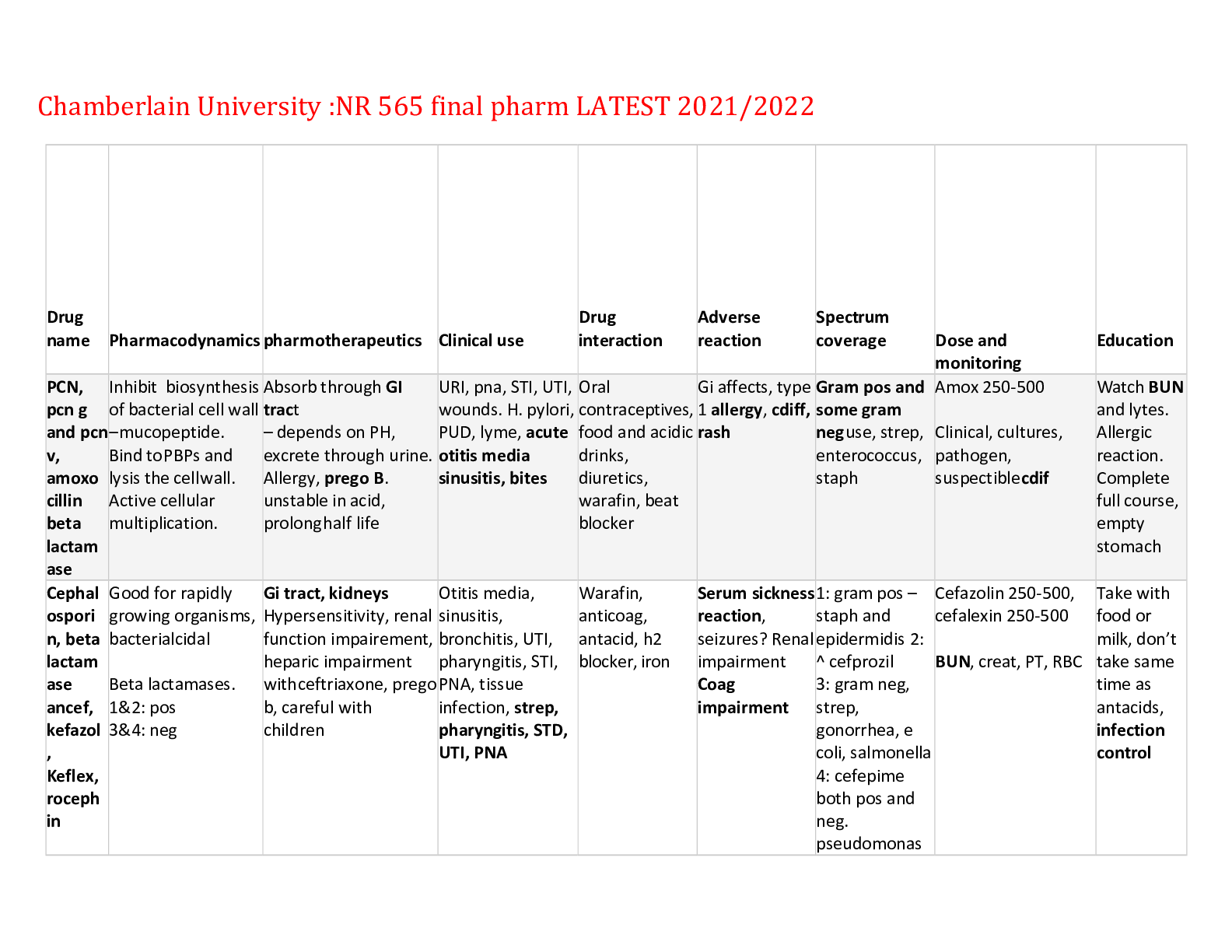
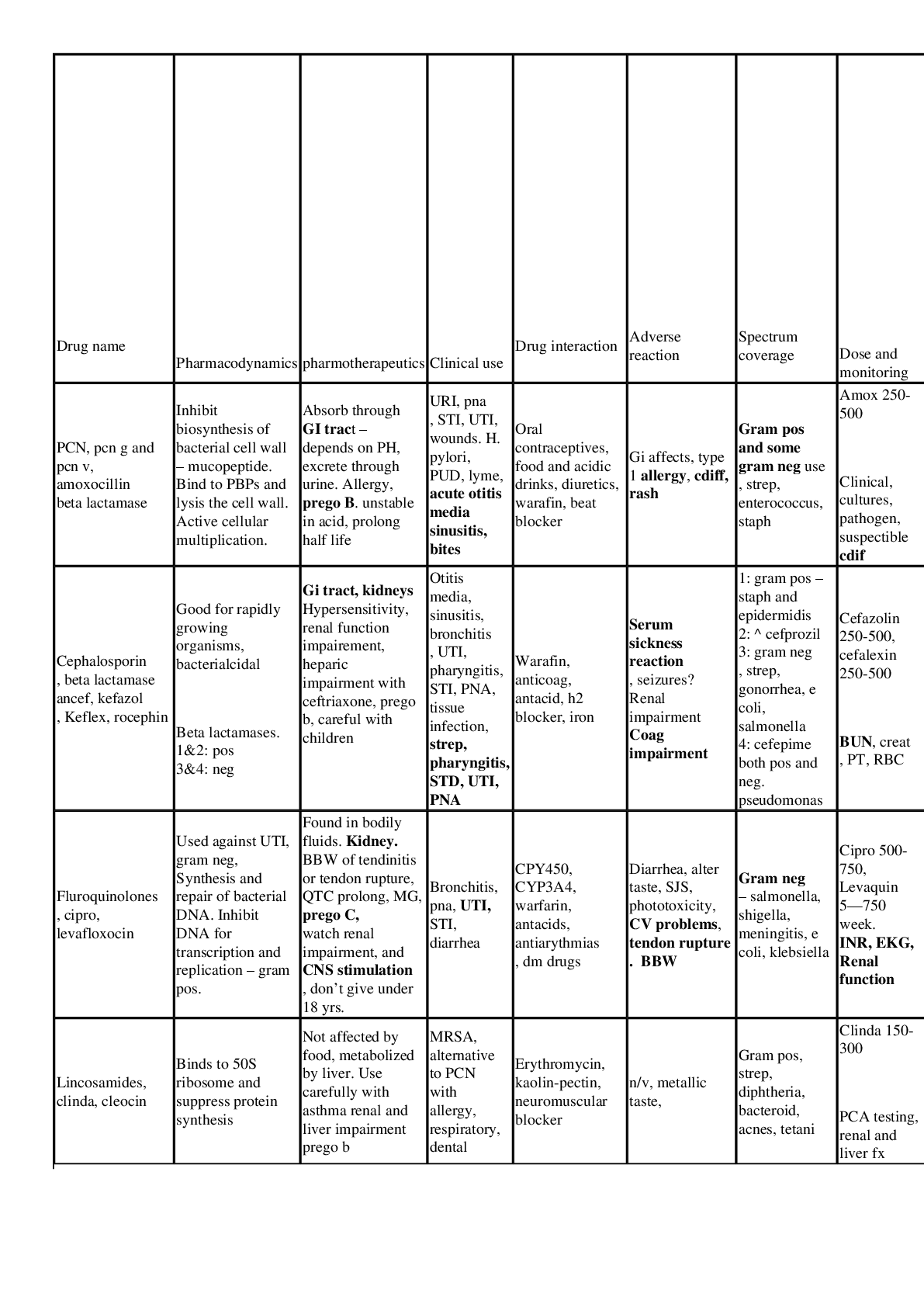
PCN,
pcn g and pcn v, amoxo cillin beta lactam ase Inhibit biosynthesis of bacterial cell wall – mucopeptide. Bind to PBPs and lysis the cell wall. Active cellular multiplication. Absorb through GI tract
– depends on PH, excrete through urine. Allergy, prego B. unstable in acid, prolong half life URI, pna, STI, UTI,
wounds. H. pylori, PUD, lyme, acute otitis media sinusitis, bites Oral contraceptives, food and acidic drinks, diuretics, warafin, beat blocker Gi affects, type 1 allergy, cdiff, rash Gram pos and some gram neg use, strep, enterococcus, staph Amox 250-500
Clinical, cultures, pathogen, suspectible cdif Watch BUN and lytes. Allergic reaction.
Complete full course, empty stomach
Cephal ospori n, beta lactam ase ancef, kefazol
,
Keflex, roceph in Good for rapidly growing organisms, bacterialcidal
Beta lactamases. 1&2: pos
3&4: neg Gi tract, kidneys Hypersensitivity, renal function impairement, heparic impairment with ceftriaxone, prego b, careful with children Otitis media, sinusitis, bronchitis, UTI, pharyngitis, STI, PNA, tissue infection, strep, pharyngitis, STD, UTI, PNA Warafin, anticoag, antacid, h2 blocker, iron Serum sickness reaction, seizures? Renal impairment Coag impairment 1: gram pos – staph and epidermidis 2: ^ cefprozil
3: gram neg, strep, gonorrhea, e coli, salmonella 4: cefepime both pos and neg.
pseudomonas Cefazolin 250-500,
cefalexin 250-500
BUN, creat, PT, RBC Take with food or milk, don’t take same time as antacids, infection control
Fluroq uinolo nes, cipro, levaflo xocin Used against UTI, gram neg, Synthesis and repair of bacterial DNA. Inhibit DNA for transcription and replication – gram pos. Found in bodily fluids. Kidney. BBW of tendinitis or tendon rupture, QTC prolong, MG, prego C, watch renal impairment, and CNS stimulation, don’t Bronchitis, pna,
UTI, STI, diarrhea CPY450, CYP3A4,
warfarin, antacids, antiarythmias, dm drugs Diarrhea, alter taste, SJS, phototoxicity, CV problems, tendon rupture. BBW Gram neg – salmonella, shigella, meningitis, e coli, klebsiella Cipro 500-750,
Levaquin 5—750 week.
INR, EKG, Renal function 2 hour after meal, water, same time full course, avoid sun
give under 18 yrs.
Lincos amide s, clinda, cleocin Binds to 50S ribosome and suppress protein synthesis Not affected by food, metabolized by liver. Use carefully with asthma renal and liver impairment prego b MRSA, alternative to PCN with allergy, respiratory, dental Erythromycin, kaolin-pectin, neuromuscular blocker n/v, metallic taste, Gram pos, strep, diphtheria, bacteroid, acnes, tetani Clinda 150-300
PCA testing, renal and liver fx Sit or stand after dose, food, let provider know if surgery - stop
Macrol ides, azythr omyci n, erythr omyci
n Binds to p site or 50s ribosome and inhibits protein synthesis, weak base – alkaline media. Prolong qt, cardiac arrhythmia, electrolytes, hepatotoxicity, MG, visual disturbance. Prego b and c Empirical treatment for Com acq PNA, STI,
chancroid, chlymidia, PUD, bronchitis, resp issues Cyp3a4, CYP450, Orap,
class 1a and 3 antiarrthmias, fluconazole, promethazine. antacids Gi problems, liver abnormalities, SJ. Statin - myopathy Gram pos – strep, mssa Gram neg – influenza, Neisseria, ricketessa, chlamidia,
mycobacterium Azithromycin 500, erythromycin
Hearing loss, ekg, liver values Empty stomach, give with water, same time each day
Sulfon amide s,
*sulfa Inhibitition of dihydrofolate synthesis to prevent folic acid synthesis, prevent purine and nucleic acids. Absorbed through Gi track, serum level 5-15. Metabolise in liver – slow metabolizer risk for toxicity prego c, give
<2 mo. , PCN allergy Combination therapy – uti, burn, MRSA GPD6 deficincy, renal impairment, folate.
Salicylates, warafin, Rashes, skin reaction, photosensitivit y, SJS,
hypersnesitivity Gram pos and neg – klebsillea, salmonella, gonorrhea, protozoa Sulfa – loading dose then 2-4g/d
CBC, UA Give with water and make sure good urine output, photosensi tivity by
Trimet hopri m, primso l Converts dihydrofolate to tetrahydrofolic acid – synthesis to pruines and DNA
WITH SULFA –
sequential blocking Distributed throughout the body, kidney excretion, prego c, not
<2 mo Uti, uri, bronchitis, Mrsa ^ Ace inhibitors, phenytoin Rash, skin reaction, hyperkalemia Gram pos and neg – e colia, salmonella, shigella, pertuisses 100 mg q d for 10 day CBC, renal, liver
Nitrof uranto in Alter bacterial ribosomes, low concentration in body high in urine, synthesis of DNA and energy Absorbd slowly, watch creat <40, prego b, not
<1 mo UTI ^ anticholinergics Peripheral neuropathy, pulmonary reactions Gram pos and neg – staph, strep 50-100 qid with meals CBC, pulm eval Give with food, w urine may be brown, watch pulmonary
Lipogly
copep Vanc, inhibit cell wall
synthesis binds to IV preferred, excreted in
BM. Systemic – be CDI, staph Aminoglycocide
s, ace inhibitor, Nephrotoxicity,
CDI, prolong qt, Gram pos – first
line, MRSA, vre, Watch bun and creat Use with
cholesterya
tides membrane and weakens cell wall careful with renal impairment and otoxoic, prego b and c loop diuretic hypersensitivity
– red man syndrome Staph aureus 100-500 q6 6-10
days,m max 3 g iv. mine hours apart – hand washing and preventing spread of infections.
Baceriostatic: killing bacteria causing illness – clinda, macrolides, sulfa, tetracyclines
Bactericidal: aminoglycosides, beta lactamas fluroquinoles, metronzaials, sterp, and vanc. Stops growth and spread of infection.
First gen: kefledx, duricef – soft tissue infection, positive second gen: ceclor, cefzil, gram pos.
third gen: cedax, suprax, Rocephin, spectracef, gram neg fourth gen: gram pos, cefepime
Antimicrobial resistance: resistnet organisms from day care, overcrowding, travel, and antibiotics in agriculture. Exdcessive use and inappropriate use increases risk for resistance, inadequate dosing, excessive duration of therapy and increase in empirical use of abx when not required. Unknown use of recent abx usage? Susceptibility testing.
Treatment of group a and b beta strep: penicillin
Cross sensitivity with cephalosporins: hypersensitive reactions and are not recommended with reaction to PCN.
Contraindications for topical beta blockers: AV block or bradycardia
Prophylaxis for ophthalmia neonatals: abx eye medication within one hour of delivery – erythromycin .5% to each eye
Glaucoma: IOP damages optic nerve.
Treatment: beta blockers, andrengeric agonist, miotics, CA inhibitors, sympathomiometric, xalantan Beta blockers – reduce IOP by interference with the aqueous humor
Miotic and ca inhibitor – IOP reduced from resistance to aqueous outflow = miosis and muscle contraction, increase aqueous humor outflow
CA inhibitor – slows secretion and reduces sodium and fluid Sympathomimetics: vasoconstrict – reduce IOP and outflow Dosing: beta blocker – 2.8 .25 solutions, timolol,
Education: take as prescribed don’t stop abruptly – BP monitoring
Allergic conjunctivitis: allergens
Treatment: h1 blocker ketotifen, decongestiant with antihistamine – antazoline and naphazoline Dosing:1 drop ever 8-12 hours for adults and children >3.
Education: don’t share meds and take as prescribed
Bacterial conjunctivitis: usuall children 3 mo to 8 years old – self-limiting. Abx can speed recovery Treatment: sulfacetamide 10% solution, erythromycin ointment, polytrim or polysporin.
Dosing: 10 %, 5mg, 1000 u
Education: throw away eye makeup, wash hands thoroughly, bulls eye method
Viral conjunctivitis: caused by adenovirus,herpes Treatment: sulfacetamide 10%
Dosing: could be ganciclovir, triflurideine, vidarbine Education: ^^
Cerumenosis: excessive accumulation of cerum which can lead to impaction Treatment: mineral oil – cabamide peroxide
Dosing: 1-5 gtt. Twice day for four days. Education: irrigate with warm water.
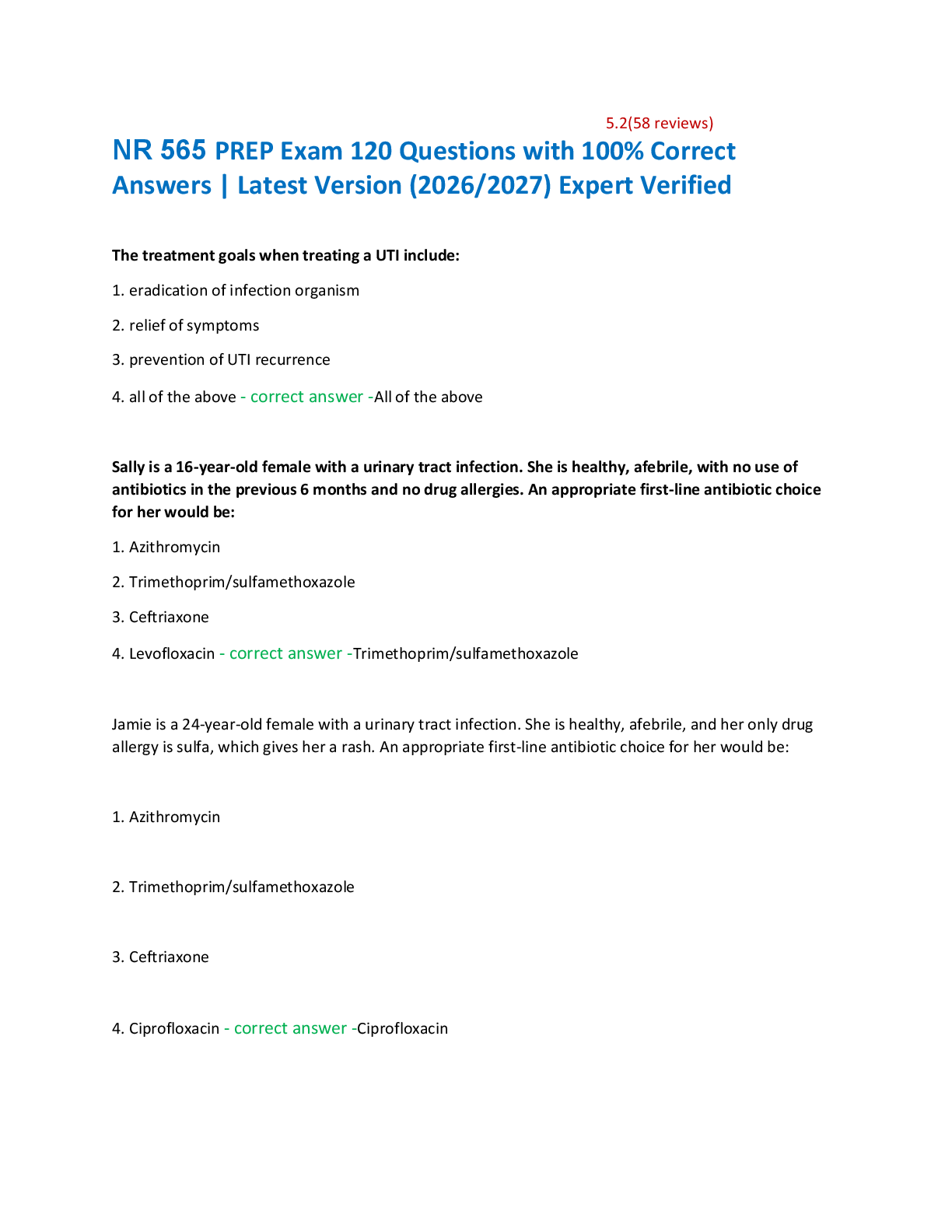
UTI first line abx: TMP/ smx, batrim, septra. Trimethoprim/sulfa, nitrofurantonin children 10 day courses. Fluroquine if prego. Upper: cipro, TMP/Sulfa
Lower: Uncompliated - TMX/sulfa, nitro, cipro. Complicated – Tmx/sulfa, cipro
Drug selection based off of h&p:short term therapy isn’t a candidate for patients with symptoms >7 days, shaking chills, flank pain, Hx of diabetes, prego, immunosuppression, renal insufficiency, discharged from hospital in two weeks, 4 or more UTI in year, failure of tx last 4 months, long term care facility
UTI organisms: E. coli most prevelant, saphroyticus, klebsiella, enteric bacilli.
Complicated UTI tx: recurrent, >2 in 6 mo, >3 in 12 mo. Fluroquinines. 7-14 days. Doxycycline. Cipro second line. Febrile – IV abx.
Uncomplicated UTI tx: urine sample. Recommended nitrofluriquine for uti in women. Trimethoprim./sulfa. Eradication of organisms, relief of pain, prevention of recurrence.
UTI prevention: avoid spermicide and diagphrams – voiding 10-15 min after intercourse. Injestion of cranberry juice, maintain 2l fluid intake, not resisting urge to voide, don’t douche
Risk factors UTI: pregnancy, HLA-A2, estrogen deficiency, BPH, bladder obstruction, incontinence, DM, abd f=x for other infections. Catheter cystoscopy
Referral to urology: complicating factors or longer treatment, failure of sterile urine in children after 14 days, gross hematuria, persistent microscopic hematuria between episodes of infection or obstruction, persistent rather than recurrent UTI, infection with uria specific bacteria, pregnant and high fever or dehydration.
Drug Pharmacody namic Pharmacothera peutics Clincal use Drug interacti ons Adverse drug reactions spectrum Dosing and monitorin
g education
Antimycobact TB therapy. Genetics – how TB – four Alcohol, Peripheral TB CYP450 Full course
erials, Interferes metabolized in drug coumadi neuropathy, four drugs completion
isonziad with lipid and liver. Careful therapy. n, benzo hepatotoxicit for two , nutrition,
nucleic with alcohol y, ototxiity, months rests,
biosynthesis, intake, drug thrombocyto then two exercise.
inhibit abuse, prego, penia. for 4-7.
synthesis of neuropathy. Izonaid 5-
mycolic acids. Needs combined
thearpy 15m/kg, rifampin 600 daily,
eth 15-25
Antivirals, neucleoside analogues Herpes, zoester, varicella. Interfere with DNA synthesis and viral replication Poorly absorbed
– distributed throughout the body. Dose adjustments in renal function HSV, zoster, varicella, gingivostam atitis Probenec ide, nephroto xic, theophyll ine, dig n/v/d, dizzy, confusion, tremor HIV Rash, temp, bun
Acyclovir 200 q4. Hydration, renal failure and enceophap athic changes. Tx first sign of rash,loose clothing – partner
must take
Antifungals, fluconazole Years and dermatophyt es, inhibit fungal enzyme and fights against active yest. Absorption enhance with food, cyp450 and 341.
Hepatotoxicity, reduce when creat <50, prego
c Years, dermatoph ytes, needs loading dose.
Rifampin, h2, cyp3a4, cyp450
Hepatotoxicit y, cpy450 3a4, GI,
prolong qt Candida, cryptococ cus, endemic, dermo Liver enzyme, bilirubin
Fluc 150. Take with food, no alcohol use, liver toxicity
Anthelminthic s, -azole Parasytic infections, ringworm. Bind to microtubes to inhibit polymerizatio
n and loss of
Minimal, prego c Pinworm, whipworm, roundweor m, hookworm, threadwor m, scabies. Dex, cimetidin e N/V/D. neutropenia. Mazotti reaction. worms Stool stample. Mebenda zole, pamoate, albenzole, scabies
ivermecti High fat meals, ivermectin on empty stomach. Vigorous hygiene
function. n
Antiprotazoal s, metronidazol e and tinidazole Disrupt dna and protein synthesis Paracytic and bacterial infections.
Trichomonas,
cdif. Oral, distributed into fluids.
Caution with sz and clots. Prego b T vafinalis, lamblia, bacteria vainosis, h pylori. Not in first timester Coumadi n, cyp450, lithium Anorexia, abd pain, dizziness, metallic taste .
Trich, giardiasis leukopeni a Watch metallic taste, no alcohol. condoms
Bacterial vaginosis diagnosis and treatment: bacterial flora is altered. Foul odor, clear, copious discharge, PH greater than 4.5, positive wiff test, few WBC. Flagyl is drug of choice esp if pregnant 500 mg twice daily. Tinidazole 2 g oral for healthy or 1 g with food for 5 days.
Antimycobacterial treatment guidelines for TB: several drugs for 6-9 mo. Isoniazid, rifampin, ethambutol, pyrazinamide. Patients need to be evaluated to make sure they don’t have mycobacterium – two to prevent or delay resistance – azithromycin and clarithromycin. Make sure they are administered together.
Mycobacterial infection hardest to kill because they are resistant.
Influenza indication for treatment: antivirals are recommended for patients who have been symptomatic less than 48 hours. Oseltamivir and zamairvir are approved for prophylaxis in patients 1 year or older and 5 year and older. Peramivir is treatment for acute influenza >18 y.o. treatment is recommended when patients are hospitalized, have severe disease or risk of developing complications.
Prophylactic treatment of meningitis: ceftriaxone
Spectrum of antiviral coverage for various organisms: acyclovir – herpes, Epstein barr. Valacyclovir. Famciclovir – hsv-1, 2, ebv, hep b.
Cardinal symptoms of chronic bronchitis that indicates abx use: two of three symptoms including: increase sputum volume, purulence, and dyspnea. A radiographic chest xray may be needed.
Animal and human bite prophylaxis: amoxicillin, bacitracin and polymixinb.
Types of tinea infections: tinea copris – ring worm, tinea capitis – most common ring worm of scalp. Tinea pedis – athlets foot, tinea cruris – jock itch. Tinea onychomycosis – nail.
Treatment of onychomycosis: systemic antifungals, topical ciclopirox or systemic Griseofulvin, itraconzole (kids) or terbinafine (kids), topical with <50% of nail surface. Combination therapy of both is recommended.
Treatment of primary and secondary skin infections: cephalosporins, cefalexin, dicloxacillin, amoxicillin, clinda.
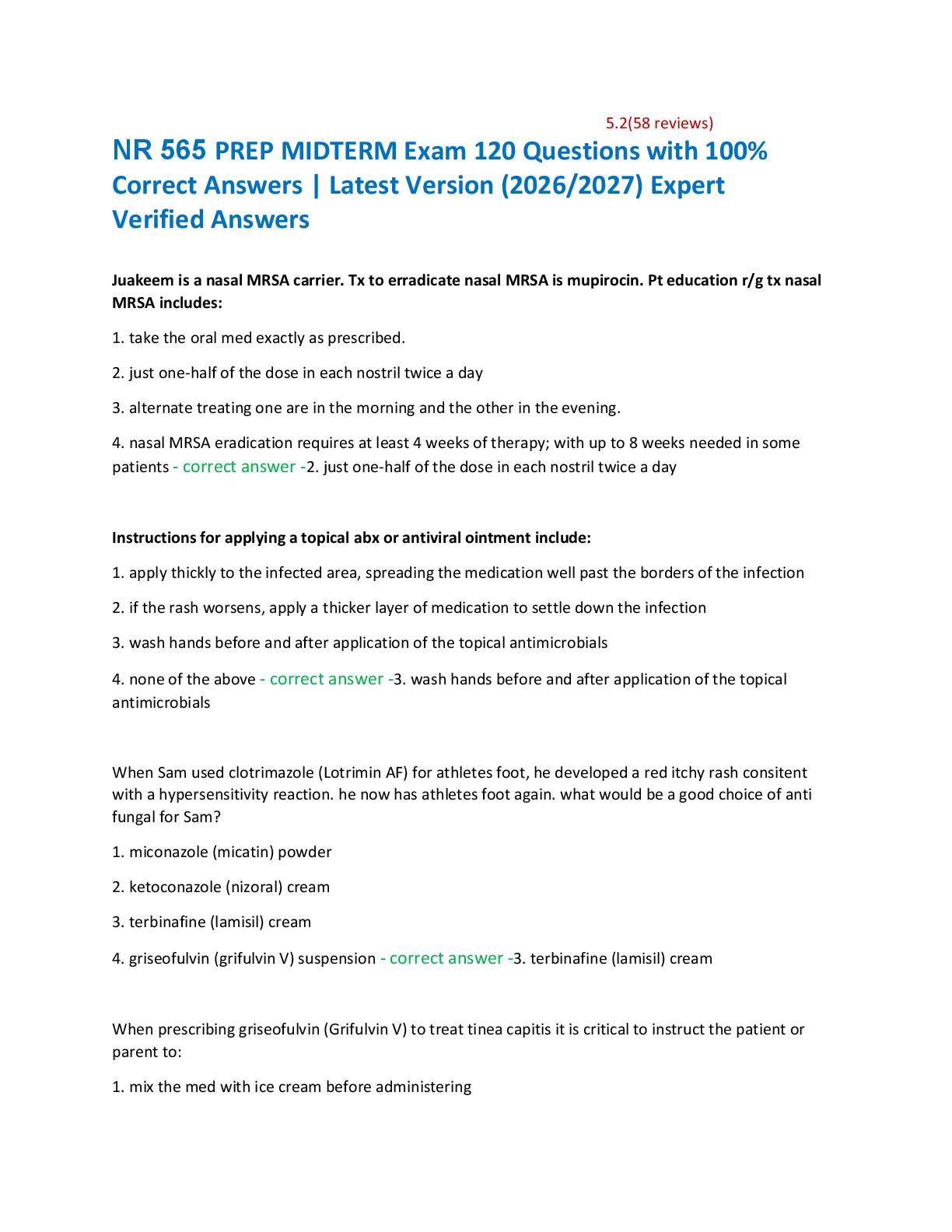
Medication and dose to eradicate nasal mrsa: intranasal mupirocin, half in one nostril half in the other in the am five days.
Symptomatic treatment for viral uri: nasal congestion, rhinorrhea, malaise, scratch throat. Topical decongestant like afrin, neosynephrine, tyl if malaise.
Treatment of acute sinusitis: purulent drainage, sinus pressure, nasal obstruction. Amoxicillin with or without clavulant. Absence of infection – no steroids.
Secondary bacterial infections: complex to the common cold – OM, sinusitis for kids. Will not need meds if something else was already wrong. During or after treatment of another infection – caused by first treatment changes to immune system
Herbal supplement use and recommendation: decreases symptoms of common cold, vit c alleviate common cold. Zinc for uri and cold. Echinacea for cold and flu.
Drug name Pharmacodynamic Pharmacotherapeutics Clinical use Drug interactions Adverse reactions
s
Antacids, alum, ca, mag, sodium bicarb, bases Neutralize acids in GI tract, makes stomach acid more neutral Excreted in fece, mag, calcium, aluminim or sodium. Cannot be used with abd pain or
fever. Hyperacidity, PUD, GERD, OTC, after meals and bedtime Seprate from other meds by two hours Diarrhea, constipation
Antidiarrheals, pepto, loperamide, cholestyamine Kaolin and pectin hold onto bacteria, Lomotil is an opiod, binds to receptors to slow gastric motility, slows
peristalsis. Toxic megacolon, bismuth not in children, use cautiously in older adults, metabolized by liver. iBS Diarrhea, hydration, electrolytes, opioids, travelers diarrhea Bismuth subsalicylate – toxicity with asa and hypoglycemia. Diphenoxylate with atropine – cns
depressant Constipation, black tongue and gray stool, anticholigeric effects, CNS effects
Cytoprotective Sucralfate’s minimal absorbed, misoprostol is
rapidly absorbed Prego x, renal and feces Ulcers associated with NSAIDS Sucralfate, misoprosotol Constipation diarrhea
Antiemetics Anticholinergic effects, block dopamine receptor with n/v Careful with EPS, seizure, not in children, n/v with drugs, motion sickness, antihistamines. CNS depression, anticholinergic effects, lithium toxicity and EPS with
phenothiazines Drowsy, EPS, respiratory depression
H2 receptor Inhibit acid secretion by parietal cells Caution in renal impairment, prego b, rantidiene and Pepcid ok in children, oral GERD, PUD,
heartbutn Cimetidine uses several isoenzymes Impotence, hematological disorders, blood problems,
confusion
Prokinetics Stimulate motility of gi tract without
stimulating gastric BBW tardive dyskensia, GI
hemorrhage, GERD CNS depression, increase risk of
EPS, Tardive dyskensia, dizziness,
diarrhea,
biliary or pancreatic
secretions depression, SI. anticholinergic
effects hypoglycemia
Ppi Reduce h+ secretion by inhibiting the h+k+ atpase enzyme at secretor suface of
cell Liver metabolism, prego b and c, children, short term usage Duodenal and gastric ulcers, GERD Interefere with absoption of drugs, increase INR with warafin, Plavix BBW Vitamin deficiencies, osteoporosis, cdif, pNA
laxatives Stimulant: stimulate myenteric plexus
Osmotic: draw water into lumen Bulk: natural Lubricant: soften stool
Surfactant: reduce tension of stool Hyperosmolar: darws water into
intestine Absorption differs, contraindicated with n/v, mag ox renal dysfunction Rapid response and short term, depends on class of drug Methylantexone with opioids Excessive bowel activity, cramp, flatulance
problem Dosing Monitoring education
GERD burning substernal pain aggravated by meals and laying down, angina, MI, sore throat or hoarse H2, ppi, antacids, prokinetics Ppi first line then h2. H2 decrease amount of acid and ppi fix ph balance Reduce symptoms, heal lesions, prevent complications. CBC, esophagitis, endoscopy hOB elevated, avoid bending after rating, avoid stenous activity, after eating, avoid spicy food, avoid sweets coffee alohol, eat in moderation, stop
smoking
PUD inflammatory condition
of stomach and small Lifestyle modification – h2 –
ppi – complicated or Endo at end of therapy – urea
breath test or stool antigen Understanding long term risk
of bleeding and ca of stomach,
intestine duodenal and gastric. uncomplicated - testing lifestyle modifications, adhere to regimen. Wi;ll need lifelong
therapy
IBS – abd pain large intestine with cramping bloating gas Lubiprostone, dicylomide if not responsive to treatment
and lifestyle management. No specific monitoring 30-60 min before a meal
Travelers diarrhea – loose stools and abd cramping bc of contamination Bismuth subsalicylate – two tables or two oz each meal and at bedside for three
weeks, fluroquinolones Patients desination – high risk is central and south America, asia, middle east, mexico CDC travel site
BBW metoclopramide: tardive dyskinesia
Step progression of PPI: step 1: lifestyle modifications, OTV antacids, h2 blockers -> step 2: h pylori testing and ppi treatment -> step 3: treatment for h pylori, PPI with Abx to treat -> step 4: triple therapy – ppi
Effectiveness of ppi: reducing acid production causing anemia, b12 and calcium deficiency. 1-4 days
Triple therapy for h pylori: PPI plus, clarithromycin 500 mg BID or metronidazole 500mg bid, or amoxicillin 1 g twice daily for 10-14 days.
Misoprostol use for duodenal ulcer prophylaxis and treatment: >400 mcg/day can be used if h2 was not a response. FDA approved off label.
Lubiprostone mechanism of action: activates CIC-2 chloride channel in GI lining, produces chloride rich secretions, soften stool and increase gastric motility. Doesn’t effect potassium or serum levels. Chronic idiopathic constipation, irritable bowel syndrome > 18, and chronic oploid induced constipation.
[Show More]


![Preview of eBook [PDF] Barash, Cullen, and Stoelting's Clinical Anesthesia 9th Edition By Bruce F. Cu](https://browseimages.nyc3.digitaloceanspaces.com/paper-images/2024/Aug/29/8DF2QRTq2024-08-29-10-3966d0259b7c4b5.png)
![Preview of eBook [PDF] Fundamentals of Nursing 3rd Edition By Joanne Tollefson, Sue C. DeLaune, Patri](https://browseimages.nyc3.digitaloceanspaces.com/paper-images/2024/Aug/26/U6SQ8mmq2024-08-26-01-4766cc5d40d7385.png)
![Preview of eBook [PDF] Burns' Pediatric Primary Care 7th Edition BY Dawn Lee Garzon Maaks,, Nancy Bar](https://browseimages.nyc3.digitaloceanspaces.com/paper-images/2024/Aug/26/WR2rowXX2024-08-26-02-0966cc625bea839.png)