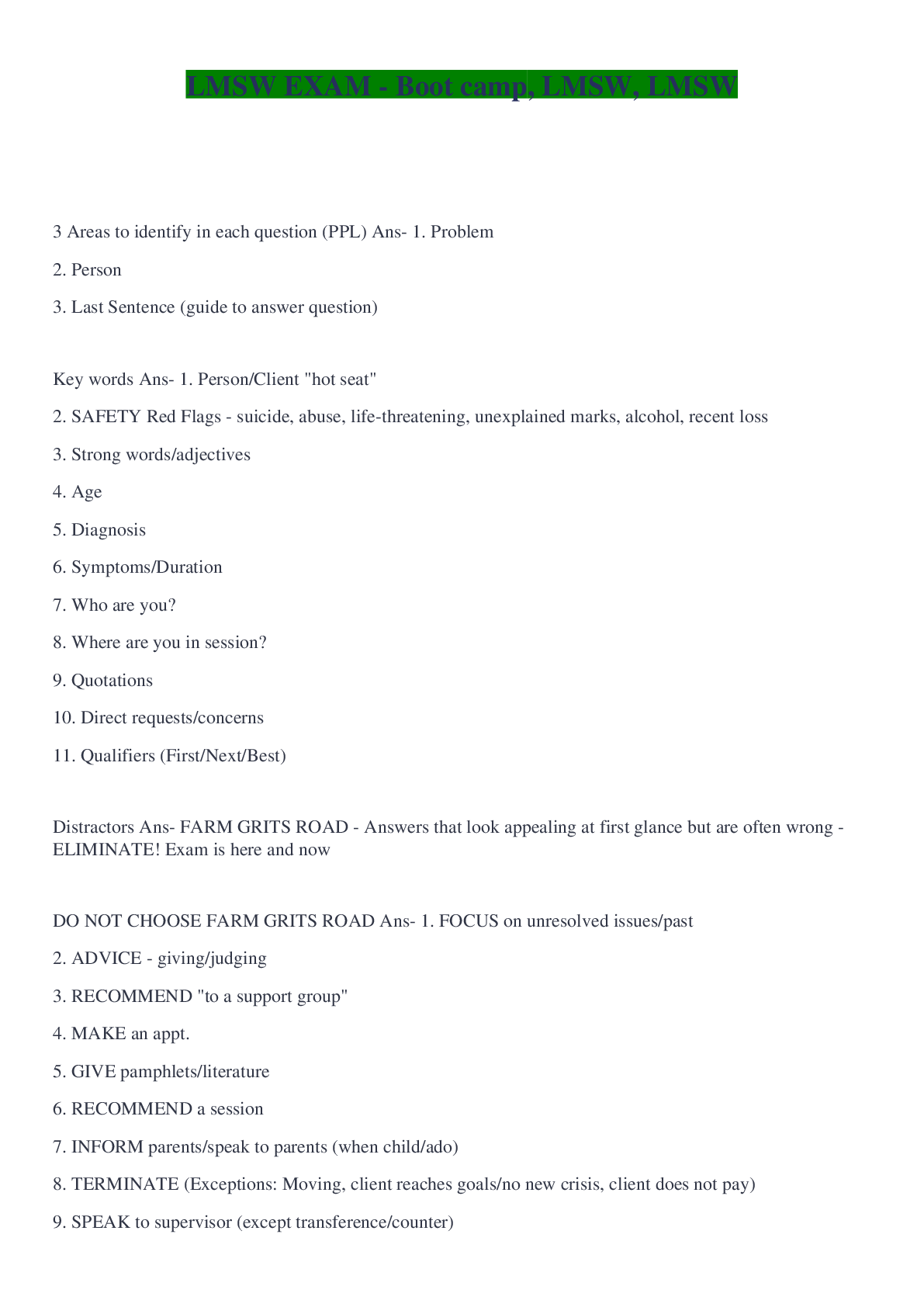
LMSW EXAM - Bootcamp!, LMSW, LMSW
3 Areas to identify in each question (PPL) - 1. Problem
2. Person
3. Last Sentence (guide to answer question)
Key words - 1. Person/Client "hot seat"
2. SAFETY Red Flags - s
...
LMSW EXAM - Bootcamp!, LMSW, LMSW
3 Areas to identify in each question (PPL) - 1. Problem
2. Person
3. Last Sentence (guide to answer question)
Key words - 1. Person/Client "hot seat"
2. SAFETY Red Flags - suicide, abuse, life-threatening, unexplained marks, alcohol, recent loss
3. Strong words/adjectives
4. Age
5. Diagnosis
6. Symptoms/Duration
7. Who are you?
8. Where are you in session?
9. Quotations
10. Direct requests/concerns
11. Qualifiers (First/Next/Best)
Distractors - FARM GRITS ROAD - Answers that look appealing at first glance but are often wrong - ELIMINATE! Exam is here and now
DO NOT CHOOSE FARM GRITS ROAD - 1. FOCUS on unresolved issues/past
2. ADVICE - giving/judging
3. RECOMMEND "to a support group"
4. MAKE an appt.
5. GIVE pamphlets/literature
6. RECOMMEND a session
7. INFORM parents/speak to parents (when child/ado)
8. TERMINATE (Exceptions: Moving, client reaches goals/no new crisis, client does not pay)
9. SPEAK to supervisor (except transference/counter)
10. RESPECT self-determination (If mentally UNSTABLE)
11. OFFER contract as a reminder
12. ALLOW the clients to lead the session
13. DO nothing/say nothing
How do you answer first/next questions? - 90% of exam is SAFETY FIRST.
How does the exam want you to have a CLEAR understanding of client's issues? - ASSESS BEFORE ACTION.
RUSAFE - 1. RULE out medical
2. UNDER the influence/delusional/hallucinating Do Not Treat
3. SAVE Lives - Safety first (Answers: Duty to warn, report child/elder abuse, 911, mobile crisis, ER)
4. ASSESS before action - (Answers: ASSESS, ASK or DICE - Determine, Identify,Clarify, Explore)
5. FEELINGS - (Answers: ACKNOWLEDGE person's feelings) CONCERNS (AID ASSIST, INFORM client, DISCUSS concerns)
6. EMPOWER - If client is mentally stable/alert (Answers: Respect client's decisions)
COE: Ethical responsibilities towards clients - 1. Client's best interests are primary
2. Respect/promote right to self-determination if client is mentally alert/stable, NOT unstable/intoxicated/psychotic
3. Informed consent, written agreement by client to undergo treatment, risks/benefits/costs disclosed
4. Avoid conflicts of interest (Things that interfere with SW's impartial judgment/discretion)
5. DO NOT promote individual therapy sessions to ppl who have a relationship w/ each other (except couples, family, group treatment) - Provide family members with appropriate referrals
6. Avoid dual/multiple relationships
7. Avoid bartering (unless common practice in community)
8. Obtain a professional translator FIRST if client does not speak the language of SW
9. Do not disclose client information w/out consent unless req'd by law
10. Provide client with reasonable access to records (First explore/discuss reason for request) Follow laws of state.
11. Ensure CONTINUITY of services
12. NO relations with clients past or present
Mandated reporting - SW's are req'd and responsible for reporting any instances of abuse that is suspected. Abuse includes physical, emotional, sexual, neglect, CHILD AND ELDER ABUSE
Duty to Warn - SW's MUST WARN a threatened victim of any harm that his/her client may cause when there is a REAL INTENT (PLAN)
HIV Decisions - NOT DUTY TO WARN! 3 options:
1. FIRST urge client to disclose to partner
2. FIRST encourage client to engage in safe sex
3. Research/follow state laws as needed
Subpoena by the court - SW may be req'd by law to disclose confidential information
COE: Ethical responsibilities to colleagues - 1. Refer to colleague who may be better trained in an area than SW. SW can take client but must be COMPETENT.
2. When CONSULTING with colleague, disclose least amount of information
3. FIRST speak to a colleague to discourage/prevent/correct unethical behavior
4. AVOID relationships with colleagues (conflict of interest)
COE: Ethical responsibilities in practice settings - 1. Accurately document services in client's records while keeping best interests in mind
2. Maintain records securely for a period of time consistent with state laws
COE: Ethical responsibilities as professionals - 1. MONITOR/EVALUATE policies and implementation of programs
2. ADVOCATE when necessary
HMO Insurance/Short term Care/MANAGED CARE - 1. Emphasizes short term, discourages long term treatment
2. Cases assigned to case manager to whom provider must justify necessity for treatment for payment and services.
3. More precise diagnosis = greater likelihood of reimbursement
4. Encourages Cognitive/Behavioral short term TX.
5. Contracts are INFLEXIBLE, abide by rules to receive reimbursement
Disorders in Infancy, Childhood, Adolescence - Autism, ADHD, Oppositional Defiant Disorder, Conduct Disorder, Enuresis, Separation Anxiety Disorder
Adult Disorders - Delirium, Dementia, Amnestic/Cognitive Disorders, Schizophrenia and other Psychotic Disorders, Mood Disorders, Anxiety Disorders, Somatoform Disorders, Factitious Disorders
attention-deficit/hyperactivity disorder (ADHD) - 1. Symptoms at least 6 months
2. Inattentive: Difficulty focusing, staying on task follow-through, listening, easily distracted, loses things, forgetful
3. Hyperactive: Impulsive, fidgeting, running around, talking excessively
4. Several symptoms present prior to age 12
5. Must occur in 2 or more settings
6.. Behaviors can increase/decrease based on settings.
7. TX: Behavior modification
Oppositional Defiant Disorder - At least 6 months - Angry, irritiable, defiant, talking back to adults, rebellious behavior, attitude, blames others, cursing, lying
- NO SERIOUS VIOLATIONS OF OTHERS RIGHTS
a childhood disorder in which children are repeatedly argumentative and defiant, angry and irritable, and in some cases, vindictive. Lasting at least 6 months
Conduct Disorder - 1. Violates other's rights, bullies, shoplifts, truancy, DX up to age 17
2. TX: Family, schools, community, client, parent/child behavior modificationq skills
a disorder that involves severe antisocial and aggressive behaviors that inflict pain on others or involve destruction of property or denial of the rights of others. Has a childhood onset however it is more likely to continue into adulthood. Adolescent onset less likely to display aggressive behaviors. Symptoms occurred in the last year with at least one occurring in the last six months
Enuresis - 1. Repeatedly urinating during day/night
2. Up to 5 years old
3. Rule out medical first
involuntary discharge of urine, usually referring to a lack of bladder control
Repeated bed wetting, wetting clothes, wetting at least twice a week for approximately three months, must be five years or older
Separation Anxiety Disorder - 1. Excessive distress when separated from major attachment figures.
2. Clinging, school refusal, sleep refusal
3. School Phobia is a form of separation anxiety.
4. Brought on when leaving home/family members to attend school.
5. At least 1 month of symptoms
Impulse control disorders - Trichotillomania, Intermittent Explosive Disorder, Gambling, Kleptomania, Pyromania,
Dementia - 1. Slow onset
2. Deterioration of memory/cognition
3. Alzheimer's, HIV, Parkinson's
Amnestic Disorders - Memory impairment w/out cognitive impairment
Korsakoff's Syndrome - Chronic alcoholism causes inability to recall previously learned information
an amnestic disorder caused by thiamine (vitamin b1) deficiency associated with prolonged ingestion of alcohol. Memory loss, lack of insight, apathy etc
Schizophrenia - 1. Hallucinations, delusions, disorganized speech, disordered/catatonic behavior, impaired thinking, negative symptoms (diminished emotional expression or avolition) THOUGHT DISORDER
2. Duration at least 1 month, but more than 6 months
3. TX = Medication and ego-supportive therapy (No INSIGHT therapy!)
a psychological disorder characterized by delusions, hallucinations, disorganized speech, and/or diminished, inappropriate emotional expression. This involves impairment in functioning and must be longer 6 than months
Schizophreniform - 1. Same symptoms of schizophrenia
2. DURATION is at least 1 month, but less than six months
2. Triggered by turmoil/high stress
3. TX = Mediation and supportive therapy
A Psychotic disorder that exhibits the characteristics of schizophrenia but the duration is different. This disorder episode last at least one month but less than six months
Delusional Disorder - 1. NON-BIZARRE/IRRATIONAL beliefs/delusions
2. Hallucinations absent or not prominent
3. Persecutory/Jealous Types of delusions
4. NO IMPAIRED FUNCTIONING
Brief Psychotic Disorder - 1. 1 Symptoms of criterion A Schizophrenia
2. DURATION LESS THAN 1 MONTH
Psychotic symptoms may also occur during which other conditions? - Bipolar 1 Disorder, Major Depression, Substance Induced Mental Disorders, Mental disorders due to a medical condition (ex. Amphetamine induced psychotic disorder with delusional features), Delusional Disorder, Borderline Personality Disorder, Brief Psychotic Disorder, Schizophreniform Disorder, Schizoaffective Disorder
Differential diagnosis Schizophrenia and Delusional Disorder - 1. Delusions occur in both
2. Schizophrenia experience other symptoms (hallucinations, bizarre delusions)
3. DD less functional impairment
schizoaffective disorder - Same symptoms of schizophrenia with a major depressive episode, manic episode, or mixed episode
Psychotic disorder featuring symptoms of both schizophrenia and major mood disorder. Hallucinations and delusions last two or more weeks.
Disruptive Mood Dysregulation Disorder - a childhood disorder (diagnosed after age 6, before age 18) marked by severe recurrent temper outbursts along, persistent irritable or angry mood, 3 or more times per week period of 12 months
Major Depressive Disorder - 1. Symptoms: (most of day, nearly every day for 2 weeks)
-Depressed mood
-Lack of pleasure
-weight loss/gain
-insomnia/hypersomnia,
-psychomotor agitation
-sad/empty/worthlessness
-suicidal ideation
- fatigue
- difficulty concentrating
- excessive guilt
MDD and bereavement differences- excessive guilt, anhedonia, suicidality
Dysthymic Disorder - 1. MDD symptoms but LESS SEVERE
2. Chronic
3. Duration more than 2 years (Children 1 year)
4. Symptoms cannot be absent for longer than 2 consecutive months
Bipolar 1 Disorder - 1. One or more manic episodes (Elevated, expansive, irritable mood, or excessive mood and increased energy) usually accompanied by a major depressive episode)
2. Symptoms may last at least 1 week to a few months
3. 3 or more manic symptoms
4. Impaired functioning
a type of bipolar disorder marked by full manic and major depressive episodes.
Manic symptoms - Inflated self-esteem, decreased need for sleep, loud/rapid speech, restlessness, racing thoughts, increased sociability and goal-directed activity, impairment of normal activities/relationships
Bipolar II Disorder - - 1 or more depressive episodes with at least 1 or more hypomanic episode
- NO manic episodes or mixed episodes
a type of bipolar disorder marked by mildly manic (hypomanic) episodes and major depressive episodes. Depressive episode must last at least 2 weeks
Depressive Symptoms - Sadness, loss of interest in usual activities, sleep/appetite disturbance, feelings of worthlessness/guilt, difficulty concentrating, suicidal thoughts/death
Neurovegetative symptoms of depression - changes in appetite of weight, sleep disturbances, fatigue, decrease in sexual desire/function
Rapid Cycling - 4 or more manic episodes of illness over 12-month period
Mixed State - Both depression and Mania occur at the same time
Children and Adolescents with Bipolar Disorder - 1. Can occur, more likely if parents have illness
2. Children/Ados may experience very fast mood swings b/t depression and mania in one day
3. Children with mania likely to be irritable and prone to tantrums than to be overly happy
4. Bipolar difficult to tell apart from other problems in this age group
Hyperthyroidism can mimic - Mania
Hypothyroidism can mimic - Depression
Mood disorder - Refers to a disturbance of mood and other symptoms that occur together for a minimal duration of time and not due to physical/mental illness
Panic Disorder - 1. Brief, recurrent, panic attacks
2. Followed by persistent worry of another panic attack and behavior change
2. TX = Desensitization techniques
social anxiety disorder - intense fear of social situations, leading to avoidance of such
Generalized Anxiety Disorder - 1. Excessive worry and physical symptoms (restlessness, fatigue, headache, stomachache)
2. Ex. client reports frequently irritable and unable to focus, tension, insomnia
3. At least six months
4. Worry impedes functioning
Panic attack or depression caused by substance - Substance Induced Anxiety Disorder or Mood Disorder
Panic attack caused by medical illness - Anxiety or Mood disorder caused by General Medical Condition
Somatoform Disorders - Disorders characterized by physical complaints that appear to be medical in origin but that cannot be explained in terms of physical disease (emotional connection)
obsessive-compulsive disorder - An anxiety disorder characterized by unwanted repetitive thoughts (obsession) and/ or actions (compulsions)
Body Dysmorphic Disorder - 1. Excessive preoccupation with one body part
2. Severe, impairment in functioning
3. Cause of decline = obsessing about defect
Conversion Disorder - Involuntary loss of voluntary function, however client does not control or produce them voluntarily
a disorder in which a person experiences very specific genuine physical symptoms for which no physiological basis can be found. Not able to be explained by a neurological disease but also provide why it is not a neurological disease
Factitious vs. Malingering - 1. Intentionally produced symptoms, differing incentives
2. Malingering fakes symptoms for external gain/goal
3. Factitious produces symptoms due to need to be "sick patient"
Munchausen's Syndrome - Faking an illness/producing symptoms to receive sympathy as patient
Munchausen's By Proxy - Abuse of another (typically a child) in order to seek attention for the abuser
post-traumatic stress disorder (PTSD) - 1. Exposure and response to life-threatening event
2. Arousal, intrusive, avoidance symptoms (distressing memories, dreams, dissociations,
3. LAST A MONTH AND BEYOND
4. Impairment to functioning/life pursuits
a disorder characterized by haunting memories, nightmares, social withdrawal, jumpy anxiety, numbness of feeling, and/or insomnia that lingers for four weeks or more after a traumatic experience
acute stress disorder - PTSD symptoms that appear for a month or less following exposure to one or more traumatic events
Reactive Attachment Disorder - 1. Disorder caused by lack of attachment to caregiver - NEGLECT... i.e. foster care kids
Attachment disorder in which a child with disturbing behavior neither seeks out a caregiver nor responds to offers of help from one; fearfulness and sadness are often evident. Onset between 9 months to 5 years
Adjustment disorder - a disorder in which a person's response to a common stressor, is maladaptive and occurs within 3 months of the stressor
Disinhibited Social Engagement Disorder (DSED) - a trauma-related attachment disorder characterized by indiscriminate, superficial attachments and desperation for interpersonal contact
Somatization Disorder - Recurrent/multiple somatic complaints that cannot be explained medically of several years. STRESS.
Substance related Disorder - Drug/Alcohol Intoxication and Withdrawal, Drug/Alcohol Abuse and Dependence
Disorders that are chronic - All personality disorders, Schizophrenia (> 6 months), Dysthymic and Cyclothymic (> 2 years), Generalized Anxiety Disorder (> 6 months), Hypochondrias (> 6 months), Somatization Disorder (several years)
Paraphilias vs. Sexual Sexual Dysfunction - Inappropriate sexual object or practice vs. inhibition of sexual response
Parasomnias vs. Dyssomnia - Abnormal event that occurs during sleep, b/t sleep/waking VS. disturbance in amount/timing of sleep
Personality Disorders - 1. An enduring pattern of inner experience and behavior that deviates markedly from the expectations of the individual's culture
2. 2 or more areas (cognition, affectivity, interpersonal functioning, impulse control)
Cluster A personality disorders - odd/eccentric
paranoid, schizoid, schizotypal
Schizoid PD - LONER, introverted, withdrawn, detachment from social relationships, RESTRICTED RANGE OF EMOTIONAL EXPERIENCE AND EXPRESSION, NO DESIRE FOR FOR SOCIAL RELATIONSHIPS
Schizotypal - Odd/strange/bizarre behavior/beliefs/mannerisms and interpersonal/social deficits due to fear/paranoia
Magical thinking - ideas that one's thoughts or behaviors have control over specific situations
ideas of reference - The false impression that outside events have special meaning for oneself.
Cluster B personality disorders - dramatic, emotional, erratic
antisocial, borderline, histrionic, narcissistic
Borderline PD - 1. Unstable in interpersonal relationships, behavior, mood, and self-image.
2. Abrupt and extreme mood changes
3. Stormy interpersonal relationships
4. Fluctuating self-image
5. self-destructive actions
Psychological disorder characterized by a pervasive pattern of instability in interpersonal relationships, self-image, and emotions, and of marked impulsivity beginning by early adulthood and present in a variety of contexts.
Histrionic PD - Melodramatic, attention-seeking, excessive emotionality, sexually seductive
a personality disorder characterized by excessive emotionality and preoccupation with being the center of attention; emotional shallowness; overly dramatic behavior; the sexualization or forced closeness of most relationships; a very dramatic interpretation of most events in life
Cluster C personality disorders - Anxious, fearful
avoidant, dependent, obsessive compulsive
Avoidant PD - Hypersensitive to rejection, unwilling to be involved, fear of not being liked
A personality disorder characterized by consistent discomfort and restraint in social situations, overwhelming feelings of inadequacy, and extreme sensitivity to negative evaluation.
Multiple Personality Disorder - Dissociative Identity Disorder
Mental Status Exam - Structured way of observing and describing current state of mind - appearance, attitude, affect, behavior, cognition, insight, judgment, mood, perception, speech, thought process, thought content
Relatively coarse preliminary test of a client's judgment, orientation to time and place, and emotional and mental state; typically conducted during an initial interview.
Displacement - Place unwanted/unpleasant feelings onto someone less threatening or innocent bystander
ex. angry at boss, take it out on spouse
EX: A client is angry at his doctor, does not express it, but becomes verbally abusive with the nurse.
Dissociation - A disturbance or change in the usually integrative functions of memory, identity, perception, and consciousness
A person often loses track of time or themselves and their usual thought processes and memories. People who have a history of any kind of childhood abuse often suffer from some form of dissociation
Projection - Taking your emotions and placing it on others... Attributing feelings or impulses unacceptable to oneself to another person.
Ex. All of my coworkers are greedy, but I am not
EX: Sue feels a strong sexual attraction to her track coach and tells her friend, "Hes coming on to me!"
<>>>>>>>>>>>>>>>>>>>>>>>>>>>>>>>CONTINUES (84pages)
[Show More]




.png)





.png)
.png)