PRINCIPALS OF MEDICATION ADMINISTRATION
I.“Six Rights” of drug administration
1.The Right Medication – when administering medications, the nurse compares the label of the medication container with medication form.
...
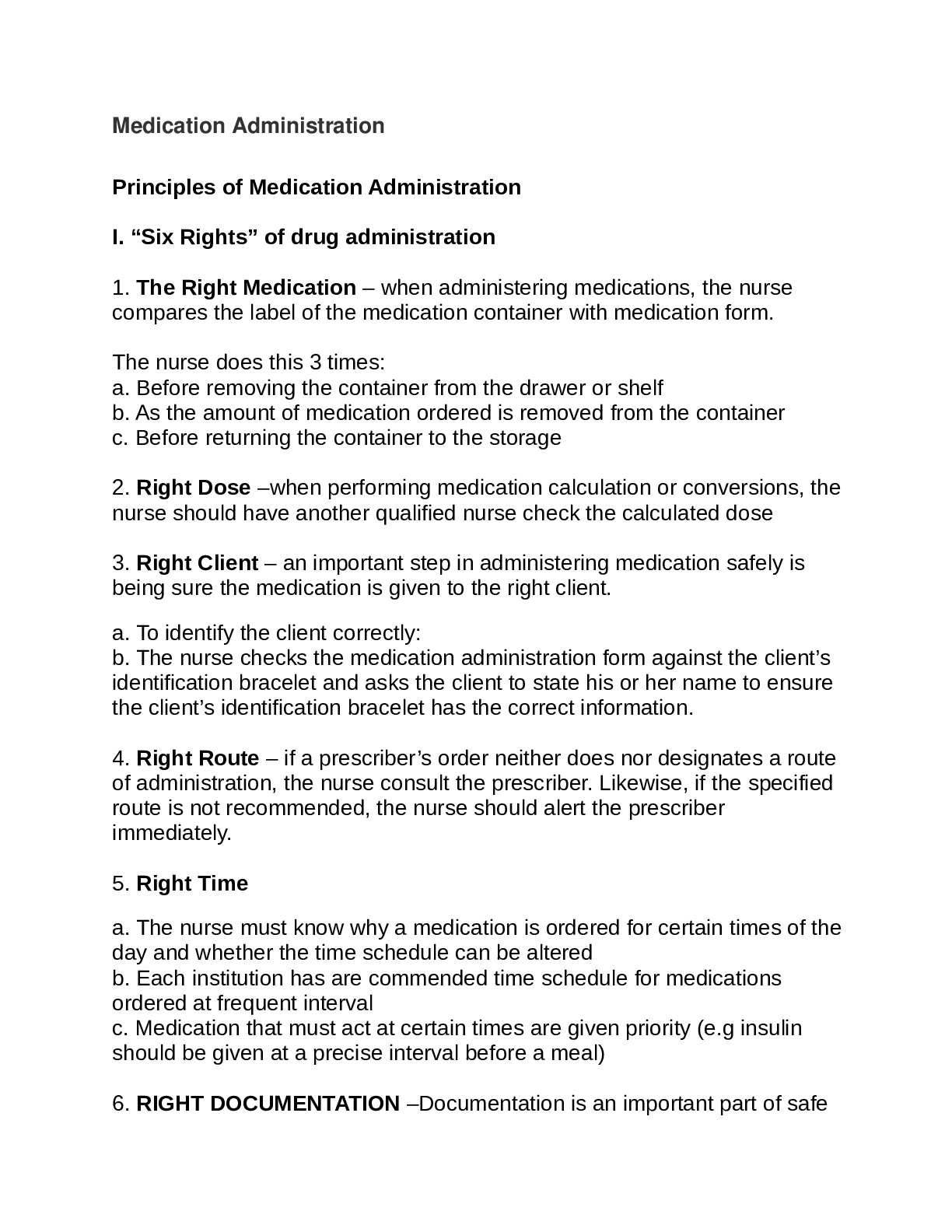
PRINCIPALS OF MEDICATION ADMINISTRATION
I.“Six Rights” of drug administration
1.The Right Medication – when administering medications, the nurse compares the label of the medication container with medication form.
The nurse does this 3 times:
a.Before removing the container from the drawer or shelf
b.As the amount of medication ordered is removed from the container
c.Before returning the container to the storage
2.Right Dose –when performing medication calculation or conversions, the nurse should have another qualified nurse check the calculated dose
3.Right Client – an important step in administering medication safely is being sure the medication is given to the right client.
a.To identify the client correctly:
b.The nurse checks the medication administration form against the client’s identification bracelet and asks the client to state his or her name to ensure the client’s identification bracelet has the correct information.
4.Right Route – if a prescriber’s order neither does nor designates a route of administration, the nurse consult the prescriber. Likewise, if the specified route is not recommended, the nurse should alert the prescriber immediately.
5.Right Time
a.The nurse must know why a medication is ordered for certain times of the day and whether the time schedule can be altered
b.Each institution has are commended time schedule for medications ordered at frequent interval
c.Medication that must act at certain times are given priority (e.g insulin should be given at a precise interval before a meal)
[Show More]