SOCIOLOGY
Document Content and Description Below
SOCIOLOGY
SOCIOLOGY ASSIGNMENT
SOCIOLOGY EXAM
1. Discuss 15 factors that influence interaction at the work place.
i. Leadership and management.
Leadership and management refers to the administrative structure of a w
...
[Show More]
Last updated: 3 years ago
Preview 1 out of 17 pages
Instant download

Buy this Document to get the Full Access Instantly
Provided by Students Who Aced it
We Verify Document Content to Gurantee Accuracy
Reviews( 0 )
Document information
Connected school, study & course
About the document
Uploaded On
Mar 17, 2022
Number of pages
17
Written in
All

Additional information
This document has been written for:
Uploaded
Mar 17, 2022
Downloads
0
Views
225
Topic Tags
Recommended For You
Get more on EXAM »

.png)
$7
4 Pages
Final Exam: Sociology Swansboro High School - SOCIAL STU 101 (...

$24
502 Pages
Test Bank for Discover Sociology 4th Edition By William Chambl...
$25
157 Pages
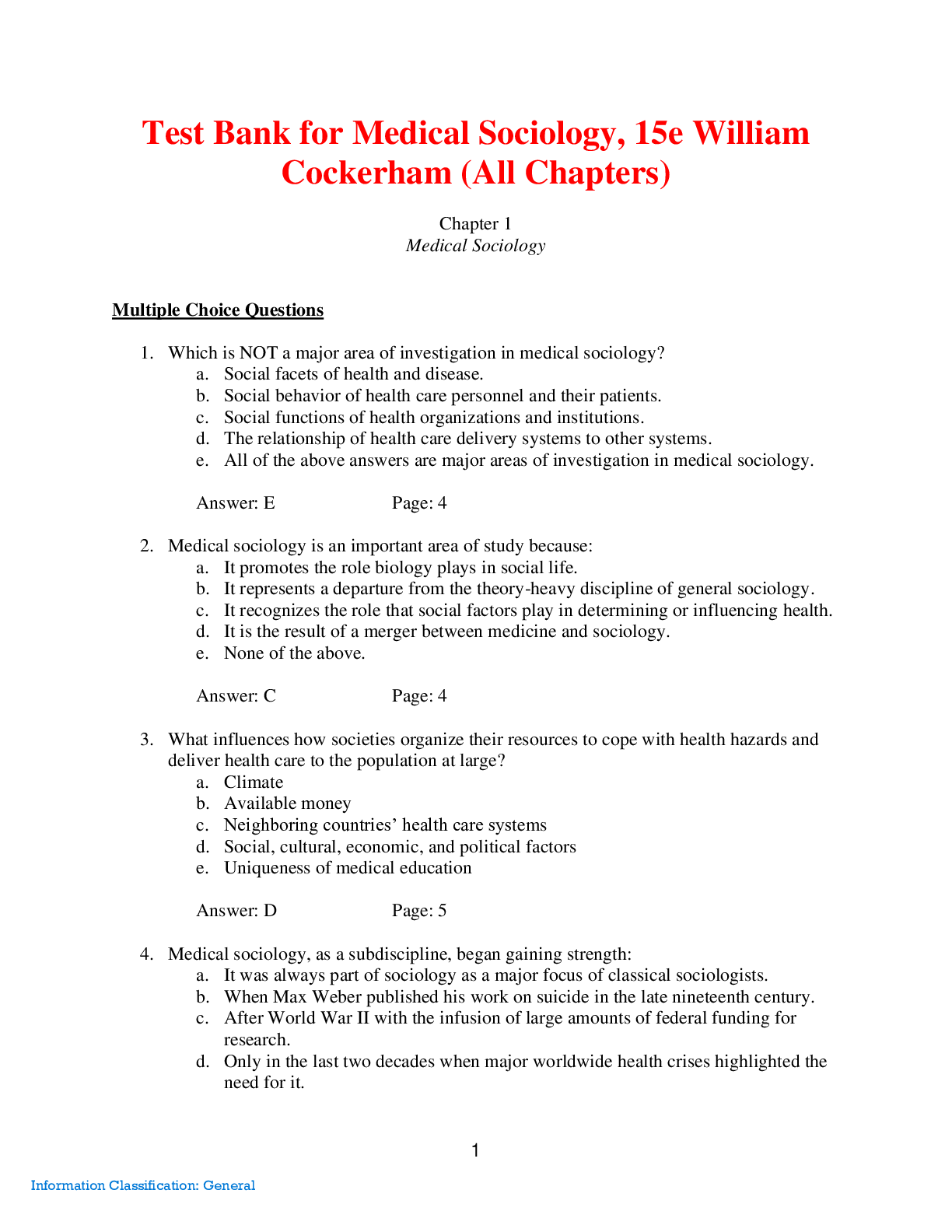
Medical Sociology, 15th Edition William Cockerham | Test Bank
$24
359 Pages
The Real World An Introduction to Sociology 5th Edition By Ker...
.png)
$11
11 Pages
SOC 210 Test 7 Questions and Answers- Western Governors Univer...

$15
12 Pages
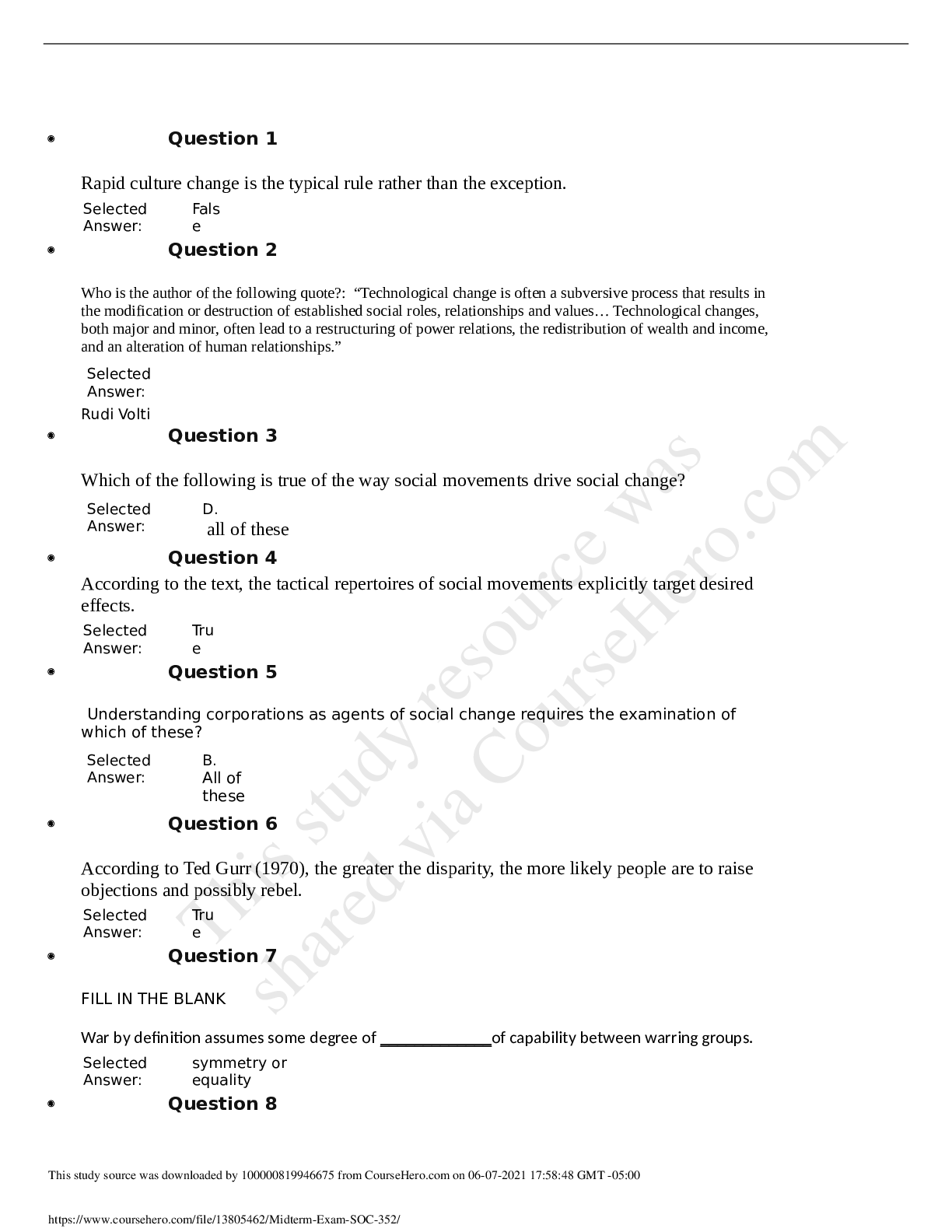
BEHS 364 Alcohol In U. S. Society Final Examination (updated s...
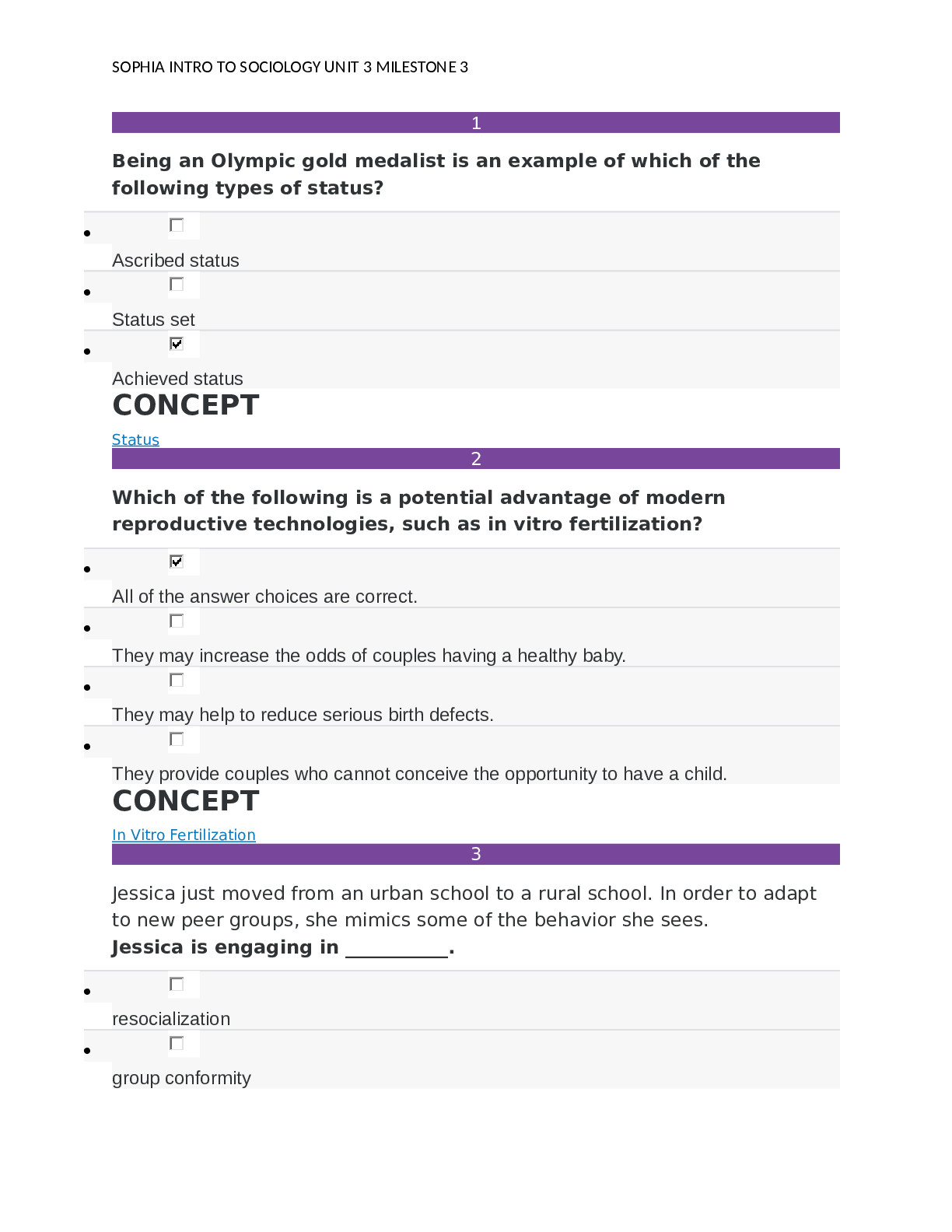

$11
6 Pages
Grand Canyon University SOCIOLOGY SOC-220 touchstone 2.2 creat...

$1
41 Pages
OCR GCE Sociology H580/03: Debates in contemporary society Adv...

$1
23 Pages
OCR GCE Sociology H580/02: Researching and understanding socia...
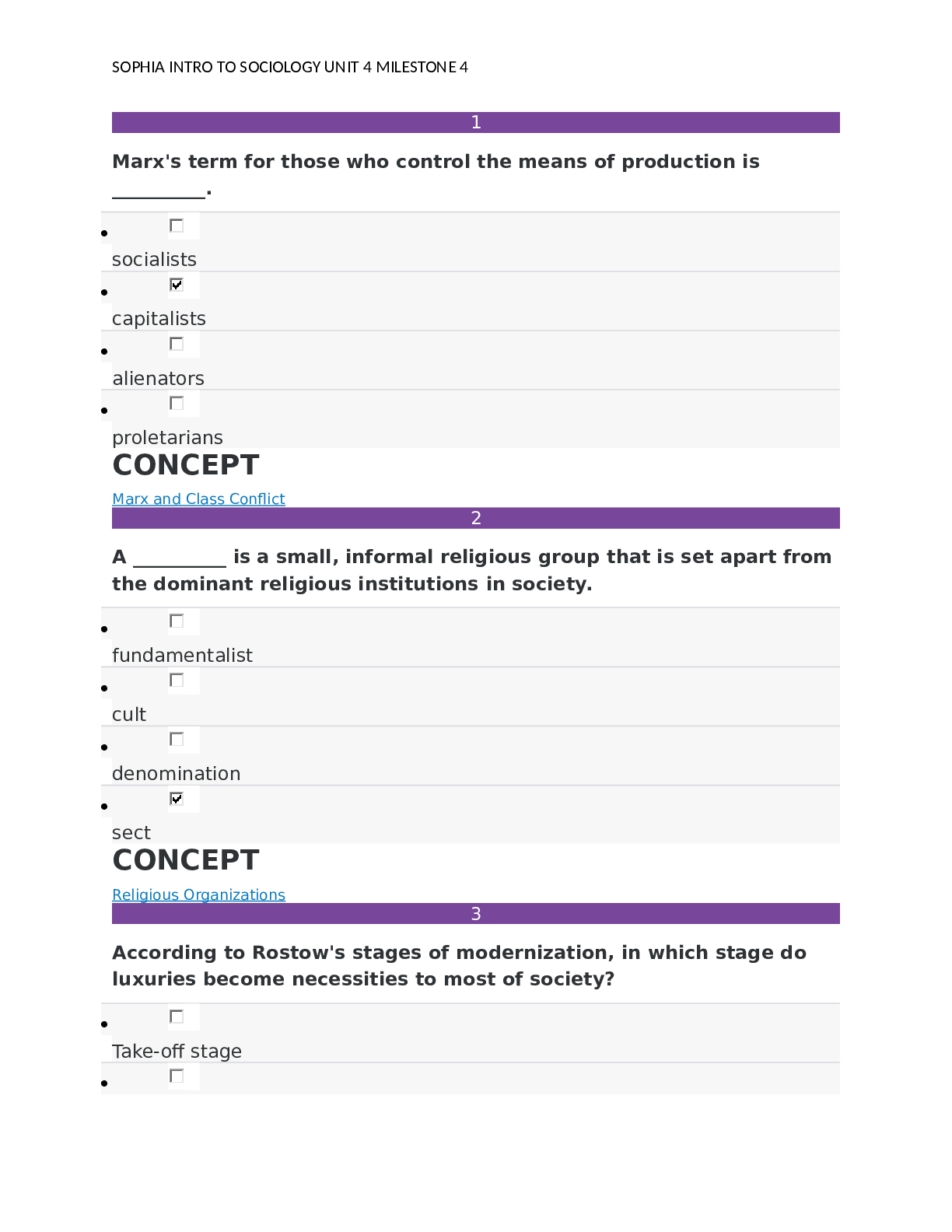
$10
11 Pages
SOPHIA INTRO TO SOCIOLOGY UNIT 4 MILESTONE 4 WITH correct answ...

$28
314 Pages
A Concise Introduction to Logic, 12e Patrick Hurley (Instructo...
More related documents below