NURSING > DISCUSSION POST > NR 293 Week 7 Discussion: Unfolding Case Study (graded A) (All)
NR 293 Week 7 Discussion: Unfolding Case Study (graded A)
Document Content and Description Below
Last updated: 3 years ago
Preview 1 out of 2 pages
Instant download
Buy this Document to get the Full Access Instantly
Provided by Students Who Aced it
We Verify Document Content to Gurantee Accuracy
Also available in bundle (1)
Click Below to Access Bundle(s)
NR 293 Entire Course Week 1 – 8 BUNDLE (100% Correct Solutions) | Highly RATED | Real Exams
NR 293 Week 1 Assignment: ATI: Pharmacology Made Easy: Introduction to Pharmacology NR-293 Week 1 Discussion: Unfolding Case Study NR 293 Week 2 Discussion: Safety Precautions with Chemotherapeuti...
By EliteStudyDocs 4 years ago
$14.5
22
Reviews( 0 )
Document information
Connected school, study & course
About the document
Uploaded On
Mar 18, 2022
Number of pages
2
Written in
All

Additional information
This document has been written for:
Uploaded
Mar 18, 2022
Downloads
0
Views
171
Topic Tags
Related Subjects & Courses
Explore similar study resources and related concepts.
Recommended For You
Get more on DISCUSSION POST »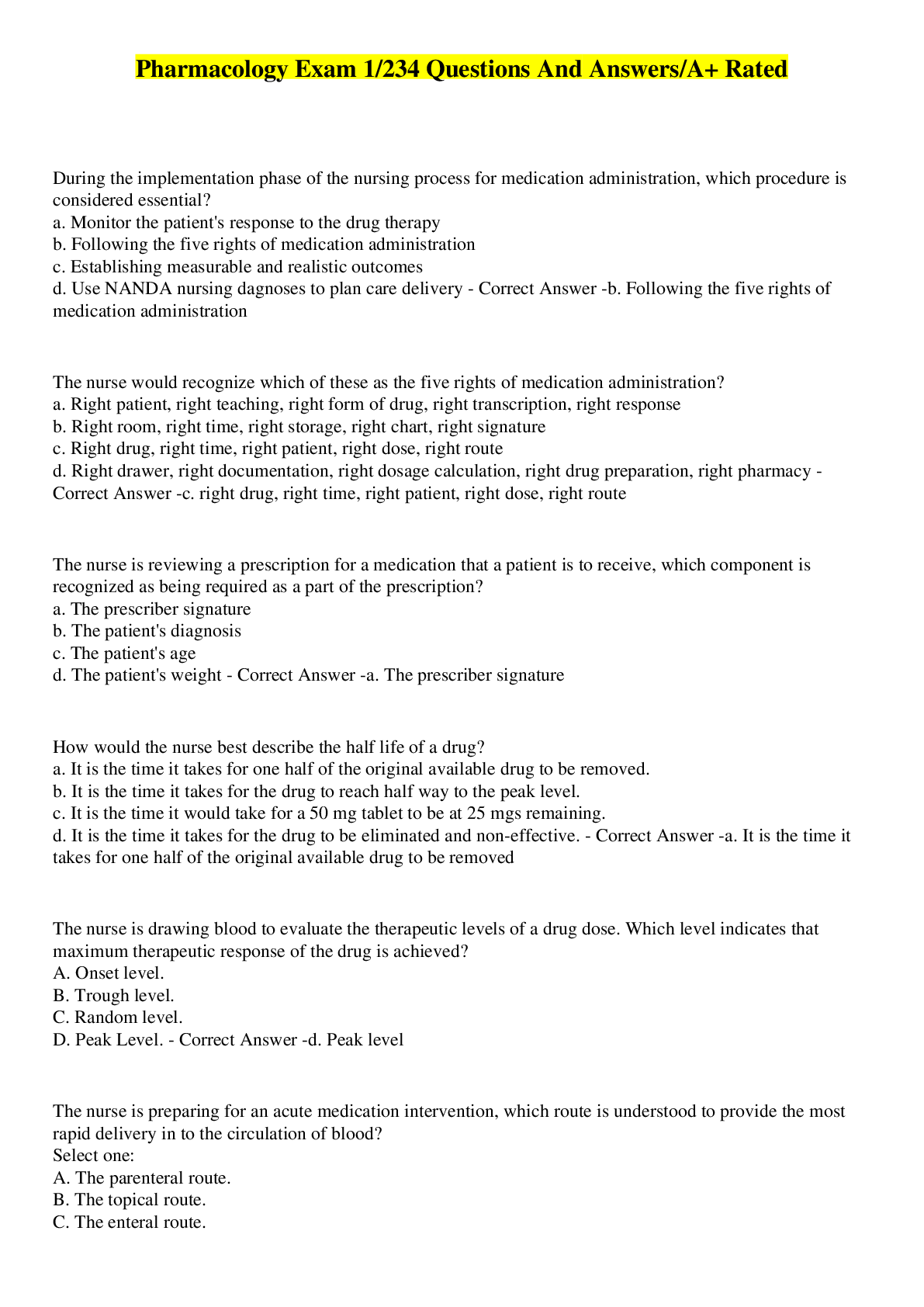
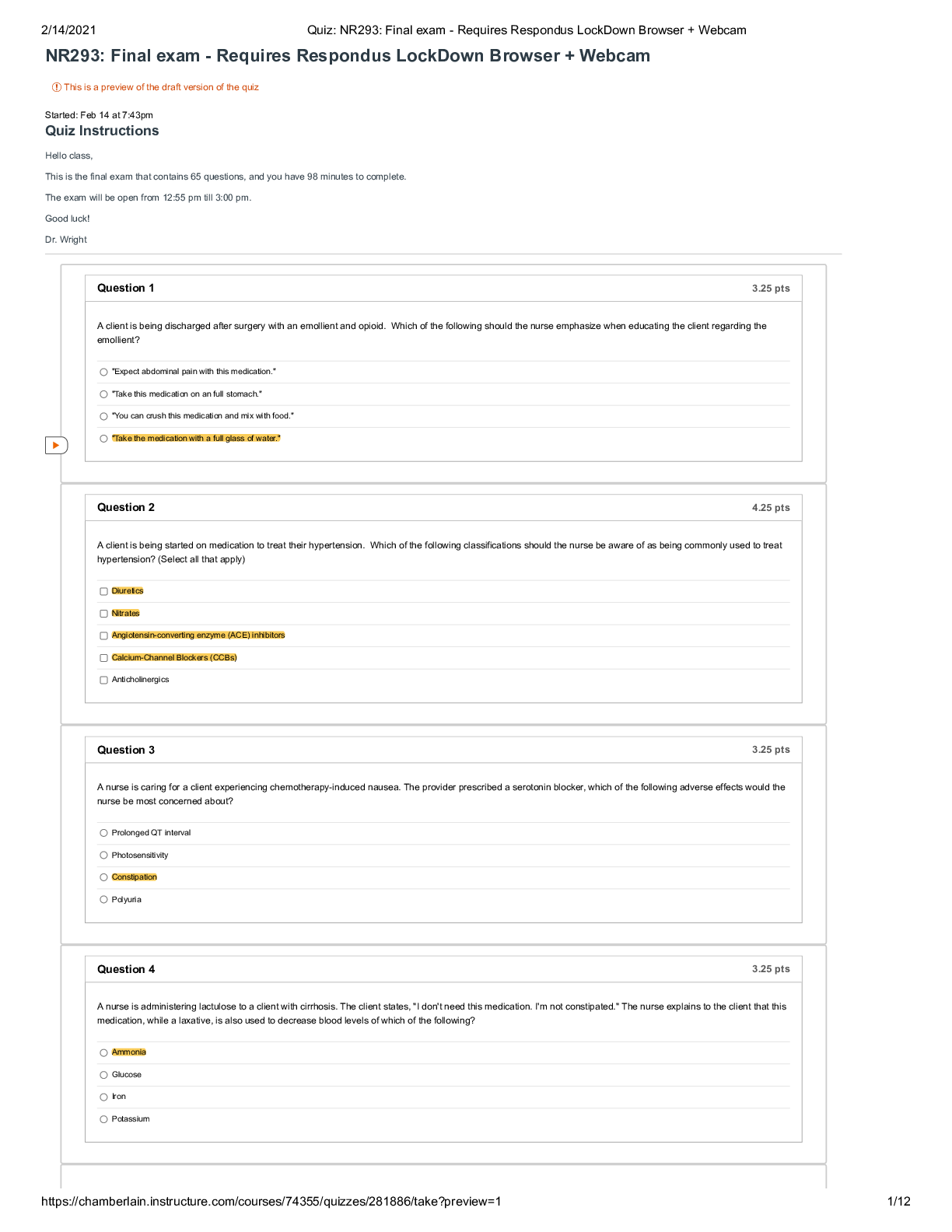
NR293 / NR 293 Pharmacology for Nursing Practice Exam 1. Chamb...

NR293 / NR 293 Pharmacology for Nursing Practice FINAL EXAM La...
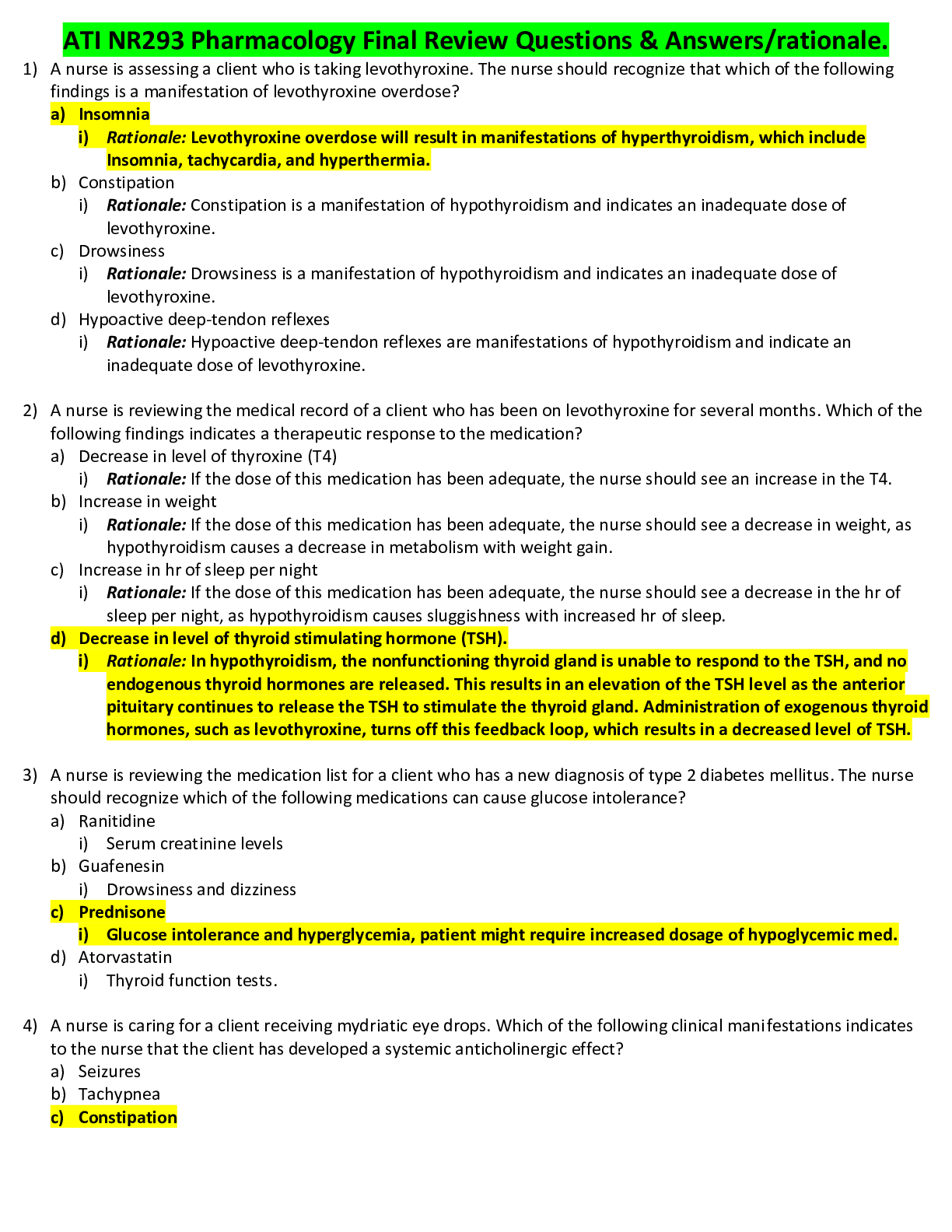
ATI NR293 Pharmacology / NR 293 ATI Pharmacology Final Review...

NR293 / NR 293: Pharmacology for Nursing Practice Exam 1 (Fall...

ATI NR293 Pharmacology Final Review 1 Questions & Answers/rati...
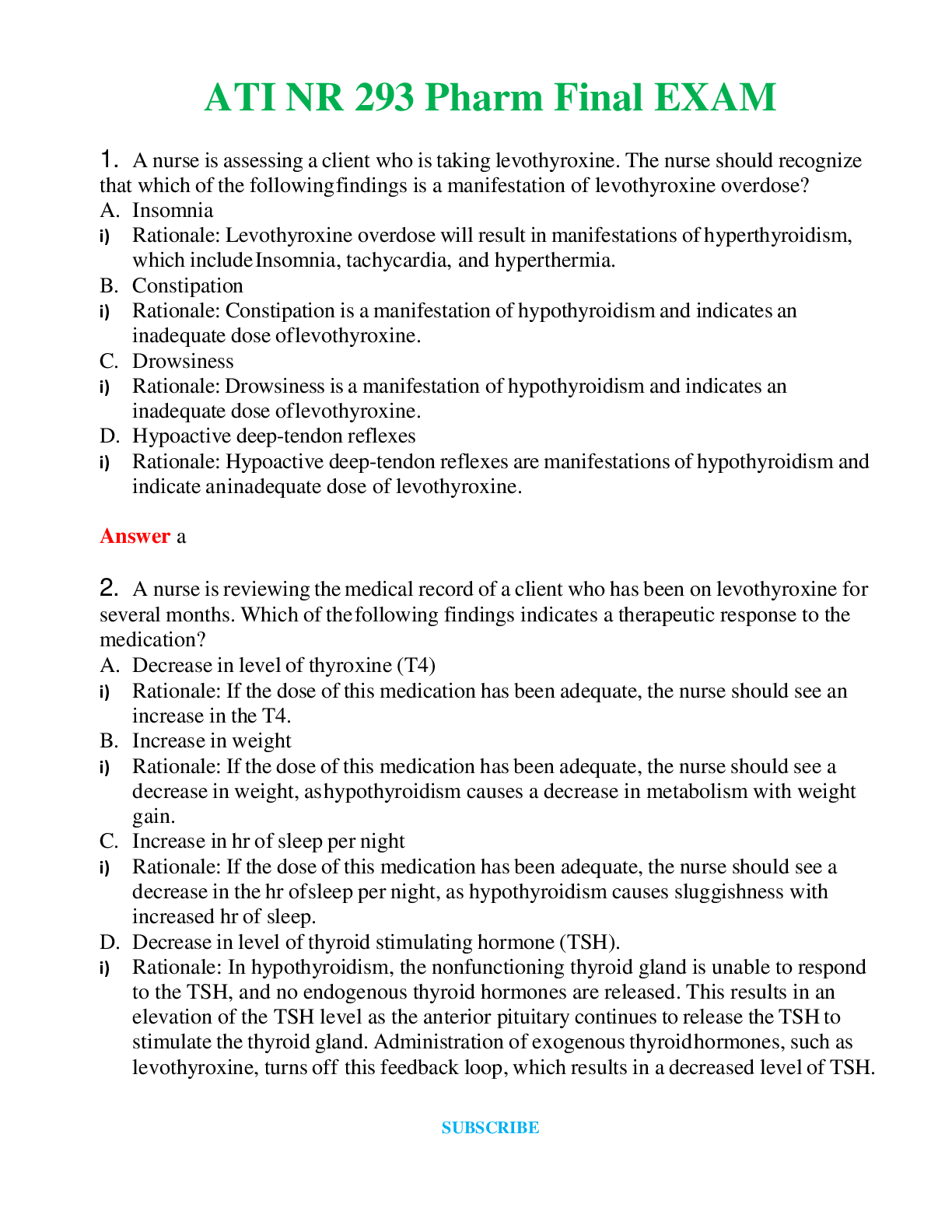
ATI NR 293 Pharm Final EXAM Questions and Answers (Verified A...
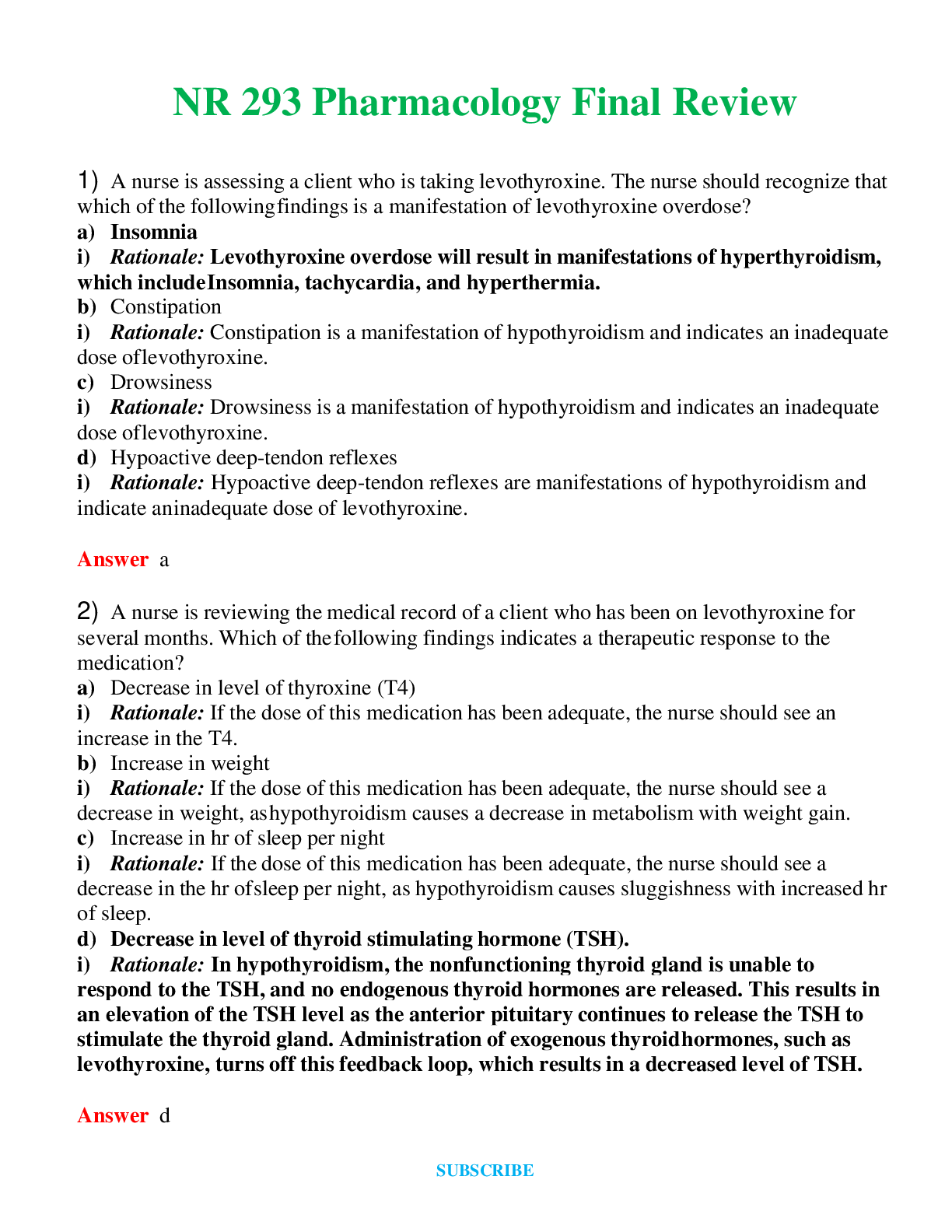

NR 293 ATI Pharmacology Final Review_2020 - Chamberlain Colleg...
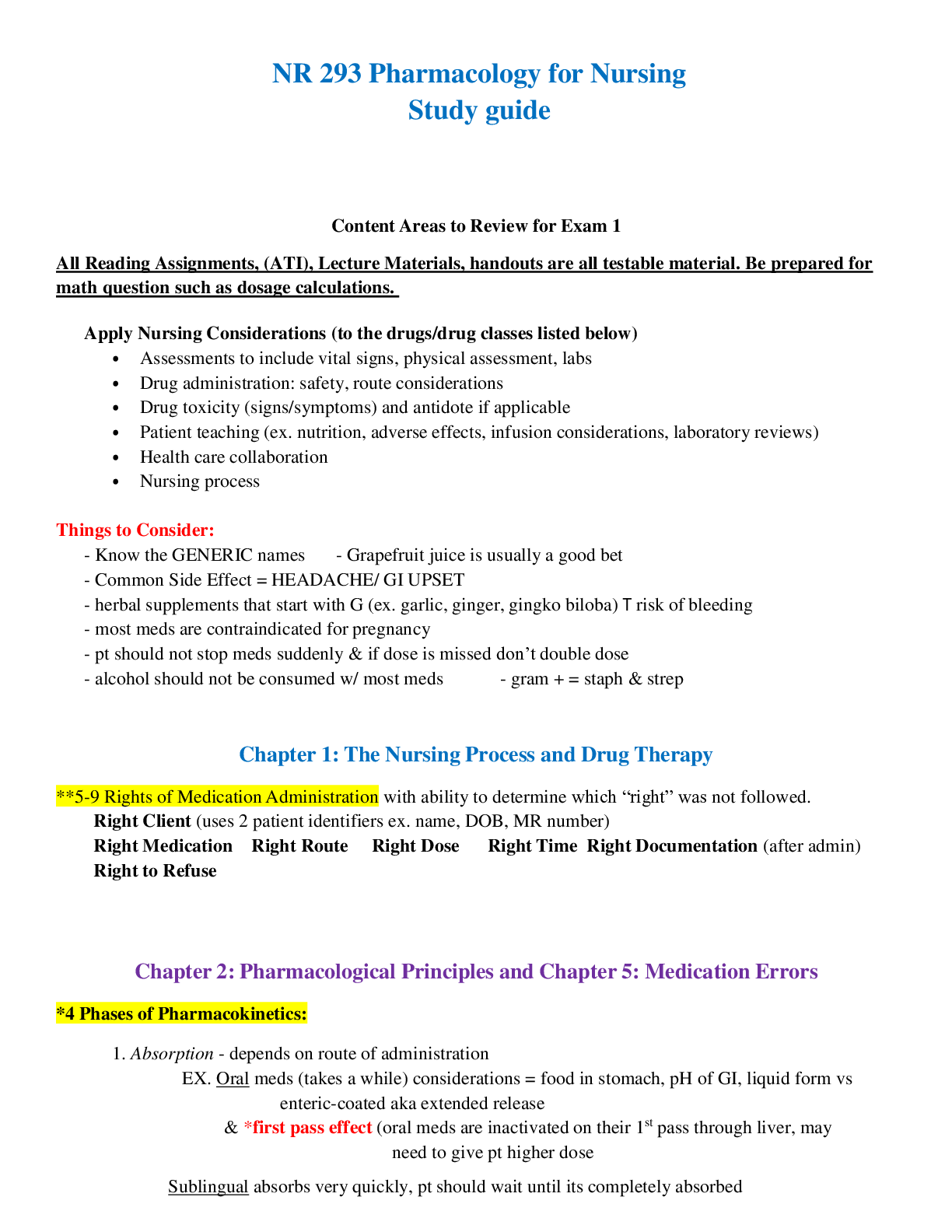
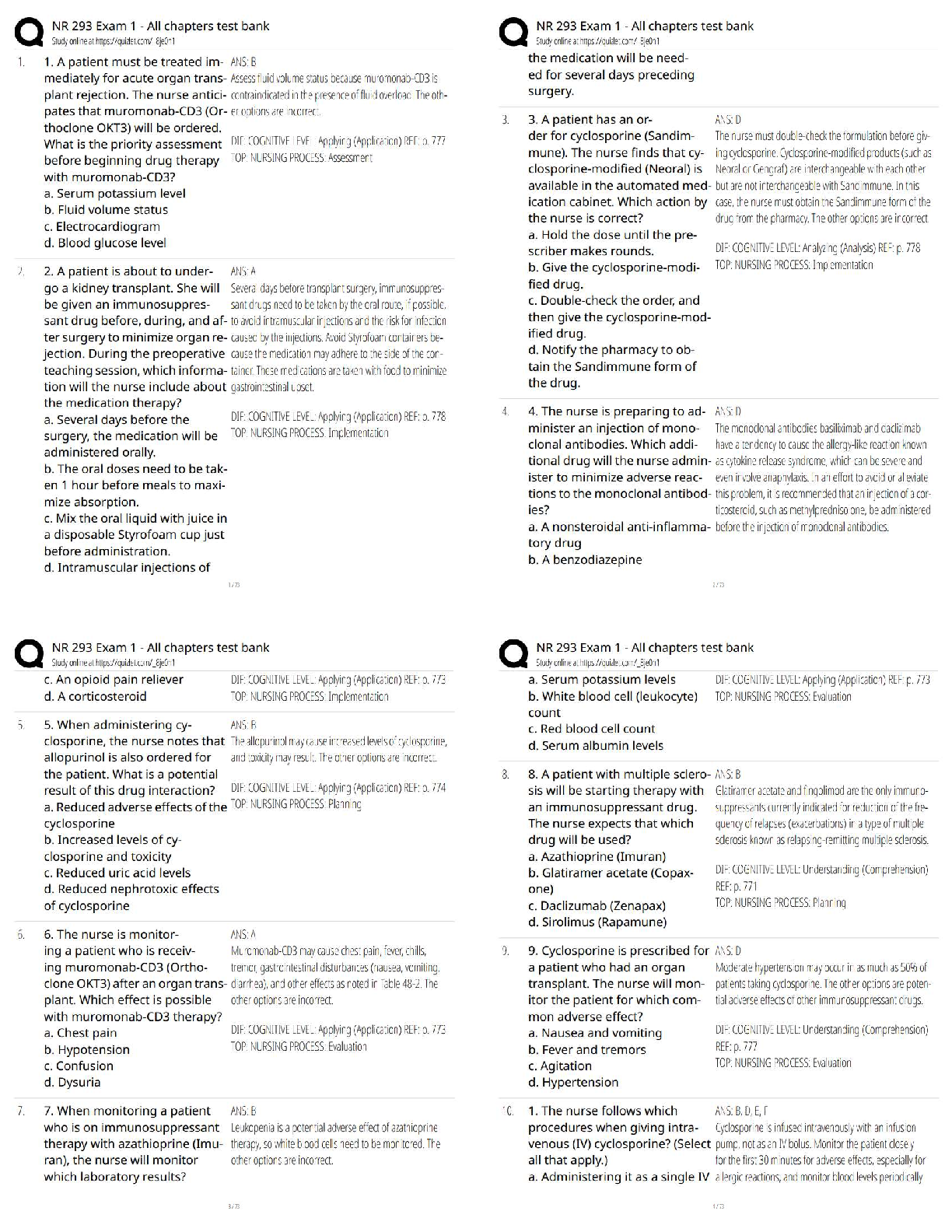

NR 293 ATI Pharmacology Final Review_2020 – Chamberlain Colleg...

NR 293 ATI Pharmacology Final Review Chamberlain College of Nu...

NR 293 ATI Pharmacology Final Review | Chamberlain College of...