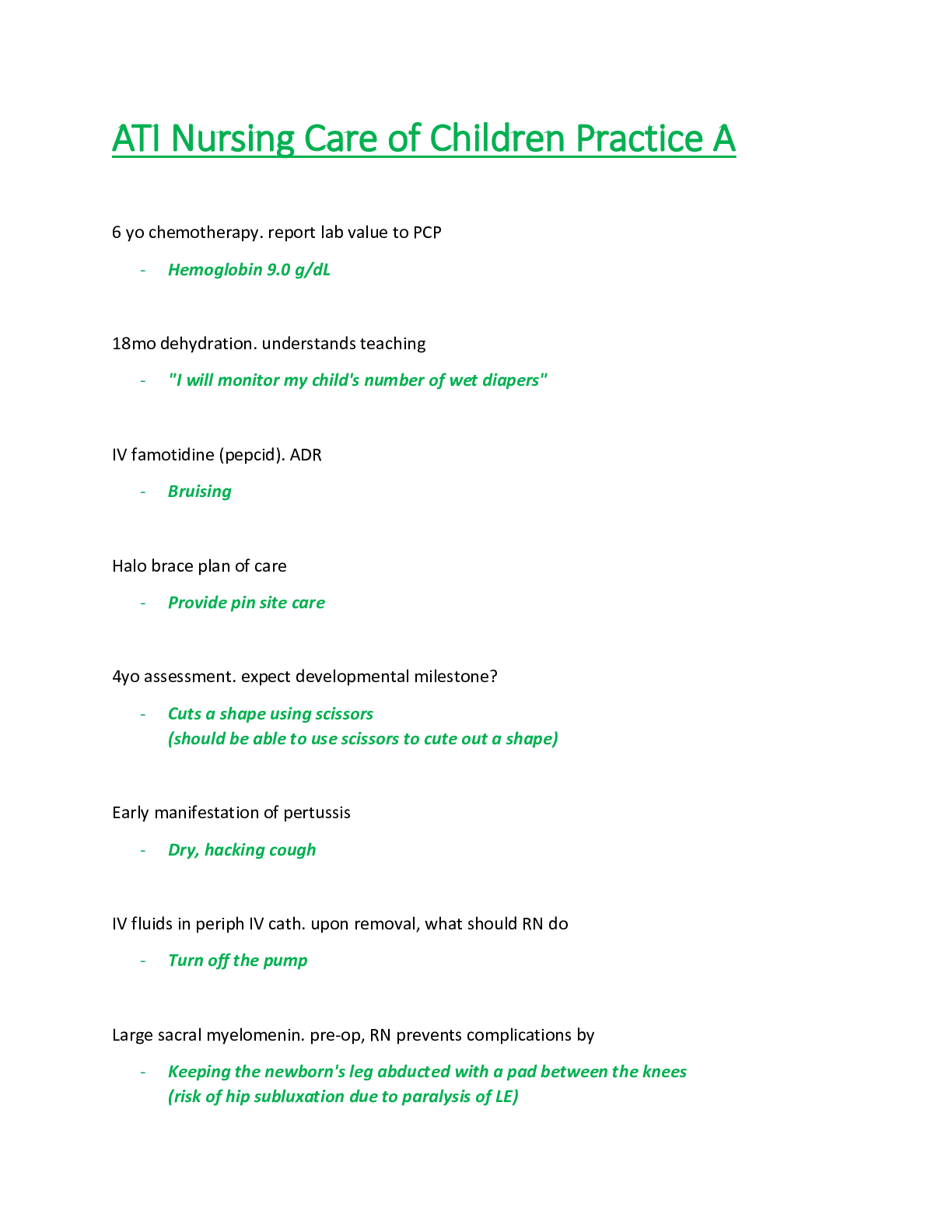
A nurse is assessing a 4-year-old child at a well-child visit. Which of the following developmental milestones should the nurse expect to observe
A. Identifies right from left hand
B. Uses a utensil to spread butter
C
...
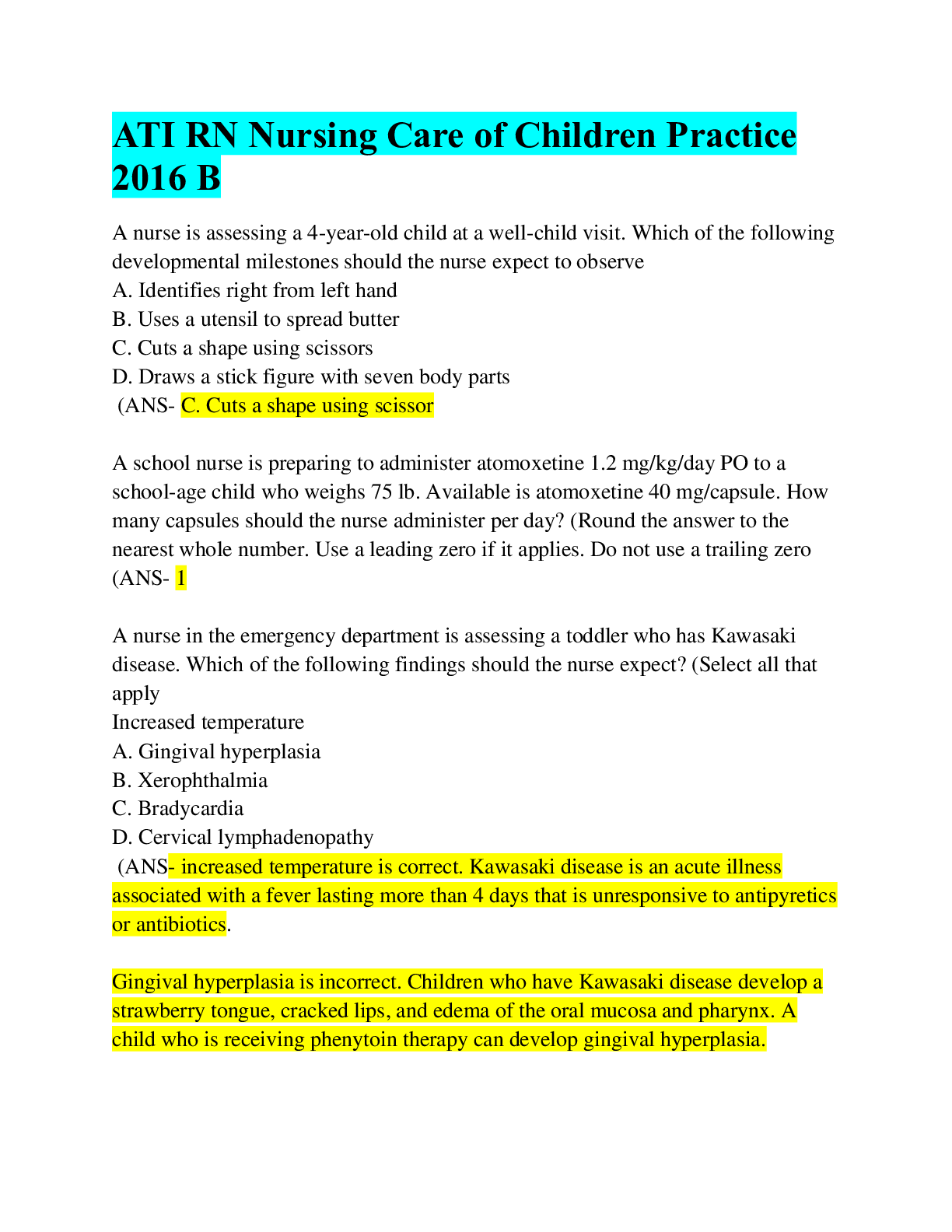
A nurse is assessing a 4-year-old child at a well-child visit. Which of the following developmental milestones should the nurse expect to observe
A. Identifies right from left hand
B. Uses a utensil to spread butter
C. Cuts a shape using scissors
D. Draws a stick figure with seven body parts
(ANS- C. Cuts a shape using scissor
A school nurse is preparing to administer atomoxetine 1.2 mg/kg/day PO to a school-age child who weighs 75 lb. Available is atomoxetine 40 mg/capsule. How many capsules should the nurse administer per day? (Round the answer to the nearest whole number. Use a leading zero if it applies. Do not use a trailing zero (ANS- 1
A nurse in the emergency department is assessing a toddler who has Kawasaki disease. Which of the following findings should the nurse expect? (Select all that apply
Increased temperature
A. Gingival hyperplasia
B. Xerophthalmia
C. Bradycardia
D. Cervical lymphadenopathy
(ANS- increased temperature is correct. Kawasaki disease is an acute illness associated with a fever lasting more than 4 days that is unresponsive to antipyretics or antibiotics.
Gingival hyperplasia is incorrect. Children who have Kawasaki disease develop a strawberry tongue, cracked lips, and edema of the oral mucosa and pharynx. A child who is receiving phenytoin therapy can develop gingival hyperplasia.
Xerophthalmia is correct. Ophthalmic manifestations of Kawasaki disease include reddening of the conjunctiva and dryness of the eyes, or xerophthalmia.
Bradycardia is incorrect. Kawasaki disease is an infection that affects the vascular system, including the heart. The nurse should expect the child to be tachycardic with a gallop rhythm. Long term effects of Kawasaki disease include the development of coronary artery aneurysms or myocardial infarction.
Cervical lymphadenopathy is correct. The child who has Kawasaki disease may develop enlarged cervical nodes on one side of the neck that are nontender and greater than 1.5 cm in size.
A nurse is teaching a school-age child who has a new diagnosis of type 1 diabetes mellitus. The nurse should identify which of the following statements by the child as understanding the teaching
A. "I will puncture the pad of my finger when I am testing my blood glucose."
B. "I will give myself a shot of regular insulin 30 minutes before I eat breakfast."
C. "I will eat a snack of 5 grams of carbohydrates if my blood glucose is low."
D. I will decrease the amount of fluids I drink when I am sick."
(ANS- B. I will give myself a shot of regular insulin 30 minutes before I eat breakfast
[Show More]