NR-507 Week 4 Midterm Study Guide (Variant 1)
Pulmonary
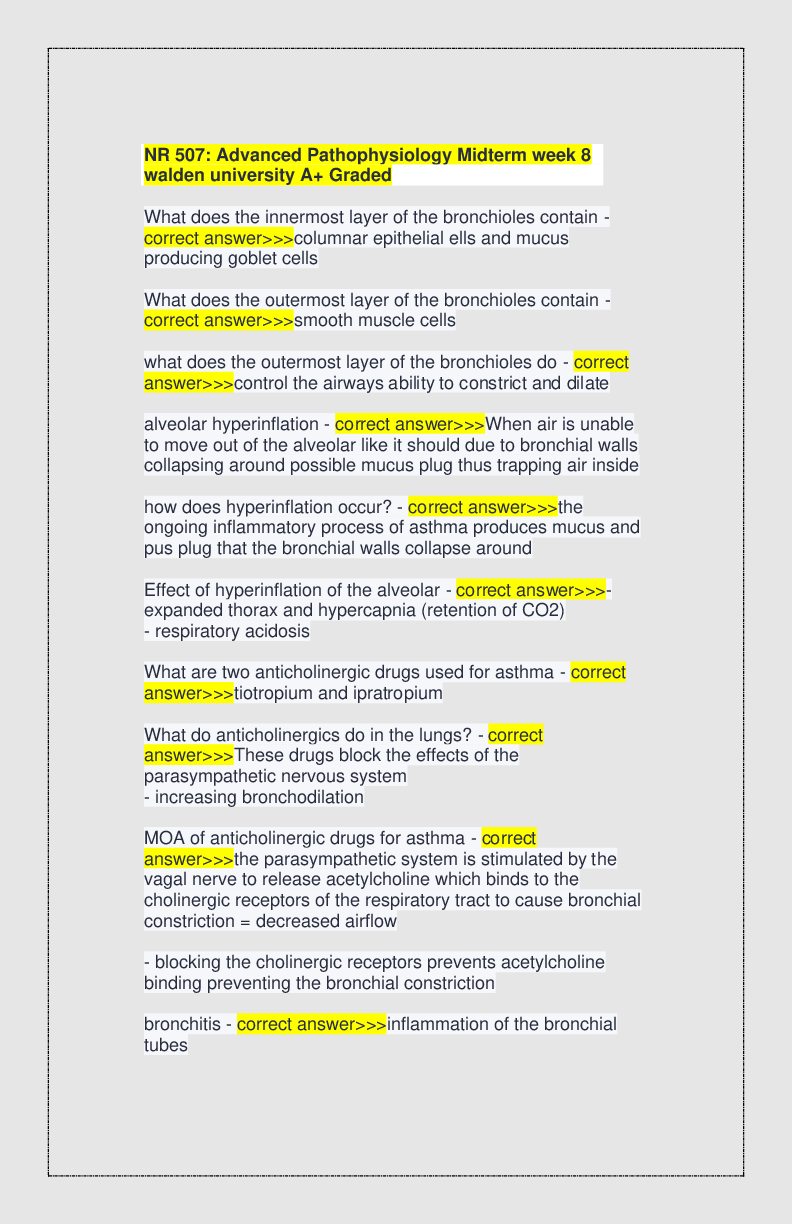
Concepts of anticholinergic drug and asthma:
Bronchitis & associated pathogenesis:
Chronic bronchitis and related acid/base disturbance:
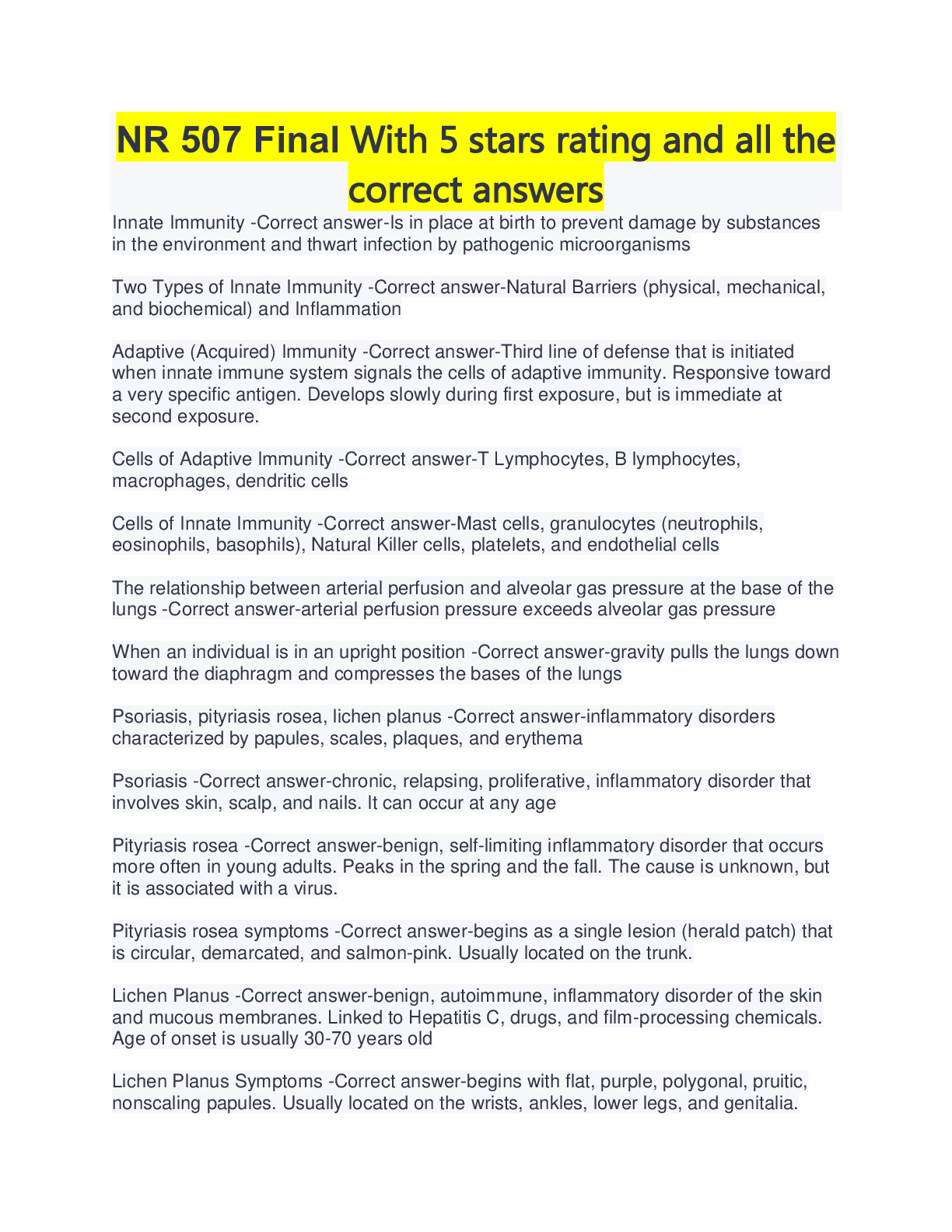
Perfusion:
Blood fl
...
NR-507 Week 4 Midterm Study Guide (Variant 1)
Pulmonary
Concepts of anticholinergic drug and asthma:
Bronchitis & associated pathogenesis:
Chronic bronchitis and related acid/base disturbance:
Perfusion:
Blood flow between the heart and lungs in chronic bronchitis:
Asthma signs and symptoms:
Bronchioles in asthma:
Alveolar hyperinflation with asthma:
Polycythemia Vera:
Mechanism of action of anticholinergic drugs to treat asthma:
Cardiovascular:
Review concepts of Cardiac Output:
Concepts of cardiac contractility:
Preload and Afterload Concepts:
Systole and Diastole:
Heart valves: When they open and close
The production of heart sounds S1 and S2 :
Stenosis of the heart valves and effects;
Stroke Volume:
Cor Pulmonale:
Heart Failure:
Hypertension: Patho:
Calcium binding and troponin:
ATP IS REQUIRED TO FACILLITATE THIS INTERACTION
Hematology:
Hematopoiesis
Risk factors for developing any type of anemia:
Iron Deficiency Anemia:
Erythrocyte function and lifespan:
Sickle cell anemia:
Thalassemia:
Pernicious Anemia:
Hemolytic Anemia:
Erythropoetin:
Function of hemoglobin:
Development of anemia due to gastrectomy:
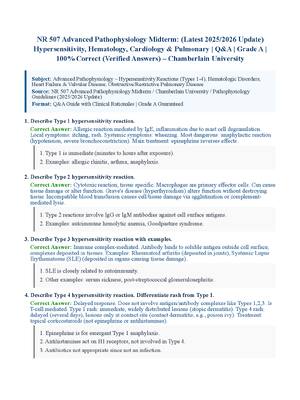
Effect of being transfused with the incorrect blood type:
Genitourinary/ Renal:
Anatomy and physiology of the kidney:
Nephron damage:
Tubular reabsorption and Tubular secretion:
Conditions associated with renal failure:
Calculi blockage of the ureter:
Benign Prostatic hypertrophy:
Prerenal, intrarenal and postrenal disease and what causes it:
Glomerulonephritis:
Treatment for renal failure:
Blood hydrostatic pressure:
Kidney filtration:
Role of angiotensin converting enzyme ACE:
Role of the Macrophage:
NR 507 Week 4 Midterm Study Guide (Variant 2)
Pulmonary:
Review concepts related to anticholinergic drugs and the treatment for asthma
Bronchitis and associated pathogenesis
Chronic bronchitis and related acid/base disturbances, perfusion, blood flow between the heart and lungs
Asthma signs and symptoms
Bronchioles
Alveolar hyperinflation with asthma
Polycythemia vera
Mechanism of action of anticholinergic drugs to treat asthma
Cardiovascular:
Cardiac output
Cardiac contractility
Preload/afterload
Systole/diastole
Heart valves (when they are open and closed; the production of S1 & S2)
Stenosis of the heart valves and effects
Stroke volume
Cor Pulmonale
Heart failure and physiologic processes that lead to heart failure symptoms
Hypertension
Calcium binding and troponin
Hematology:
Hematopoiesis
Risk factors and causes for developing any type of anemia
Iron-deficiency anemia
Erythrocyte function and lifespan
Sickle-cell anemia
Thalassemia
Pernicious anemia
Hemolytic anemia
Erythropoietin
Functions of hemoglobin
Development of anemia due to gastrectomy
Effects of being transfused with incorrect blood type
Genitourinary/Renal:
Anatomy and physiology of the kidney
Nephron damage
Tubular reabsorption
Tubular Secretion
Conditions associated with renal failure
Calculi blockage of ureter
Benign prostatic hypertrophy
Prerenal, intrarenal, and postrenal disease and what causes them
Glomerulonephritis
Treatment of renal failure
Blood hydrostatic pressure
Kidney filtration
Role of angiotensin converting enzyme (ACE)
Immunity:
Role of macrophages
[Show More]