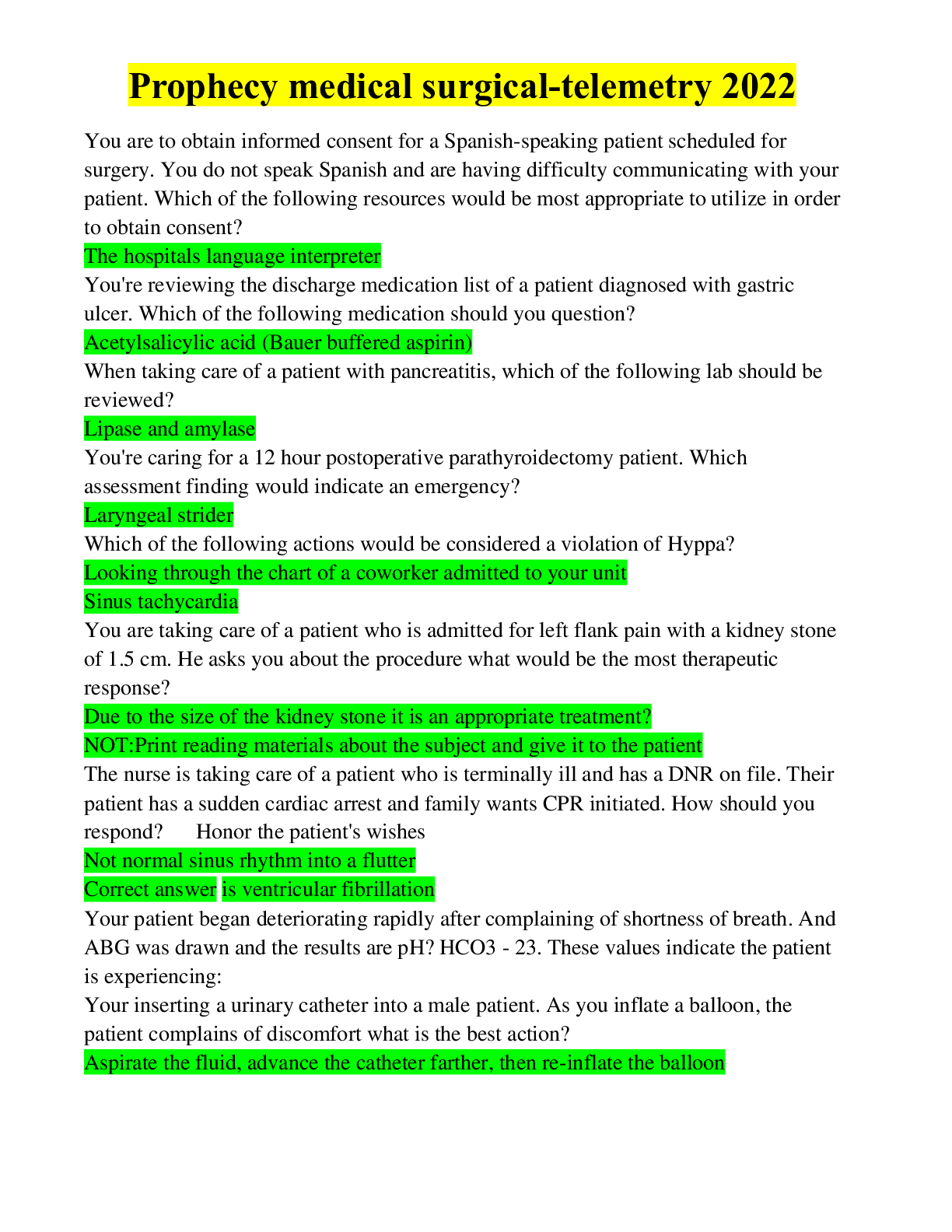
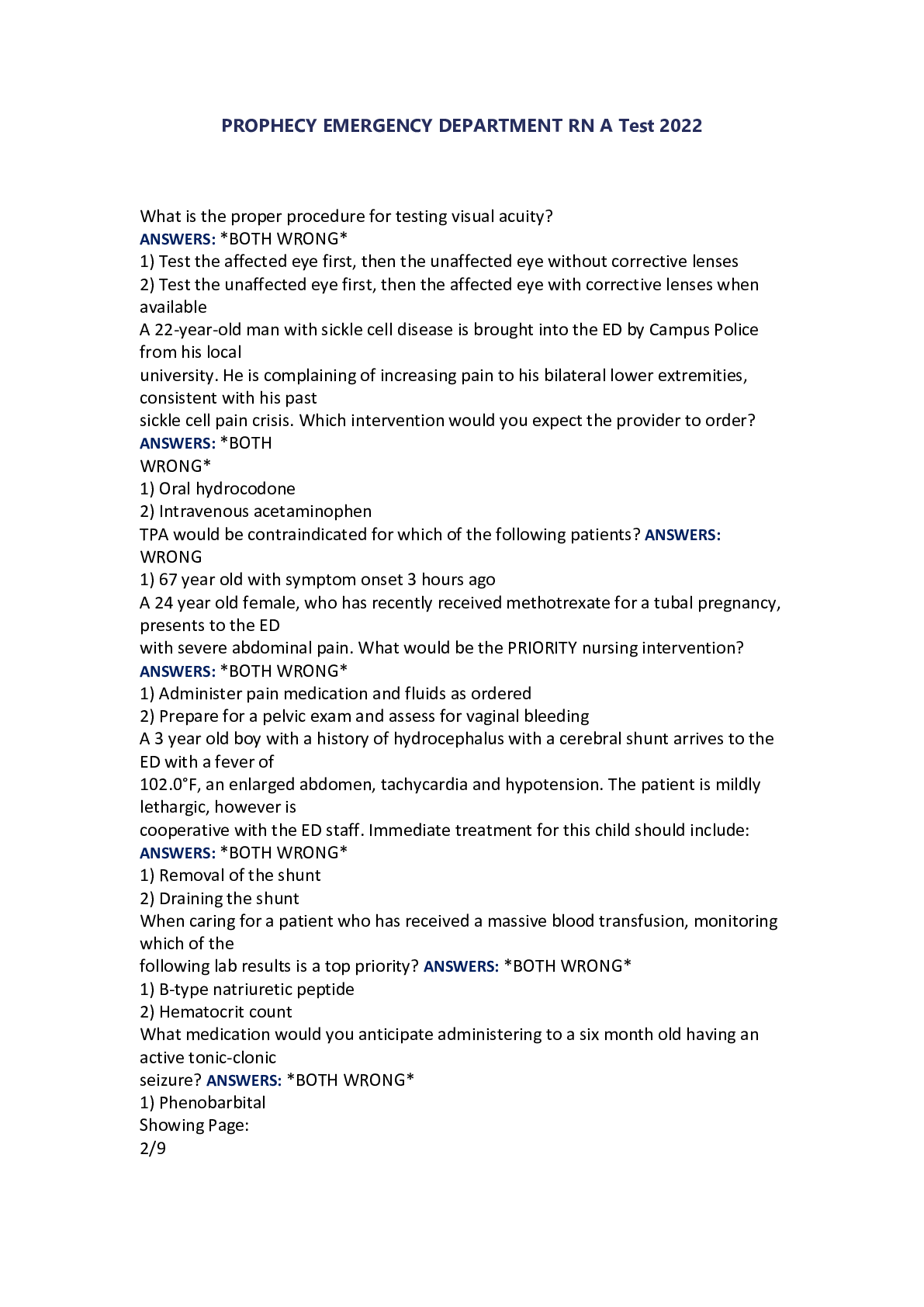
NUR 2063 Pathophysiology Exam 1 2022
Document Content and Description Below
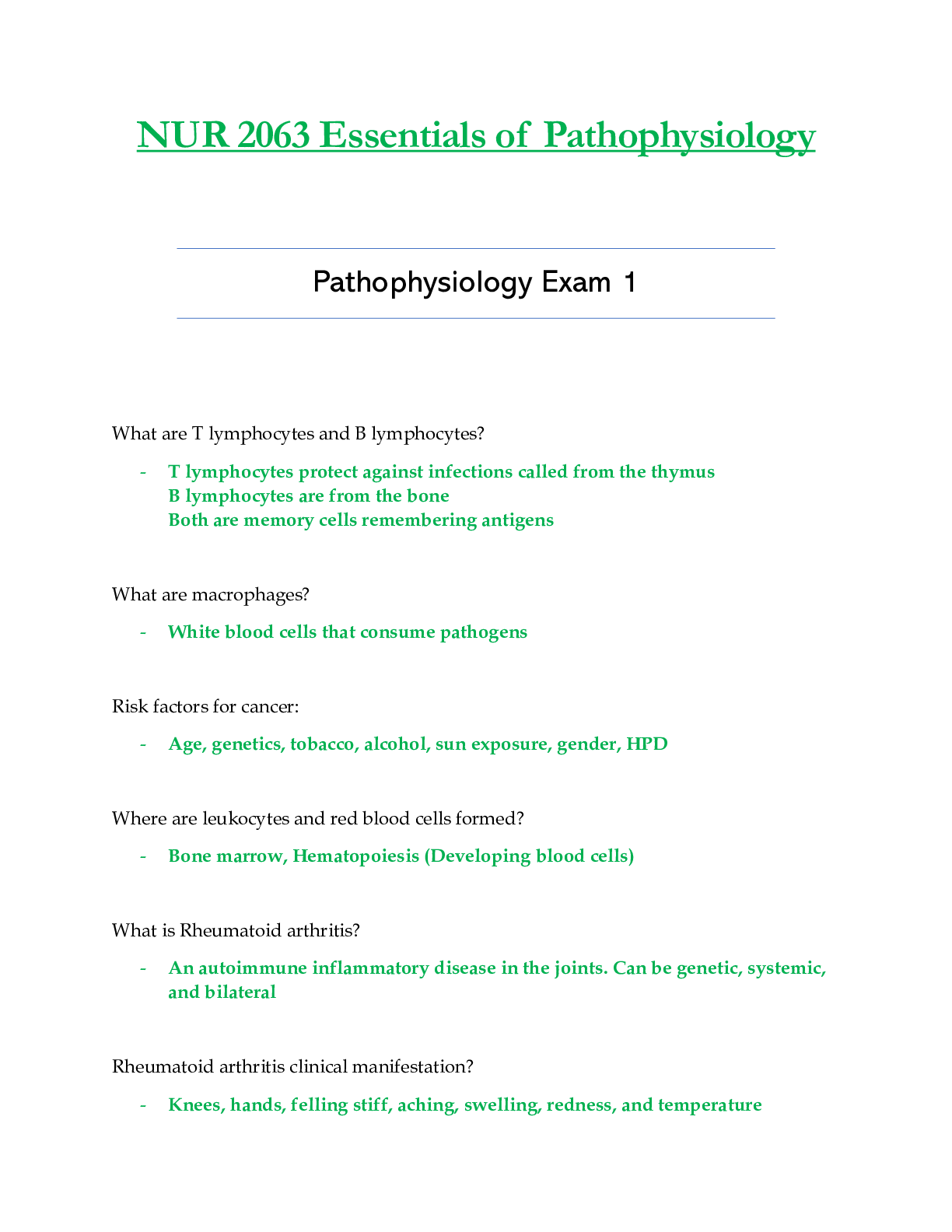
NUR 2063 Pathophysiology Exam 1 2022-What is Pathophysiology - is the study of what happens when the normal anatomy and physiology go wrong, causing disorder and disease process of the human body. What 4 things does path
...
[Show More]
Last updated: 3 years ago
Preview 1 out of 24 pages
Instant download

Buy this Document to get the Full Access Instantly
Provided by Students Who Aced it
We Verify Document Content to Gurantee Accuracy
Reviews( 0 )
Document information
Connected school, study & course
About the document
Uploaded On
Apr 11, 2022
Number of pages
24
Written in
All

Additional information
This document has been written for:
Uploaded
Apr 11, 2022
Downloads
0
Views
77
Topic Tags
Recommended For You
Get more on EXAM »
$11
35 Pages
NUR 2063 / NUR2063: Essentials of Pathophysiology Exam 1 (Wint...
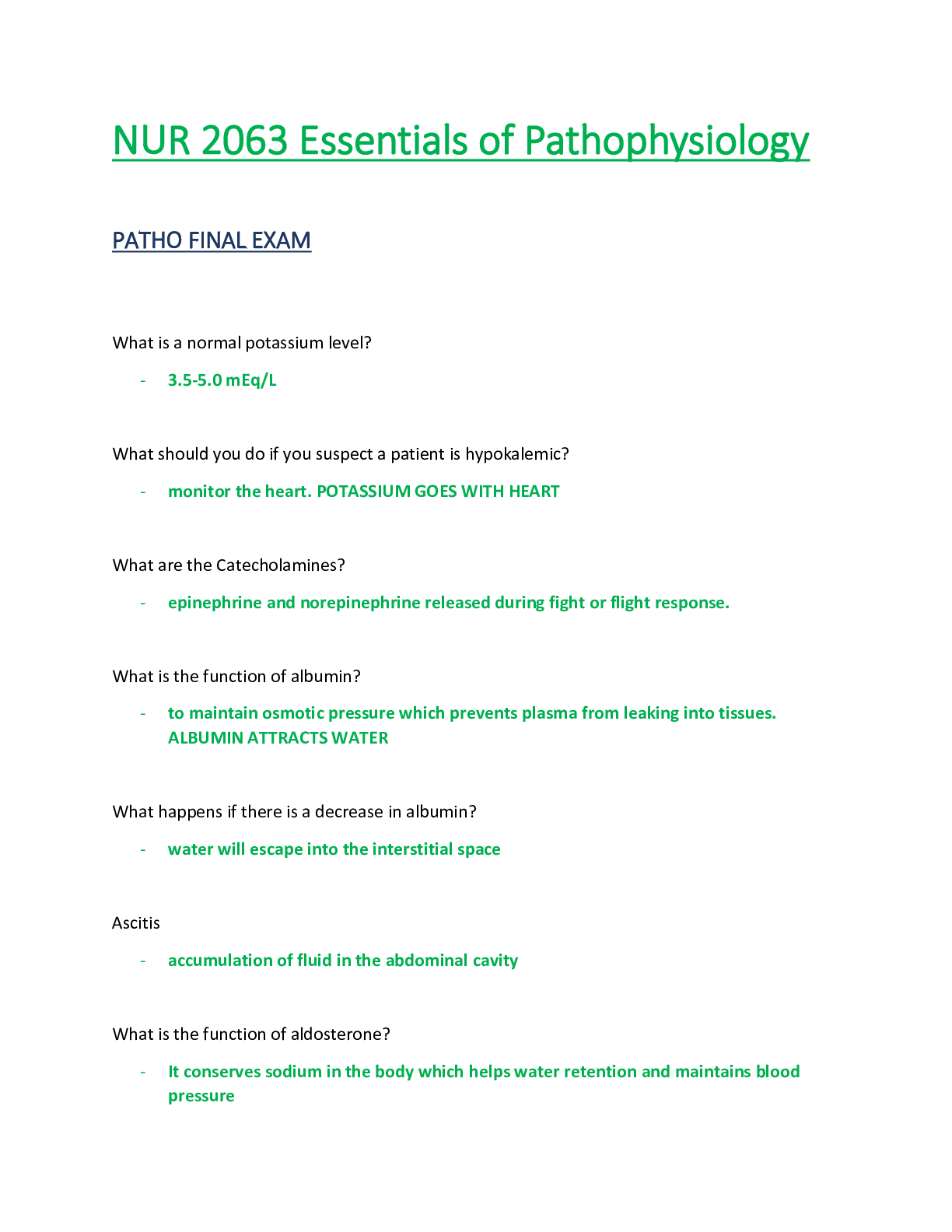
$10
20 Pages
NUR 2063 / NUR2063 Essentials of Pathophysiology Final Exam. R...

$8.5
11 Pages
NUR 2063 / NUR2063 Exam 1 Key Concepts Weeks 1 - 3 (Latest Upd...

$8
23 Pages
NUR 2063 / NUR2063 Exam 2 (Latest Update): Essentials of Patho...
$19.5
23 Pages
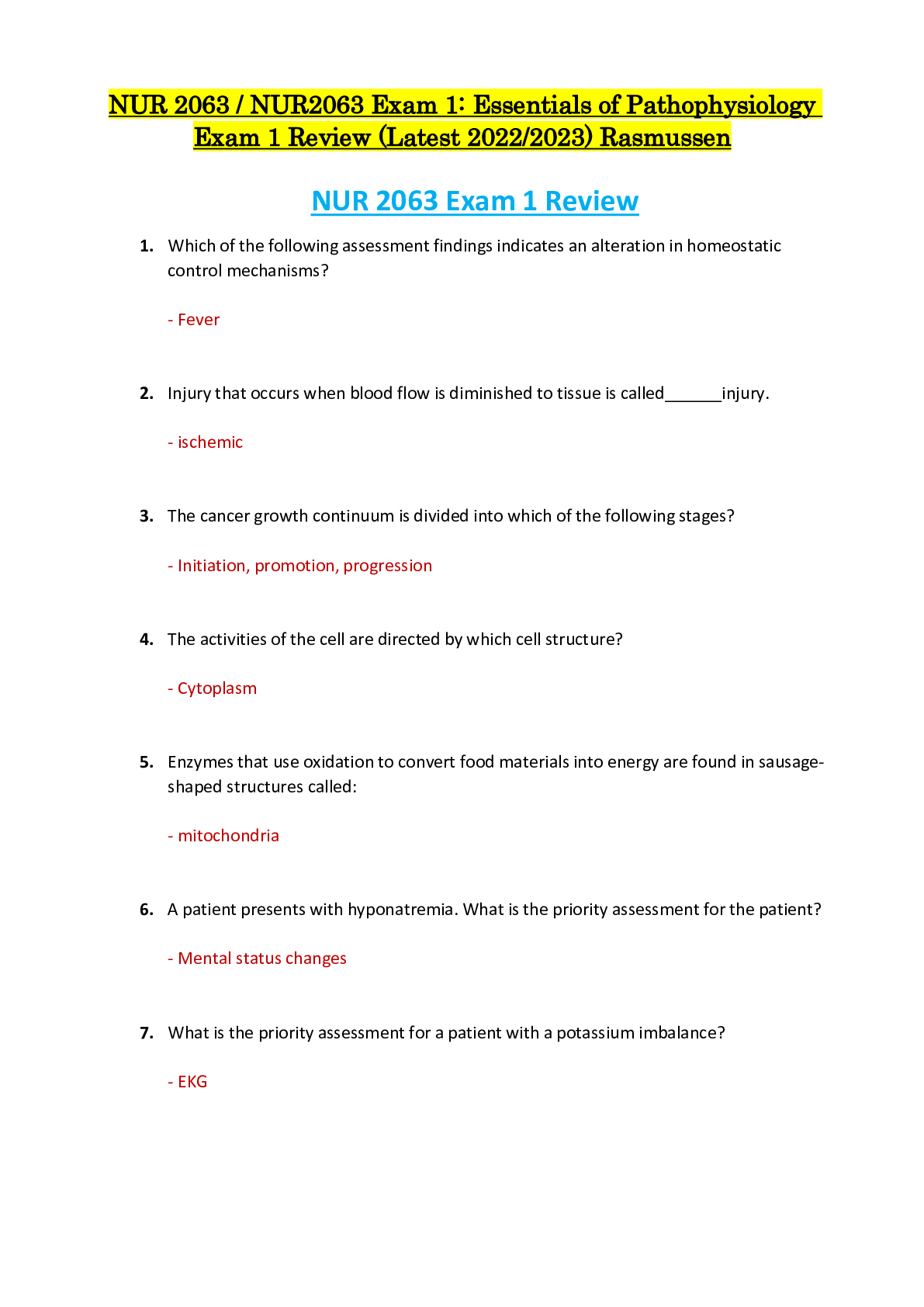
NUR 2063 Essentials of Pathophysiology Exam 1 Rasmussen
$20.5
52 Pages
NUR 2063 Essentials of Pathophysiology Final Exam – Rasmussen...
$20
22 Pages
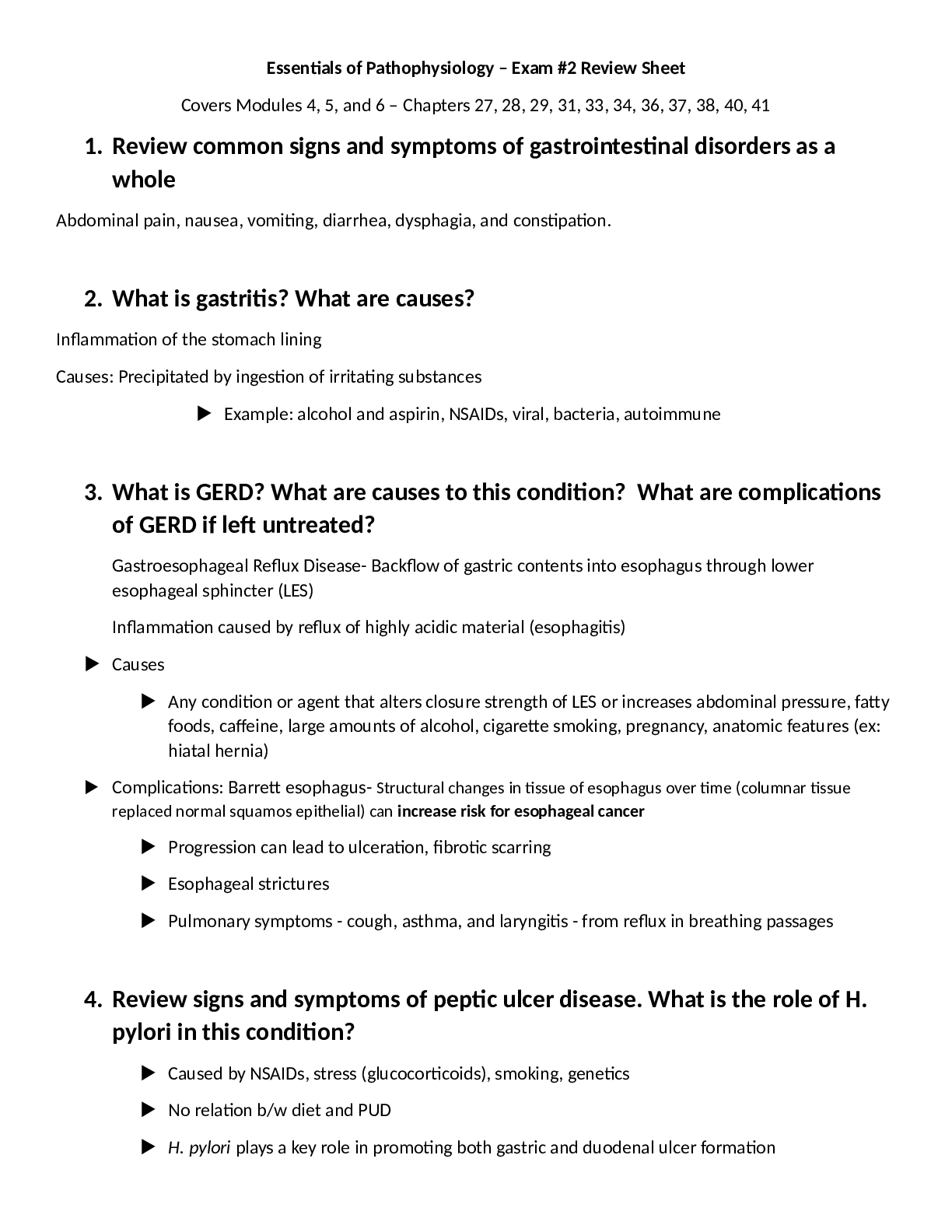
NUR 2063 Essentials of Pathophysiology Exam #2 Review SheetCo...
$13
22 Pages
NUR 2063 Essentials of Pathophysiology - Exam 2 review sheet.
$10
14 Pages
NUR2063 / NUR 2063: Essentials of Pathophysiology Exam 1 Ras...

$10.5
21 Pages
NUR2063 / NUR 2063: Essentials of Pathophysiology Exam 1 Ras...
 M21.png)
$12
52 Pages
NUR 2063 / NUR2063: Essentials of Pathophysiology Final Exam (...
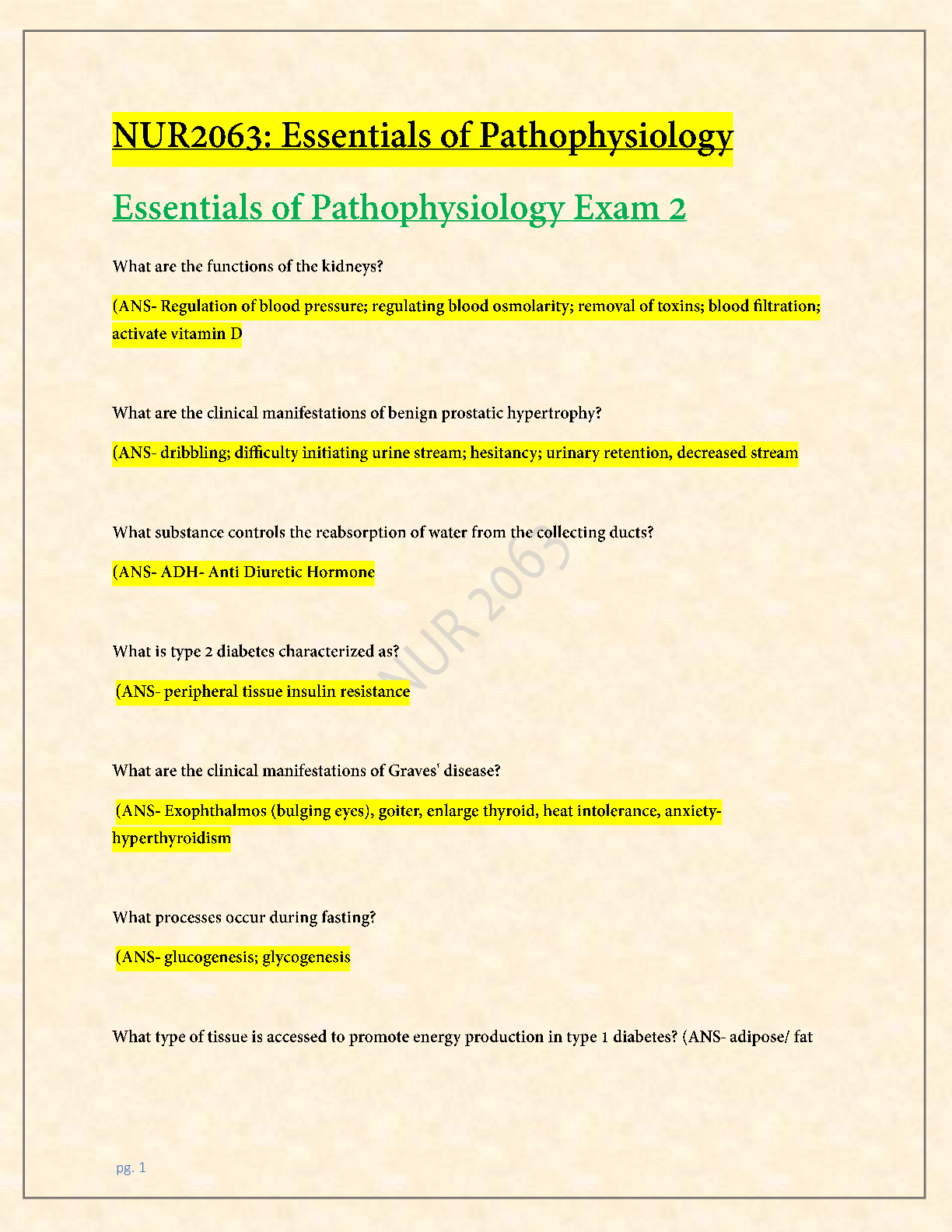
$9.5
17 Pages
NUR 2063 / NUR2063: Essentials of Pathophysiology Exam 2 (Late...
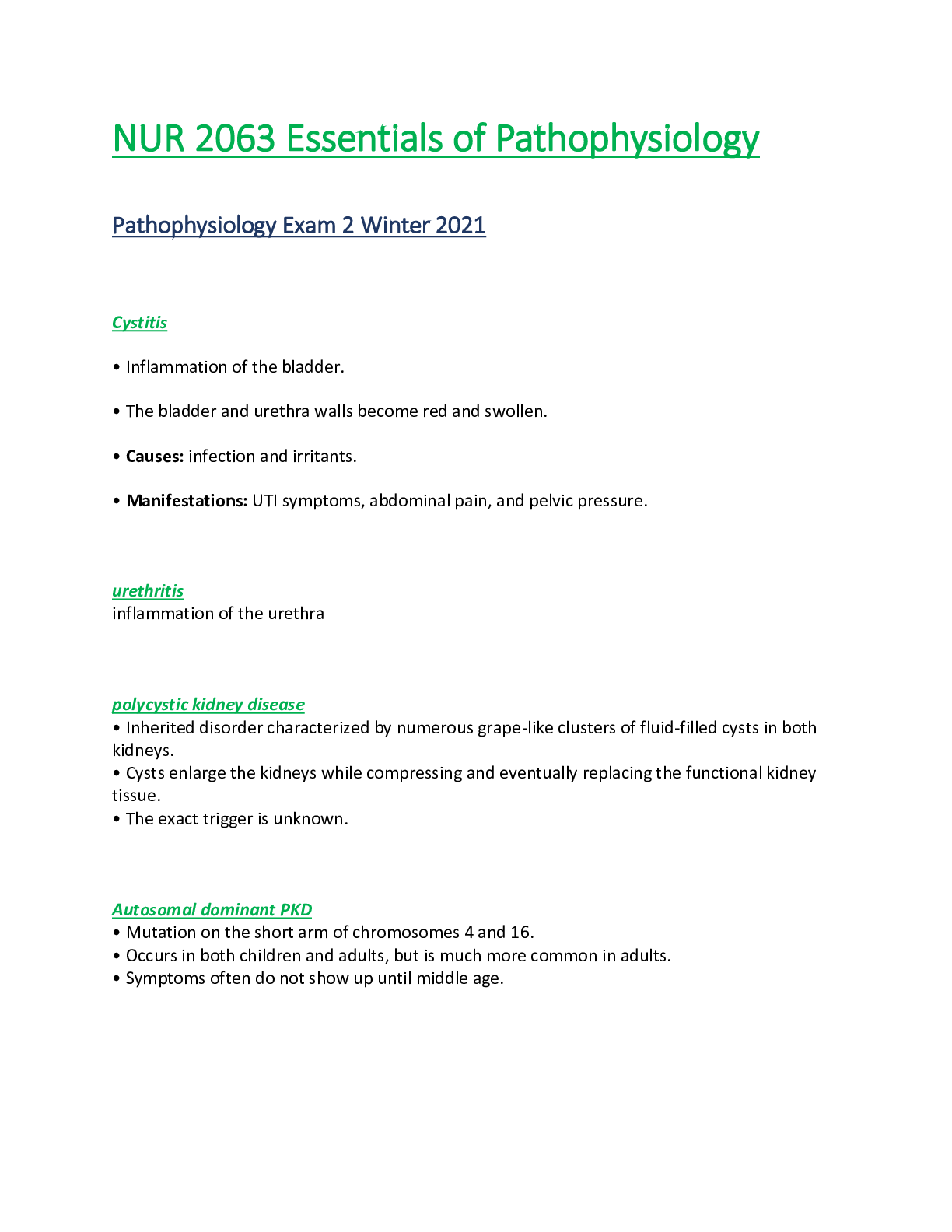
$12
33 Pages
NUR 2063 / NUR2063: Essentials of Pathophysiology Exam 2 (Wint...
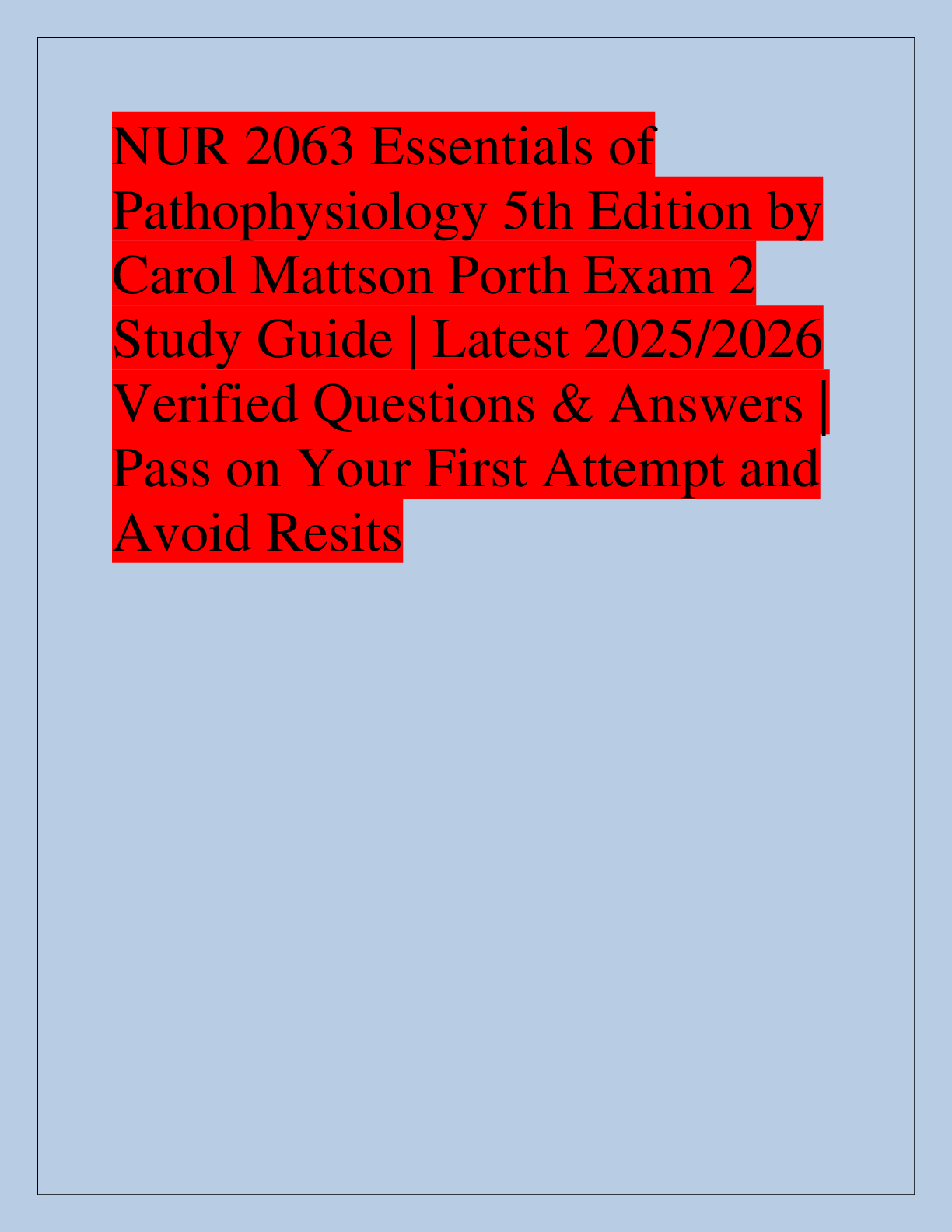
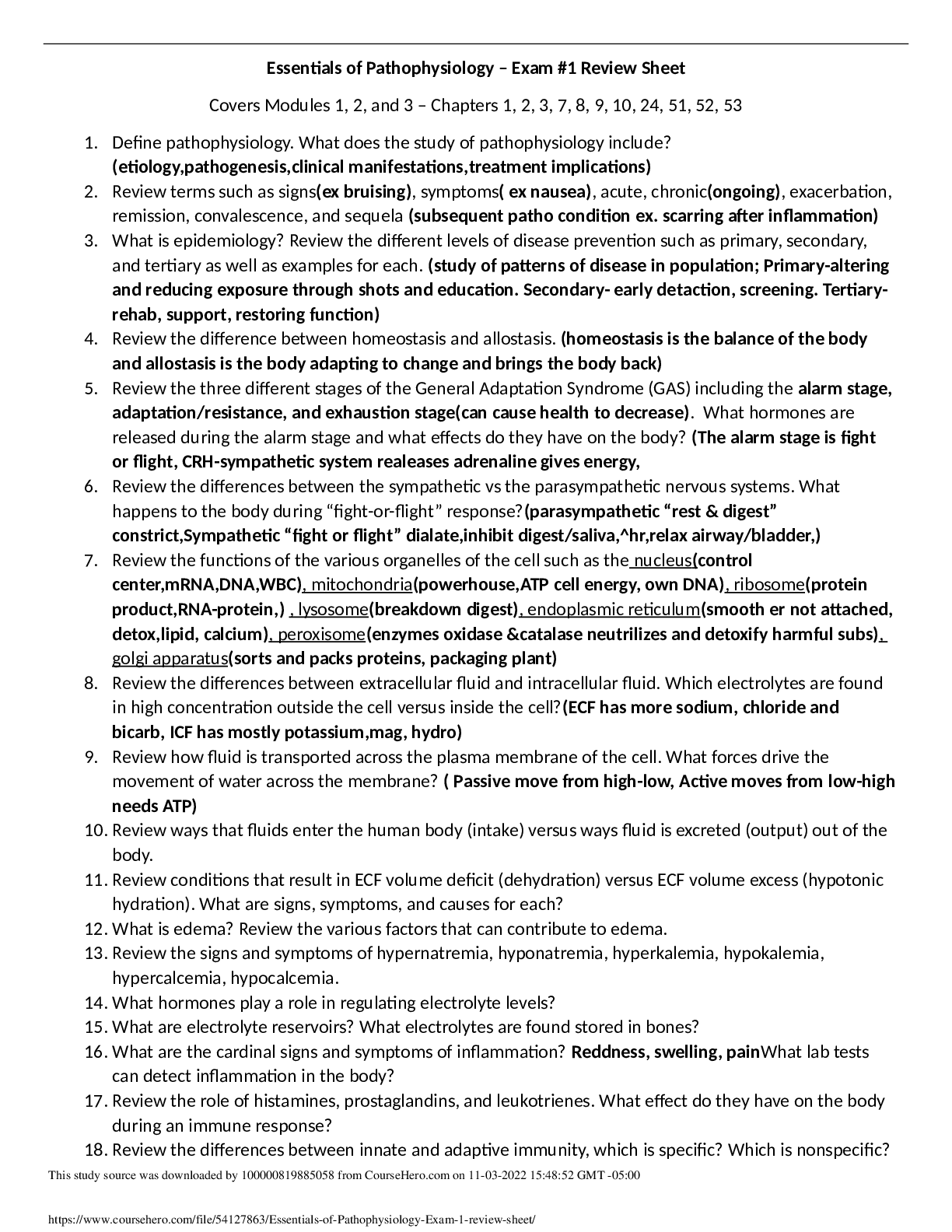
$18
2 Pages
NUR 2063 Essentials of Pathophysiology Exam #1 Study Guide Cov...

$6
7 Pages
NUR 2063 / NUR2063: Essentials of Pathophysiology Module 1 Stu...

$15.5
31 Pages
NUR2063 / NUR 2063: Essentials of Pathophysiology Application...

$9
10 Pages
NUR 2063 / NUR2063: Essentials of Pathophysiology Module 1 – 3...

$10
18 Pages
NUR 2063 / NUR2063 Final Exam Review (Latest Update): Essentia...
More related documents below

 Pediatrics Practice Exam-Answered.png)