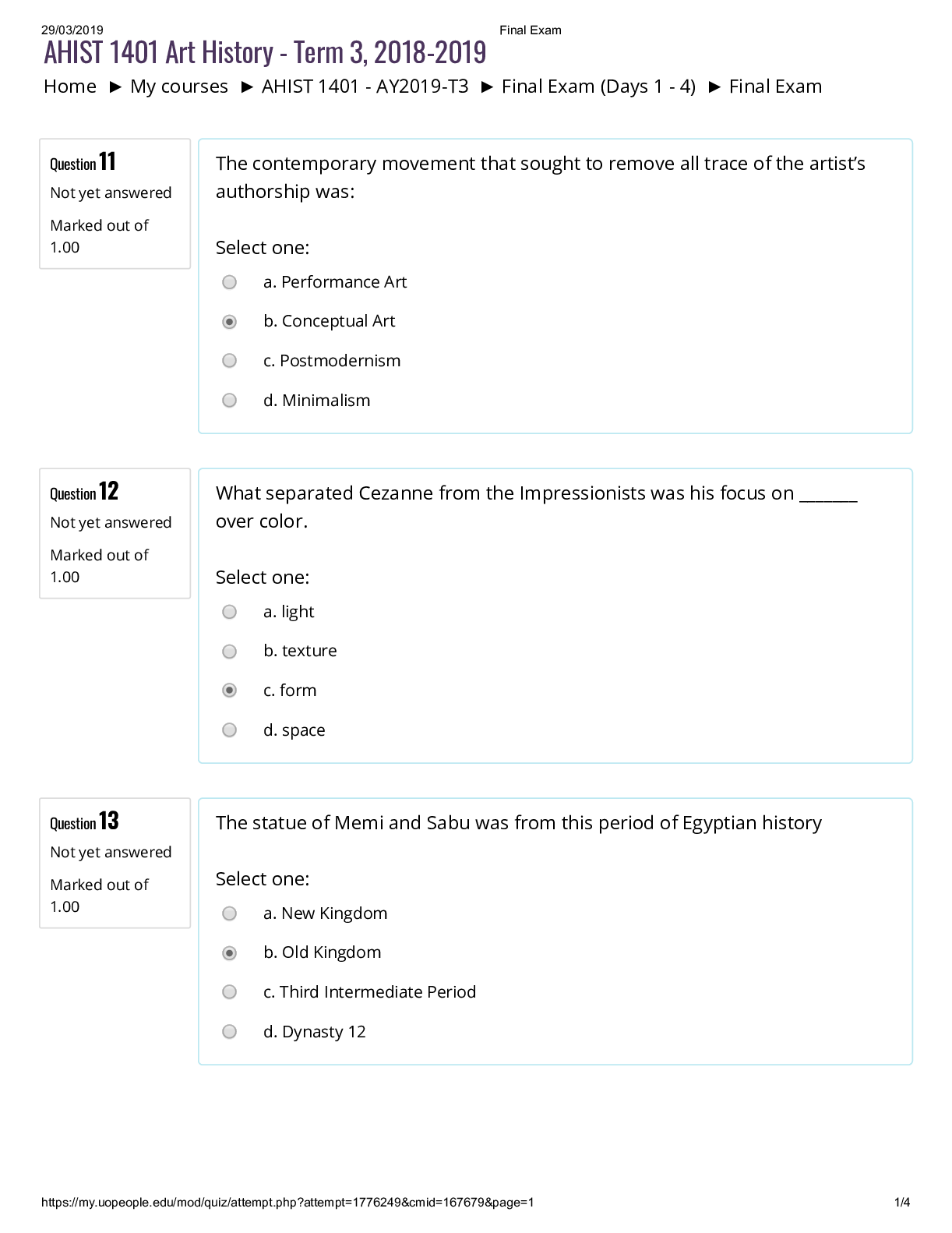
NSG6320 AGNP BOARD EXAM RESPIRATORY ASSESSMENT
Document Content and Description Below
NSG6320 AGNP BOARD EXAM RESPIRATORY ASSESSMENT
(51 QUESTIONS)
Question:
Which technique best determines whether the tissues in the chest
are air-filled, fluid-filled, or solid?
Auscultation
Palpation
Inspection
...
[Show More]
Last updated: 3 years ago
Preview 1 out of 31 pages
Instant download

Buy this Document to get the Full Access Instantly
Provided by Students Who Aced it
We Verify Document Content to Gurantee Accuracy
Reviews( 0 )
Document information
Connected school, study & course
About the document
Uploaded On
Apr 13, 2022
Number of pages
31
Written in
All

Additional information
This document has been written for:
Uploaded
Apr 13, 2022
Downloads
0
Views
111
Topic Tags
Recommended For You
Get more on EXAM »

$15
33 Pages
NSG 6320 AGNP BOARD EXAM QUESTIONS and ANSWERS Neurology Presc...
$15
31 Pages
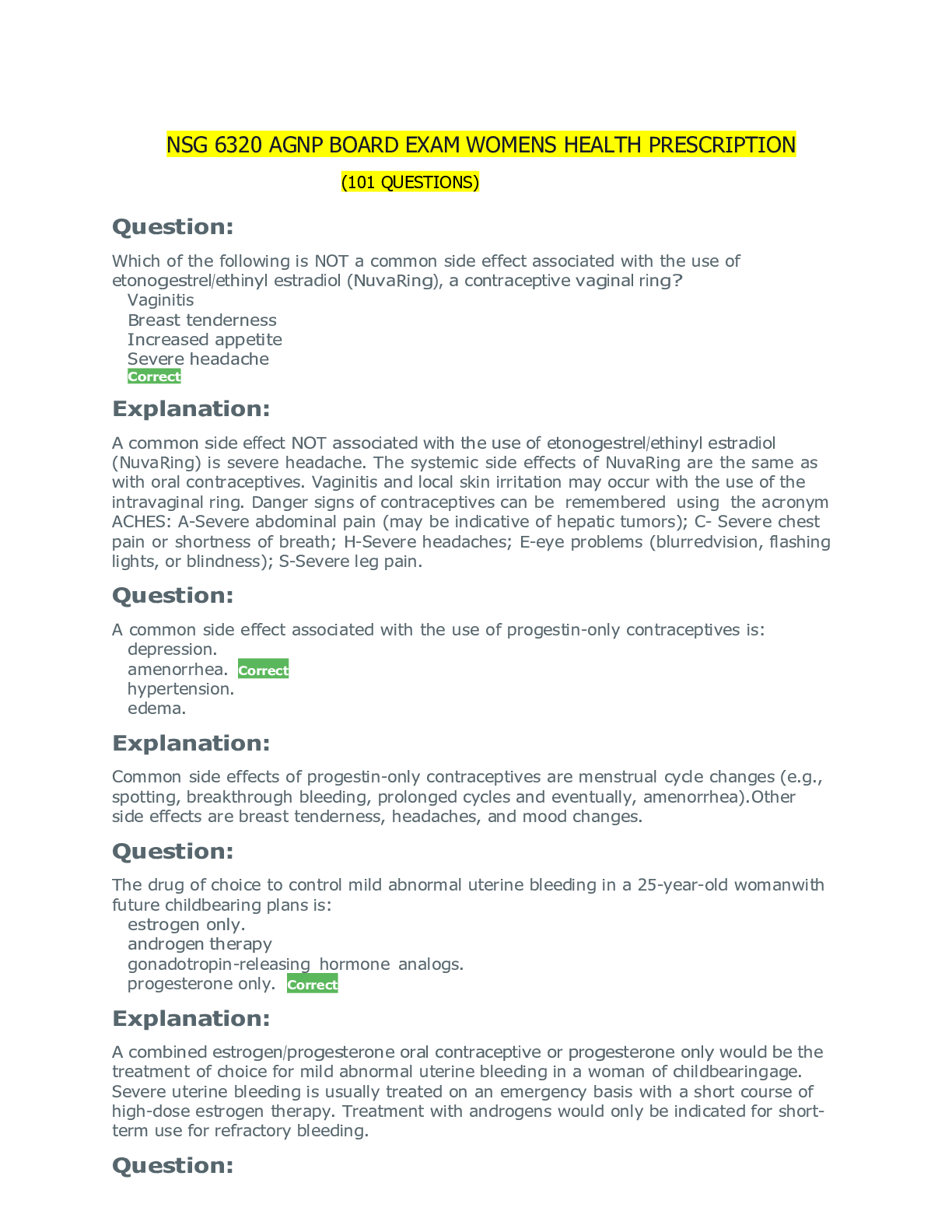
NSG 6320 AGNP BOARD EXAM QUESTIONS and Answers Women's Health...

$15
38 Pages
NSG 6320 AGNP BOARD EXAM QUESTIONS Endocrinology Prescription...


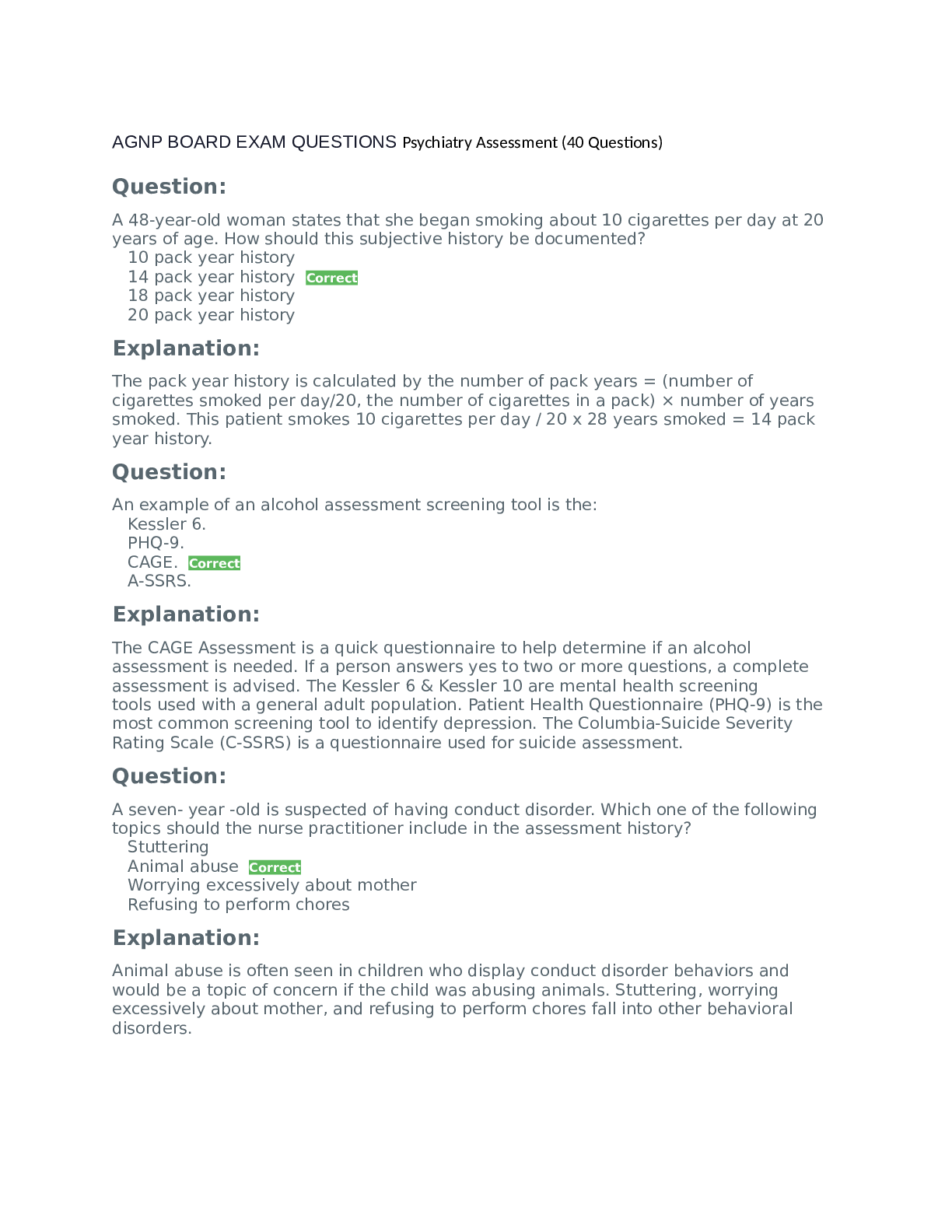


$9.5
39 Pages
NSG 6320 AGNP BOARD EXAM EYE ,EAR ,NOSE & THROAT PRESCRIPTION
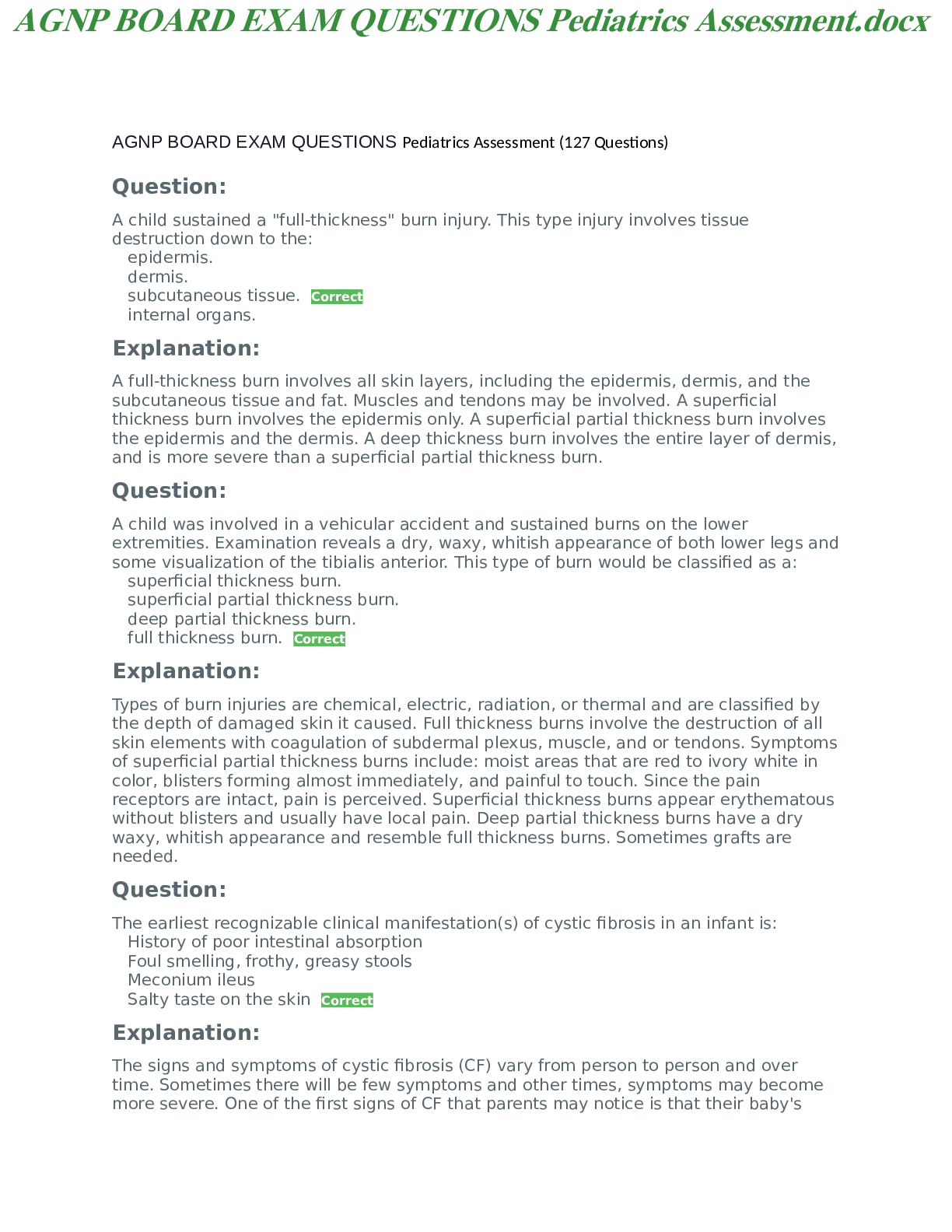
$15
43 Pages
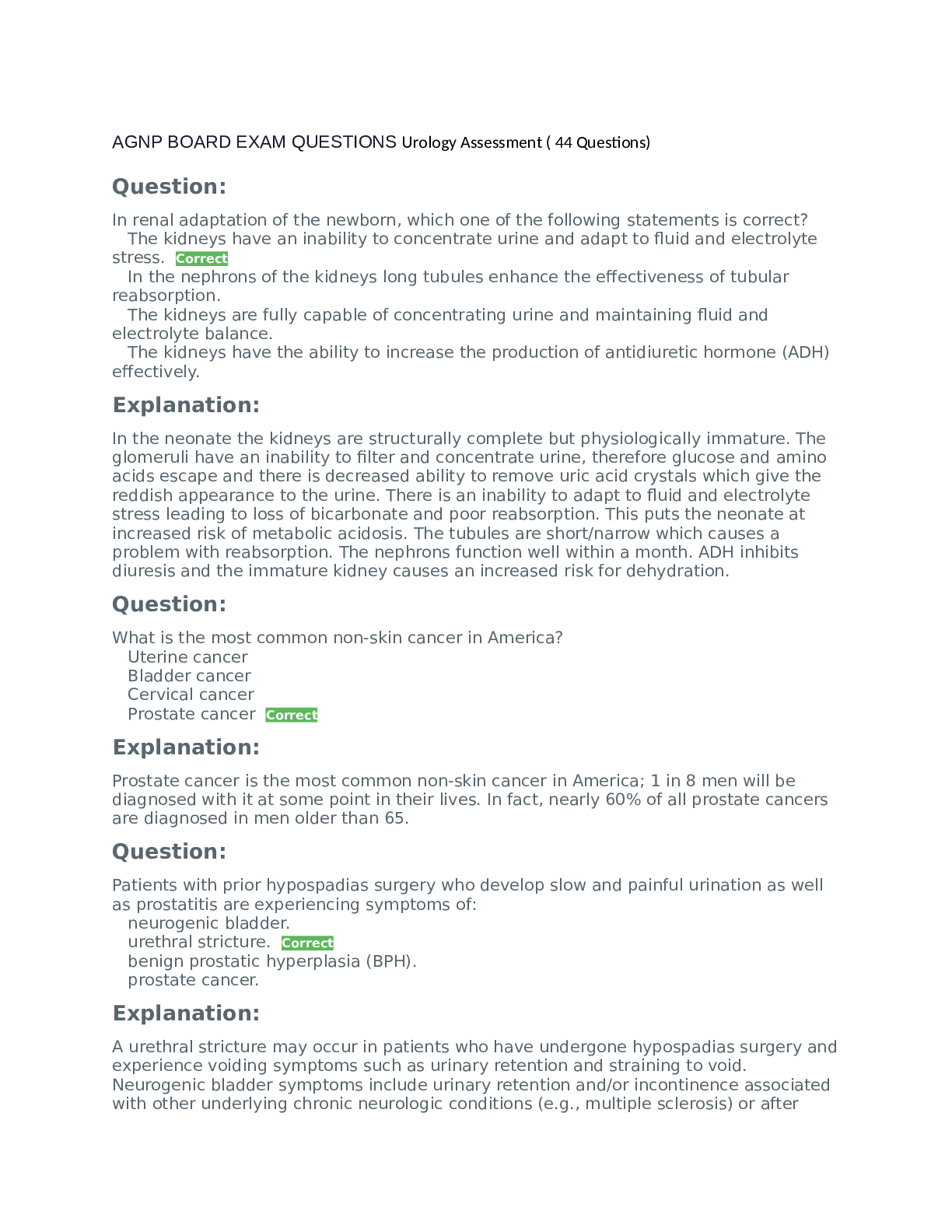
NSG 6320 AGNP BOARD EXAM QUESTIONS Pediatrics Assessment (127...

$15
63 Pages
South University, Savannah NSG 6320 AGNP BOARD EXAM QUESTIONS...
$15
33 Pages
South University, Savannah NSG 6320 AGNP BOARD EXAM QUESTIONS...

$15
14 Pages
NSG 6320-AGNP BOARD EXAM QUESTIONS Psychiatry Assessment -with...

$15
21 Pages
NSG 6320-AGNP BOARD EXAM QUESTIONS Womens Health Assessment -w...

$15
20 Pages
NSG 6320-AGNP BOARD EXAM QUESTIONS Pregnancy Assessment -with...

$15
35 Pages
NSG 6320-AGNP BOARD EXAM QUESTIONS Prescription Gastroenterolo...
$15
30 Pages
NSG 6320-AGNP BOARD EXAM QUESTIONS Dermatoloy -WITH 100% verif...
More related documents below