Anatomy > CASE STUDY > BIOS 255 Week 4 Case Study Natural Killer Cell Deficiency (offical document) | Already G (All)
BIOS 255 Week 4 Case Study Natural Killer Cell Deficiency (offical document) | Already G
Document Content and Description Below
Last updated: 3 years ago
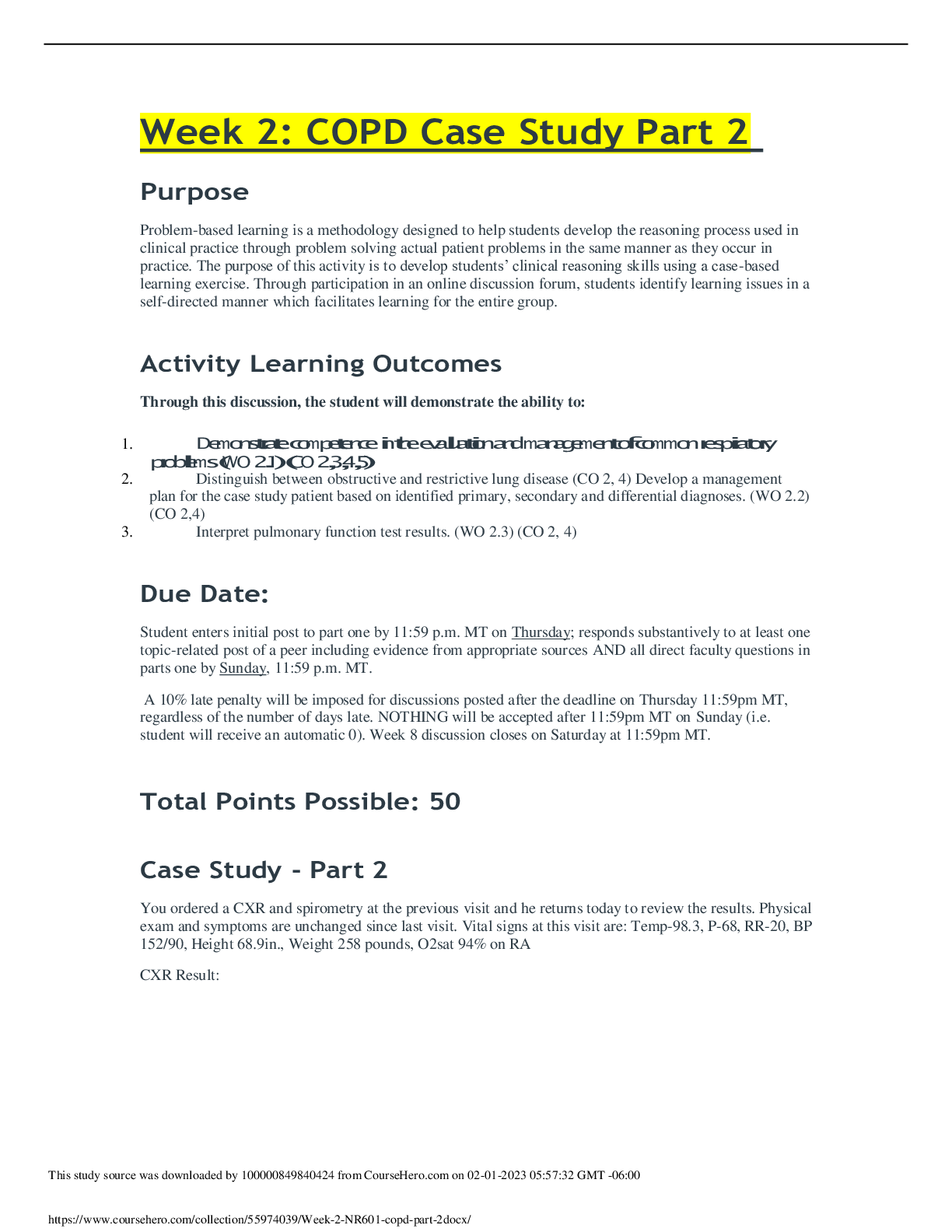
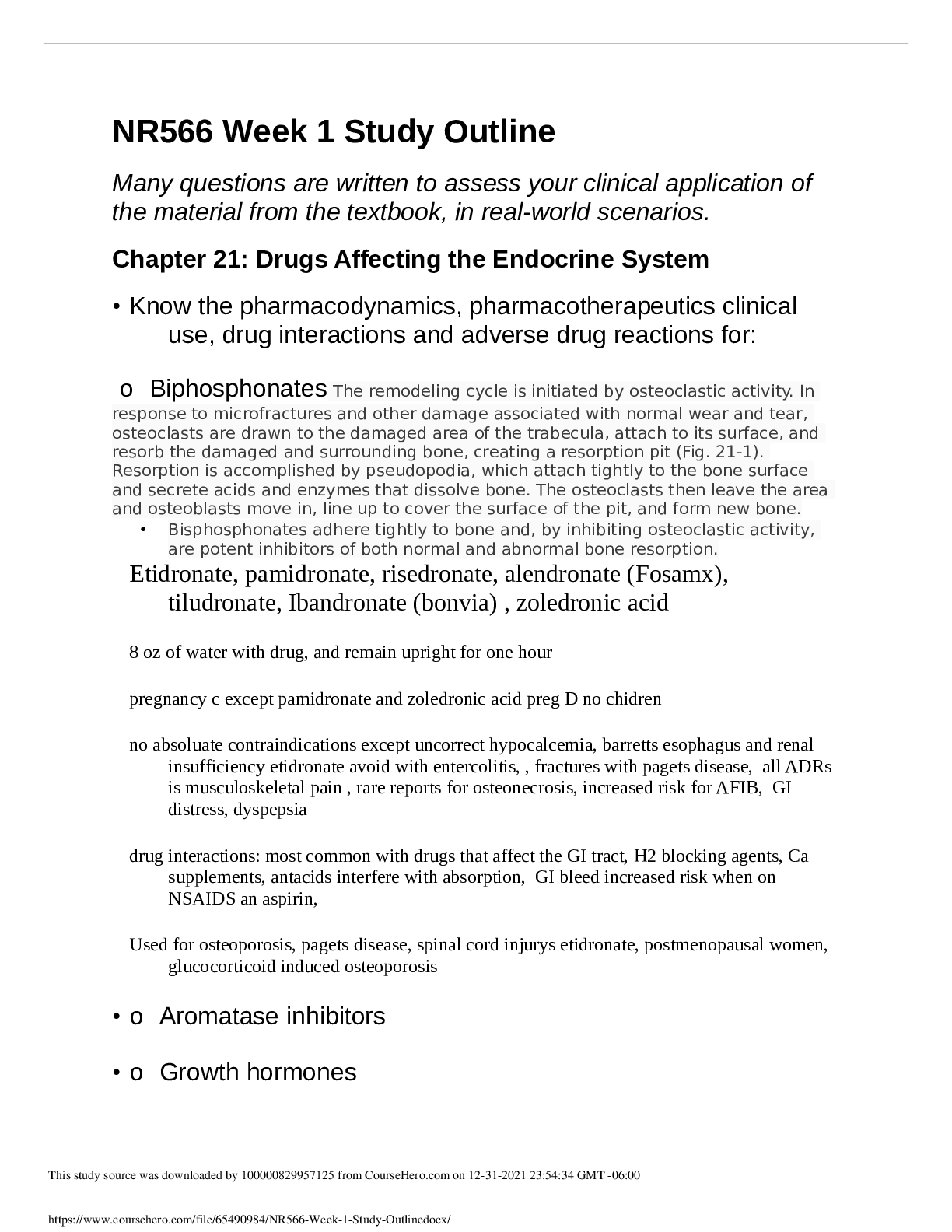
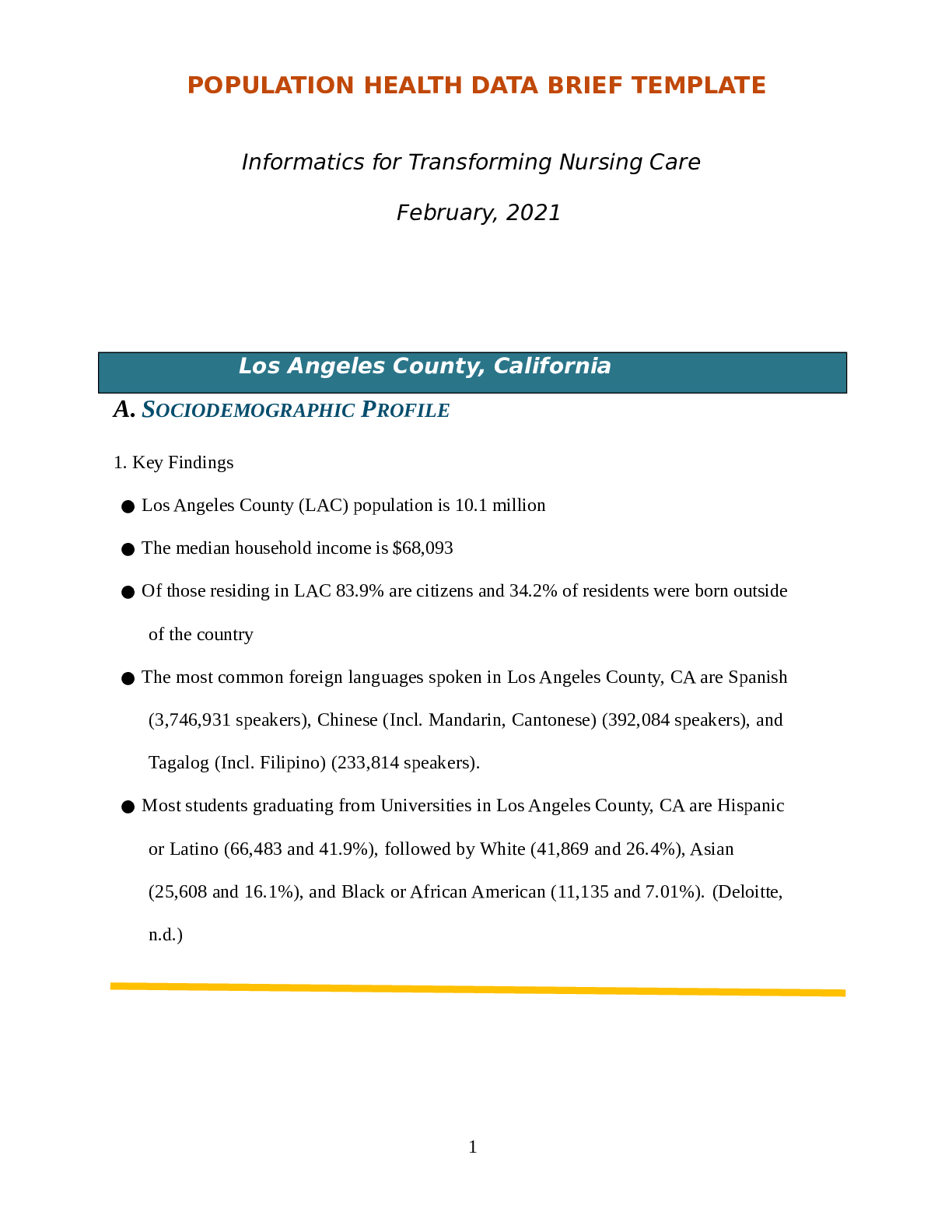
Preview 1 out of 3 pages
Instant download

Buy this Document to get the Full Access Instantly
Provided by Students Who Aced it
We Verify Document Content to Gurantee Accuracy
Reviews( 0 )
Document information
Connected school, study & course
About the document
Uploaded On
Apr 15, 2022
Number of pages
3
Written in
All

Additional information
This document has been written for:
Uploaded
Apr 15, 2022
Downloads
0
Views
175
Topic Tags
Related Subjects & Courses
Explore similar study resources and related concepts.
Recommended For You
Get more on CASE STUDY »
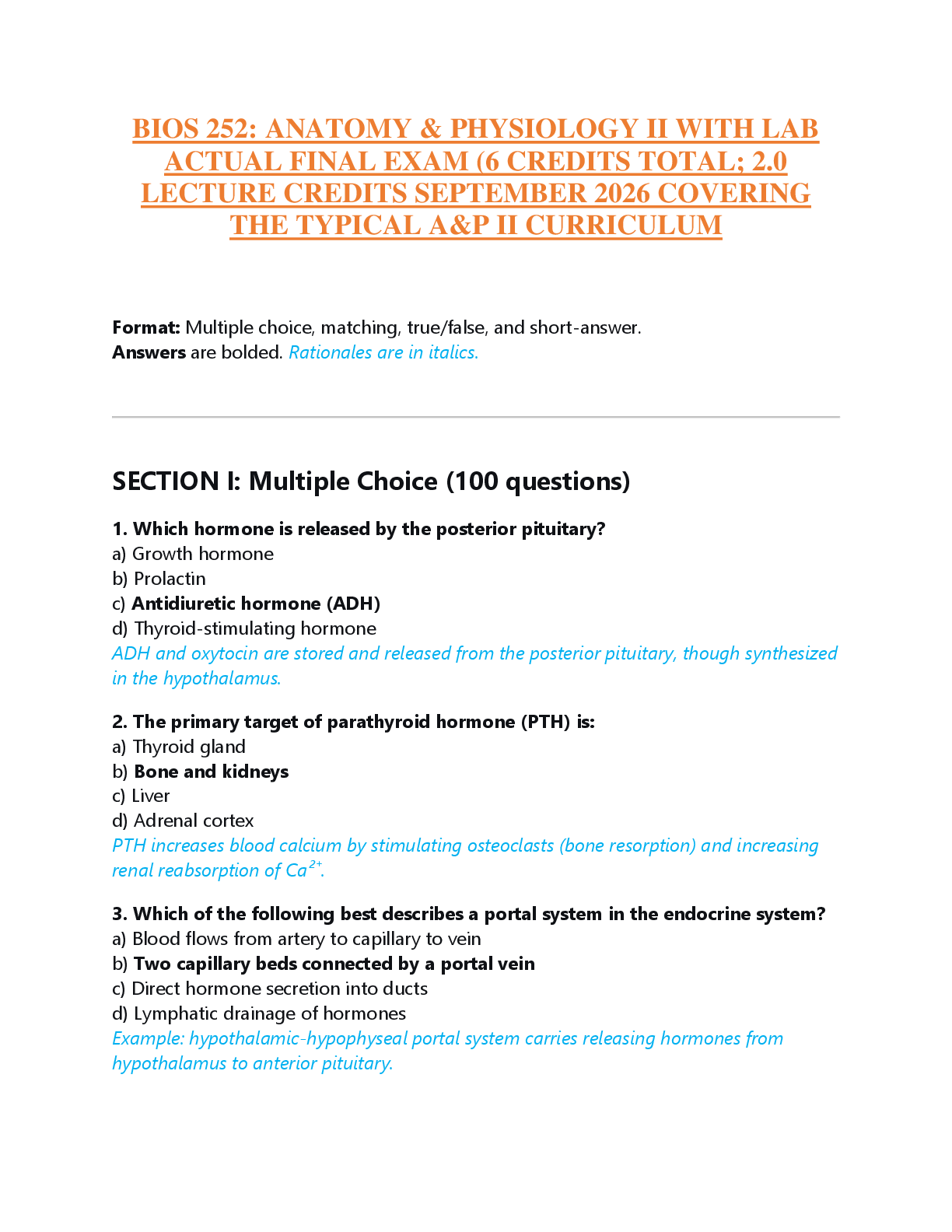
BIOS 255 Practical Exam Questions and Answers (Verified Answ...

BIOS 255 / BIOS255: Anatomy & Physiology III / A&P III Midterm...
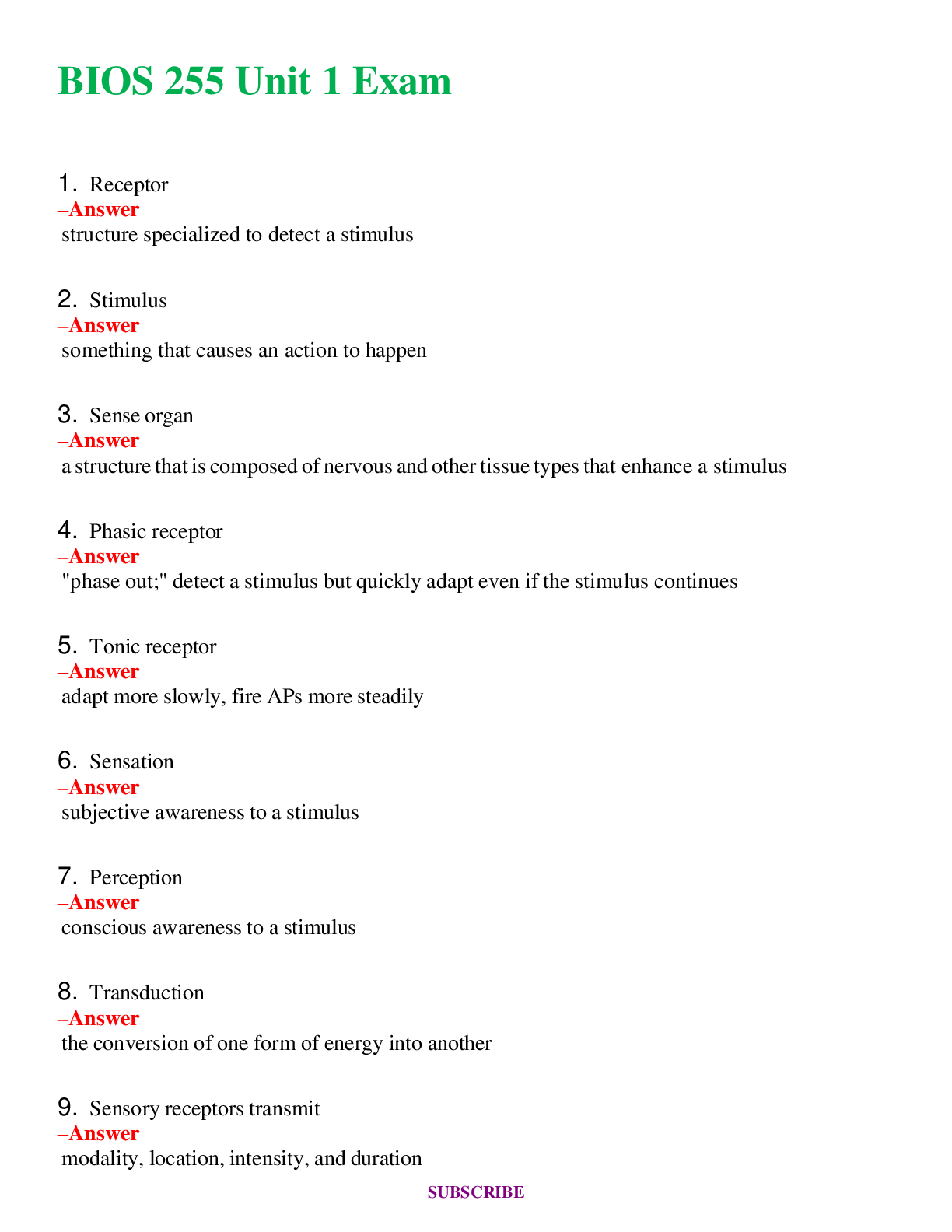
BIOS 255 Unit 1 Exam Questions and Answers (Verified Answer...
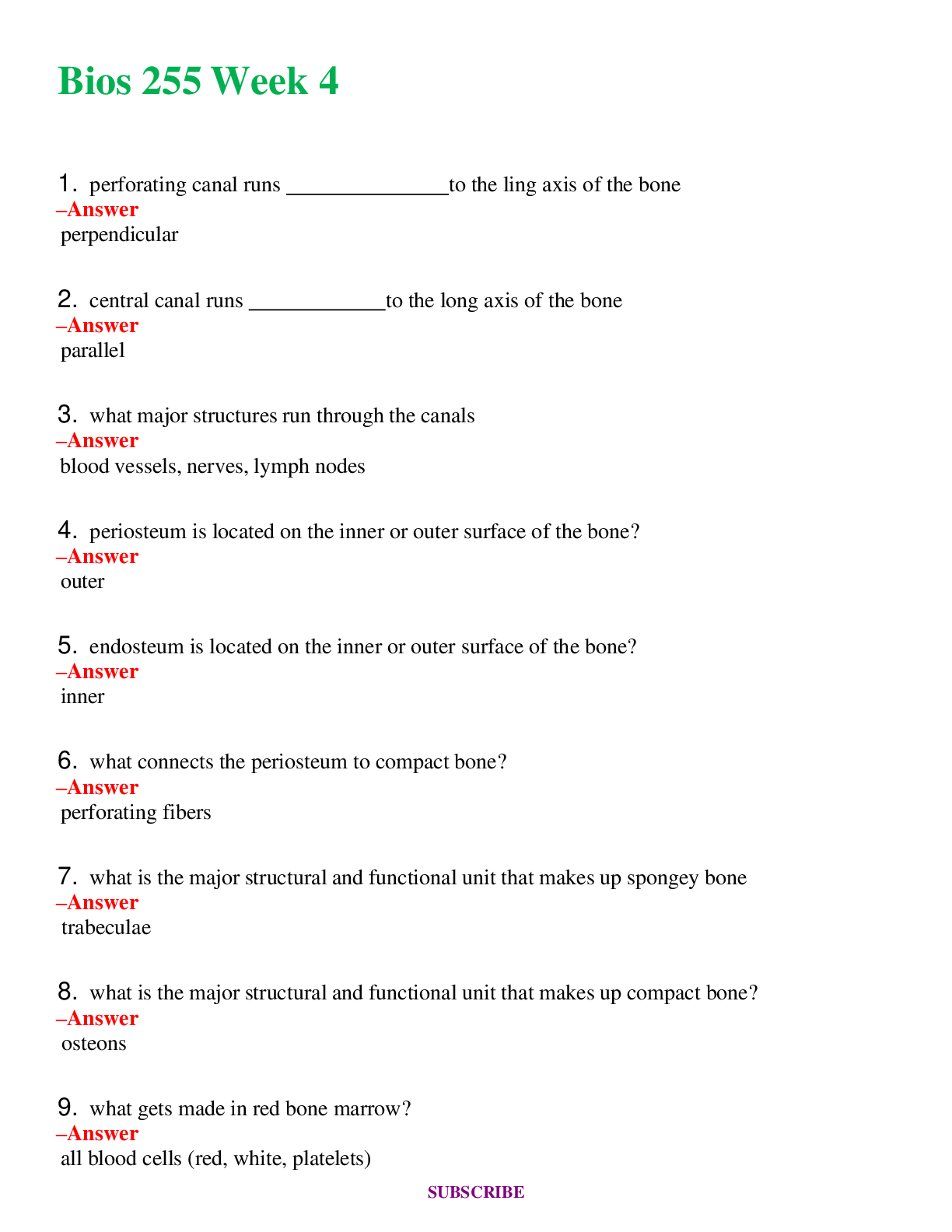
BIOS 255 Week 4 Questions and Answers (Verified Answers)
.png)

BIOS 255 / BIOS255 Final Exam Review Study Guide : Anatomy &...

BIOS 255 / BIOS255 Midterm Exam Review Study Guide : Anatomy...


Clinical Kinesiology and Anatomy, 7th Edition by Lynn Lippert...
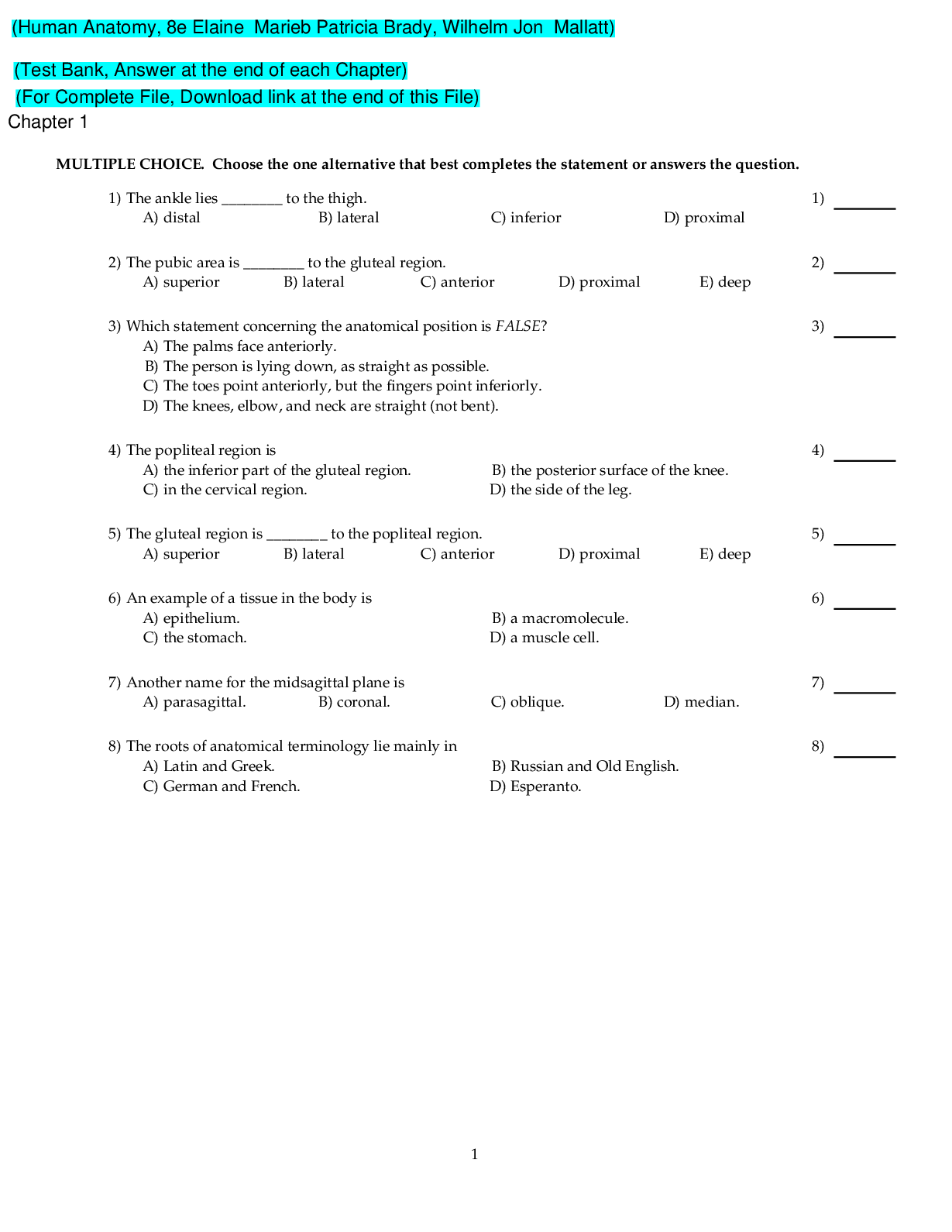
Human Anatomy, 8e Elaine Marieb Patricia Brady, Wilhelm Jon...

Human Anatomy, 9e Frederic Martini Michael Timmons, Robert...

Fundamentals of Anatomy & Physiology 11th Edition by Frederic...

Anatomy & Physiology An Integrative Approach, 4th Edition by...

Essentials of Human Anatomy & Physiology, 13th Edition by Mari...
Anatomy & Physiology An Integrative Approach 4th Edition by Mi...

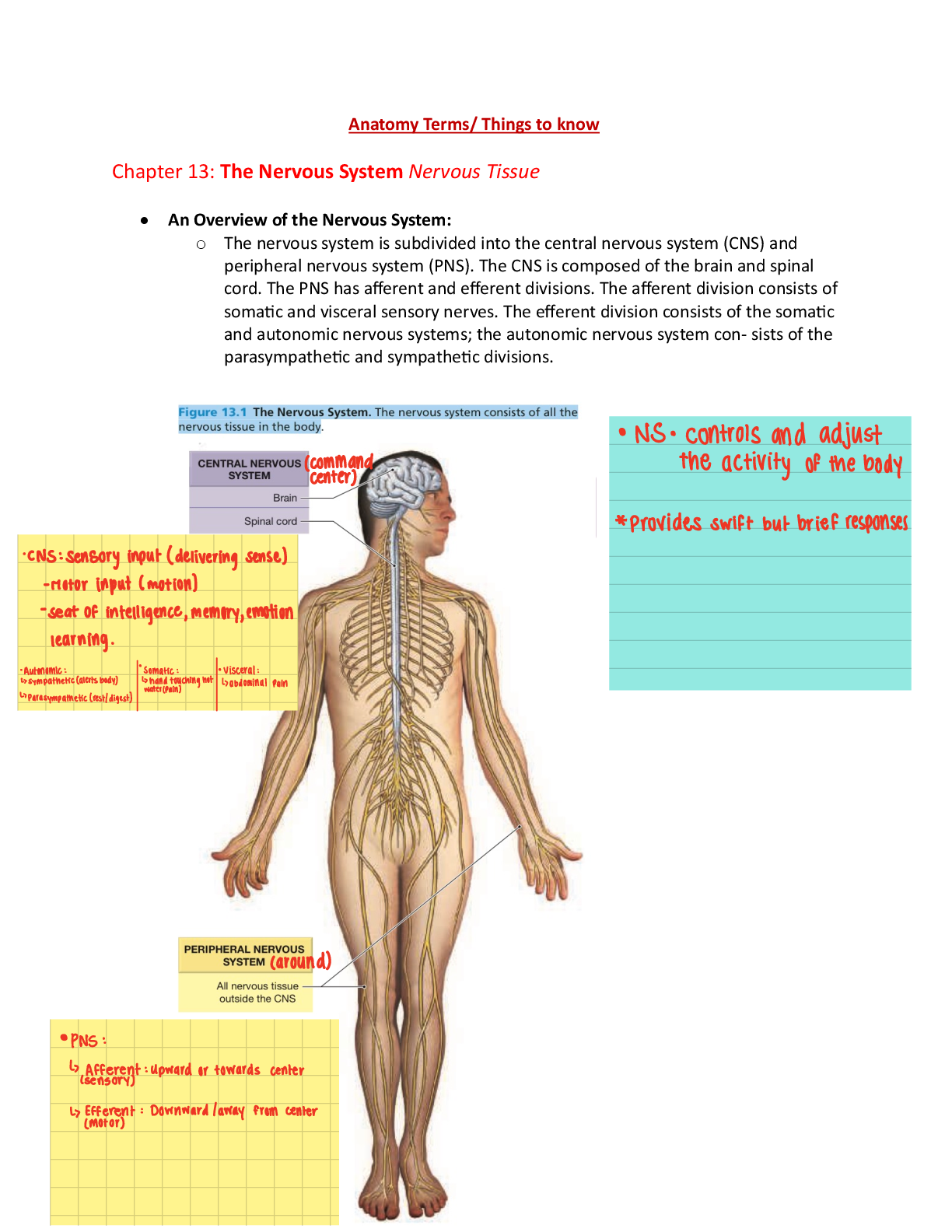
Anatomy Notes Test 3 (Ch.13-18) | Complete Solutions, Winter 2...