WITH 860 Q&A
QUESTION 1
Which classification of drugs is contraindicated for the client with hypertrophic cardiomyopathy?
A. Positive inotropes
B. Vasodilators
C. Diuretics
D. Antidysrhythmics
Answer: A Expl
...
WITH 860 Q&A
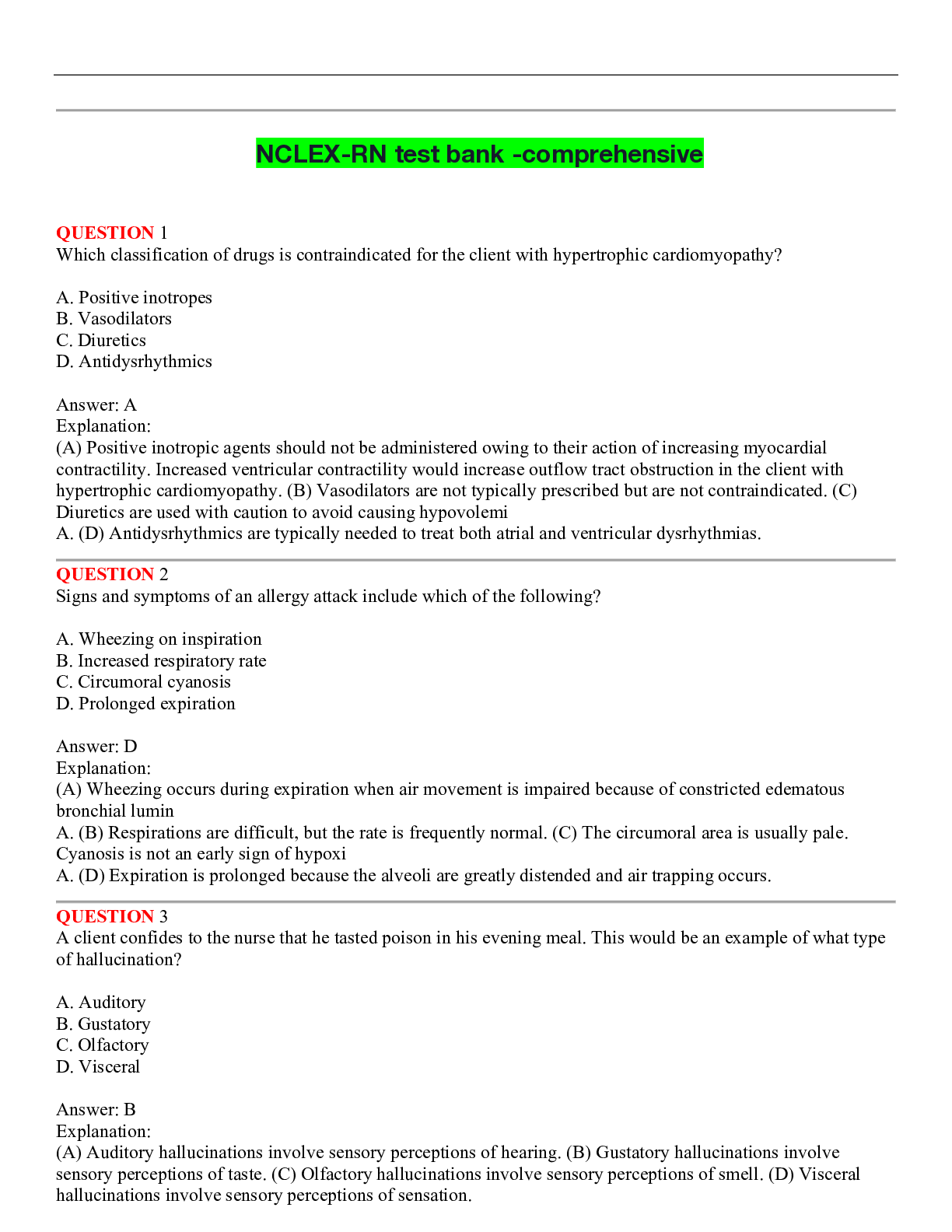
QUESTION 1
Which classification of drugs is contraindicated for the client with hypertrophic cardiomyopathy?
A. Positive inotropes
B. Vasodilators
C. Diuretics
D. Antidysrhythmics
Answer: A Explanation:
(A) Positive inotropic agents should not be administered owing to their action of increasing myocardial contractility. Increased ventricular contractility would increase outflow tract obstruction in the client with hypertrophic cardiomyopathy. (B) Vasodilators are not typically prescribed but are not contraindicated. (C) Diuretics are used with caution to avoid causing hypovolemi
A. (D) Antidysrhythmics are typically needed to treat both atrial and ventricular dysrhythmias.
QUESTION 2
Signs and symptoms of an allergy attack include which of the following?
A. Wheezing on inspiration
B. Increased respiratory rate
C. Circumoral cyanosis
D. Prolonged expiration
Answer: D Explanation:
(A) Wheezing occurs during expiration when air movement is impaired because of constricted edematous bronchial lumin
A. (B) Respirations are difficult, but the rate is frequently normal. (C) The circumoral area is usually pale. Cyanosis is not an early sign of hypoxi
A. (D) Expiration is prolonged because the alveoli are greatly distended and air trapping occurs.
QUESTION 3
A client confides to the nurse that he tasted poison in his evening meal. This would be an example of what type of hallucination?
A. Auditory
B. Gustatory
C. Olfactory
D. Visceral
Answer: B Explanation:
(A) Auditory hallucinations involve sensory perceptions of hearing. (B) Gustatory hallucinations involve sensory perceptions of taste. (C) Olfactory hallucinations involve sensory perceptions of smell. (D) Visceral hallucinations involve sensory perceptions of sensation.
QUESTION 4
Which of the following findings would be abnormal in a postpartal woman?
A. Chills shortly after delivery
B. Pulse rate of 60 bpm in morning on first postdelivery day
C. Urinary output of 3000 mL on the second day after delivery
D. An oral temperature of 101F (38.3C) on the third day after delivery
Answer: D Explanation:
CONTINUED....
[Show More]