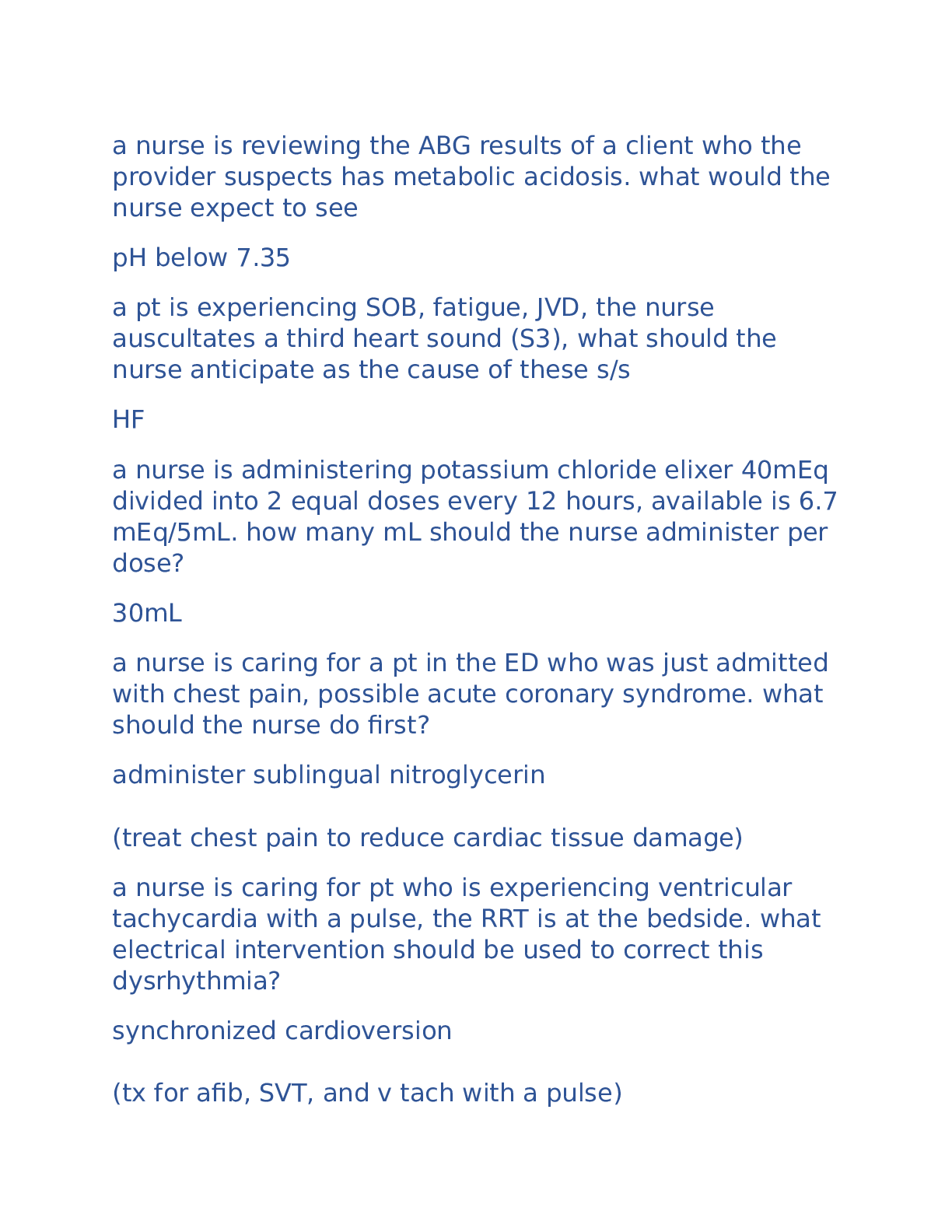
Health Care > EXAM > Nr 293 week 3 and 4 Practice questions for Neuro drugs 1 (All)
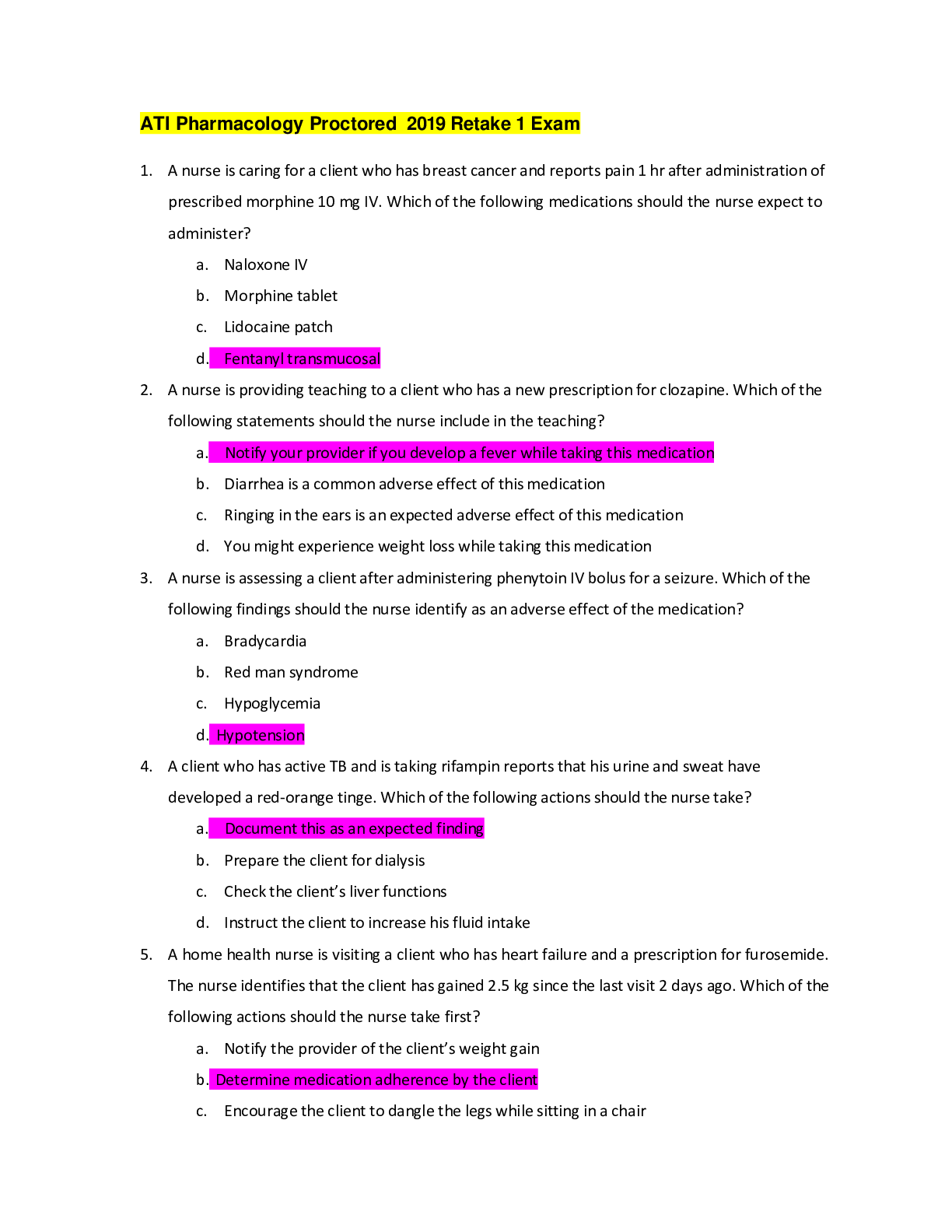
Nr 293 week 3 and 4 Practice questions for Neuro drugs 1
Document Content and Description Below
Last updated: 4 years ago
Preview 1 out of 39 pages
Instant download

Buy this Document to get the Full Access Instantly
Provided by Students Who Aced it
We Verify Document Content to Gurantee Accuracy
Reviews( 0 )
Document information
Connected school, study & course
About the document
Uploaded On
Apr 25, 2022
Number of pages
39
Written in
All

Additional information
This document has been written for:
Uploaded
Apr 25, 2022
Downloads
0
Views
91
Topic Tags
Recommended For You
Get more on EXAM »
NR 293 ATI Pharmacology Final Review | Chamberlain College of...
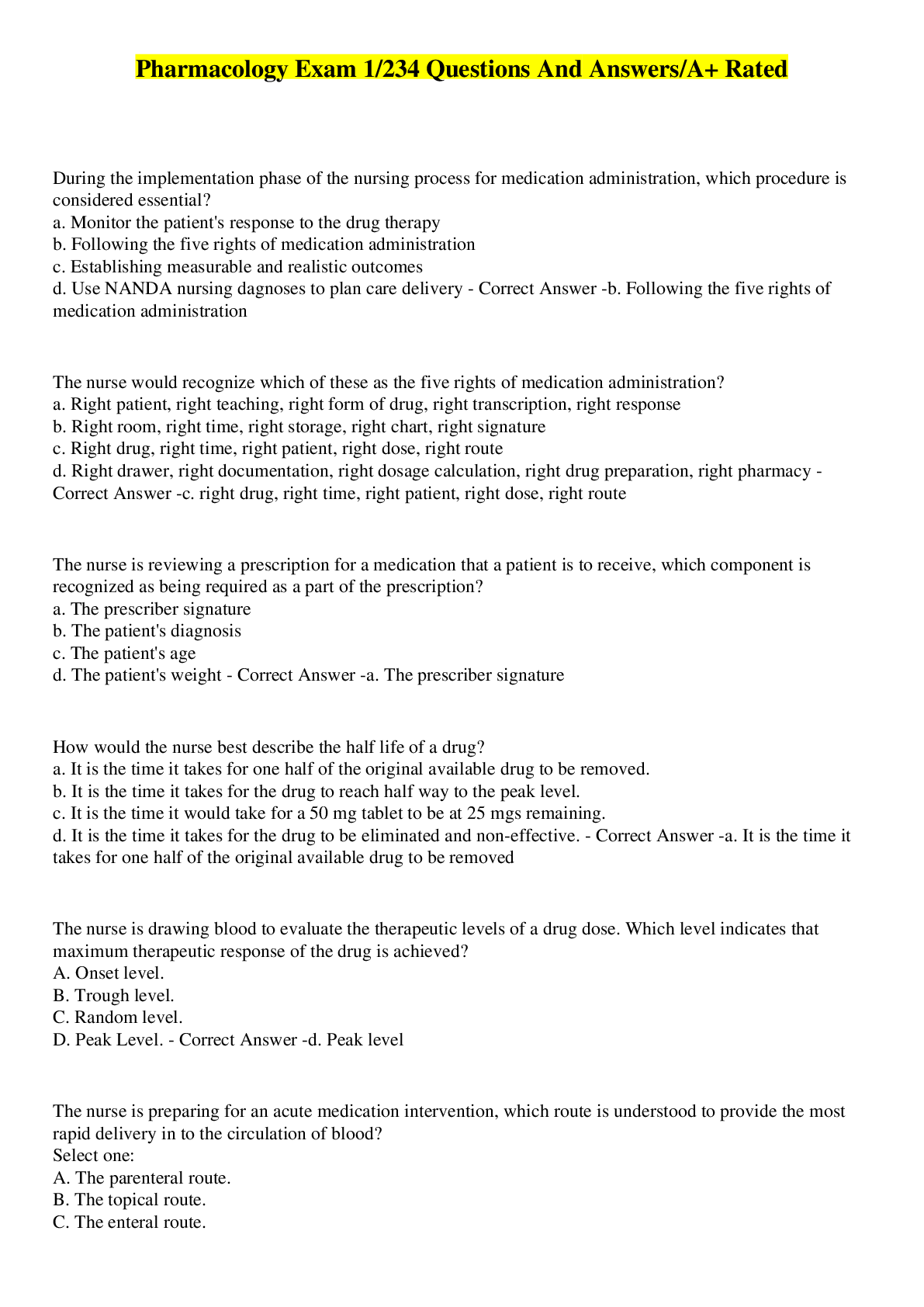
NR293 / NR 293 Pharmacology for Nursing Practice Exam 1. Chamb...

NR293 / NR 293 Pharmacology for Nursing Practice FINAL EXAM La...

NR293 / NR 293: Pharmacology for Nursing Practice Exam 1 (Fall...
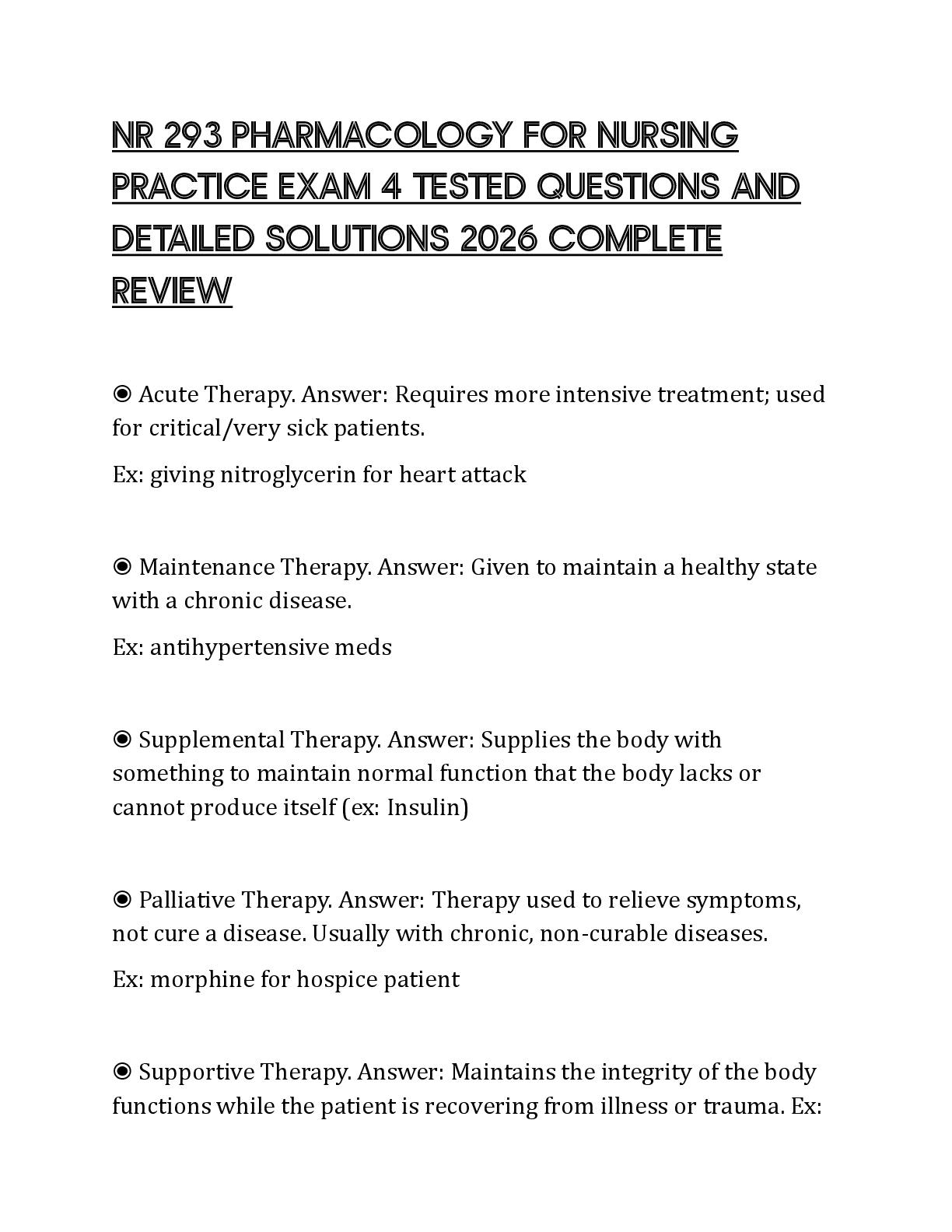
NR 293 PHARMACOLOGY FOR NURSING PRACTICE EXAM 4 TESTED QUESTIO...
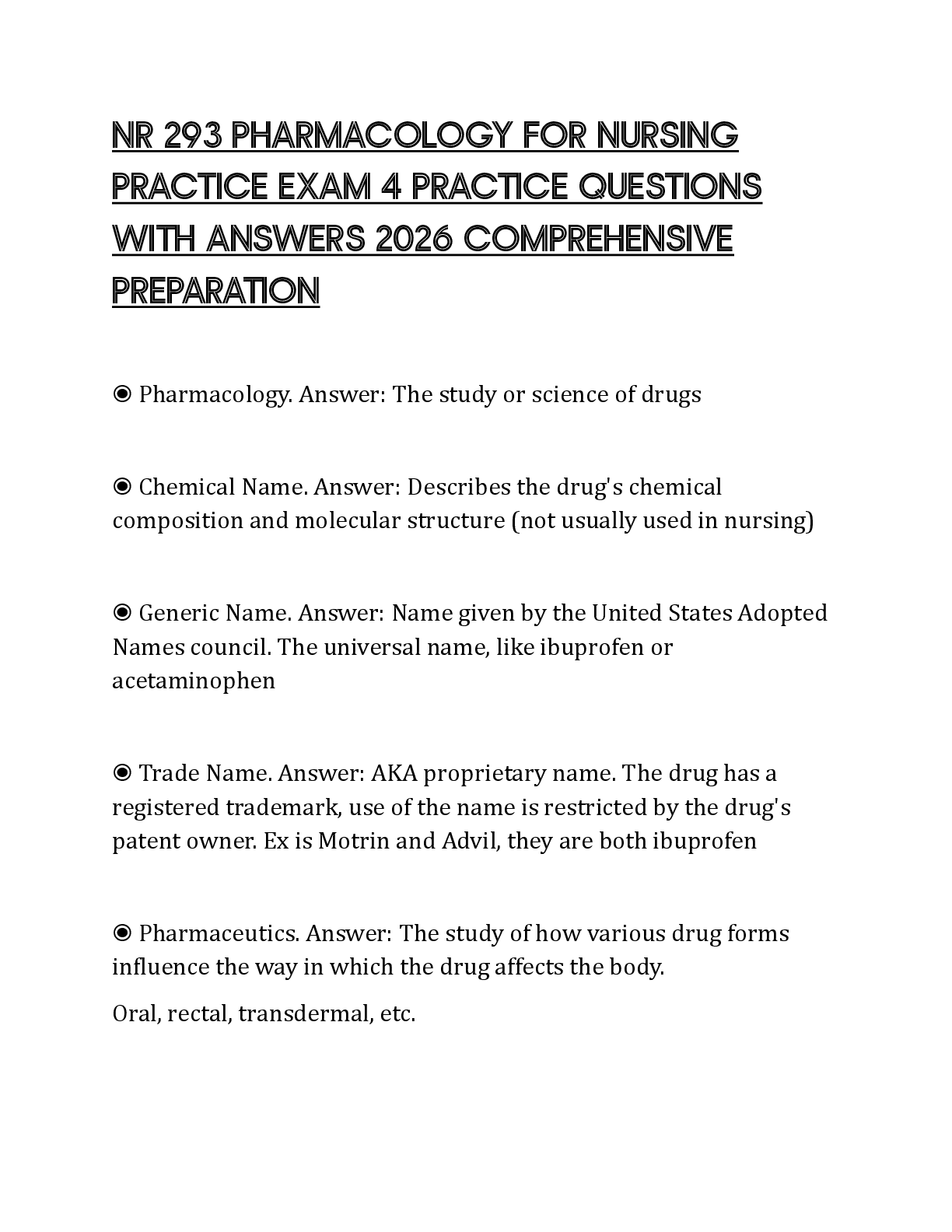
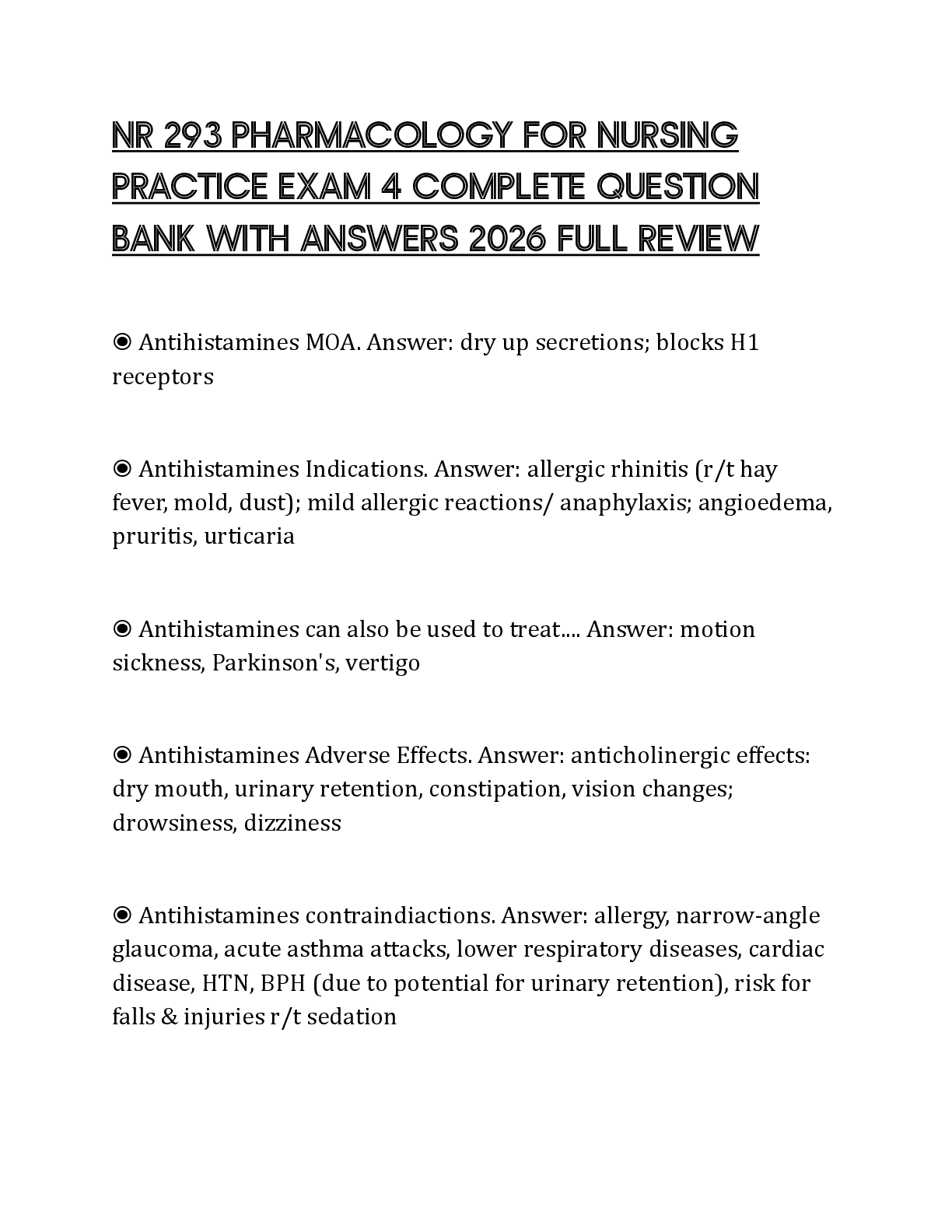
NR 293 PHARMACOLOGY FOR NURSING PRACTICE EXAM 4 COMPLETE QUEST...
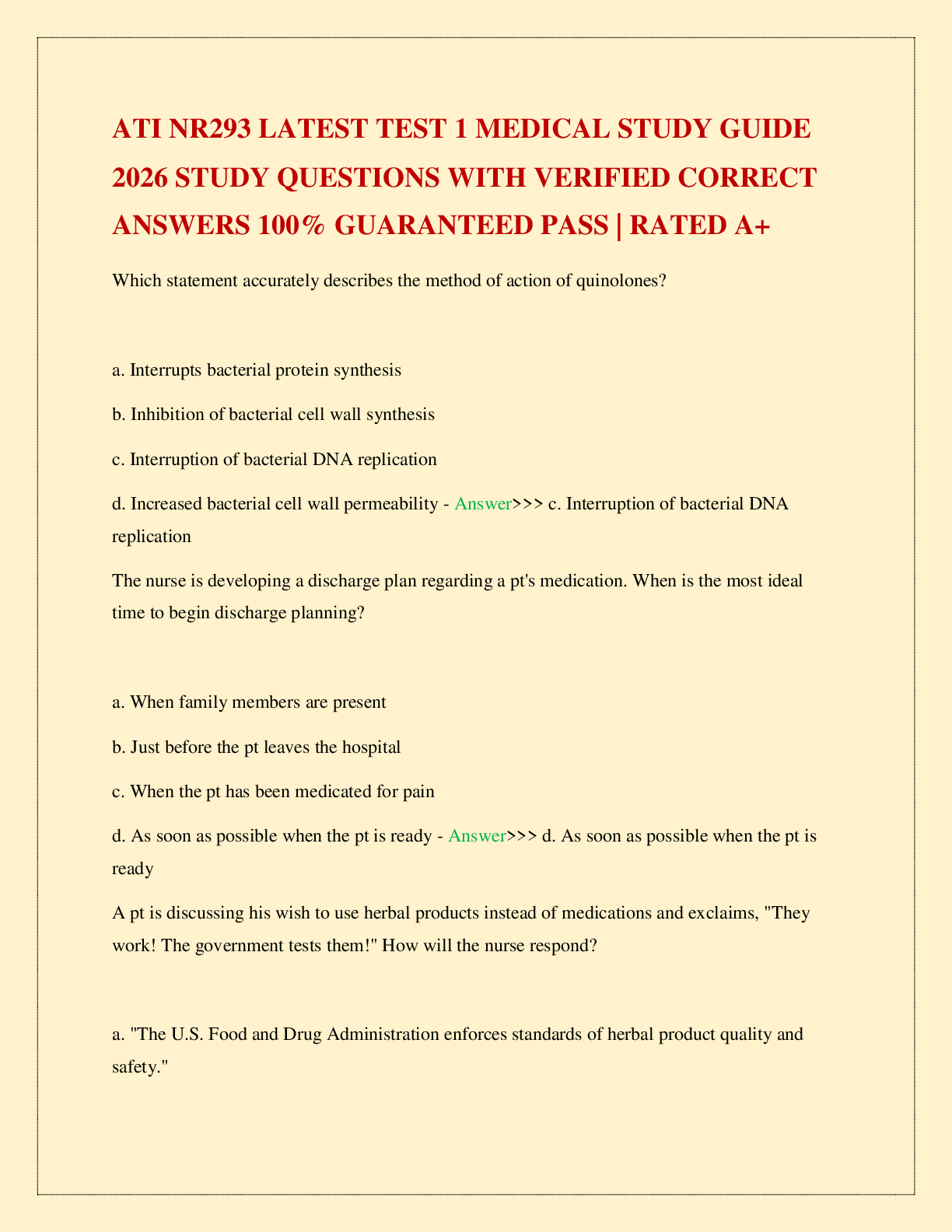
ATI NR293 LATEST TEST 1 MEDICAL STUDY GUIDE 2026 STUDY QUESTIO...
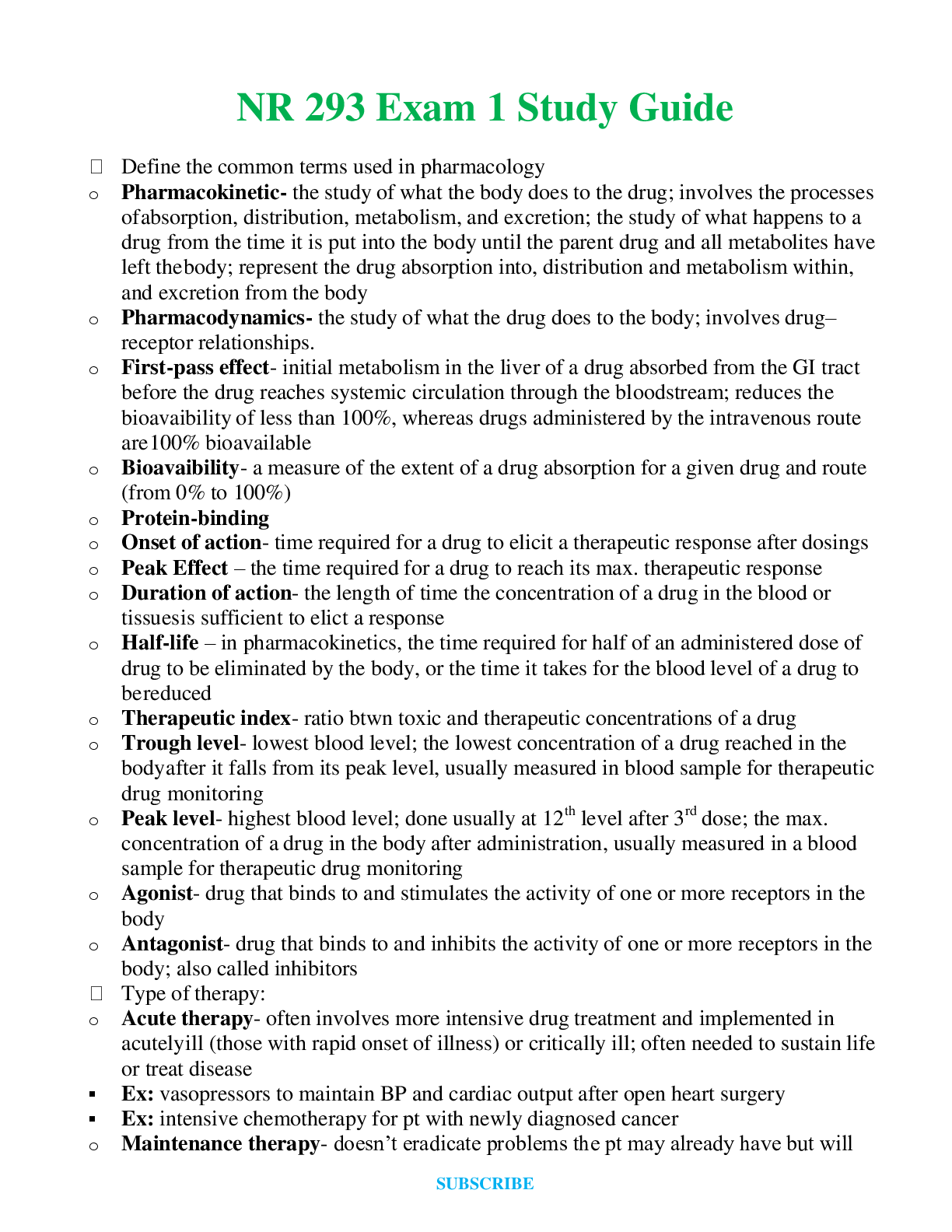
NR 293 Exam 1 Study Guide Questions and Answers (Verified A...
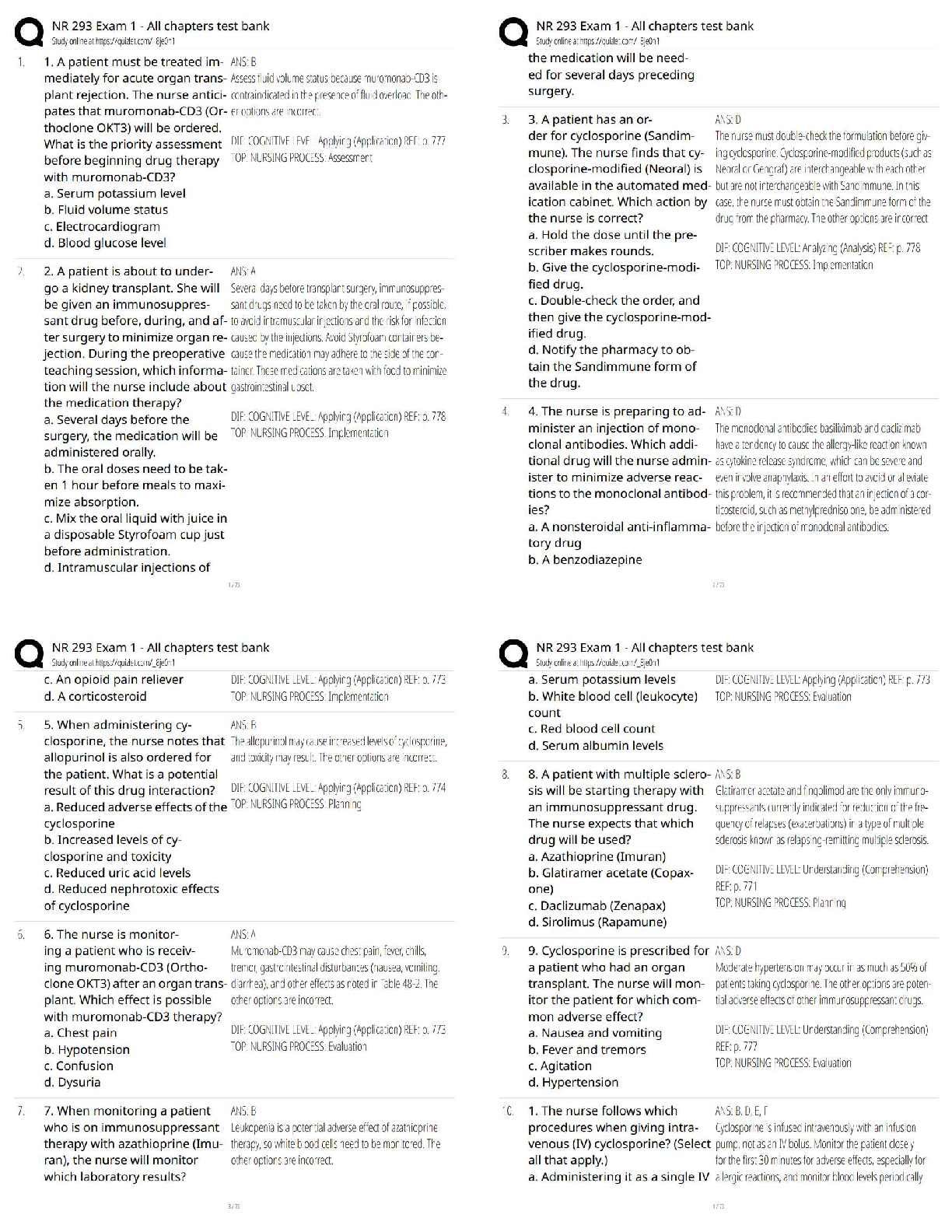
NR 293 Pharmacology Final ReviewQuestions and Answers (Ver...

NR 293 ATI Pharmacology Final Review Chamberlain College of Nu...

NR 293 ATI Pharmacology Final Review_2020 – Chamberlain Colleg...



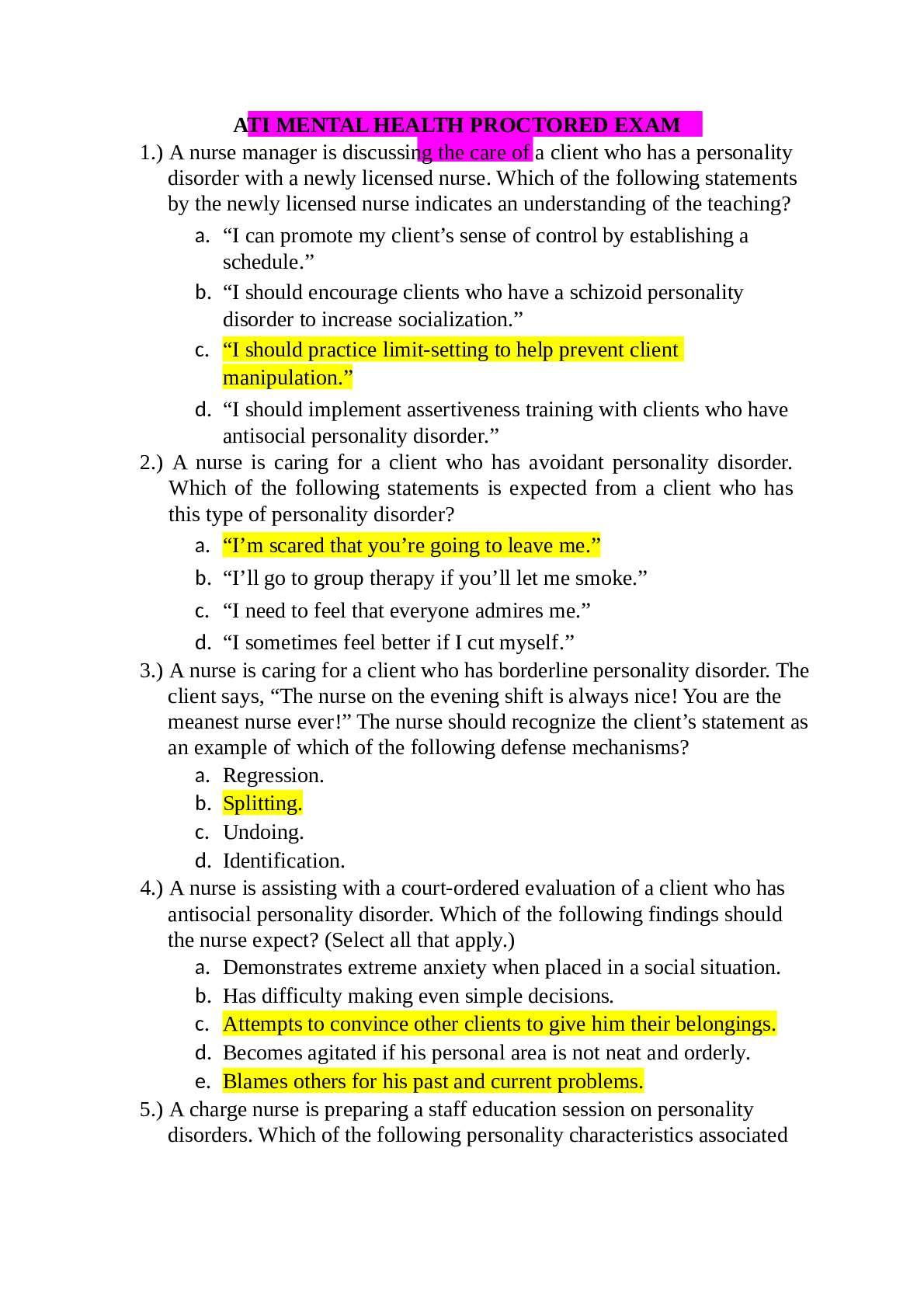
.png)


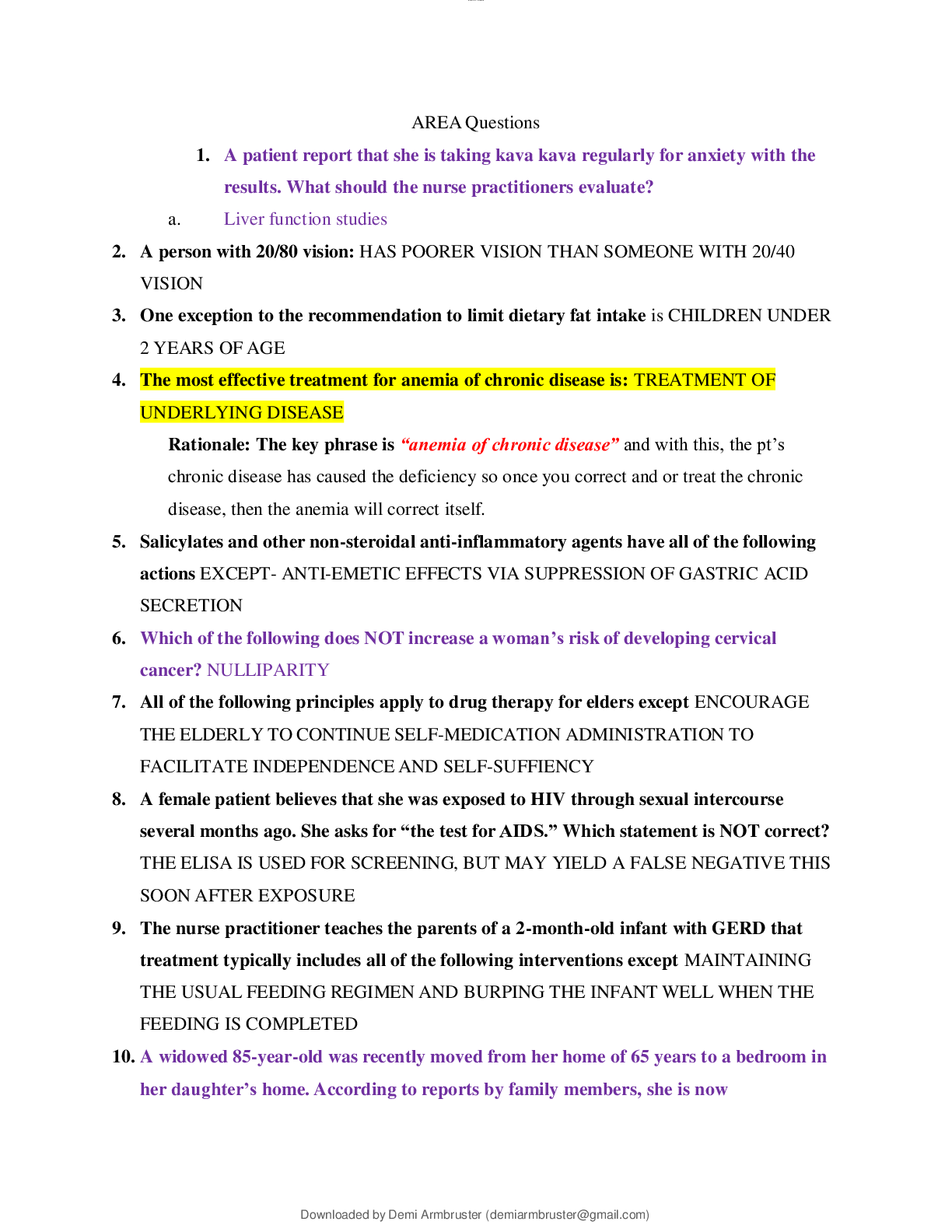

 Chamberlain College Of Nursing (100 Correct Q & A.png)