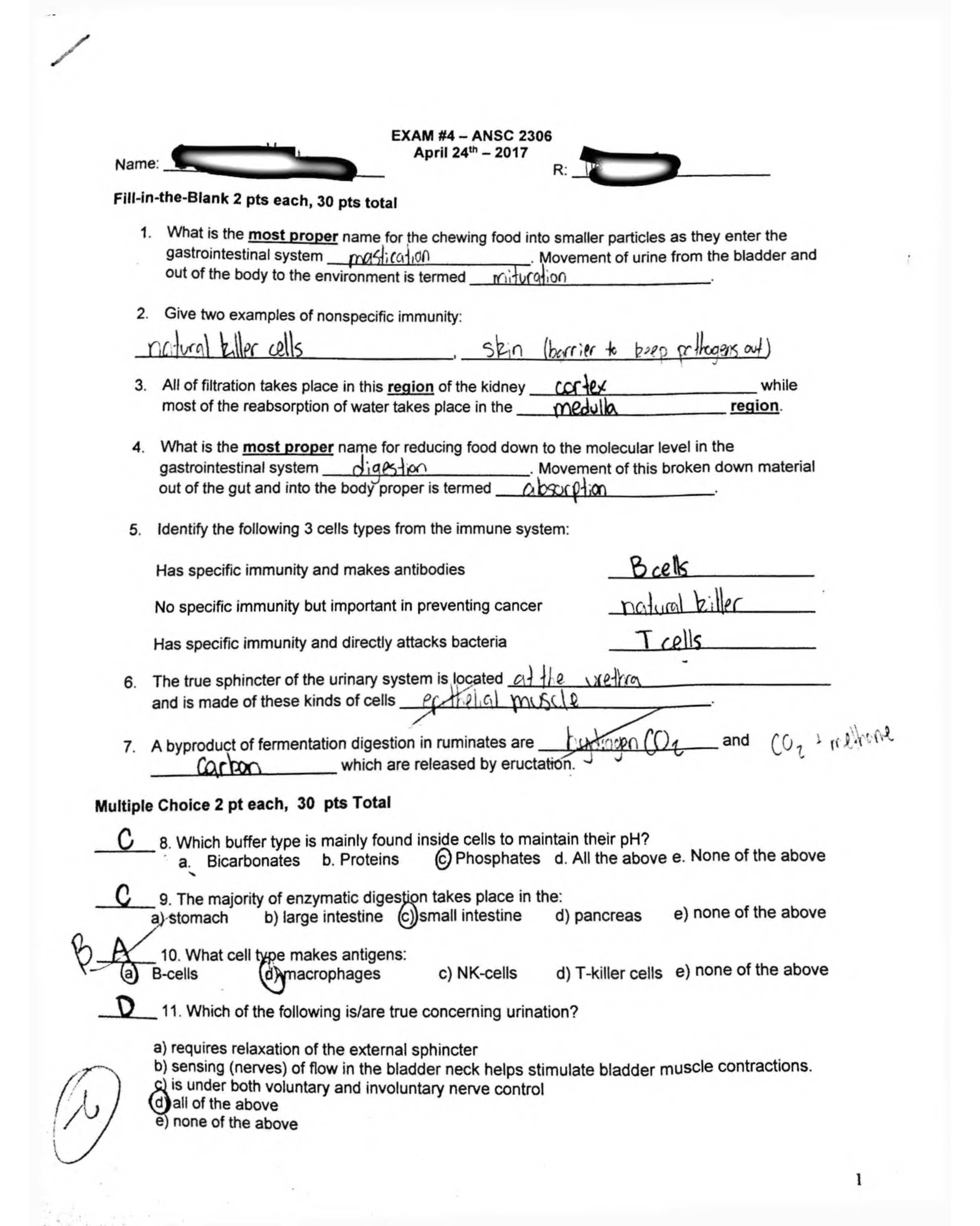
NURSING > QUESTIONS & ANSWERS > Pharm Chapter 34: Sedative-Hypnotic Drugs. 50 Questions and Answers. (All)
Pharm Chapter 34: Sedative-Hypnotic Drugs. 50 Questions and Answers.
Document Content and Description Below
Last updated: 3 years ago
Preview 1 out of 7 pages
Instant download
Buy this Document to get the Full Access Instantly
Provided by Students Who Aced it
We Verify Document Content to Gurantee Accuracy
Reviews( 0 )
Document information
Connected school, study & course
About the document
Uploaded On
Apr 26, 2022
Number of pages
7
Written in
All

Additional information
This document has been written for:
Uploaded
Apr 26, 2022
Downloads
0
Views
182
Topic Tags
Recommended For You
Get more on QUESTIONS & ANSWERS »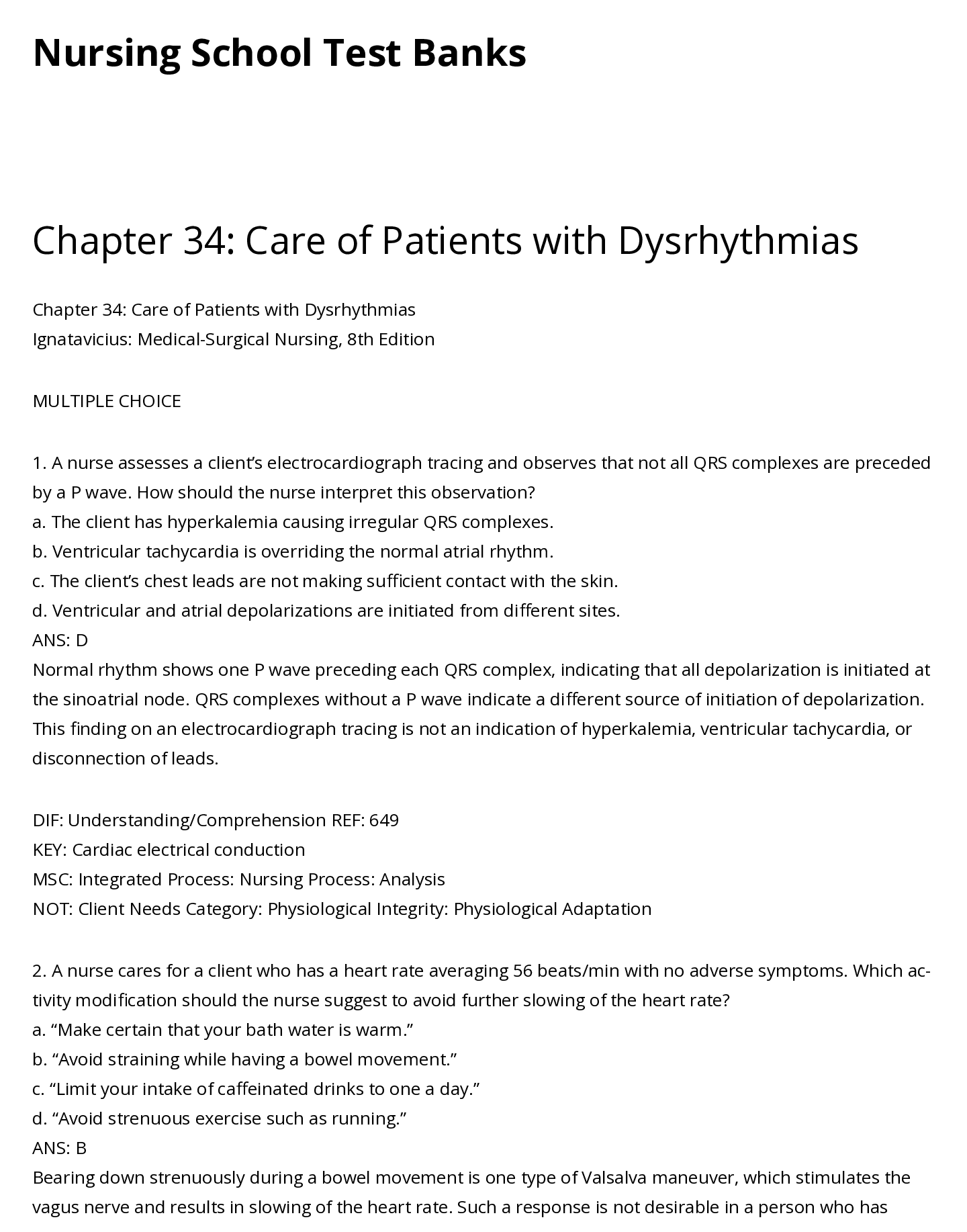
Milestone Chapter 34: Care of Patients with Dysrhythmias (Conc...
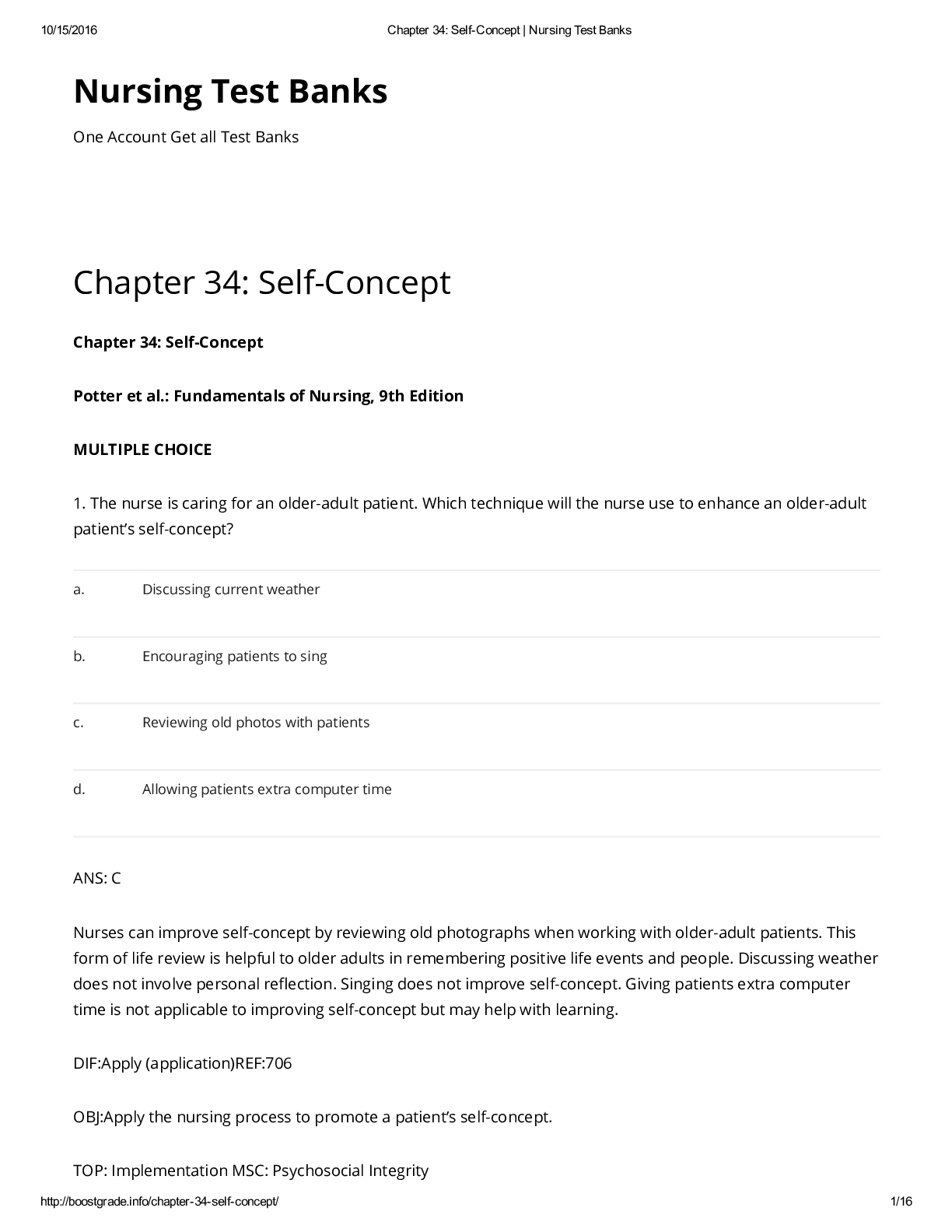
NUR 336 - Chapter 34: Self-Concept - Nursing Test Banks. Ques...
, Latest Questions and Answers with Explanations, All Correct Study Guide, Download to Score A.png)
ATI Chapter 34 Nursing Management Coronary Artery Disease and...
 Med Surg test Latest Verified Questions and all Correct Answers with Explanations Chapter 34 Management of Patients with Hematologic Neoplasms.png)
Sophia Milestone Adult Nursing (NUR 105) Med Surg test Latest...
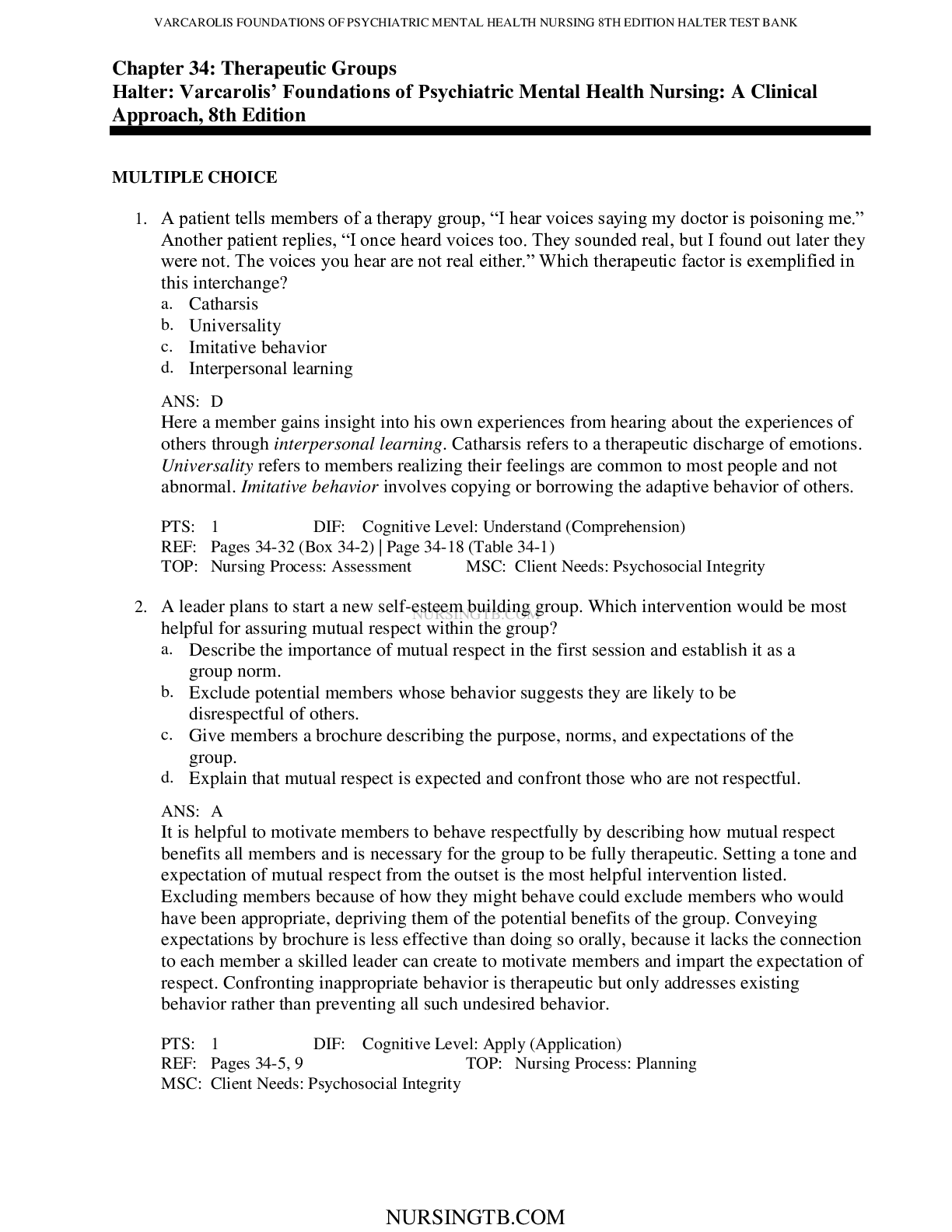
Chapter 34: Sedative-Hypnotic Drugs pharmacology testbank

NURS6521 / NURS 6521 Summary Notes Chapter 34 - 38 (Latest Upd...
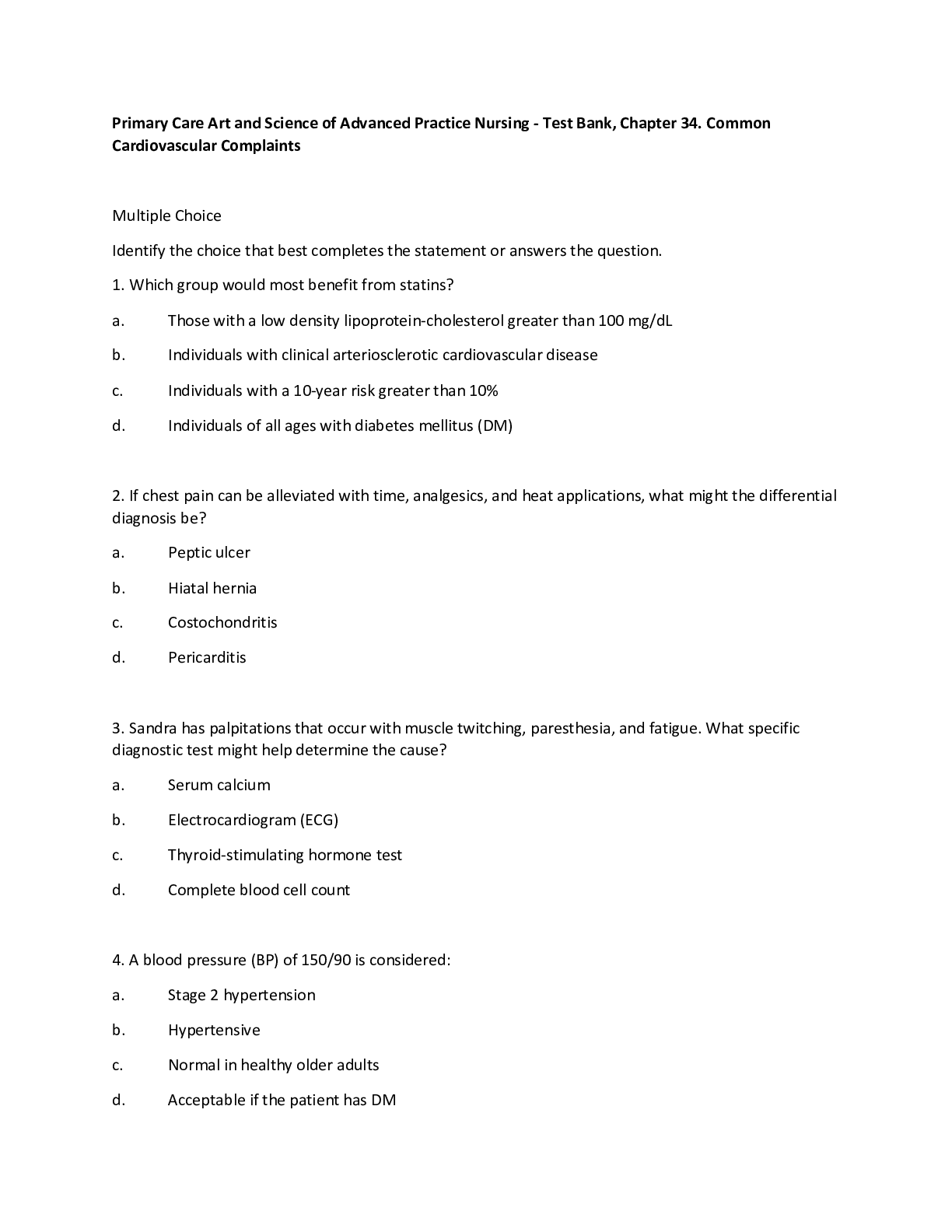
Primary Care Art and Science of Advanced Practice Nursing - Te...
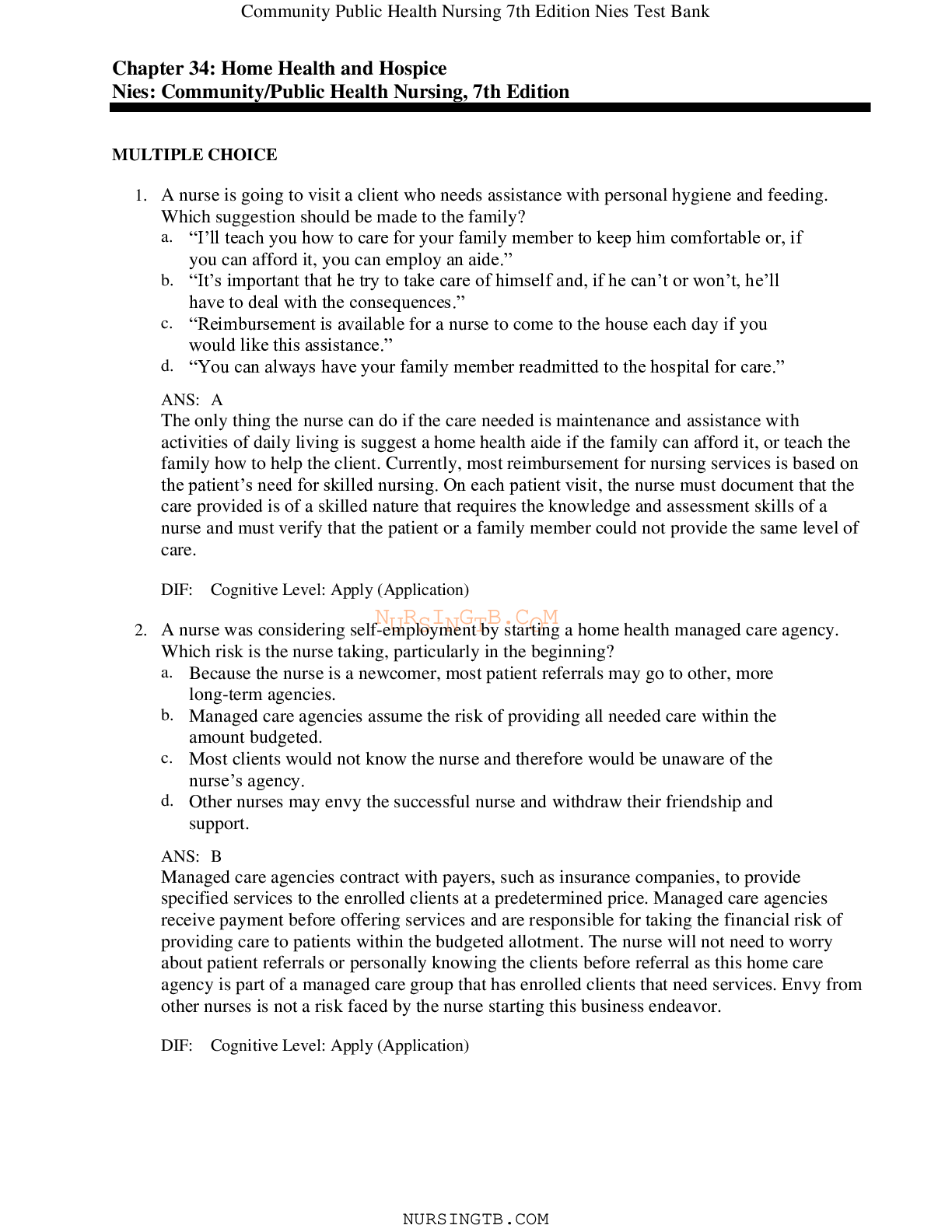
TEST BANK CHAPTER 34_ HOME HEALTH AND HOSPICE (Nies, Community...
 Med Surg test Latest Verified Questions and all Correct Answers with Explanations Chapter 34 Management of Patients with Hematologic Neopl.png)
Sophia Milestone Adult Nursing (NUR 105) Med Surg test Latest...

Milestone Chapter 34 Care of Patients with Dysrhythmias (Conce...
.png)
Chapter 34: Self-Concept Potter et al.: Fundamentals of Nursin...

.png)
NURS 8022 Chapter 34: Alterations of the Male Reproductive Sys...

NR565 / NR 565: Advanced Pharmacology Fundamentals Week 7 Chap...

NR565 / NR 565: Advanced Pharmacology Fundamentals Week 7 Chap...

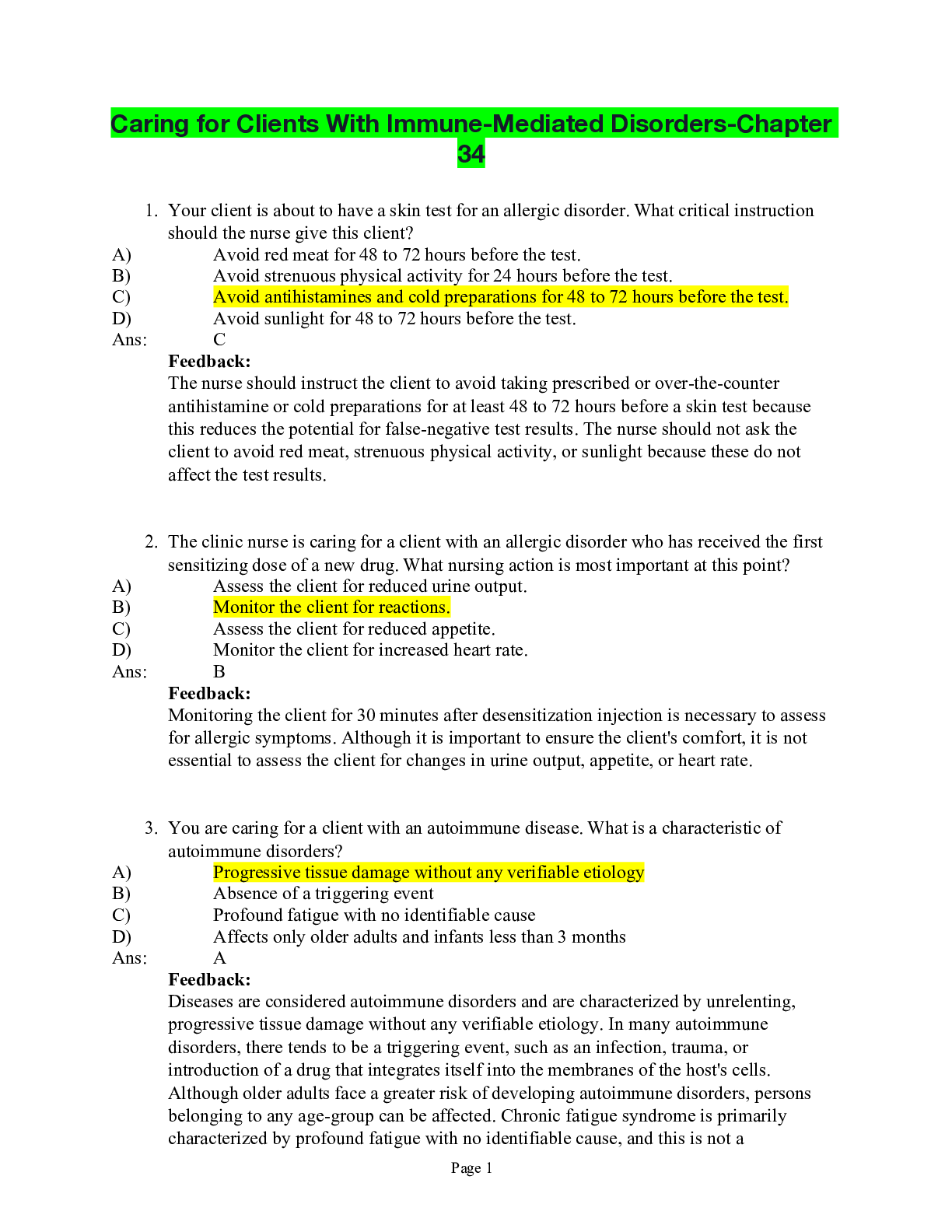
Caring for Clients With Immune-Mediated Disorders-Chapter 34
 (1).png)
Chapter 34: Heart Failure Lewis: Medical-Surgical Nursing, 10t...