NRI509IMidtermIStudyIGuideIWeekI3
Ch. I1
● BasicIandIAdvancedIInterviewingITechniques
BasicInterviewingITechniques
● ActiveIlistening:IActiveIlisteningImeansIcloselyIattendingItoIwhatIthe
IpatientIisIcommunicating,I
...
NRI509IMidtermIStudyIGuideIWeekI3
Ch. I1
● BasicIandIAdvancedIInterviewingITechniques
BasicInterviewingITechniques
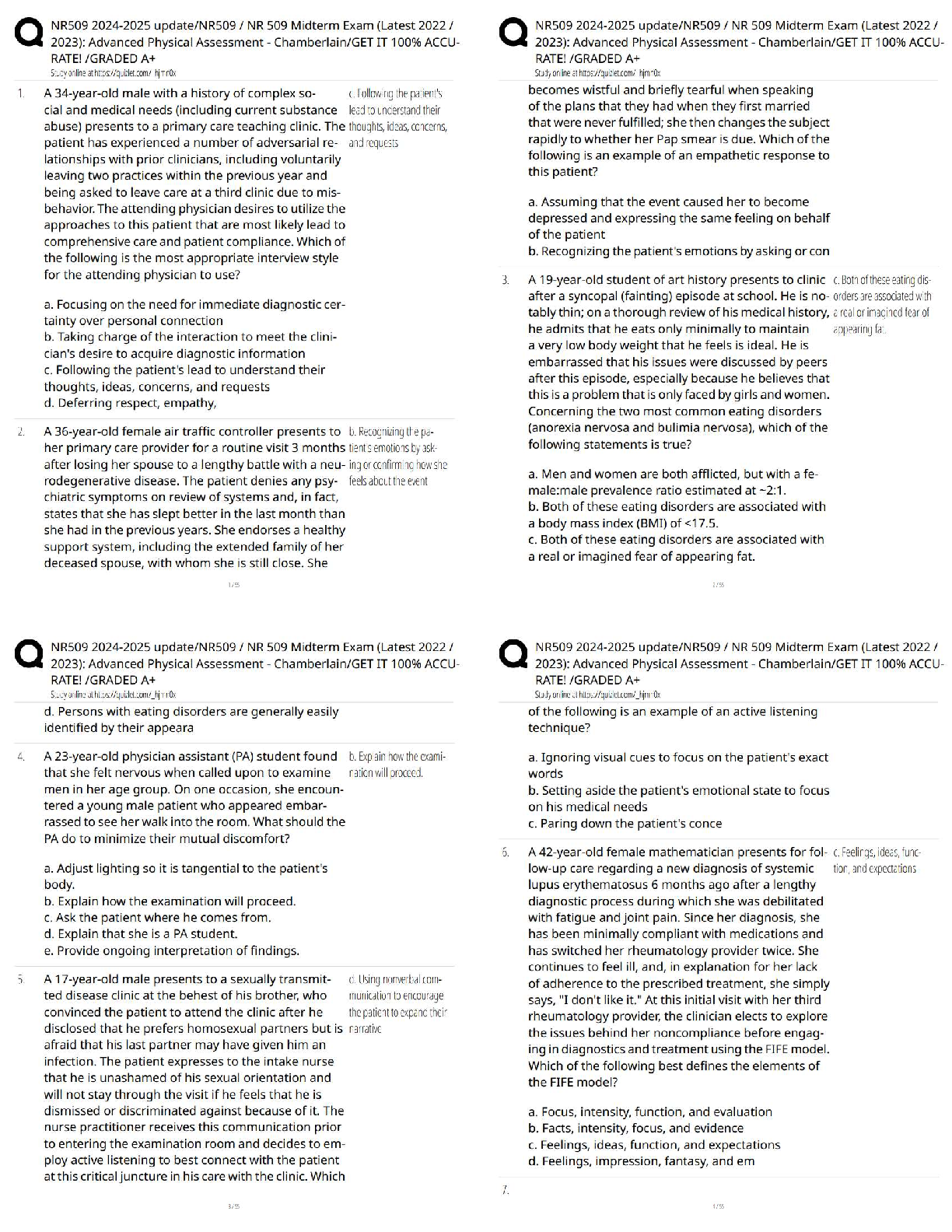
● ActiveIlistening:IActiveIlisteningImeansIcloselyIattendingItoIwhatIthe
IpatientIisIcommunicating,IconnectingItoItheIpatient'sIemotionalIstate,Iand
IusingIverbalIandInonverbalIskillsItoIencourageItheIpatientItoIexpandIon
IhisIorIherIfeelingsIandIconcerns.
EmpathicIresponses:IEmpathyIhasIbeenIdescribedIasItheIcapacityIto
IidentifyIwithItheIpatientIandIfeelItheIpatient'sIpainIasIyourIown,Ithen
IrespondIinIaIsupportiveImanner.
GuidedIquestioning:IGuidedIquestionsIshowIyourIsustainedIinterestIin
ItheIpatient'sIfeelingsIandIdeepestIdisclosuresIandIallowsItheIinterviewer
ItoIfacilitateIfullIcommunication,IinItheIpatient'sIownIwords,Iwithout
Iinterruption.
NonverbalIcommunication:INonverbalIcommunicationIincludesIeye
Icontact,IfacialIexpression,Iposture,IheadIpositionIandImovementIsuchIas
IshakingIorInodding,IinterpersonalIdistance,IandIplacementIofItheIarmsIor
Ilegs—crossed,Ineutral,IorIopen.
Validation:IValidationIhelpsItoIaffirmItheIlegitimacyIofItheIpatient'sIemotional
Iexperience.
Reassurance:IReassuranceIisIanIappropriateIwayItoIhelpItheIpatientIfeelIthat
IproblemsIhaveIbeenIfullyIunderstoodIandIareIbeingIaddressed.
Partnering:IWhenIbuildingIrapportIwithIpatients,IexpressIyourIcommitment
ItoIanIongoingIrelationship.
Summarization:IGivingIaIcapsuleIsummaryIofItheIpatient'sIstoryIduring
ItheIcourseIofItheIinterviewItoIcommunicateIthatIyouIhaveIbeenIlistening
Icarefully.
Transitions:IInformIyourIpatientIwhenIyouIareIchangingIdirectionsIduringIthe
Iinterview.
EmpoweringItheIpatient:IEmpowerIpatientsItoIaskIquestions,IexpressItheir
Iconcerns,IandIprobeIyourIrecommendationsIinIorderItoIencourageIthem
ItoIadoptIyourIadvice,ImakeIlifestyleIchanges,IorItakeImedicationsIas
Iprescribed.
AdvancedIInterviewITechniques
2
DetermineIscopeIofIassessment:IFocusedIvs.IComprehensive:
Comprehensive:IUsedIpatients IyouIareIseeingIforItheIfirstItime IinIthe Ioffice Ior
Ihospital.IIncludesIallItheIelementsIofItheIhealthIhistoryIandIcompleteIphysical
Iexamination.
IsIappropriateIforInewIpatientsIinItheIofficeIorIhospital
ProvidesIfundamentalIandIpersonalizedIknowledgeIaboutItheIpatient
IStrengthensItheIclinician–patientIrelationship
IIHelpsIidentifyIorIruleIoutIphysicalIcausesIrelatedItoIpatientIconcernsIProvides
IaIbaselineIforIfuture Iassessments
CreatesIaIplatformIforIhealthIpromotionIthroughIeducationIandIcounseling
IDevelopsIproficiencyIinItheIessentialIskillsIofIphysicalIexamination
Focused:IForIpatientsIyouIknowIwellIreturningIforIroutineIcare,IorIthoseIwith
IspecificI“urgentIcare” IconcernsIlikeIsoreIthroatIorIkneeIpain.IYouIwillIadjust
ItheIscopeIofIyourIhistoryIandIphysicalIexaminationItoItheIsituationIatIhand,
IkeepingIseveral Ifactors IinImind:Ithe Imagnitude IandIseverity IofItheIpatient’s
Iprob-Ilems;ItheIneedIforIthoroughness;ItheIclinicalIsetting—inpatientIor
Ioutpatient,IprimaryIorIsubspecialtyIcare;IandItheItimeIavailable.
IsIappropriateIforIestablishedIpatients,IespeciallyIduringIroutineIorIurgent
Icare Ivisits
AddressesIfocusedIconcernsIorIsymptoms
Assesses Isymptoms Irestricted Ito Ia Ispecific Ibody Isystem
AppliesIexaminationImethodsIrelevantItoIassessingItheIconcernIorIproblemIas
Ithoroughly IandIcarefullyIas Ipossible
BeingIawareIofIyourIreactionsIhelpsIdevelopIyourIclinicalIskills.
YourIsuccessIinIelicitingItheIhistoryIfromIdifferentItypesIofIpatientsIgrowsIwith
Iexperience,IbutItakeIintoIaccountIyourIownIstressors,IsuchIasIfatigue,Imood,Iand
Ioverwork.
Self-careIisIalsoIimportantIinIcaringIforIothers.IEvenIifIaIpatientIisIchallenging,
IalwaysIrememberItheIimportanceIofIlisteningItoItheIpatientIandIclarifyingIhisIor
IherIconcerns.
ComponentsIof ItheIHealthIHistory
Initial Iinformation
DateIandItimeIof Ihistory-timeIisIespeciallyIimportant IinIemergent Isituations
IdentifyingIdata-age, Igender, Imarital Istatus, Ioccupation-identifyIsourceIof IhistoryIie: Ifamily
Imember, IfriendIetc.
Reliability-usuallyIdocumentedIat IendIof IinterviewIie: I“patient IisIvagueIwhenIdescribing
Isymptoms”.
Chief IComplaint(s)
TryItoIquoteItheIpatientsIwords
IPresent IIllness
Complete, IclearIandIchronological IdescriptionIof ItheIproblemIpromptingItheIpatient Ivisit
IOnset, IsettingIinIwhichIit Ioccurred, ImanifestationsIandIanyItreatments
3
ShouldIincludeI7IattributesIof IaIsymptom:
Location
IQuality
QuantityIorIseverity
Timing, Ionset,Iduration, Ifrequency
ISettingIinIwhichIit Ioccurs
IAggravatingIorIrelievingIfactors
IAssociatedImanifestations
Differential IdiagnosisIisIderivedIfromItheI“pertinent Ipositives”IandI“pertinent Inegatives”
IwhenIdoingIReviewIof ISystemsIthat IareIrelevant ItoItheIchief Icomplaint.
Present IillnessIshouldIreveal Ipatient’sIresponsesItoIhisIorIherIsymptomsIandIwhat Ieffect Ithis
IhasIonItheirIlife.
EachIsymptomIneedsIitsIownIparagraphIandIaIfull Idescription.
MedicationIshouldIbeIdocumented, Iname, Idose,Iroute, IandIfrequency. IHomeIremedies,Inon�IprescriptionsIdrugs, Ivitamins, Imineral IorIherbal Isupplem
[Show More]
.png)










.png)



 Chamberlain College Of Nursing (100 Correct Q & A.png)