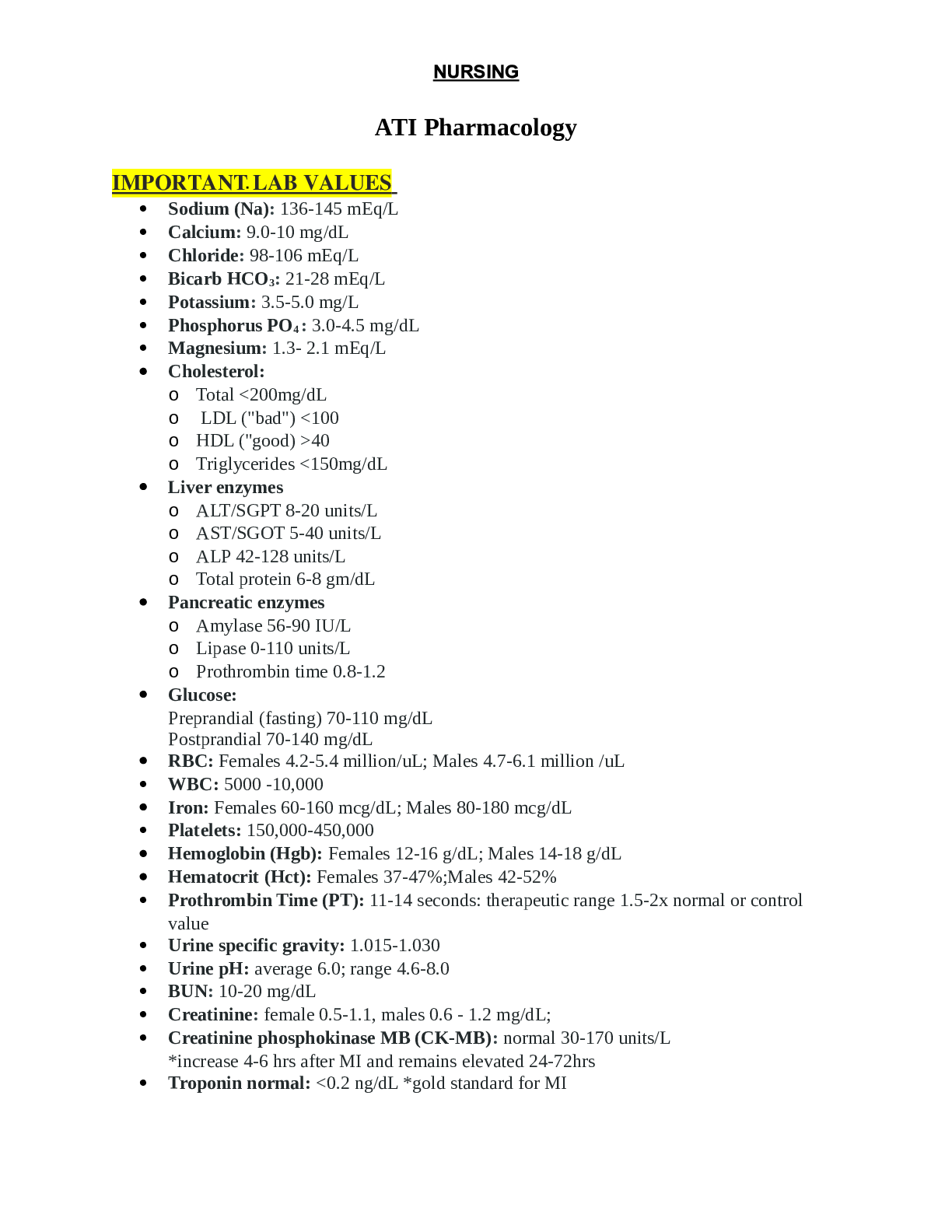
ATI Pharmacology 2019 B
1) A nurse is caring for a pt who is receiving Haloperidol. The nurse should identify which of the following findings as an adverse effect of the med?
-Akathisia = CORRECT ANSWER
An adverse eff
...
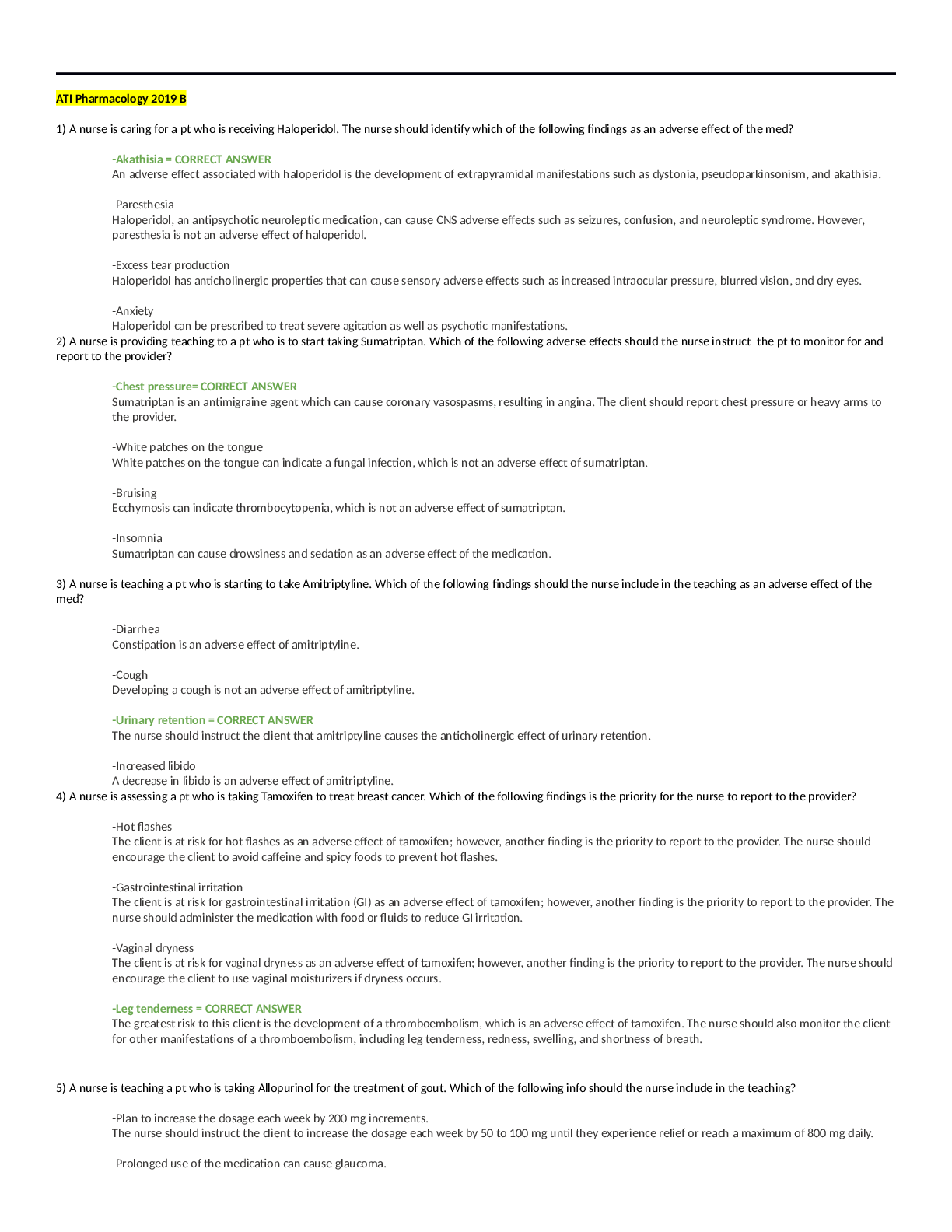
ATI Pharmacology 2019 B
1) A nurse is caring for a pt who is receiving Haloperidol. The nurse should identify which of the following findings as an adverse effect of the med?
-Akathisia = CORRECT ANSWER
An adverse effect associated with haloperidol is the development of extrapyramidal manifestations such as dystonia, pseudoparkinsonism, and akathisia.
-Paresthesia
Haloperidol, an antipsychotic neuroleptic medication, can cause CNS adverse effects such as seizures, confusion, and neuroleptic syndrome. However,
paresthesia is not an adverse effect of haloperidol.
-Excess tear production
Haloperidol has anticholinergic properties that can cause sensory adverse effects such as increased intraocular pressure, blurred vision, and dry eyes.
-Anxiety
Haloperidol can be prescribed to treat severe agitation as well as psychotic manifestations.
2) A nurse is providing teaching to a pt who is to start taking Sumatriptan. Which of the following adverse effects should the nurse instruct the pt to monitor for and
report to the provider?
-Chest pressure= CORRECT ANSWER
Sumatriptan is an antimigraine agent which can cause coronary vasospasms, resulting in angina. The client should report chest pressure or heavy arms to
the provider.
-White patches on the tongue
White patches on the tongue can indicate a fungal infection, which is not an adverse effect of sumatriptan.
-Bruising
Ecchymosis can indicate thrombocytopenia, which is not an adverse effect of sumatriptan.
-Insomnia
Sumatriptan can cause drowsiness and sedation as an adverse effect of the medication.
3) A nurse is teaching a pt who is starting to take Amitriptyline. Which of the following findings should the nurse include in the teaching as an adverse effect of the
med?
-Diarrhea
Constipation is an adverse effect of amitriptyline.
-Cough
Developing a cough is not an adverse effect of amitriptyline.
-Urinary retention = CORRECT ANSWER
The nurse should instruct the client that amitriptyline causes the anticholinergic effect of urinary retention.
-Increased libido
A decrease in libido is an adverse effect of amitriptyline.
4) A nurse is assessing a pt who is taking Tamoxifen to treat breast cancer. Which of the following findings is the priority for the nurse to report to the provider?
-Hot flashes
The client is at risk for hot flashes as an adverse effect of tamoxifen; however, another finding is the priority to report to the provider. The nurse should
encourage the client to avoid caffeine and spicy foods to prevent hot flashes.
-Gastrointestinal irritation
The client is at risk for gastrointestinal irritation (GI) as an adverse effect of tamoxifen; however, another finding is the priority to report to the provider. The
nurse should administer the medication with food or fluids to reduce GI irritation.
-Vaginal dryness
The client is at risk for vaginal dryness as an adverse effect of tamoxifen; however, another finding is the priority to report to the provider. The nurse should
encourage the client to use vaginal moisturizers if dryness occurs.
-Leg tenderness = CORRECT ANSWER
The greatest risk to this client is the development of a thromboembolism, which is an adverse effect of tamoxifen. The nurse should also monitor the client
for other manifestations of a thromboembolism, including leg tenderness, redness, swelling, and shortness of breath.
5) A nurse is teaching a pt who is taking Allopurinol for the treatment of gout. Which of the following info should the nurse include in the teaching?
-Plan to increase the dosage each week by 200 mg increments.
The nurse should instruct the client to increase the dosage each week by 50 to 100 mg until they experience relief or reach a maximum of 800 mg daily.
-Prolonged use of the medication can cause glaucoma.
The nurse should instruct the client that the prolonged use of allopurinol can cause cataracts; therefore, the client should have periodic ophthalmic
checkups.
-Drink 2 L of water daily. = CORRECT ANSWER
The nurse should instruct the client to drink at least 2 L of water each day to prevent renal stone formation and kidney injury, because allopurinol is
eliminated through the kidneys.
-A fine red rash is transient and can be treated with antihistamines.
The nurse should instruct the client to report a rash to the provider immediately as this can be an indication of hypersensitivity syndrome, a life-threatening
toxicity. Treatment for allopurino...................................................................CONTINUED
[Show More]