Brightwood College - NURSING 220 HESI STUDY GUIDE
Document Content and Description Below
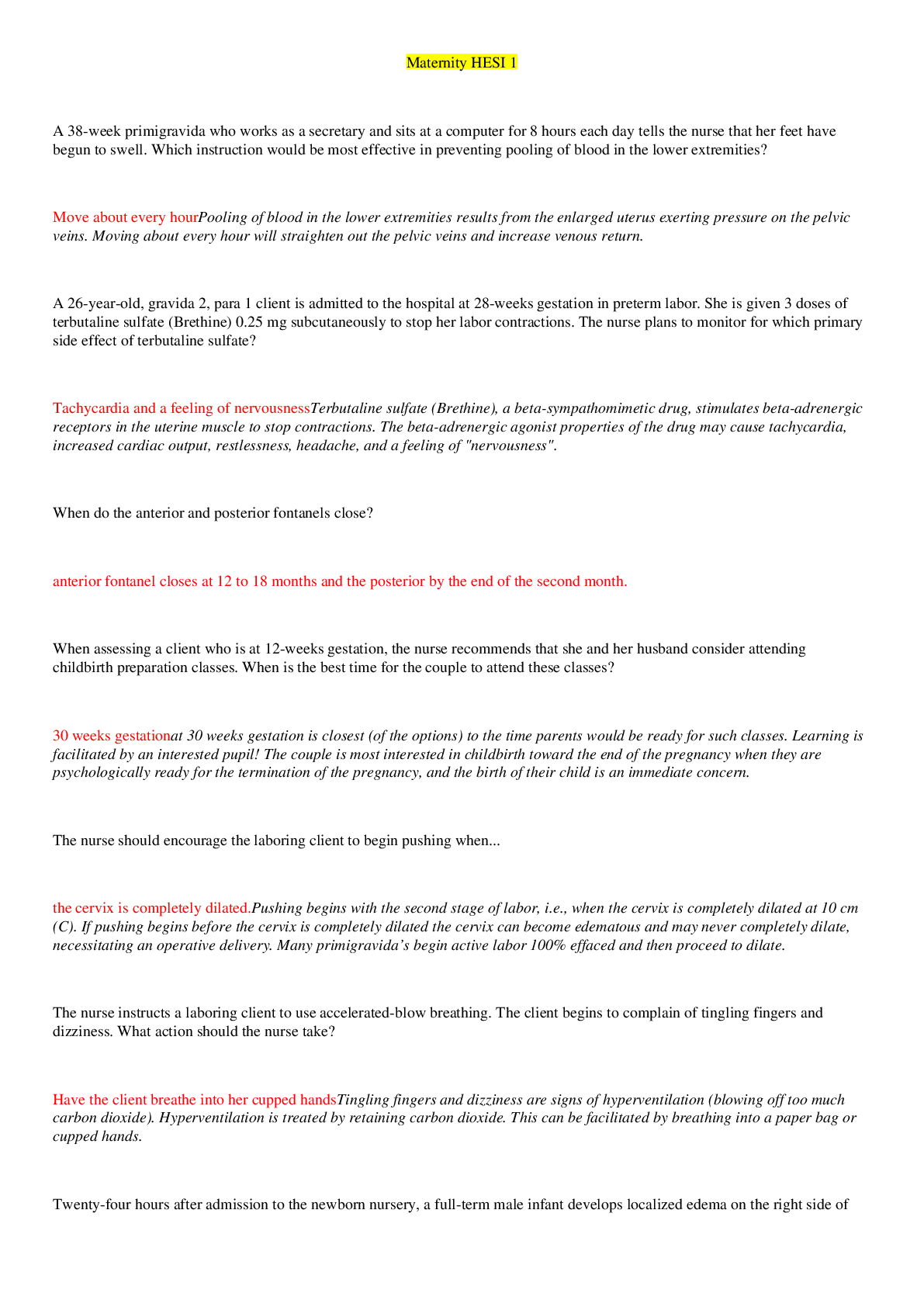
1. Which maternal behavior is the nurse most likely to see when a new mother receives her infant for the first time?
Her arms and hands receive the infant and she then traces the infant's profile with her fingertips.
...
[Show More]
Last updated: 3 years ago
Preview 1 out of 60 pages
Instant download
Buy this Document to get the Full Access Instantly
Provided by Students Who Aced it
We Verify Document Content to Gurantee Accuracy
Reviews( 0 )
Document information
Connected school, study & course
About the document
Uploaded On
Nov 06, 2020
Number of pages
60
Written in
All

Additional information
This document has been written for:
Uploaded
Nov 06, 2020
Downloads
0
Views
236
Topic Tags
Related Subjects & Courses
Explore similar study resources and related concepts.
Recommended For You
Get more on HESI »
$15
63 Pages
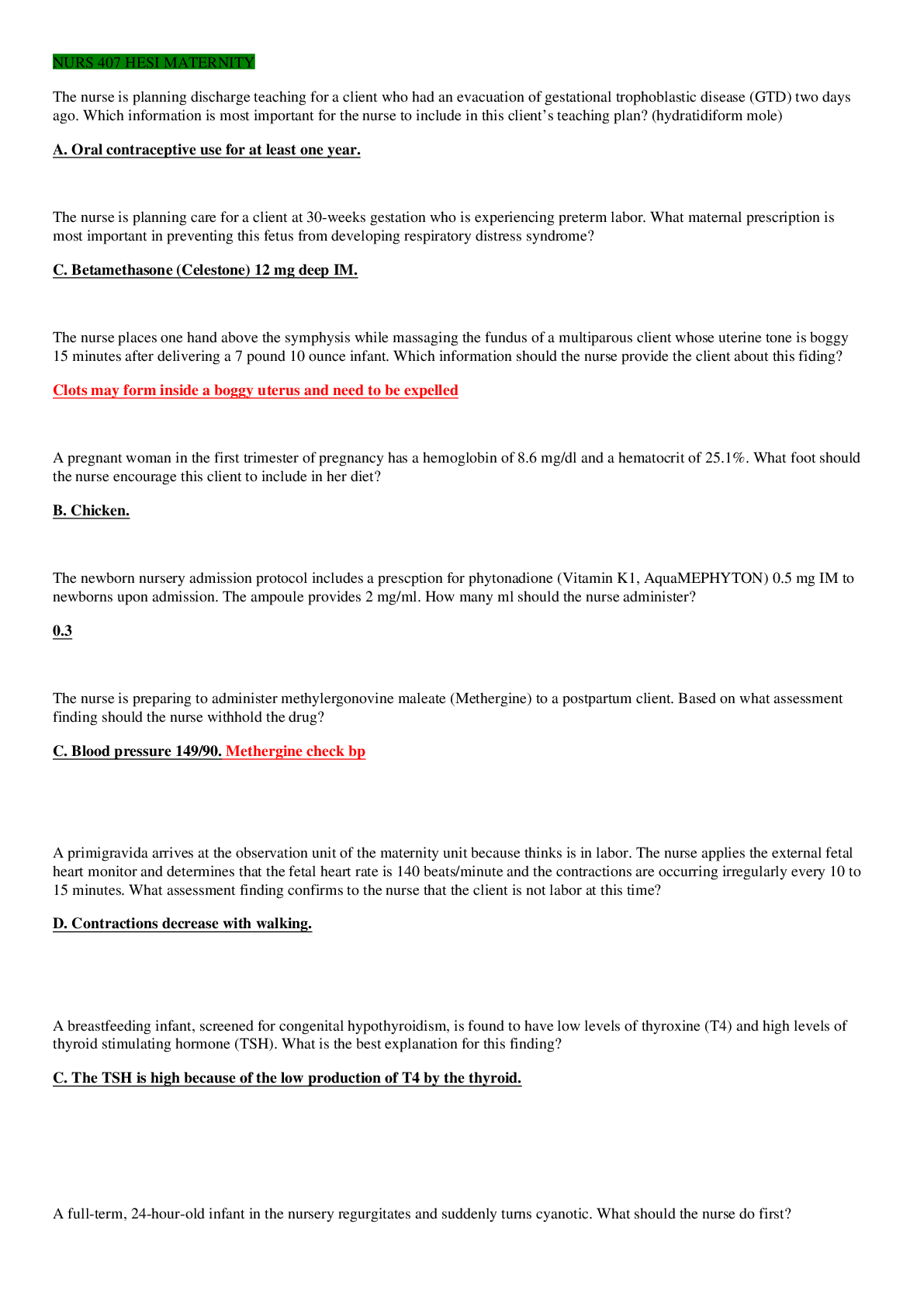
Brightwood College - NURSING 220 HESI STUDY GUIDE. Maternity H...

$20
77 Pages
NURSING 220 (NURSING220HESI STUDY GUIDE) (NURSING 220 (NURSING...

$26
320 Pages
Pediatric Success: Review Book/ NURSING 2201/ NURS MISC/ Test...
$12
25 Pages
NURSING 2200 ART OF PROFESSIONAL NURSING EXAM Q & A 2024
.png)

$6
18 Pages
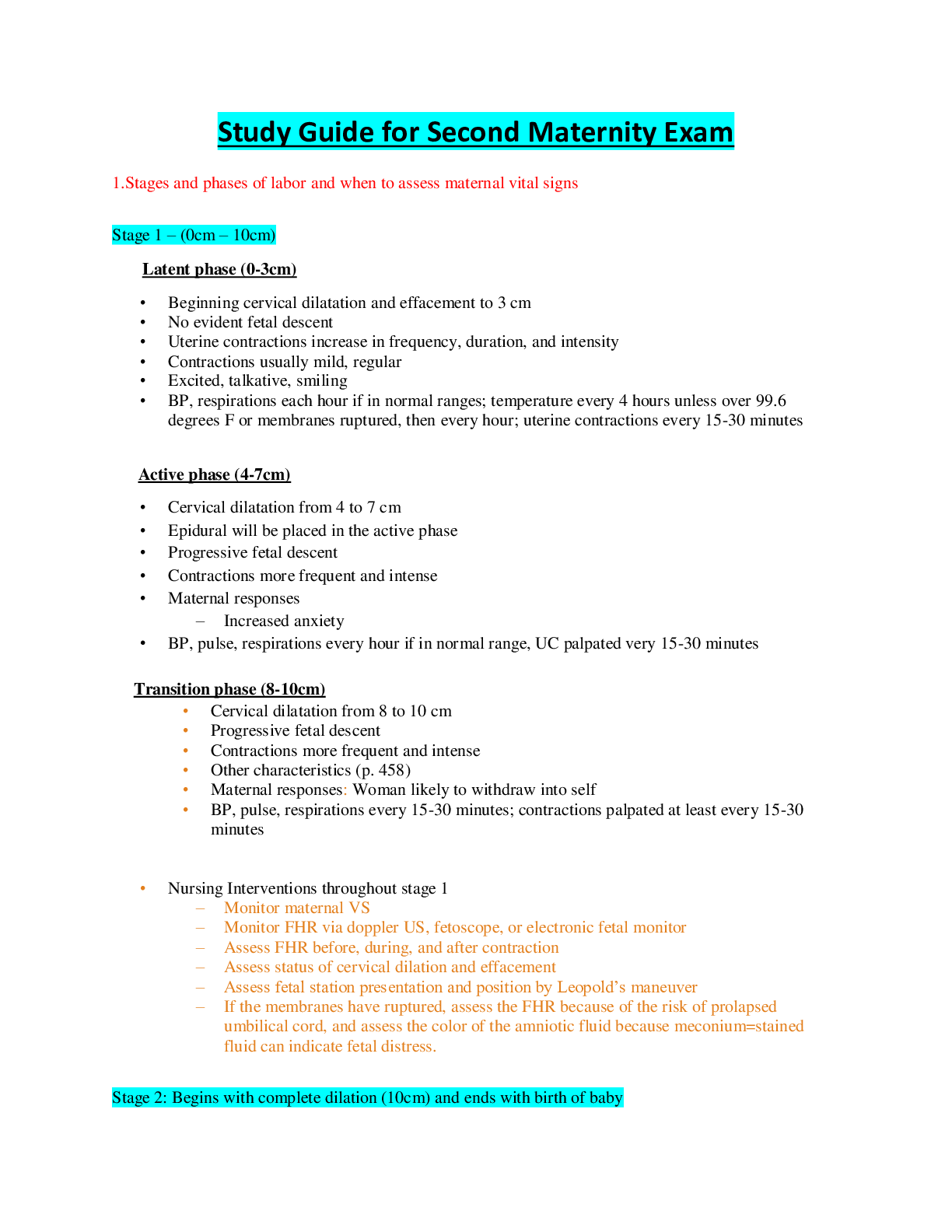
NURSING 220 2nd Exam - Study Guide with complete solution,late...

$6
10 Pages
NURSING 220 Study Guide for Third OB Exam with complete soluti...

$6
13 Pages
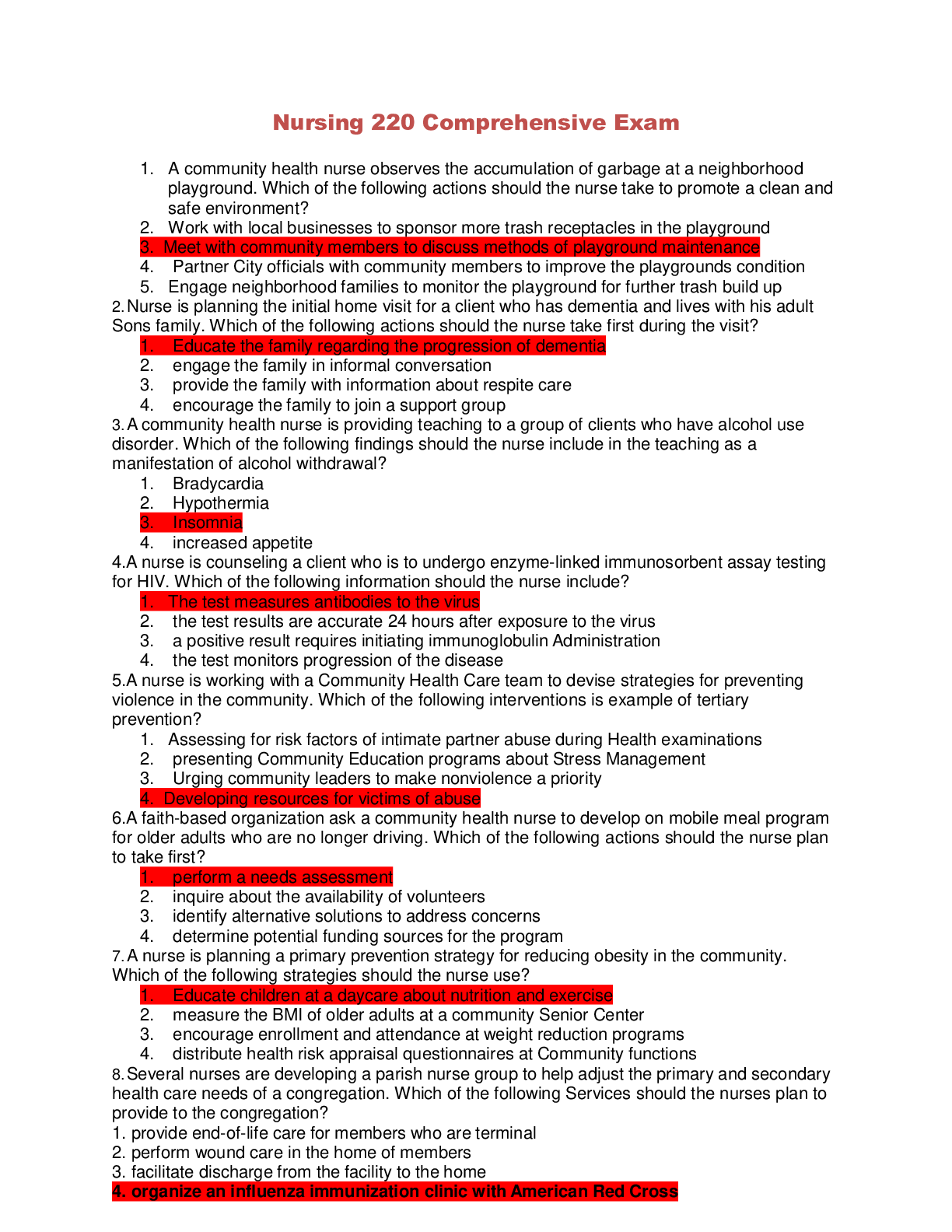
Keiser University Community Health NURSING 220 Comprehensive...
$8
12 Pages
Nursing 220 Comprehensive Exam Quality Questions and 100% Corr...

$6
13 Pages
Nursing 220 Comprehensive Exam Questions and Correct Answers 1...
$6.5
12 Pages
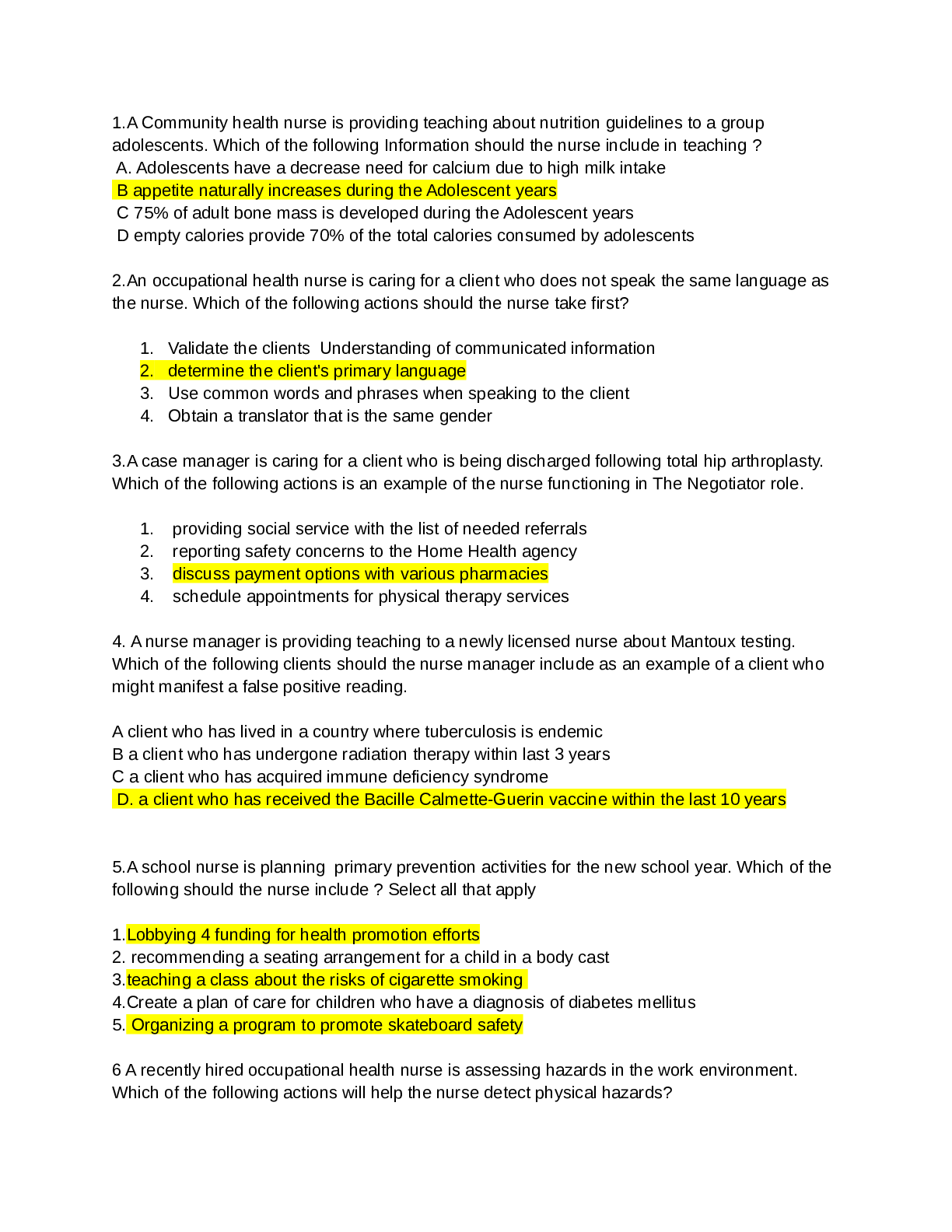
NURSING 220 community B Final exam latest update with complete...

More related documents below





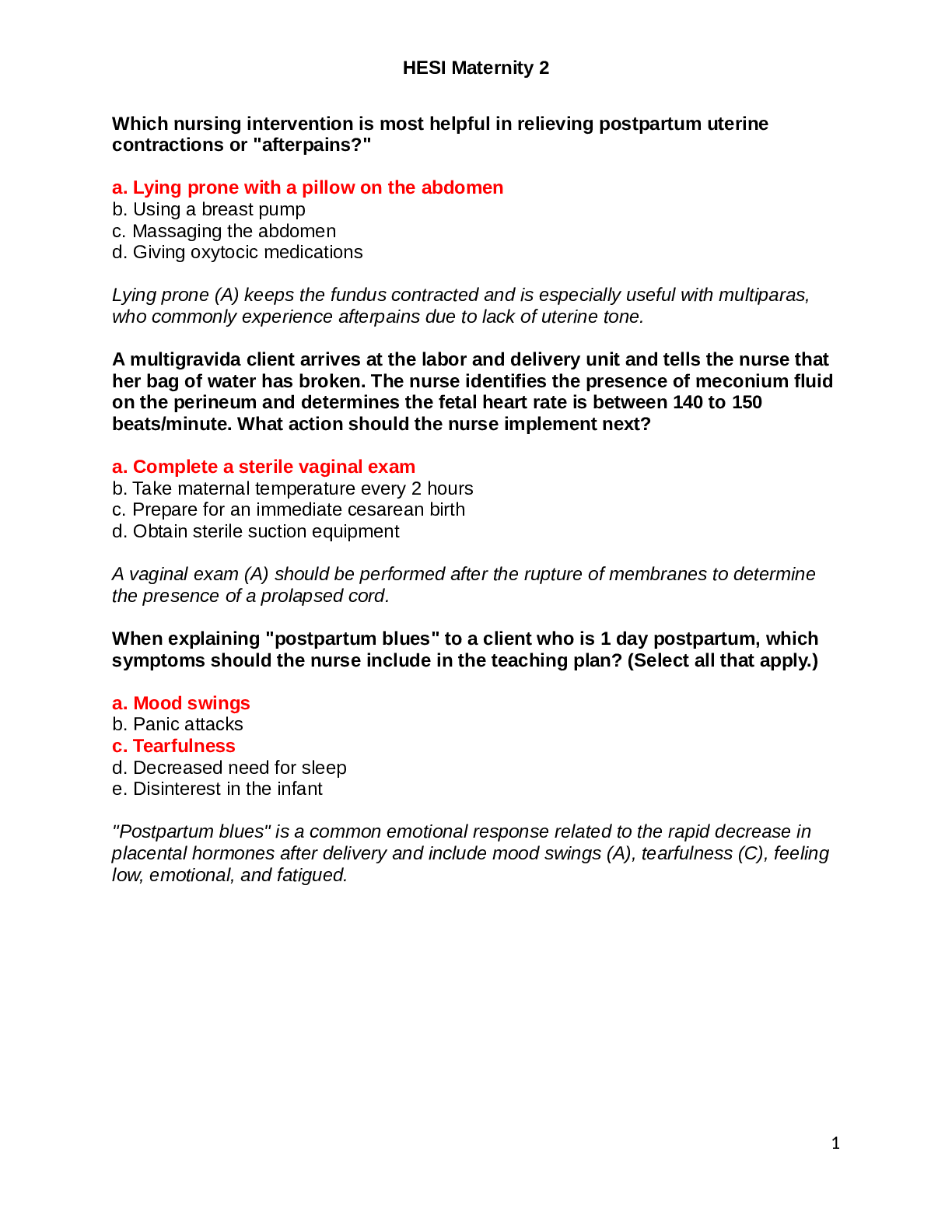
 HESI.png)

