Correctly Answered A & P II - Cardiology Quiz latest
Document Content and Description Below
Correctly Answered A & P II - Cardiology Quiz latest
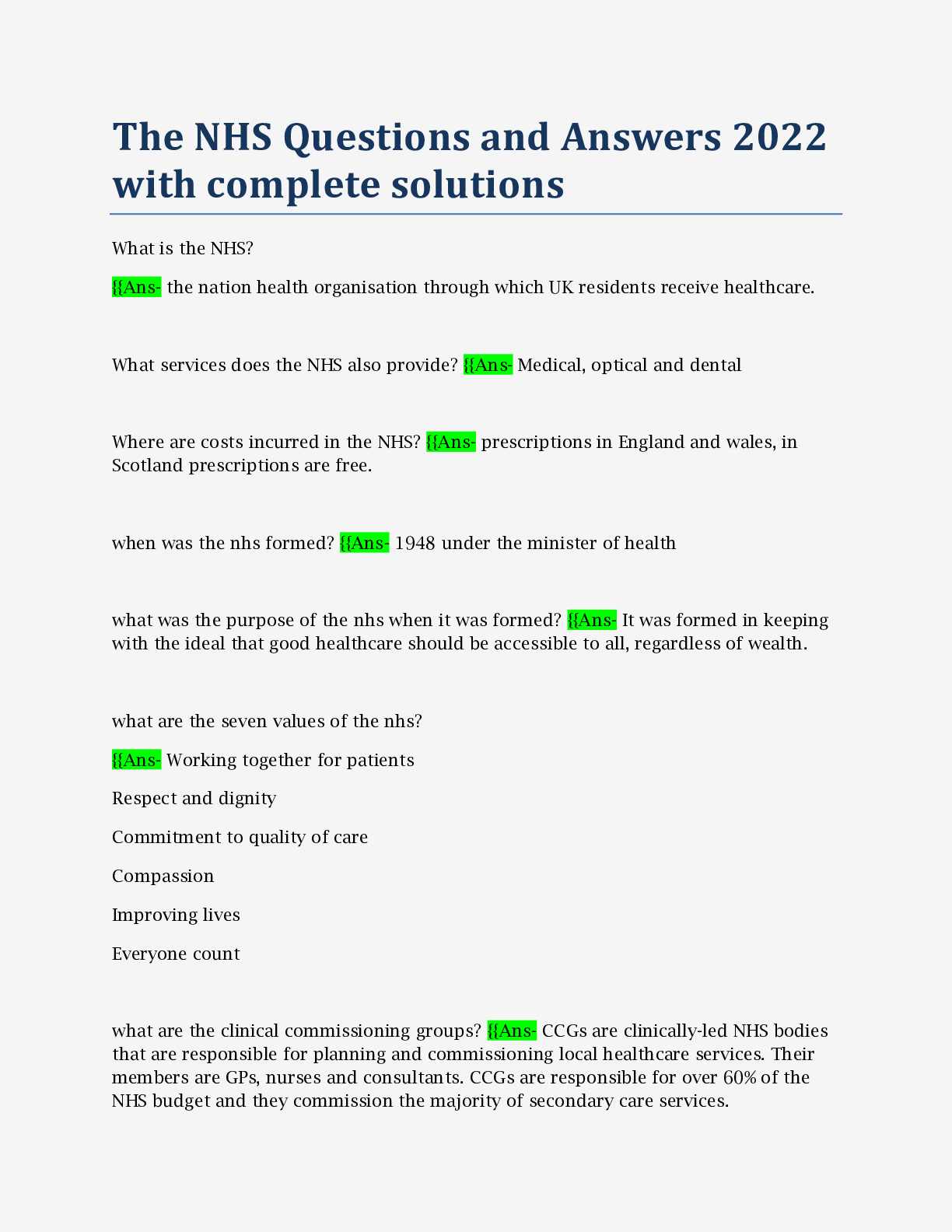
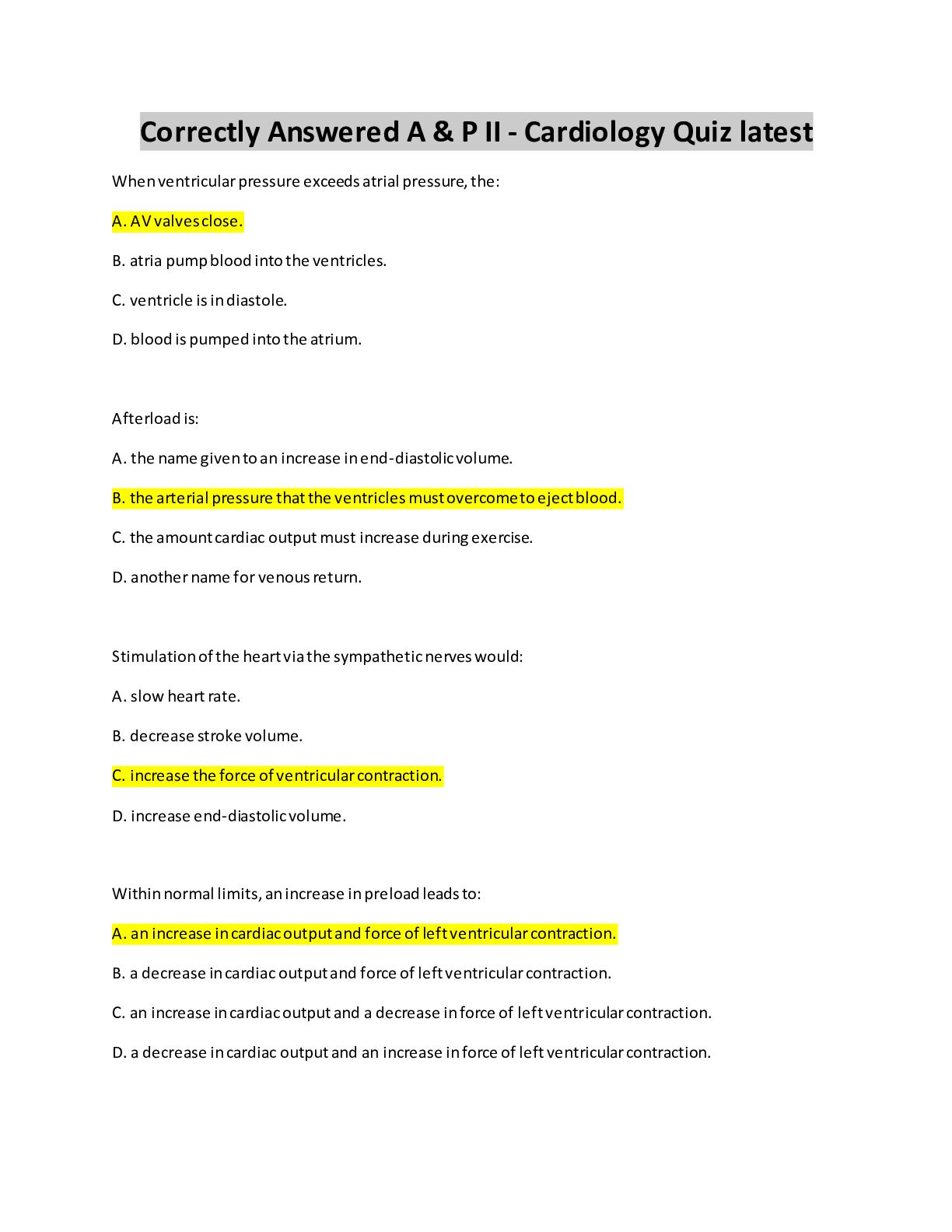
When ventricular pressure exceeds atrial pressure, the:
Afterload is:
Stimulation of the heart via the sympathetic nerves would:
Within normal limits, an inc
...
[Show More]
Last updated: 3 years ago
Preview 1 out of 8 pages
Instant download
Buy this Document to get the Full Access Instantly
Provided by Students Who Aced it
We Verify Document Content to Gurantee Accuracy
Reviews( 0 )
Document information
Connected school, study & course
About the document
Uploaded On
May 05, 2022
Number of pages
8
Written in
All

Additional information
This document has been written for:
Uploaded
May 05, 2022
Downloads
0
Views
70
Topic Tags
Recommended For You
Get more on EXAM »

$26
345 Pages
eBook [PDF] Barash, Cullen, and Stoelting's Clinical Anesthesi...

$29
551 Pages
eBook [PDF] Fundamentals of Nursing 3rd Edition By Joanne Toll...

$29
1067 Pages
eBook [PDF] Burns' Pediatric Primary Care 7th Edition BY Dawn...

$16
137 Pages
Test Bank for Burns' Pediatric Primary Care 7th Edition by Daw...
$15
135 Pages
Burns Pediatric Primary Care 7th Edition All Chapters Complete...
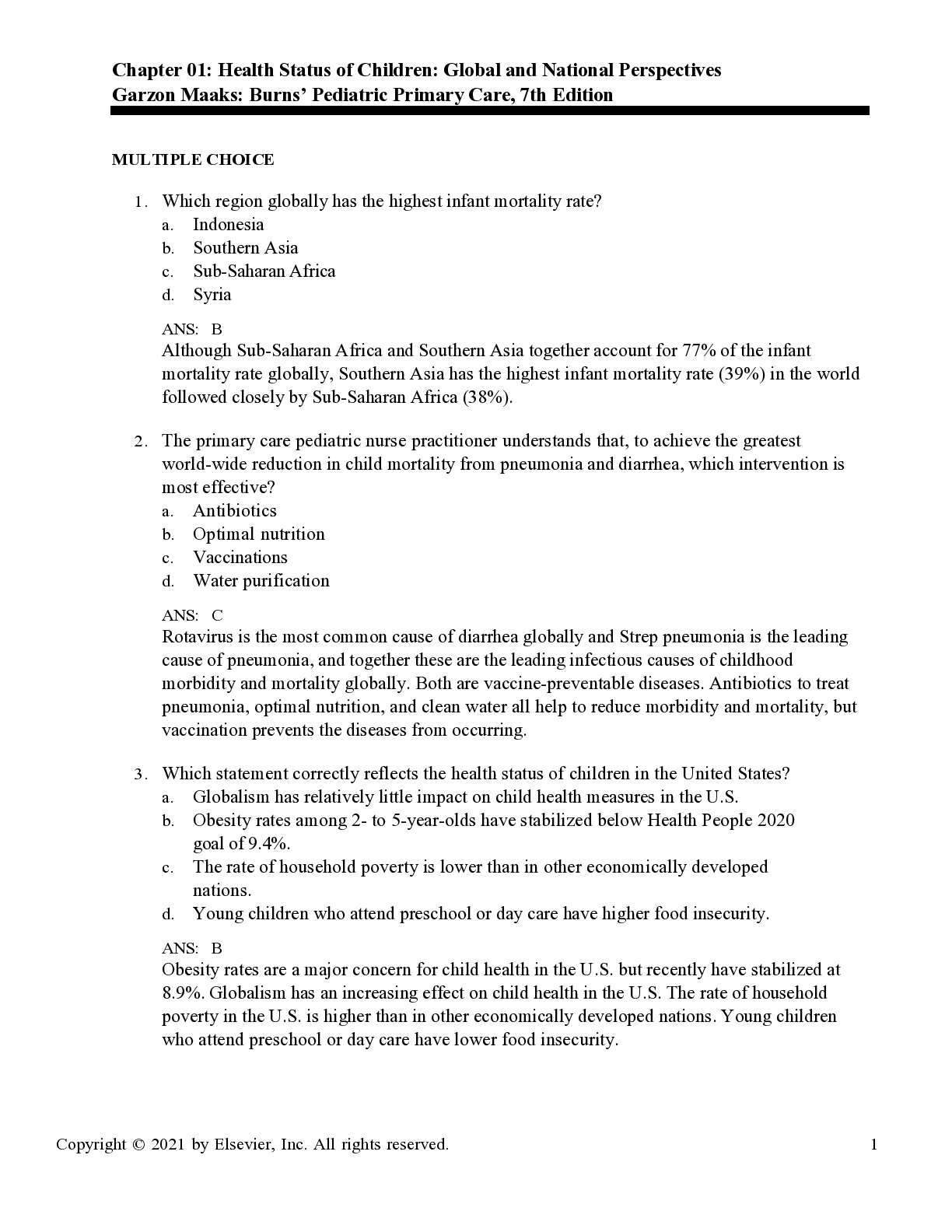
$26
209 Pages
Burns' Pediatric Primary Care, 7th Edition by Garzon, Barber S...
$15
835 Pages
Complete Test Bank Emergency Care 14th Edition Daniel Limmer Q...
$16
835 Pages
Test Bank Emergency Care 14th Edition Daniel Limmer Questions...
$25
591 Pages
AACN Essentials of Progressive Care Nursing 5th Edition By S...

$29
513 Pages
[eTextbook] [PDF] Labor Economics 9th Edition By George Borja...
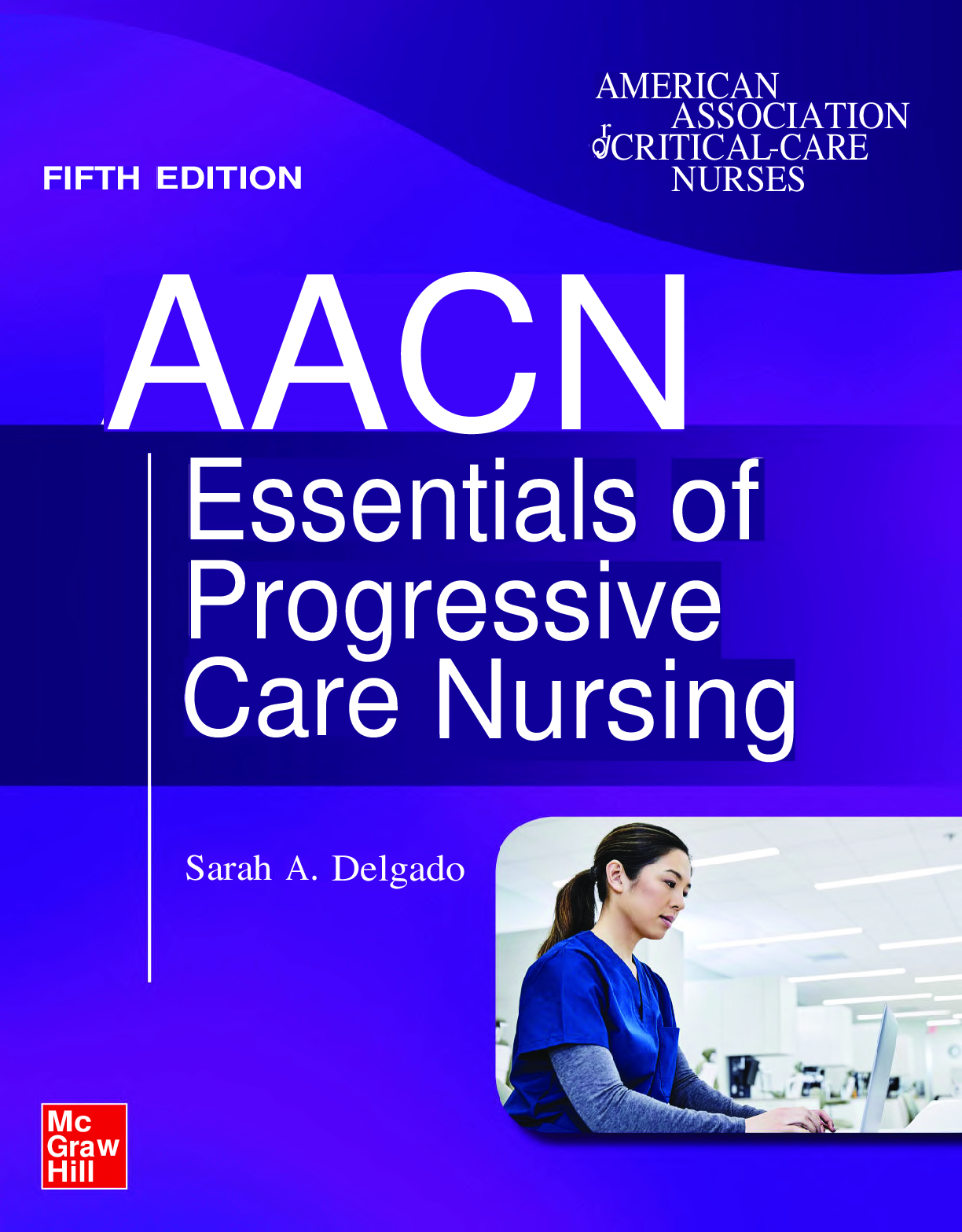
$19
591 Pages
AACN Essentials of Progressive Care Nursing, 5th Edition by Sa...

$29
658 Pages
[eTextbook] [PDF] Our Sexuality Enhanced Edition, Loose-leaf V...
More related documents below