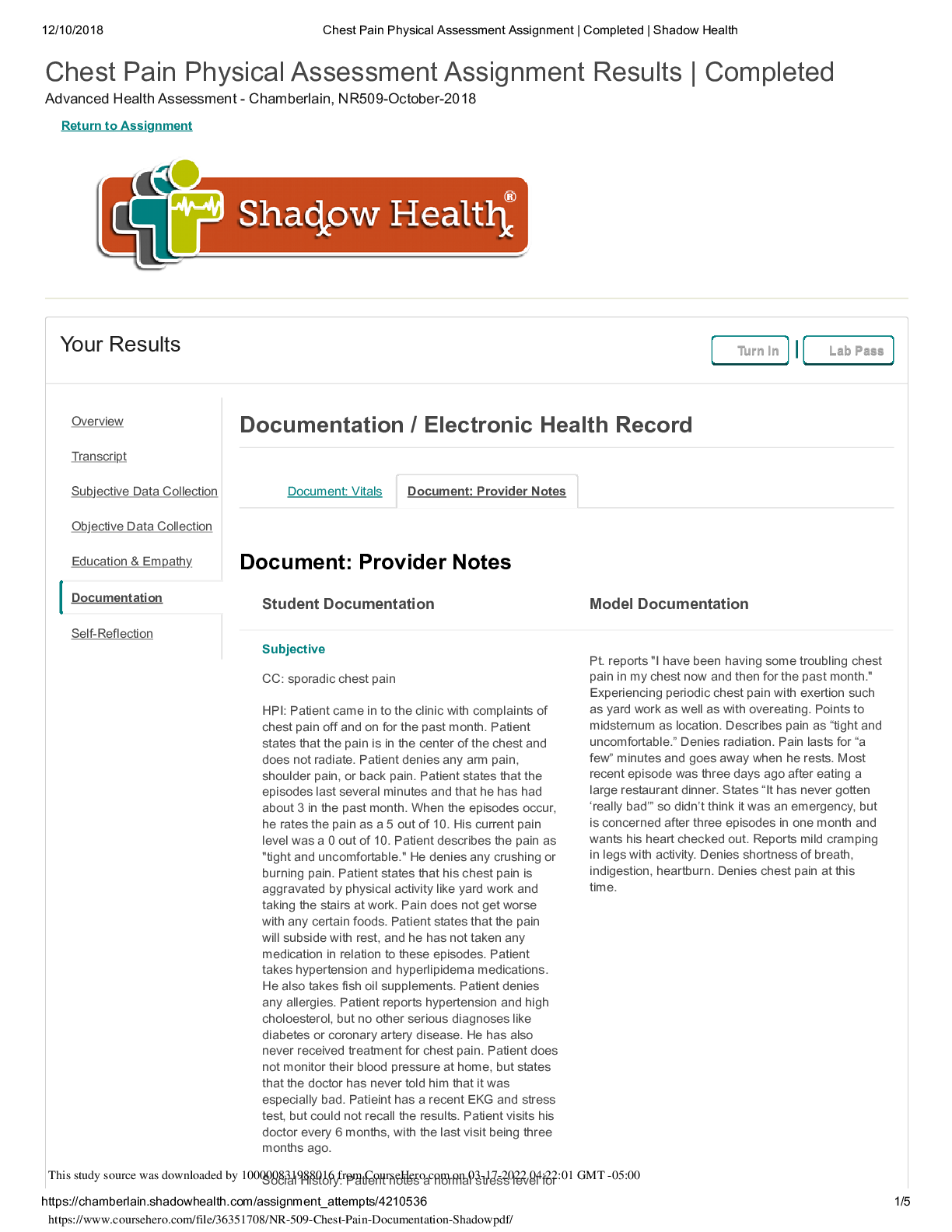
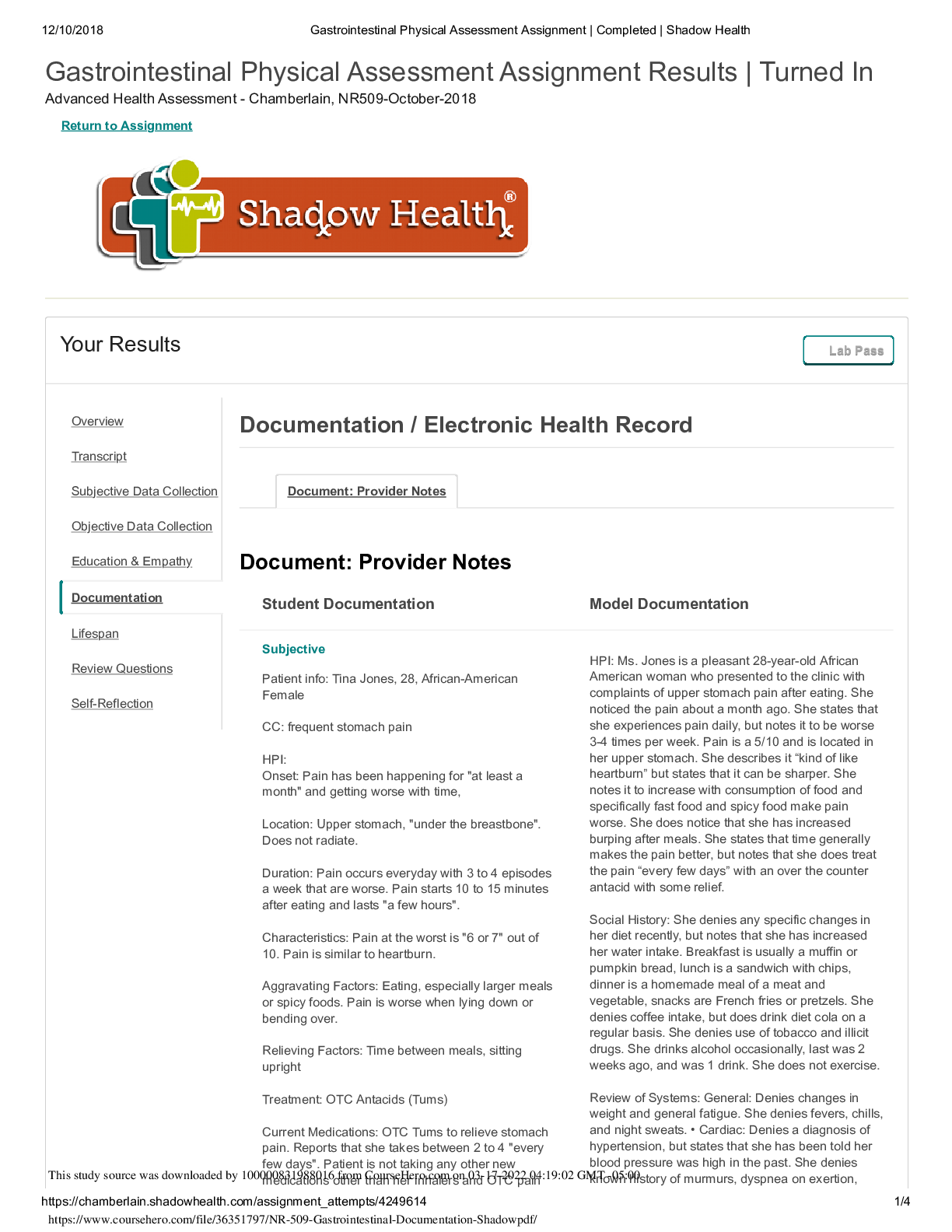
NURSING > SHADOW HEALTH > Summary Shadow Health Gastrointestinal Physical Assessment Review Questions (All)
Summary Shadow Health Gastrointestinal Physical Assessment Review Questions
Document Content and Description Below
Last updated: 4 years ago
Preview 1 out of 2 pages
Instant download

Buy this Document to get the Full Access Instantly
Provided by Students Who Aced it
We Verify Document Content to Gurantee Accuracy
Also available in bundle (1)
Click Below to Access Bundle(s)
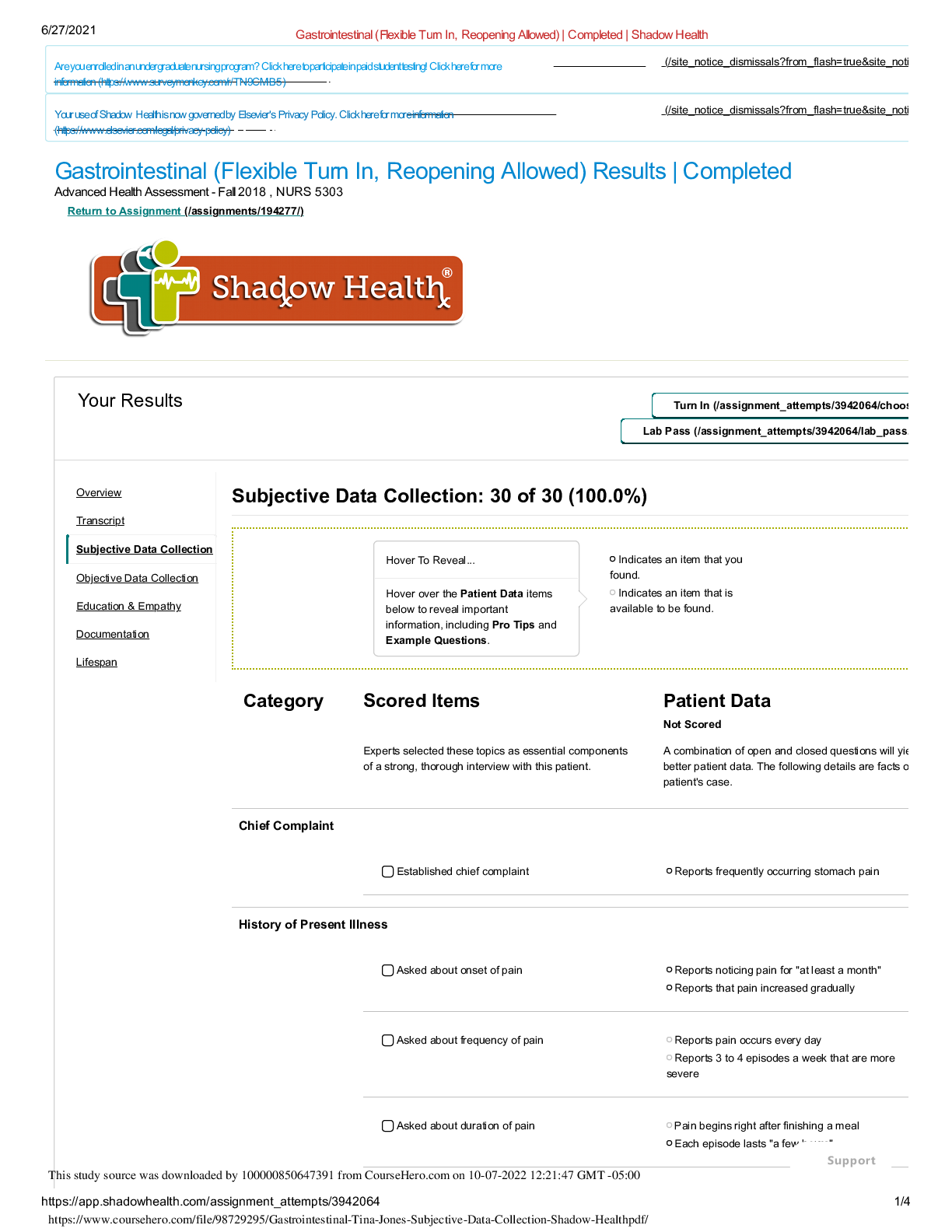
Tina Jones Gastrointestinal Physical Assessment Results Tabs
Tina Jones Gastrointestinal Physical Assessment Results_Tabs
By Nutmegs 4 years ago
$30
6
Reviews( 0 )
Document information
Connected school, study & course
About the document
Uploaded On
May 06, 2022
Number of pages
2
Written in
All

Additional information
This document has been written for:
Uploaded
May 06, 2022
Downloads
0
Views
359
Topic Tags
Recommended For You
Get more on SHADOW HEALTH »
Summary Shadow Health Respiratory Physical Assessment Review Q...

NR 516 Week 5 Shadow Health Gastrointestinal Physical Assessme...
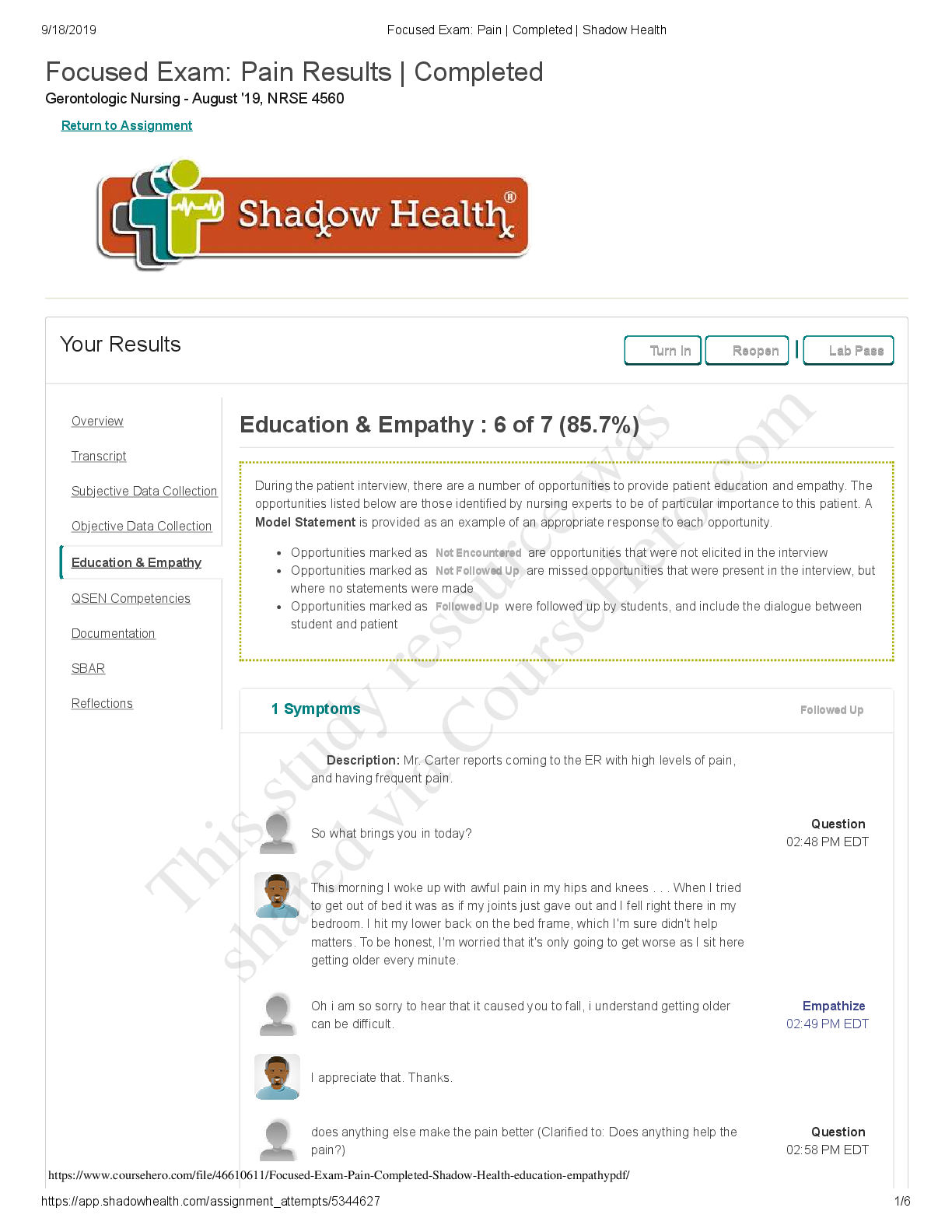
NRSE 4560 Gerontologic Nursing Edward Carter 65 year old Afric...

Shadow Health Tanner Bailey Case 01- Focused Exam Pain Managem...

NR 509 Week 5 Shadow Health Gastrointestinal Physical Assessme...
Focused Exam Mobility Completed Shadow Health subjective Subj...

NR 509 Week 5 Shadow Health Gastrointestinal review questions...

NR 509 Week 5 Shadow Health Gastrointestinal Physical Assessme...

NR 509 Week 5 Shadow Health Gastrointestinal Physical Assessme...

NR 509 Week 5 Shadow Health Gastrointestinal Physical Assessme...

TEST BANK for Essentials of Psychiatric Nursing 2nd Edition by...
Test Bank for Essentials of Psychiatric Nursing 2nd Edition by...

Test Bank for Essentials of Psychiatric Nursing 2nd Edition by...



.png)