RNSG 1538 Health Care Concepts III Final Exam BP/SCORE A
Document Content and Description Below
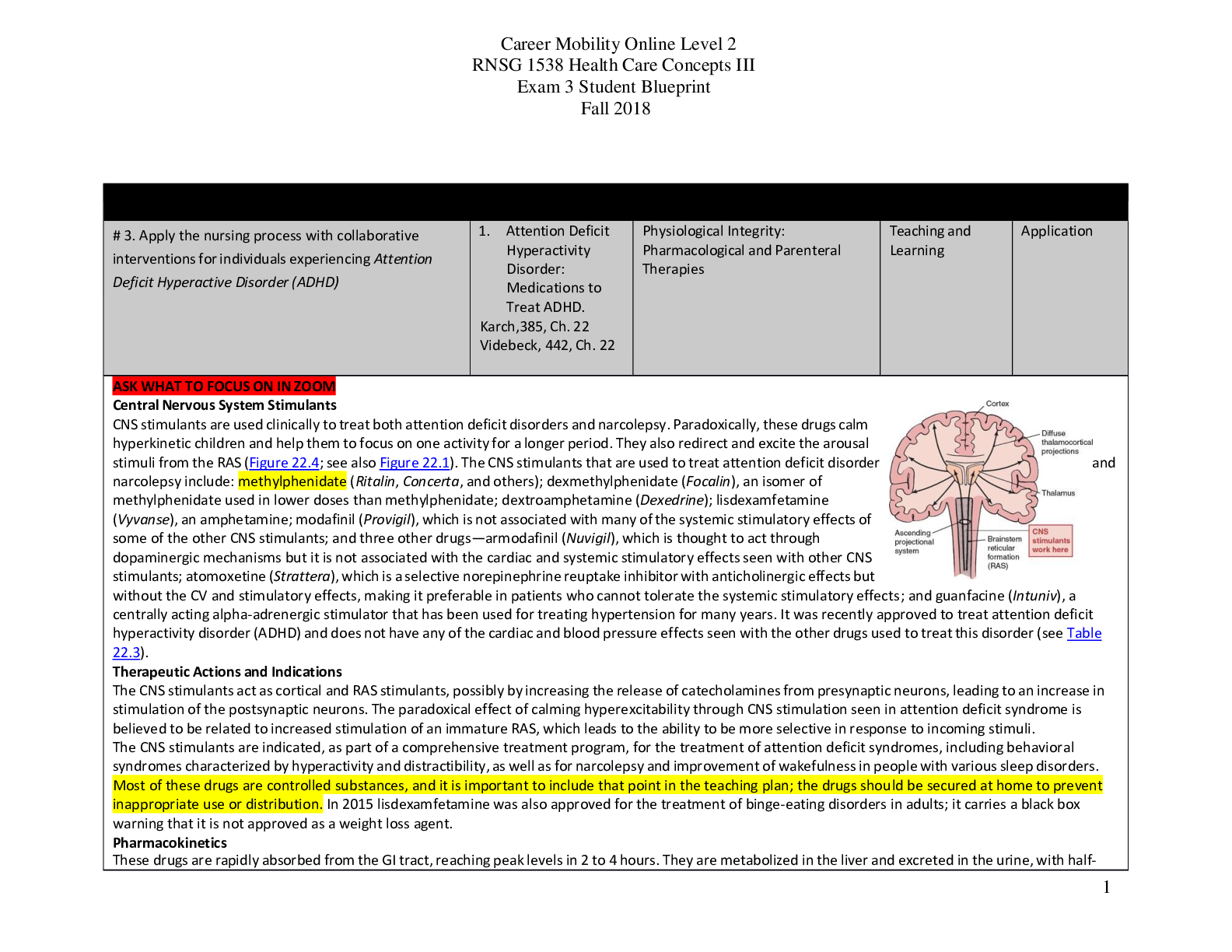
ASK WHAT TO FOCUS ON IN ZOOM Central Nervous System Stimulants CNS stimulants are used clinically to treat both attention deficit disorders and narcolepsy. Paradoxically, these drugs calm hyperkinet i c children and help
...
[Show More]
Last updated: 3 years ago
Preview 1 out of 111 pages
Instant download

Buy this Document to get the Full Access Instantly
Provided by Students Who Aced it
We Verify Document Content to Gurantee Accuracy
Reviews( 0 )
Document information
Connected school, study & course
About the document
Uploaded On
May 07, 2022
Number of pages
111
Written in
All

Additional information
This document has been written for:
Uploaded
May 07, 2022
Downloads
0
Views
67
Topic Tags
Recommended For You
Get more on EXAM »
$10.5
111 Pages
RNSG 1538 Health Care Concepts III Final Exam BP/SCORE A+
$10.5
111 Pages
RNSG 1538 Health Care Concepts III Final Exam BP/SCORE A+
$16.5
111 Pages
RNSG 1538 Health Care Concepts III Final Exam BP/SCORE A+
$21
111 Pages
RNSG 1538 Health Care Concepts III Final Exam BP Top Grade A+
$10
7 Pages
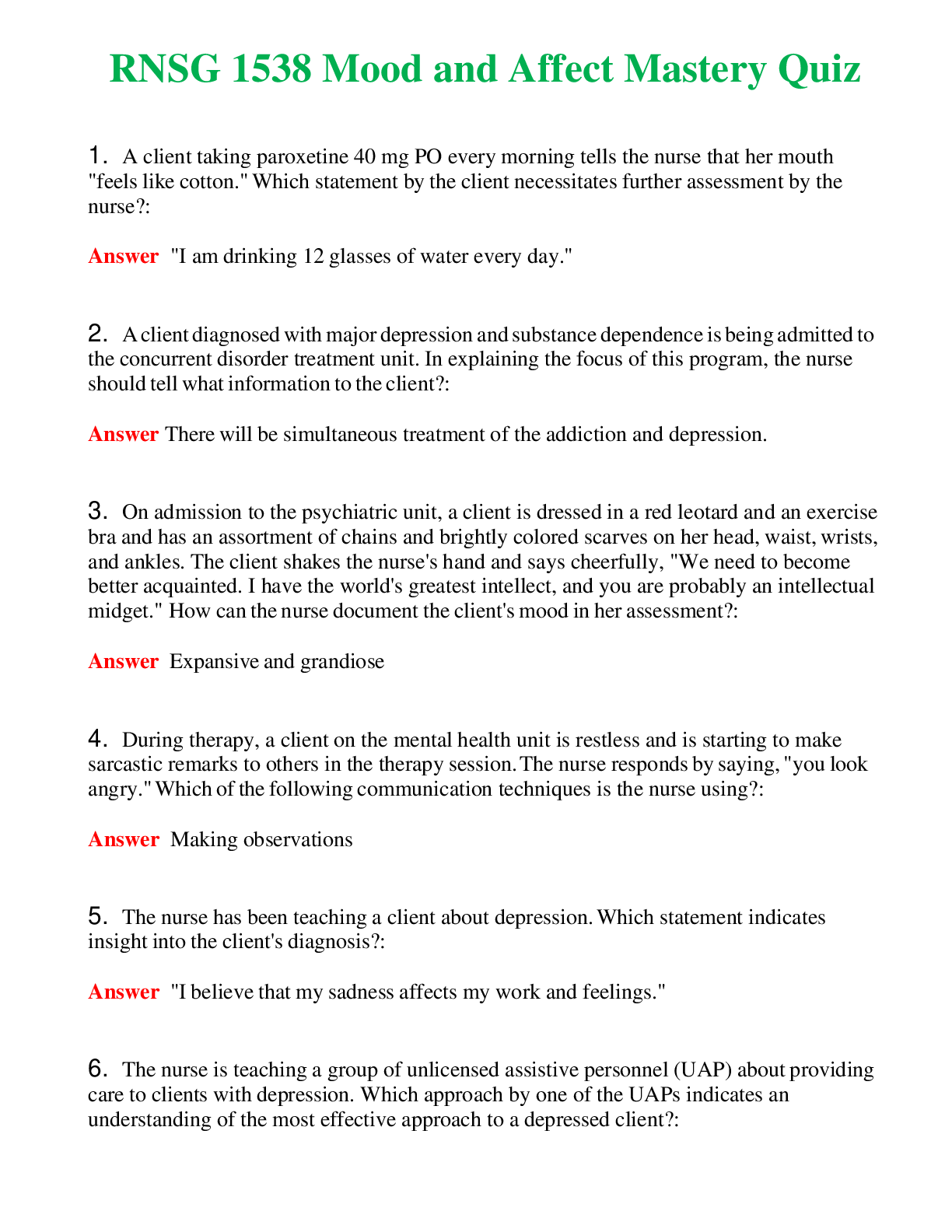
RNSG 1538 Mood and Affect Mastery Quiz | Actual Questions an...

$15
43 Pages
RNSG 1538 ATI Concept Base 3 | San Antonio College | ATI Comp...
$16
43 Pages
San Antonio College - RNSG 1538 ATI Concept Base 3: ATI Concep...
.png)
$12
43 Pages
Summary - RNSG 1538 ATI Concept Base 3: ATI Concept Base 3 (co...
$10
12 Pages
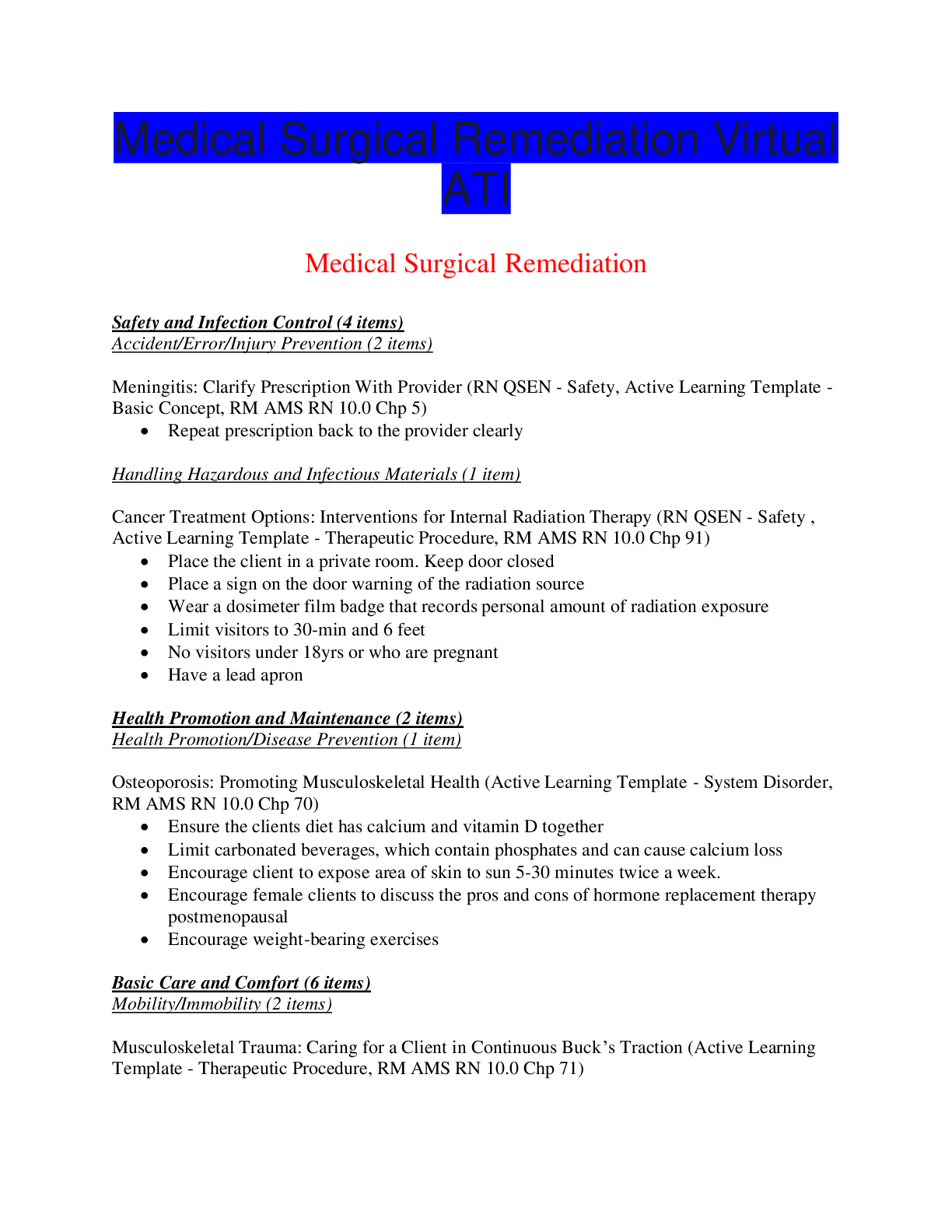
Virtual ATI-MEDSURG REMEDIATION-RNSG 1538-DELMAR COLLEGE
$9
10 Pages
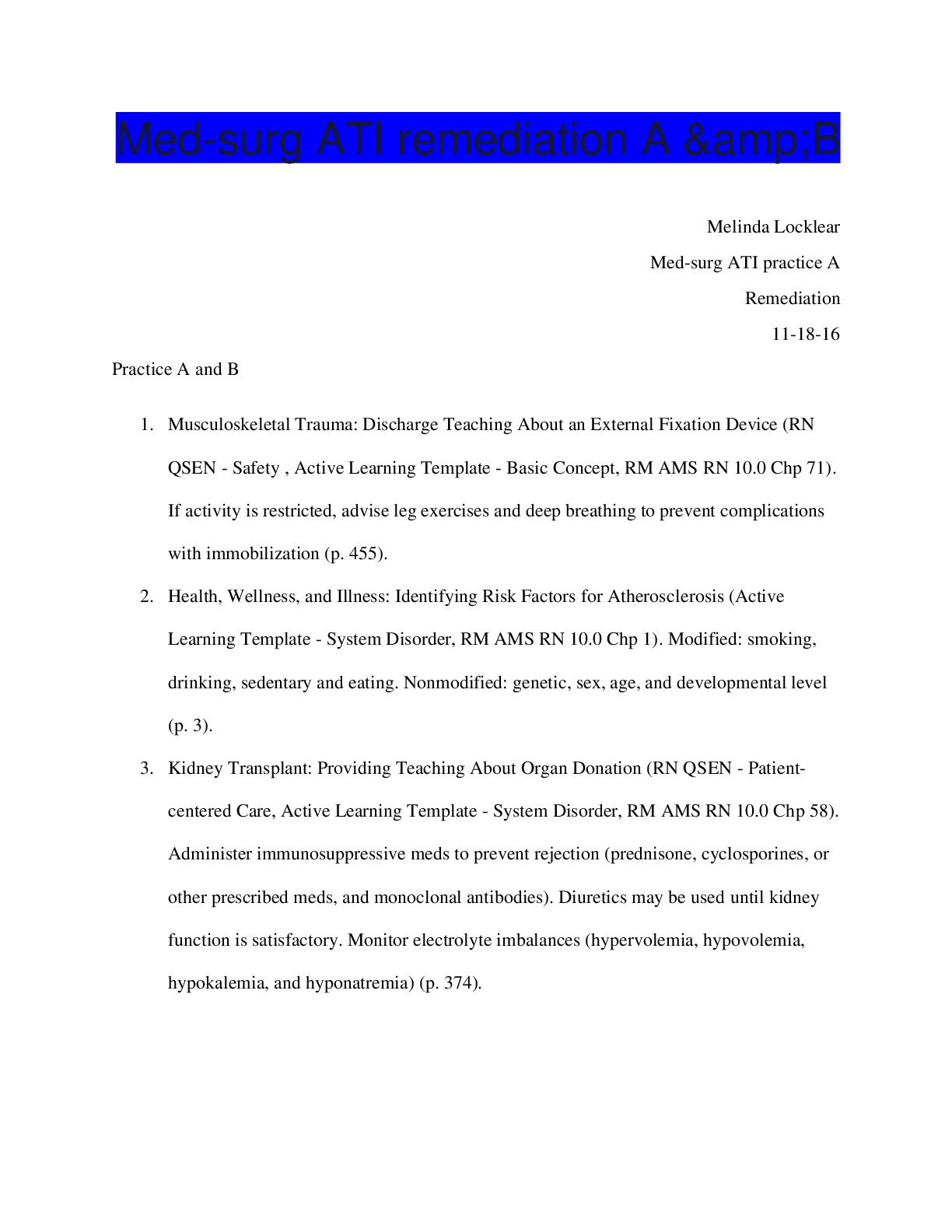
ATI-MEDSURG REMEDIATION-PARTS A&B((2020)) LATEST-RNSG 1538-DEL...


$18
21 Pages
RNSG 1430 Health Care Concepts I Study Guide for Final Exam –...

$16.5
73 Pages
RNSG 1430 Health Care Concepts I Study Guide for Final Exam –...
More related documents below


 (1).png)
 (1).png)
 (1).png)
 (1).png)
 (1).png)
 (1).png)
.png)
.png)

