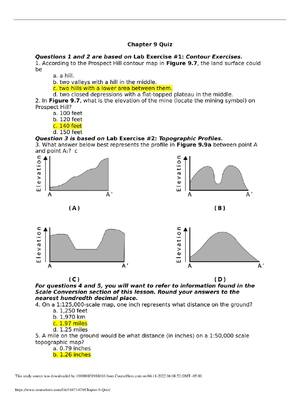
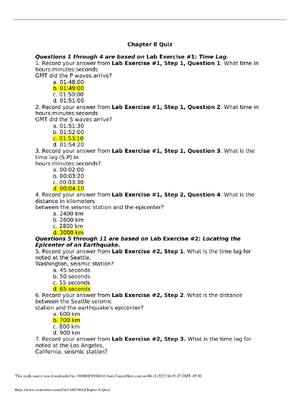
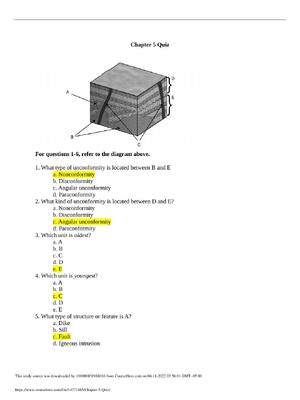
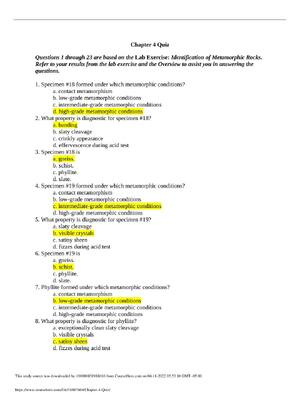
Earth Science > QUESTIONS & ANSWERS > PHSC 210 Quiz 7 Questions with Answers(Graded A):Liberty University (All)
PHSC 210 Quiz 7 Questions with Answers(Graded A):Liberty University
Document Content and Description Below
Last updated: 4 years ago
Preview 1 out of 15 pages
Instant download

Buy this Document to get the Full Access Instantly
Provided by Students Who Aced it
We Verify Document Content to Gurantee Accuracy
Also available in bundle (1)
Click Below to Access Bundle(s)

PHSC 210 Quizzes 1,2,3,4,5,6,7,8 Questions and Answers Latest: Already Graded A+
PHSC 210 Quizzes 1,2,3,4,5,6,8 Questions and Answers Latest: Already Graded A+
By Nutmegs 4 years ago
$26.5
8
Reviews( 0 )
Document information
Connected school, study & course
About the document
Uploaded On
May 09, 2022
Number of pages
15
Written in
All

Additional information
This document has been written for:
Uploaded
May 09, 2022
Downloads
0
Views
257
Topic Tags
Recommended For You
Get more on QUESTIONS & ANSWERS »
PHSC 210 Quiz 8 Questions with Answers(Graded A+):Liberty Univ...
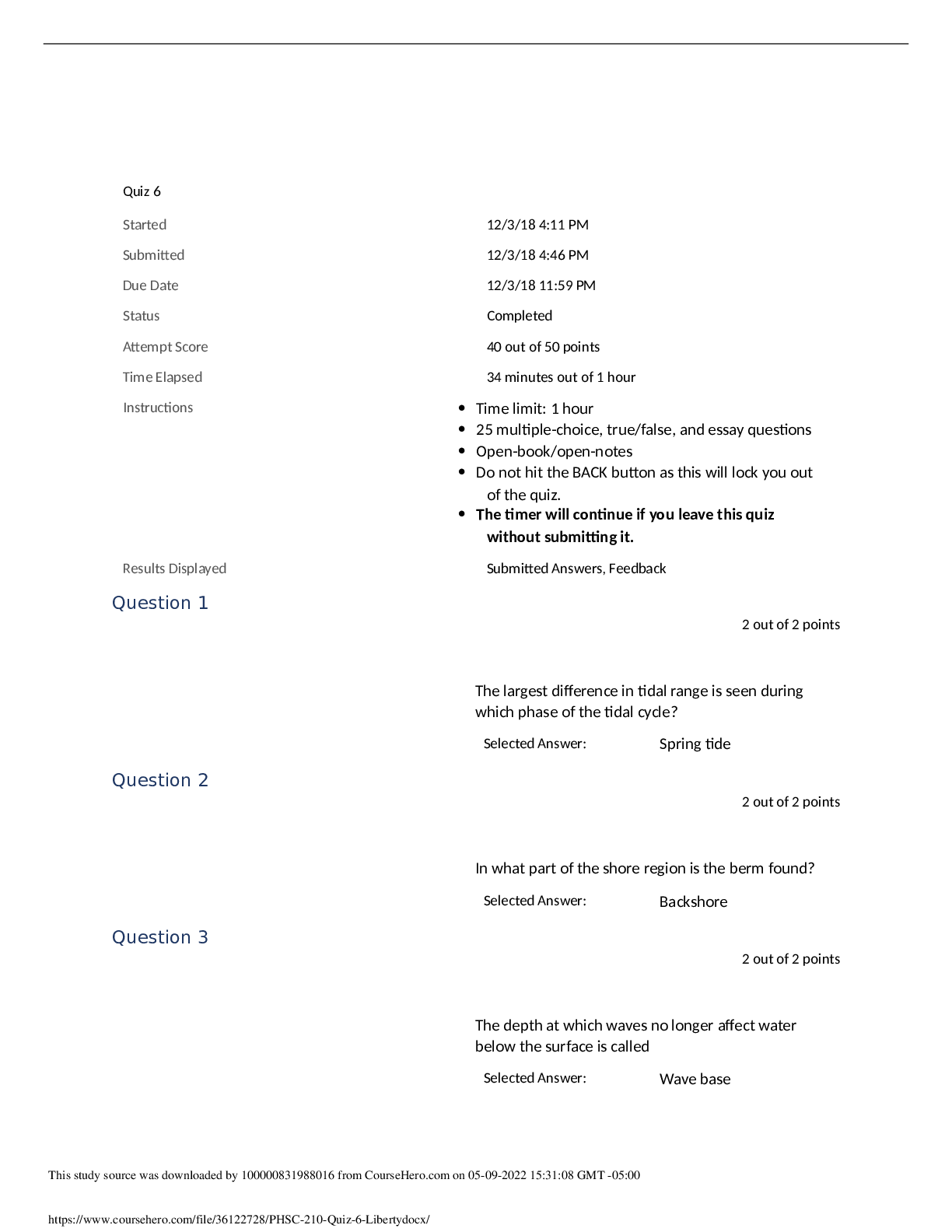
PHSC 210 Quiz 6 Questions with Answers(Graded A):Liberty Unive...

PHSC 210 Quiz 5 Questions with Answers(Graded A):Liberty Unive...
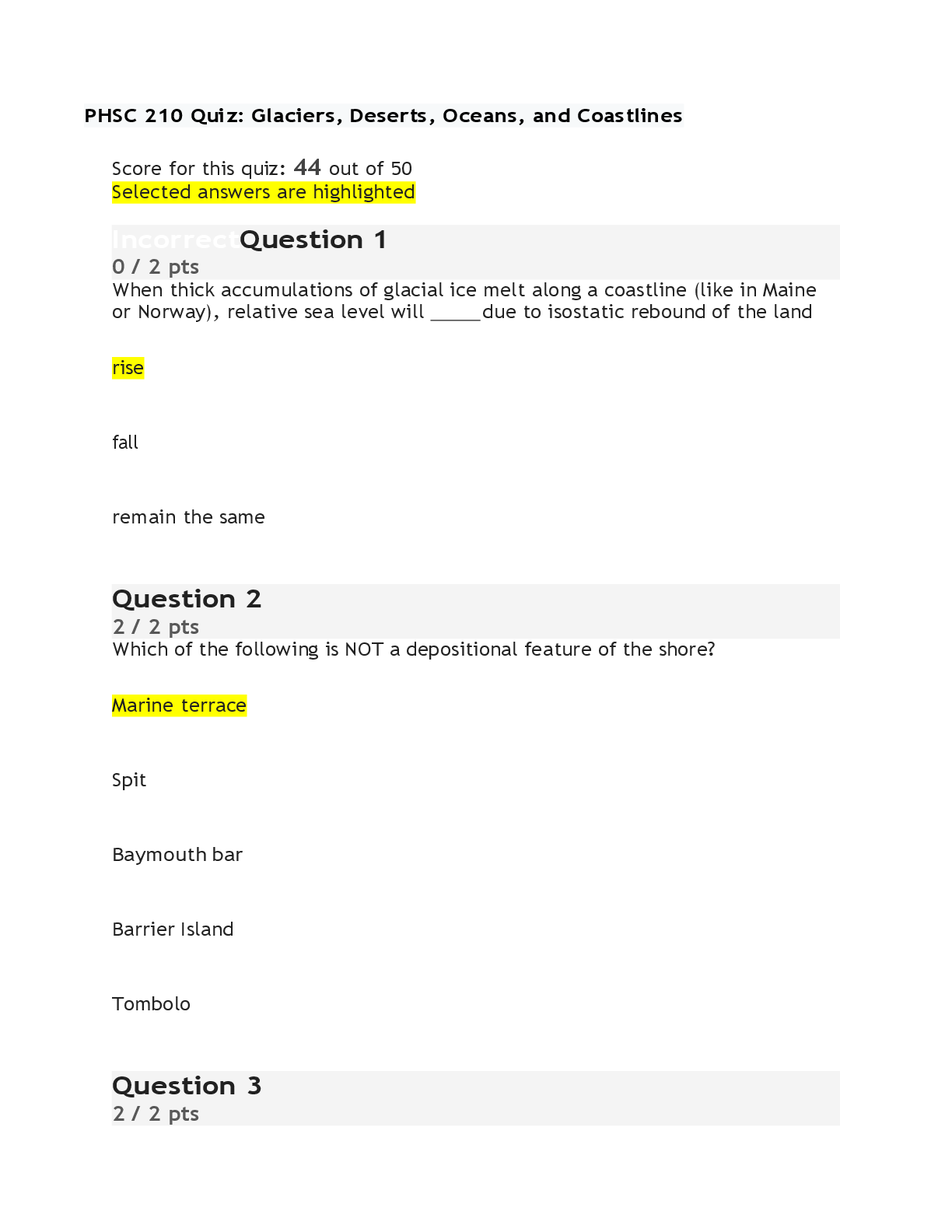
PHSC 210 Quiz: Glaciers, Deserts, Oceans, and Coastlines | Lib...
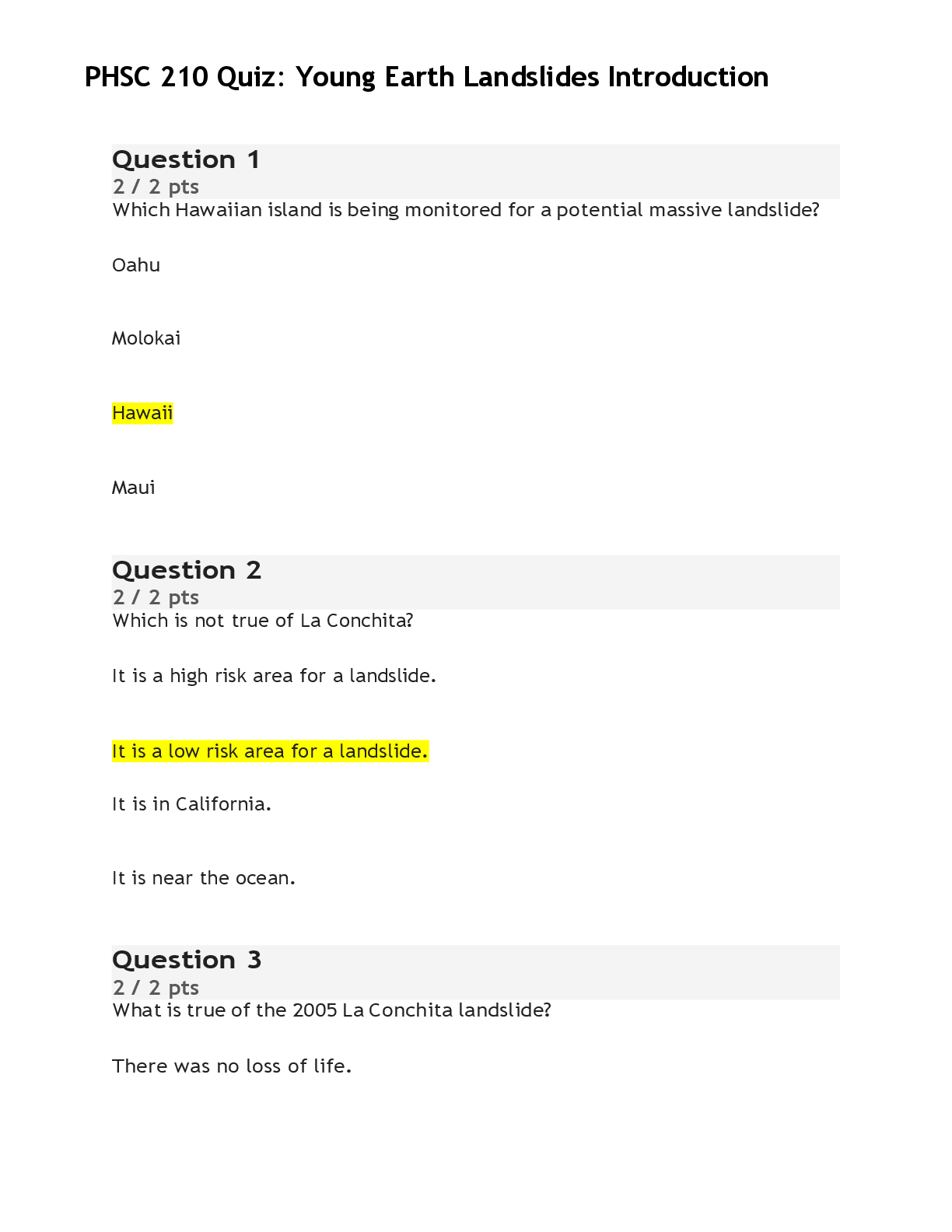
PHSC 210 Quiz: Young Earth Landslides Introduction | Liberty U...
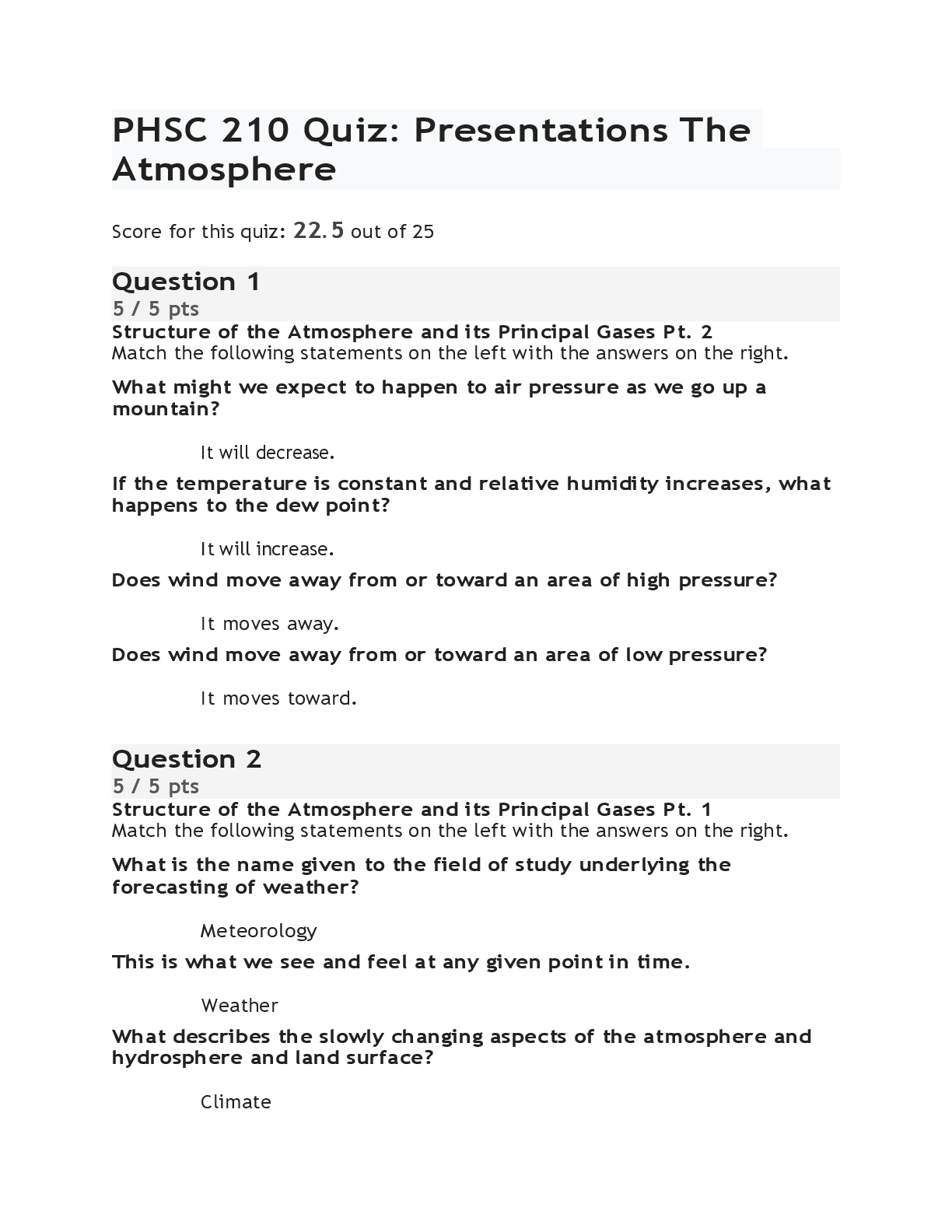
PHSC 210 Quiz: Presentations The Atmosphere | Liberty Universi...
.png)
Liberty University - PHSC 210 Study Guide Quiz 1 (Latest 2021)...


Test Bank for Earth Portrait of a Planet 6th Edition By Stephe...
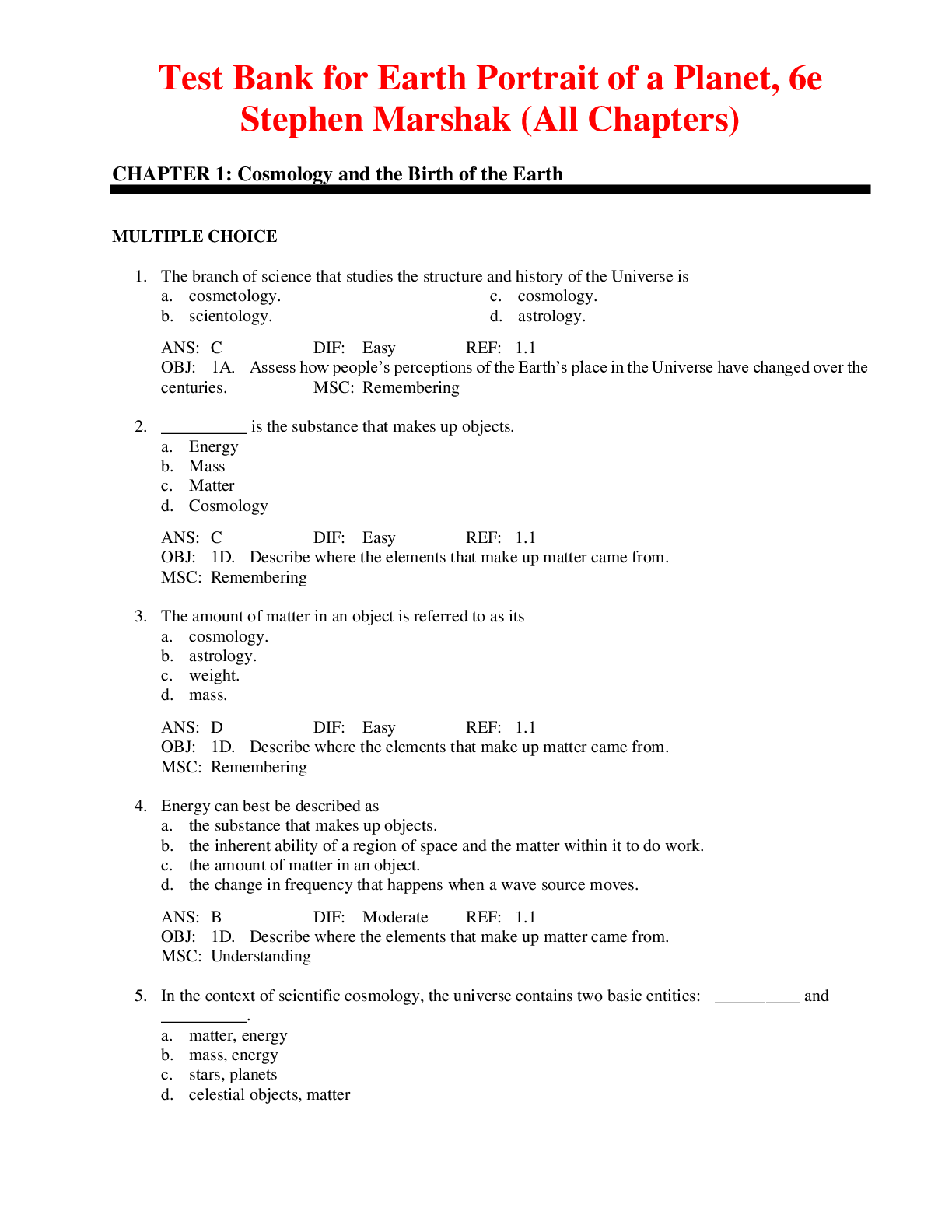
Test Bank for Earth Portrait of a Planet, 6th Edition by Steph...
Test Bank for Earth Portrait of a Planet, 6e Stephen Marshak

IB ESS Topic 2.1, 100% Coverage, Easy Revision guide, rated A...

IB ESS 1.1 Environmental Value Systems Includes the different...

IB ESS 1.4 Sustainability, All Terms definitions, relative, 1...

Test Bank for Foundations of Earth Science, 8th Edition Freder...

Test Bank for Foundations of Earth Science, 8e Frederick Lutge...

TEST BANK for Scientific American Environmental Science for a...
.png)