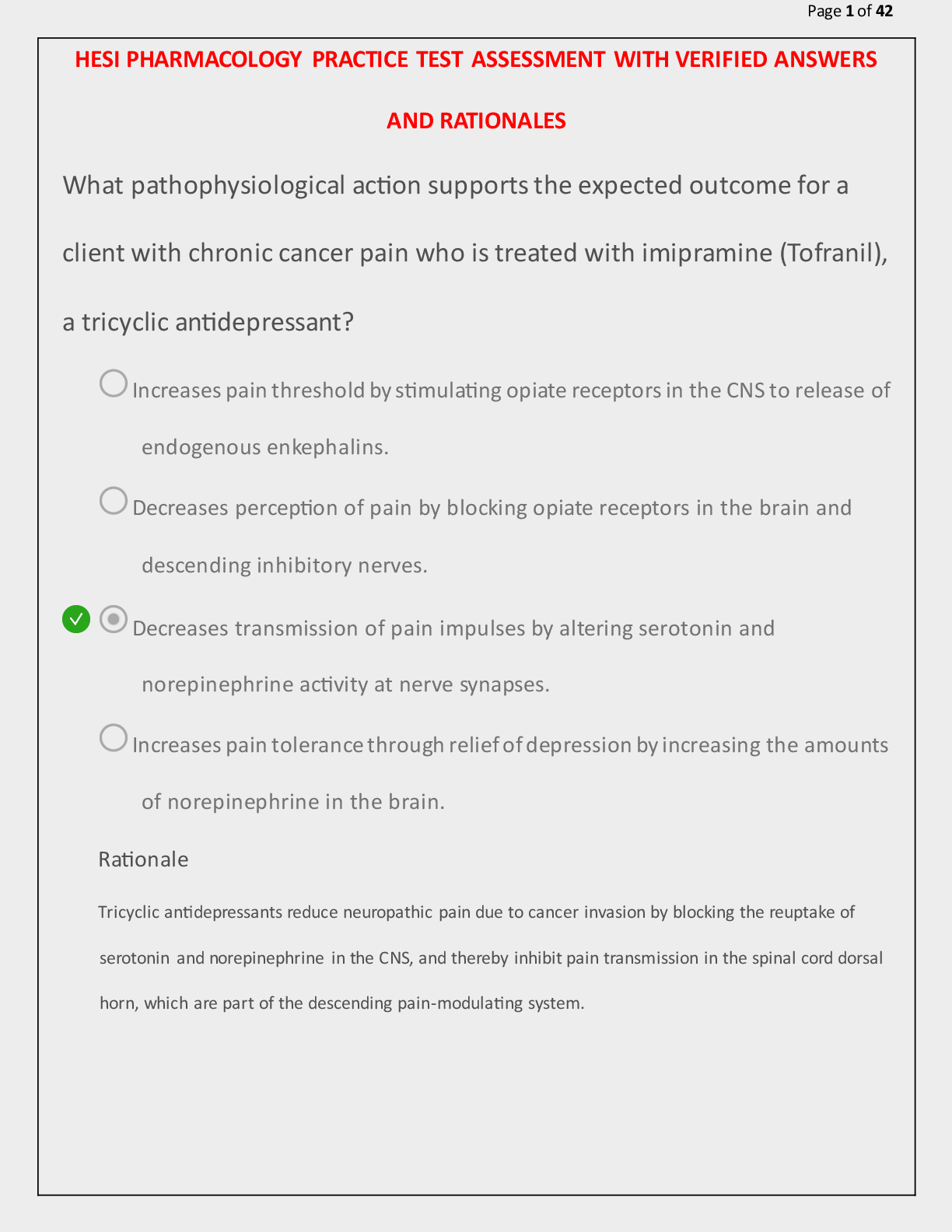
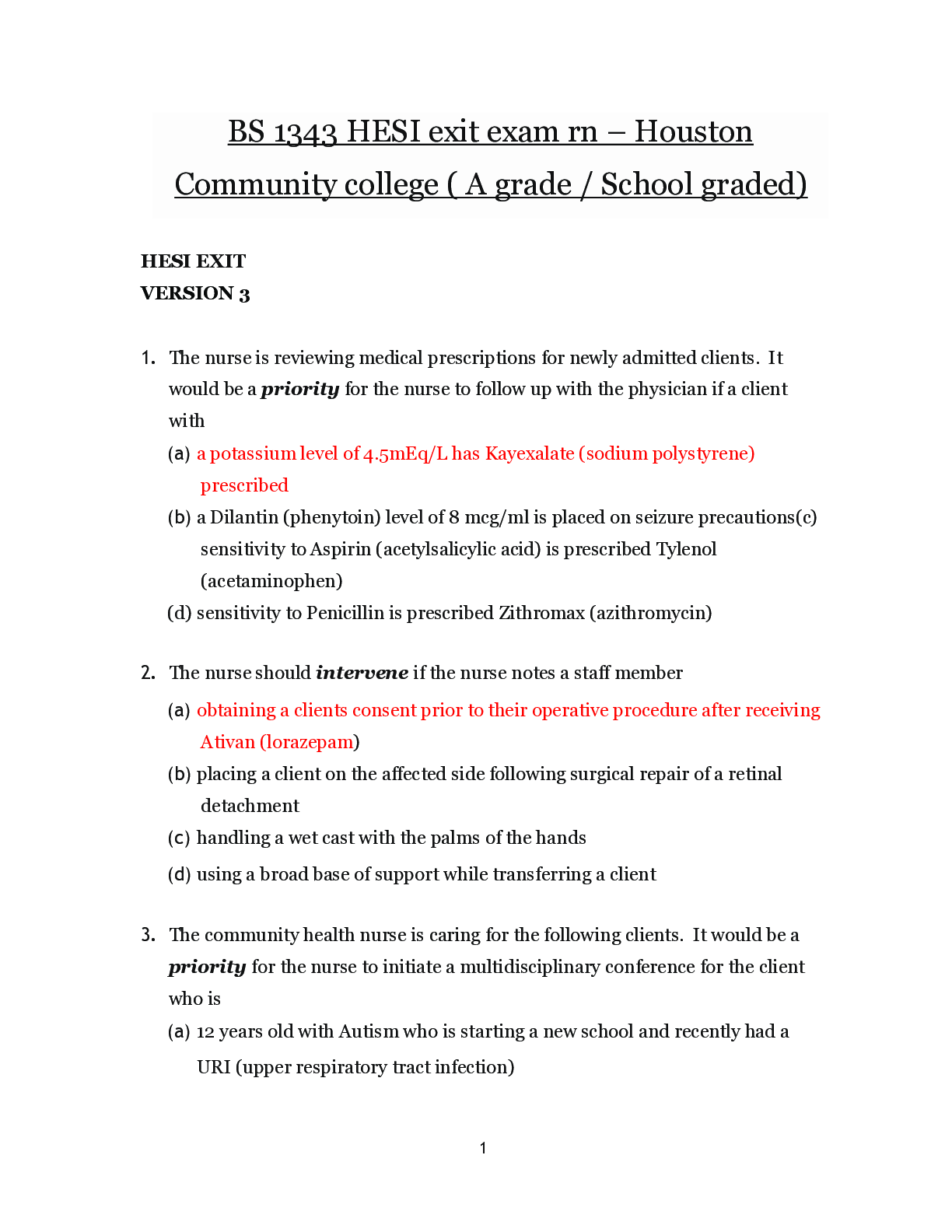
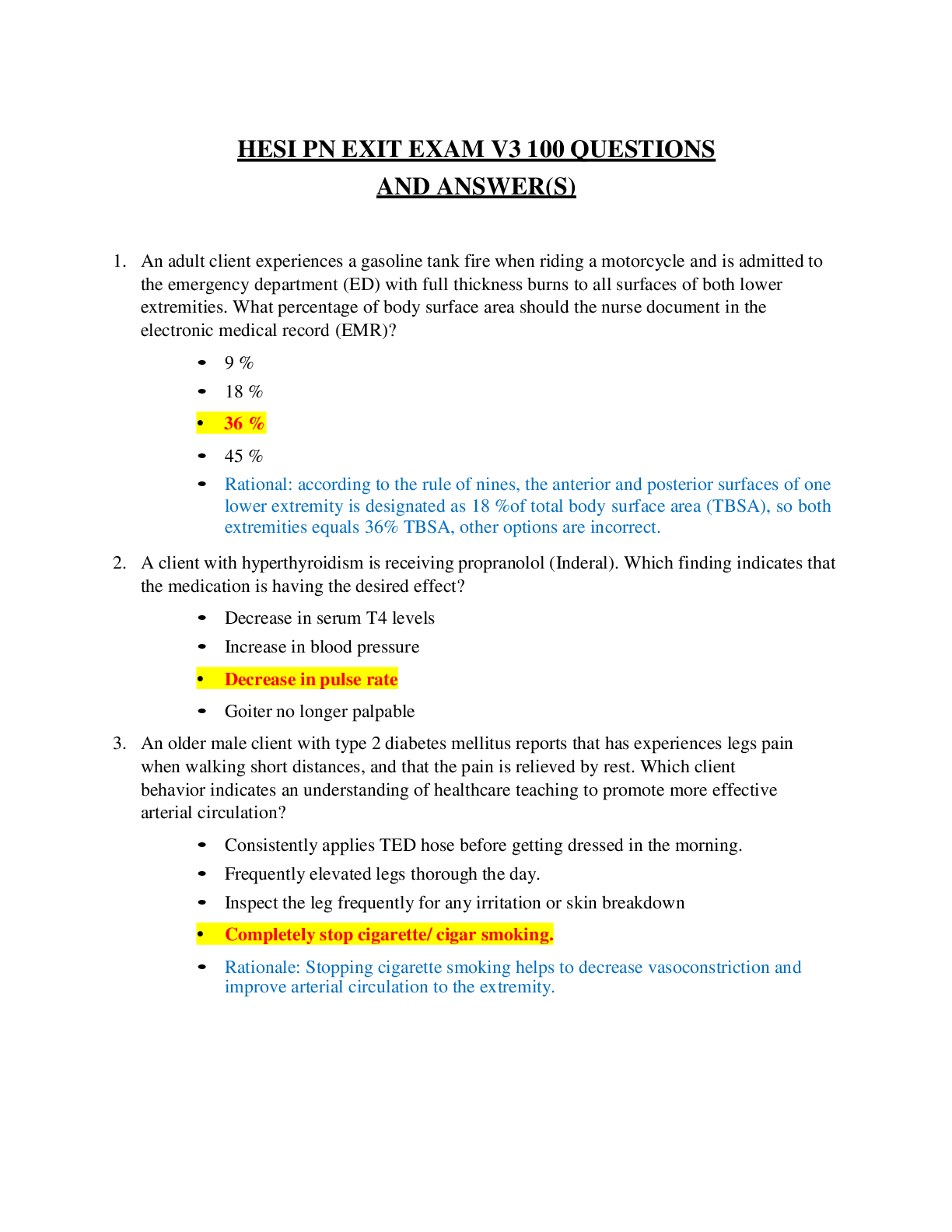
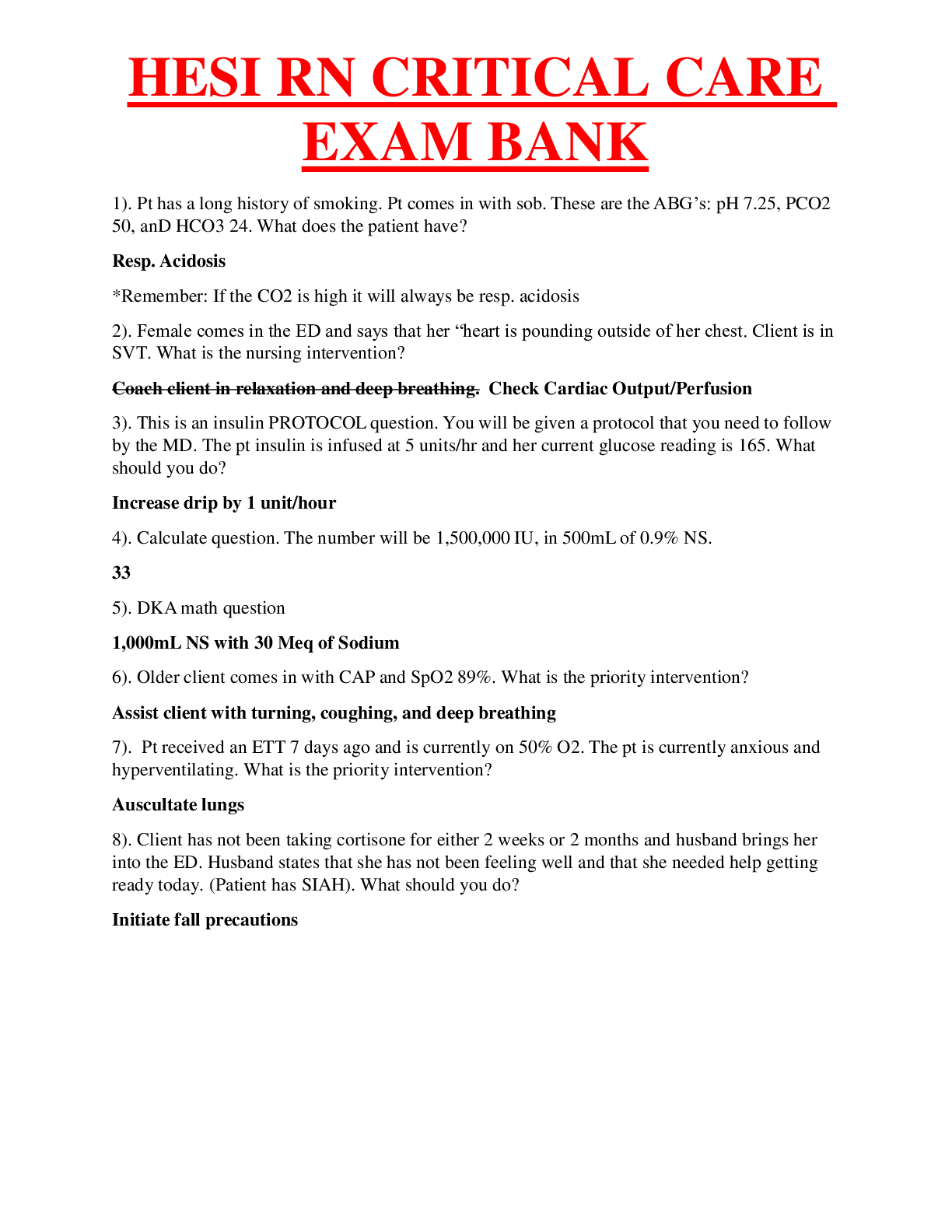
HESI PHARMACOLOGY PRACTICE
QUESTIONS FOR FINAL. Rationale
answers provided for all multiple
choices. Graded A+
A client is receiving clonidine (Catapres) 0.1 mg/24hr via transdermal patch. Which assessment finding
i
...
HESI PHARMACOLOGY PRACTICE
QUESTIONS FOR FINAL. Rationale
answers provided for all multiple
choices. Graded A+
A client is receiving clonidine (Catapres) 0.1 mg/24hr via transdermal patch. Which assessment finding
indicates that the desired effect of the medication has been achieved?
A. Client denies recent episodes of angina.
B. Change in peripheral edema from +3 to +1.
C. Client denies recent nausea or vomiting.
D. Blood pressure has changed from 180/120 to 140/70. Correct - Catapres acts as a centrally-acting
analgesic and antihypertensive agent. (D) indicates a reduction in hypertension. Catapres does not affect
(A, B, or C), so these findings do not indicate desired outcomes of Catapres
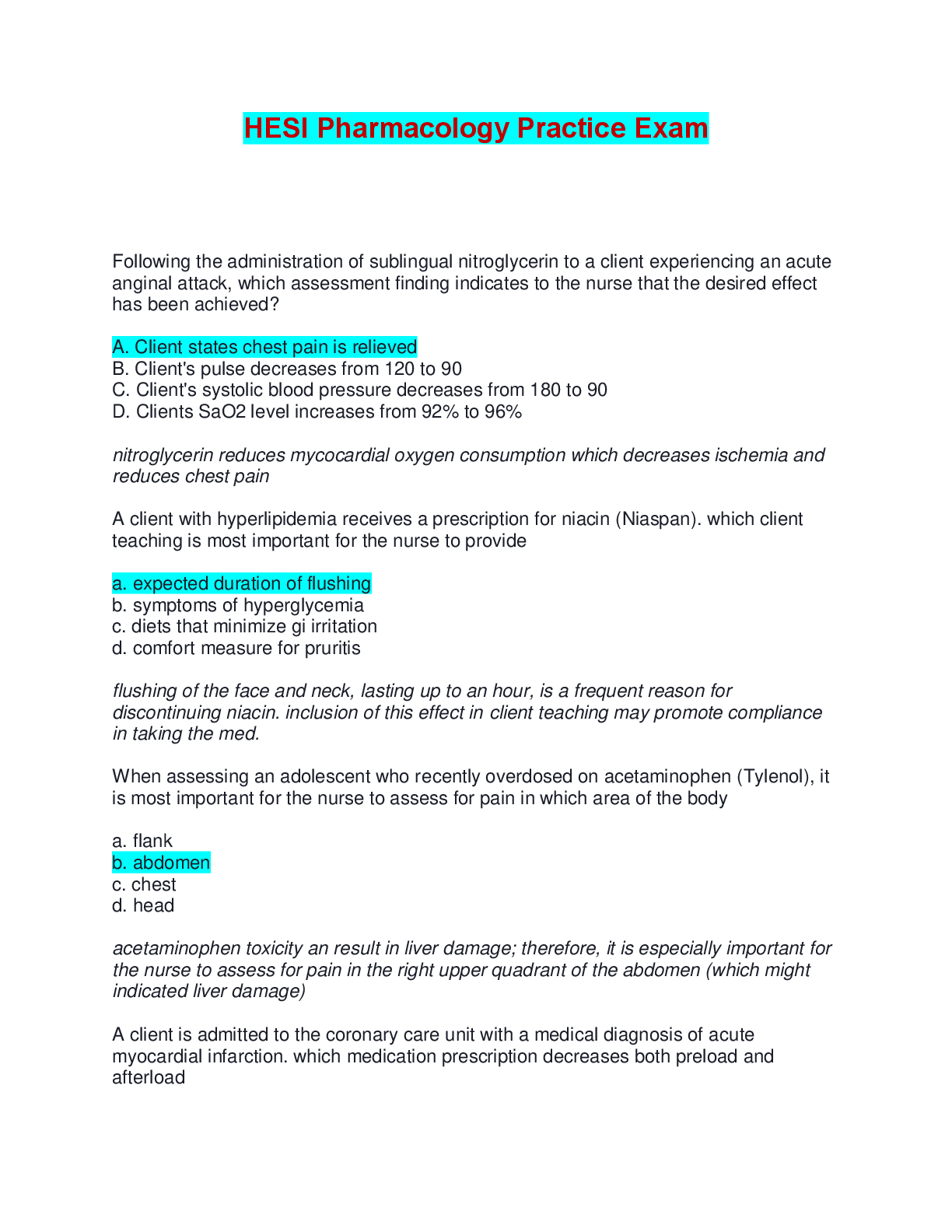
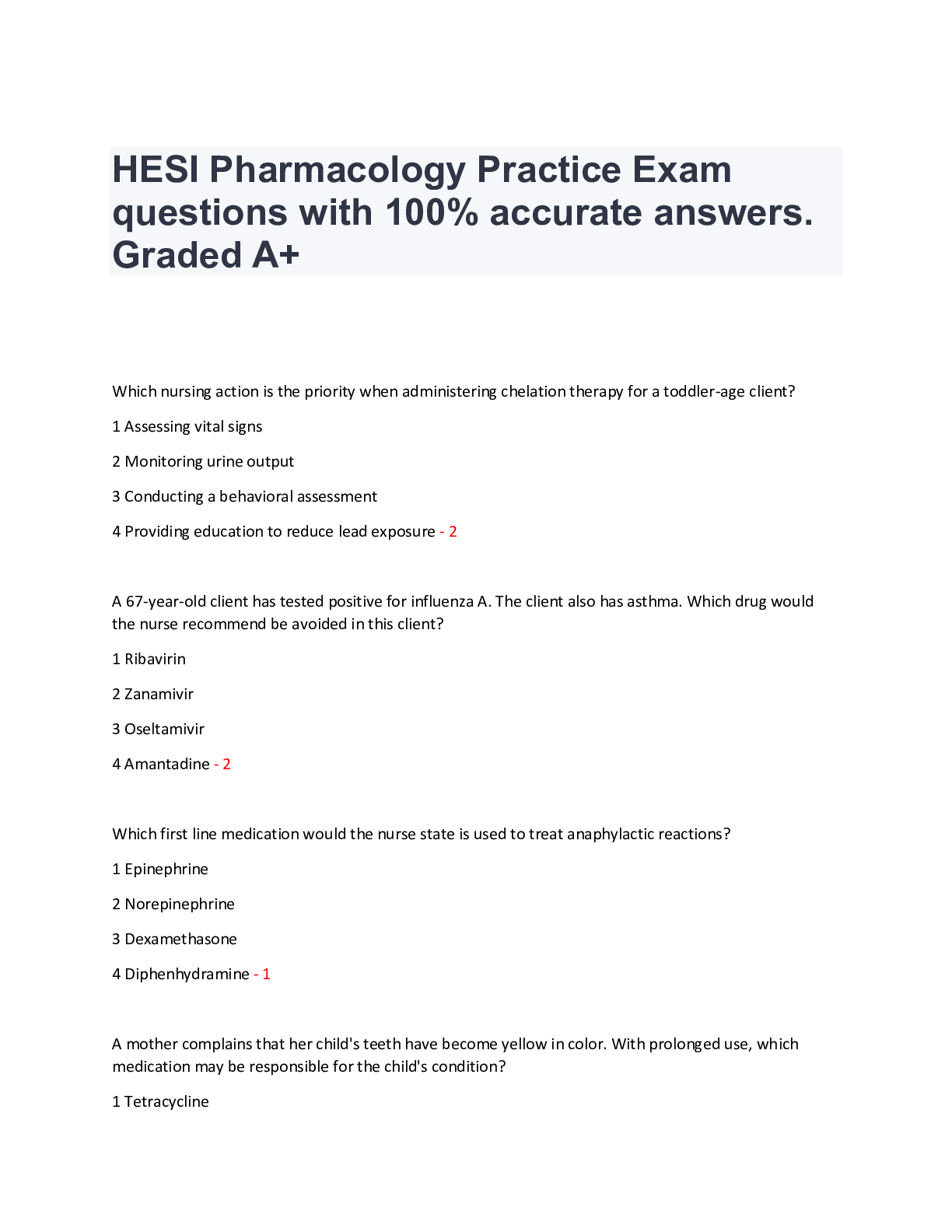
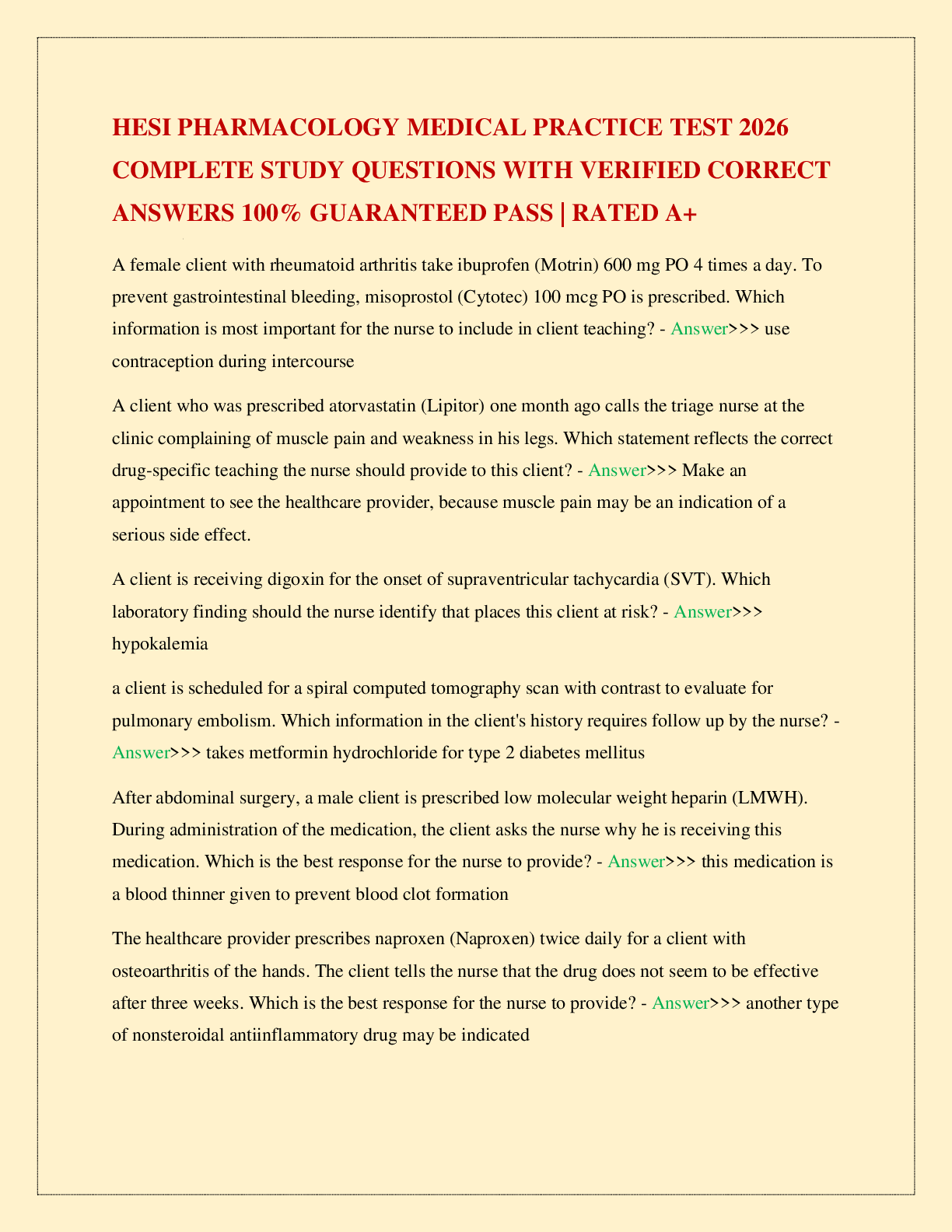
After abdominal surgery, a male client is prescribed low molecular weight heparin (LMWH). During
administration of the medication, the client asks the nurse why he is receiving this medication. Which is
the best response for the nurse to provide?
A. This medication is a blood thinner given to prevent blood clot formation. Correct
B. This medication enhances antibiotics to prevent infection.
C. This medication dissolves any clots that develop in the legs. Incorrect
D. This abdominal injection assists in the healing of the abdominal wound. - Unfractionated heparin or
low molecular weight heparin (LMWH) is an anticoagulant that inhibits thrombin-mediated conversion
of fibrinogen to fibrin and is given prophylactically to prevent postoperative venous thrombosis (A) or to
treat pulmonary embolism or deep vein thrombosis following knee and abdominal surgeries. Heparin
does not dissolve clots but prevents clot extension or further clot formation (C). The anticoagulant
heparin does not prevent infection (B) or influence operative wound healing (D).
A client with coronary artery disease who is taking digoxin (Lanoxin) receives a new prescription for
atorvastatin (Lipitor). Two weeks after initiation of the Lipitor prescription, the nurse assesses the client.
Which finding requires the most immediate intervention?
A. Heartburn.B. Headache.
C. Constipation.
D. Vomiting. Correct - Vomiting, anorexia and abdominal pain are early indications of digitalis toxicity.
Since Lipitor increases the risk for digitalis toxicity, this finding requires the most immediate intervention
by the nurse (D). (A, B and C) are expected side effects of Lipitor
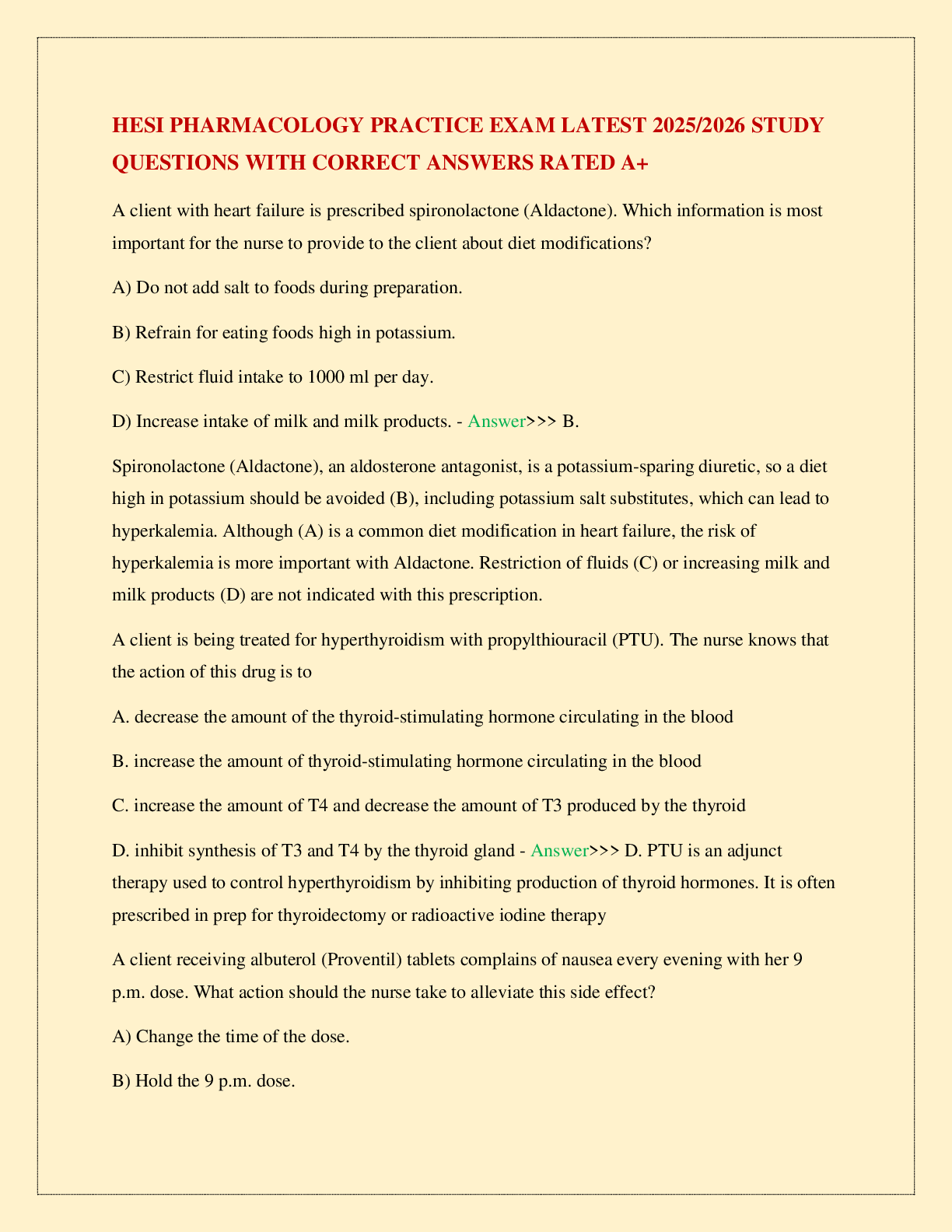
A client with heart failure is prescribed spironolactone (Aldactone). Which information is most
important for the nurse to provide to the client about diet modifications?
Do not add salt to foods during preparation.
Refrain for eating foods high in potassium. Correct
Restrict fluid intake to 1000 ml per day.
Increase intake of milk and milk products. - Spironolactone (Aldactone), an aldosterone antagonist, is a
potassium-sparing diuretic, so a diet high in potassium should be avoided (B), including potassium salt
substitutes, which can lead to hyperkalemia. Although (A) is a common diet modification in heart failure,
the risk of hyperkalemia is more important with Aldactone. Restriction of fluids (C) or increasing milk
and milk products (D) are not indicated with this prescription.
A client with a dysrhythmia is to receive procainamide (Pronestyl) in 4 divided doses over the next 24
hours. What dosing schedule is best for the nurse to implement?
q6h. Correct
QID.
AC and bedtime.
PC and bedtime. - Pronestyl is a class 1A antidysrhythmic. It should be taken around-the-clock (A) so
that a stable blood level of the drug can be maintained, thereby decreasing the possibility of
hypotension (an adverse effect) occurring because of too much of the drug circulating systemically at
any particular time of day. (B, C, and D) do not provide an around-the-clock dosing schedule. Pronestyl
may be given with food if GI distress is a problem, but an around-the-clock schedule should still be
maintained.
A client who was prescribed atorvastatin (Lipitor) one month ago calls the triage nurse at the clinic
complaining of muscle pain and weakness in his legs. Which statement reflects the correct drug-specific
teaching the nurse should provide to this client?A. Increase consumption of potassium-rich foods since low potassium levels can cause muscle spasms.
B. Have serum electrolytes checked at the next scheduled appointment to assess hyponatremia, a cause
of cramping.
C. Make an appointment to see the healthcare provider, because muscle pain may be an indication of a
serious side effect. Correct
D. Be sure to consume a low-cholesterol diet while taking the drug to enhance the effectiveness of the
drug. - Myopathy, suggested by the leg pain and weakness, is a serious, and potentially life-threatening,
complication of Lipitor, and should be evaluated immediately by the healthcare provider (C). Although
electrolyte imbalances such as (A or B) can cause muscle spasms in some cases, this is not the likely
cause of leg pain in the client receiving Lipitor, and evaluation by the healthcare provider should not be
delayed for any reason. A low-cholesterol diet is recommended for those taking Lipitor since the drug is
used to lower total cholesterol (D), but diet is not related to the leg pain symptom.
A category X drug is prescribed for a young adult female client. Which instruction is most important for
the nurse to teach this client?
A. Use a reliable form of birth control. Correct
B. Avoid exposure to ultra violet light.
C. Refuse this medication if planning pregnancy.
D. Abstain from intercourse while on this drug. - Drugs classified in the category X place a client who is in
the first trimester of pregnancy at risk for teratogenesis, so women in the childbearing years should be
counseled to use a reliable form of birth control (A) during drug therapy. (B) is not a specific precautionwith Category X drugs. The client should be encouraged to discuss plans for pregnancy with the
healthcare provider, so a safer alternative prescription (C) can be provided if pregnancy occurs.
Although the risk of birth defects during pregnancy explains the restriction of these drugs during
pregnancy, (D) is not indicated.
A client receiving Doxorubicin (Adriamycin) intravenously (IV) complains of pain at the insertion site, and
the nurse notes edema at the site. Which intervention is most important for the nurse to implement?
A. Assess for erythema.
B. Administer the antidote.
C. Apply warm compresses.
D. Discontinue the IV fluids. Correct - Doxorubicin is an antineoplastic agent that causes inflammation,
blistering, and necrosis of tissue upon extravasation. First, all IV fluids should be discontinued at the site
(D) to prevent further tissue damage by the vesicant. Erythema is one sign of infiltration and should be
noted, but edema and pain at the infusion site require stopping the IV fluids (A). Although an antidote
may be available (B), additional fluids contribute to the trauma of the subcutaneous tissues. Depending
on the type of vesicant, warm or cold compresses (C) may be prescribed after the infusion is
discontinued.
The nurse is preparing the 0900 dose of losartan (Cozaar), an angiotensin II receptor blocker (ARB), for a
client with hypertension and heart failure. The nurse reviews the client's laboratory results and notes
that the client's serum potassium level is 5.9 mEq/L. What action should the nurse take first?
A. Withhold the scheduled dose. Correct
B. Check the client's apical pulse.C. Notify the healthcare provider.
D. Repeat the serum potassium level. - The nurse should first withhold the scheduled dose of Cozaar (A)
because the client is hyperkalemic (normal range 3.5 to 5 mEq/L). Although hypokalemia is usually
associated with diuretic therapy in heart failure, hyperkalemia is associated with several heart failure
medications, including ARBs. Because hyperkalemia may lead to cardiac dysrhythmias, the nurse should
check the apical pulse for rate and rhythm (B), and the blood pressure. Before repeating the serum
study (D), the nurse should notify the healthcare provider (C) of the findings.
Which change in data indicates to the nurse that the desired effect of the angiotensin II receptor
antagonist valsartan (Diovan) has been achieved?
A. Dependent edema reduced from +3 to +1.
B. Serum HDL increased from 35 to 55 mg/dl.
C. Pulse rate reduced from 150 to 90 beats/minute.
D. Blood pressure reduced from 160/90 to 130/80. Correct - Diovan is an angiotensin receptor blocker,
prescribed for the treatment of hypertension. The desired effect is a decrease in blood pressure (D). (A,
B, and C) do not describe effects of Diovan
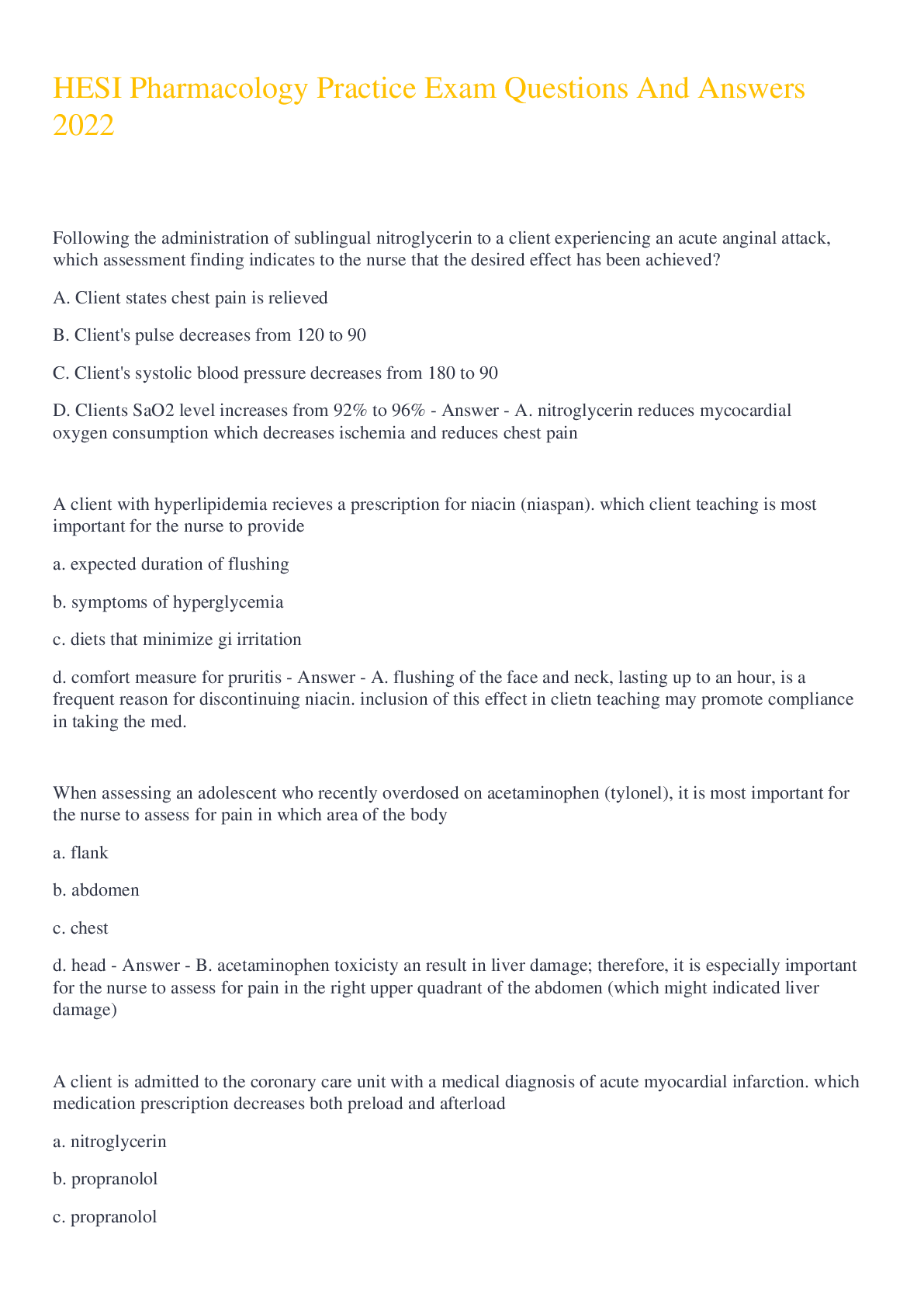
A client with hyperlipidemia receives a prescription for niacin (Niaspan). Which client teaching is most
important for the nurse to provide?A. Expected duration of flushing. Correct
B. Symptoms of hyperglycemia.
C. Diets that minimize GI irritation. In
D. Comfort measures for pruritis - Flushing of the face and neck, lasting up to an hour, is a frequent
reason for discontinuing niacin. Inclusion of this effect in client teaching (A) may promote compliance in
taking the medication. While (B, C, and D) are all worthwhile instructions to help clients minimize or
cope with normal side effects associated with niacin (Niaspan), flushing is intense and causes the most
concern for the client.
When assessing an adolescent who recently overdosed on acetaminophen (Tylenol), it is most important
for the nurse to assess for pain in which area of the body?
[Show More]





.png)

 Questions, Answers & Rationale, A+ Guide.png)