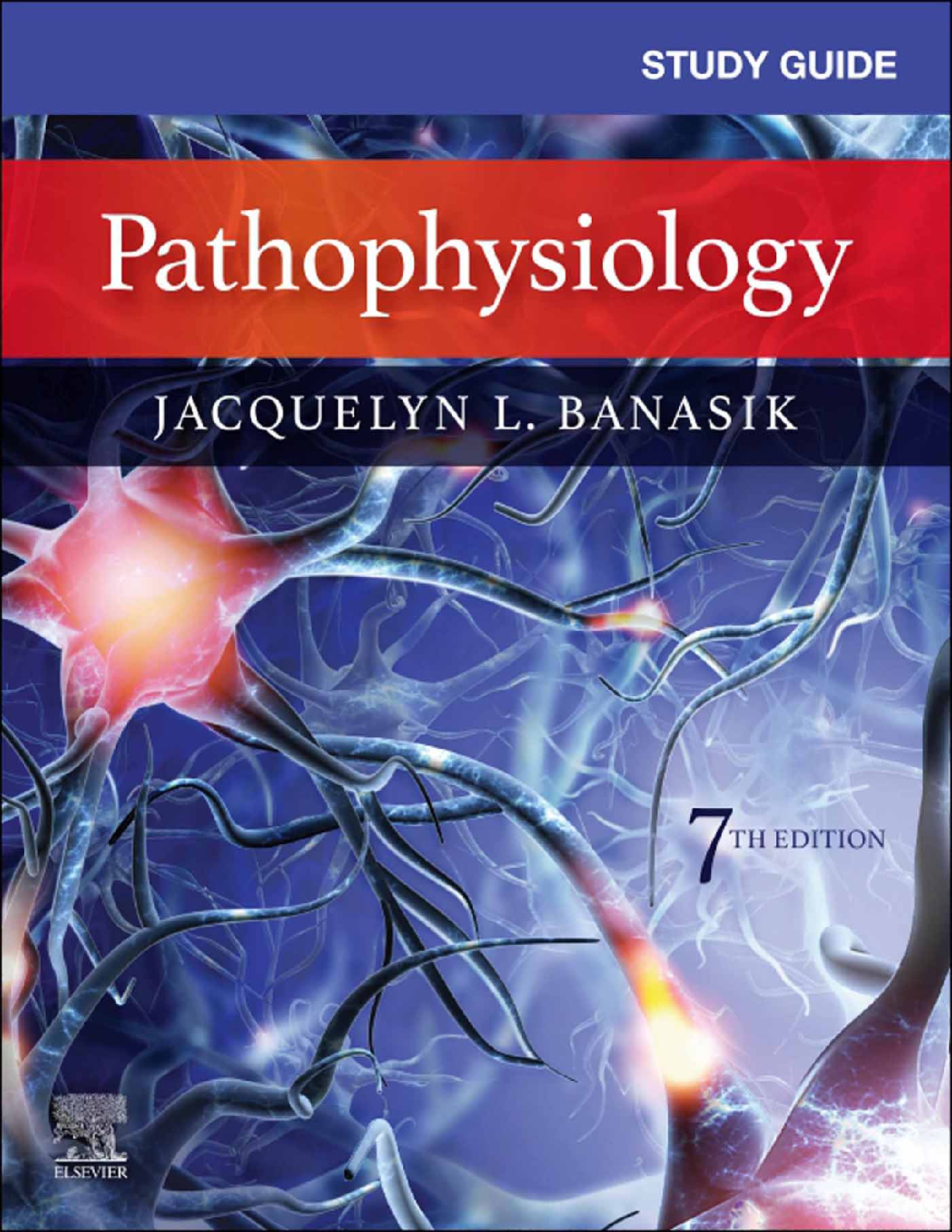
Pathophysiology  >  STUDY GUIDE  >  NR 507-ADVANCED PATHOPHYSIOLOGY-WEEK 2-FINAL STUDY GUIDE FOR QUIZ. (All)

NR 507-ADVANCED PATHOPHYSIOLOGY-WEEK 2-FINAL STUDY GUIDE FOR QUIZ.

Document Content and Description Below

NR 507 Week 2-FINAL STUDY GUIDE FOR QUIZ Chapter 35: Structure and Function of the Pulmonary System Tara Morgan The primary function of the pulmonary system is the exchange of gases between the en ... vironmental air and the blood. • ○ Ventilation, the movement of air into and out of the lungs Diffusion, the movement of gases between air spaces in the lungs and the bloodstream ○ Perfusion, the movement of blood into and out of the capillary beds of the lungs to body organs and tissues ○ • There are three steps in this process: The first two functions (ventilation and diffusion) are carried out by the pulmonary system and the third (perfusion) by the cardiovascular system. • Normally the pulmonary system functions efficiently under a variety of conditions and with little energy expenditure. • Structures of the Pulmonary System The pulmonary system includes two lungs and the upper and lower airways, and the blood vessels that serve them; the chest wall, or thoracic cage; and the diaphragm. • ○ 3 in the right lung (upper, middle, lower) ○ 2 in the left lung (upper, lower) • The lungs are divided into lobes: • Each lobe is further divided into segments and lobules. The mediastinum is the space between the lungs and contains the heart, great vessels, and esophagus. • • A set of conducting airways, or bronchi, delivers air to each section of the lung. The diaphragm is a dome-shaped muscle that separates the thoracic and abdominal cavities and is involved in ventilation. • • FIGURE 35.1 Structural Plan of the Respiratory System. The inset shows alveolar sacs where the interchange of oxygen and carbon dioxide takes place through the walls of the grapelike alveoli. Capillaries surround the alveoli. • The lungs are protected from a variety of exogenous contaminants by a series of mechanical and cellular defenses. • These defense mechanisms are so effective that in the healthy individual, contamination of the lung tissue itself, particularly by infectious agents, is rare. • STRUCTURE OR SUBSTANCE MECHANISM OF DEFENSE Upper respiratory tract mucosa Maintains constant temperature and humidification of gas entering the lungs; traps and removes foreign particles, some bacteria, and noxious gases from inspired air Nasal hairs and turbinates Trap and remove foreign particles, some bacteria, and noxious gases from inspired air Week 2: Respiratory Disorders and Alterations in Acid/Base Balance, Fluid and Electrolytes Advanced Patho Page 1 turbinates gases from inspired air Branching airways Disrupt laminar flow and enhance deposition of particles and pathogens on ciliated mucosa Mucous blanket Protects trachea and bronchi from injury; traps most foreign particles and bacteria that reach the lower airways Innate immune proteins Lysozyme, lactoferrin, defensins, collectins (surfactant protein A [SP-A] and surfactant protein D [SP-D]), and immunoglobulin A (IgA); recognize and promote killing of pathogens Cilia Propel mucous blanket and entrapped particles toward the oropharynx, where they can be swallowed or expectorated Alveolar macrophages Ingest and remove bacteria and other foreign material from alveoli by phagocytosis (see Chapter 7) Surfactant Enhances phagocytosis of pathogens and allergens in alveoli; down-regulates inflammatory responses Irritant receptors in nares (nostrils) Stimulation by chemical or mechanical irritants triggers sneeze reflex, which results in rapid removal of irritants from nasal passages Irritant receptors in trachea and large airways Stimulation by chemical or mechanical irritants triggers cough reflex, which results in removal of irritants from the trachea and large airways Conducting Airways The conducting airways provide a passage for the movement of air into and out of the gas-exchange structures of the lung. • Lined with ciliated mucosa with a rich vascular supply that warms and humidifies inspired air and removes foreign particles from it as it passes into the lungs. • • The nasopharynx, oropharynx, and related structures are called the upper airway. The mouth and oropharynx provide for ventilation when the nose is obstructed or when increased flow is required, for example, during exercise. Filtering and humidifying are not as efficient with mouth breathing. [Show More]

Last updated: 3 years ago

Preview 1 out of 33 pages

Buy Now

Instant download

We Accept:

Payment methods accepted on Scholarfriends (We Accept)
Preview image of NR 507-ADVANCED PATHOPHYSIOLOGY-WEEK 2-FINAL STUDY GUIDE FOR QUIZ. document

Buy this document to get the full access instantly

Instant Download Access after purchase

Buy Now

Instant download

We Accept:

Payment methods accepted on Scholarfriends (We Accept)

Reviews( 0 )

$15.00

Buy Now

We Accept:

Payment methods accepted on Scholarfriends (We Accept)

Instant download

Can't find what you want? Try our AI powered Search

96
0

Document information


Connected school, study & course


About the document


Uploaded On

Nov 10, 2020

Number of pages

33

Written in

All

Seller


Profile illustration for Academia1434
Academia1434

Member since 5 years

211 Documents Sold

Reviews Received
36
2
4
2
17
Additional information

This document has been written for:

Uploaded

Nov 10, 2020

Downloads

 0

Views

 96

Document Keyword Tags

Recommended For You

Get more on STUDY GUIDE »
$15.00
What is Scholarfriends

Scholarfriends.com Online Platform by Browsegrades Inc. 651N South Broad St, Middletown DE. United States.

We are here to help

We're available through e-mail, Twitter, Facebook, and live chat.
 FAQ
 Questions? Leave a message!

Follow us on
 Twitter

Copyright © Scholarfriends · High quality services·