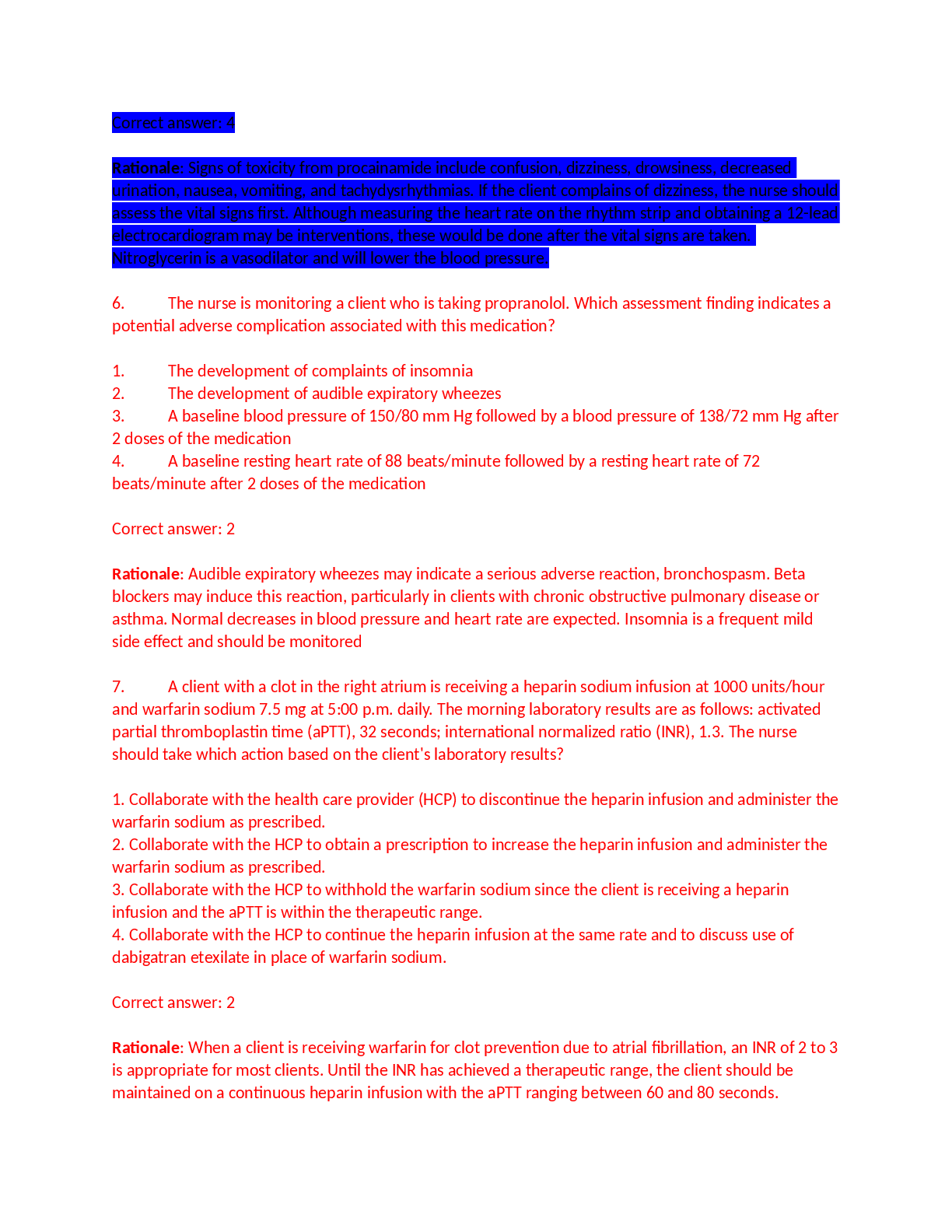
NURS 601 Pharm Cardiovascular Medications 120 Questions and Answers
Document Content and Description Below
Last updated: 2 months ago
Preview 5 out of 45 pages
Instant download
Buy this Document to get the Full Access Instantly
Provided by Students Who Aced it
We Verify Document Content to Gurantee Accuracy
Also available in bundle (1)
Click Below to Access Bundle(s)
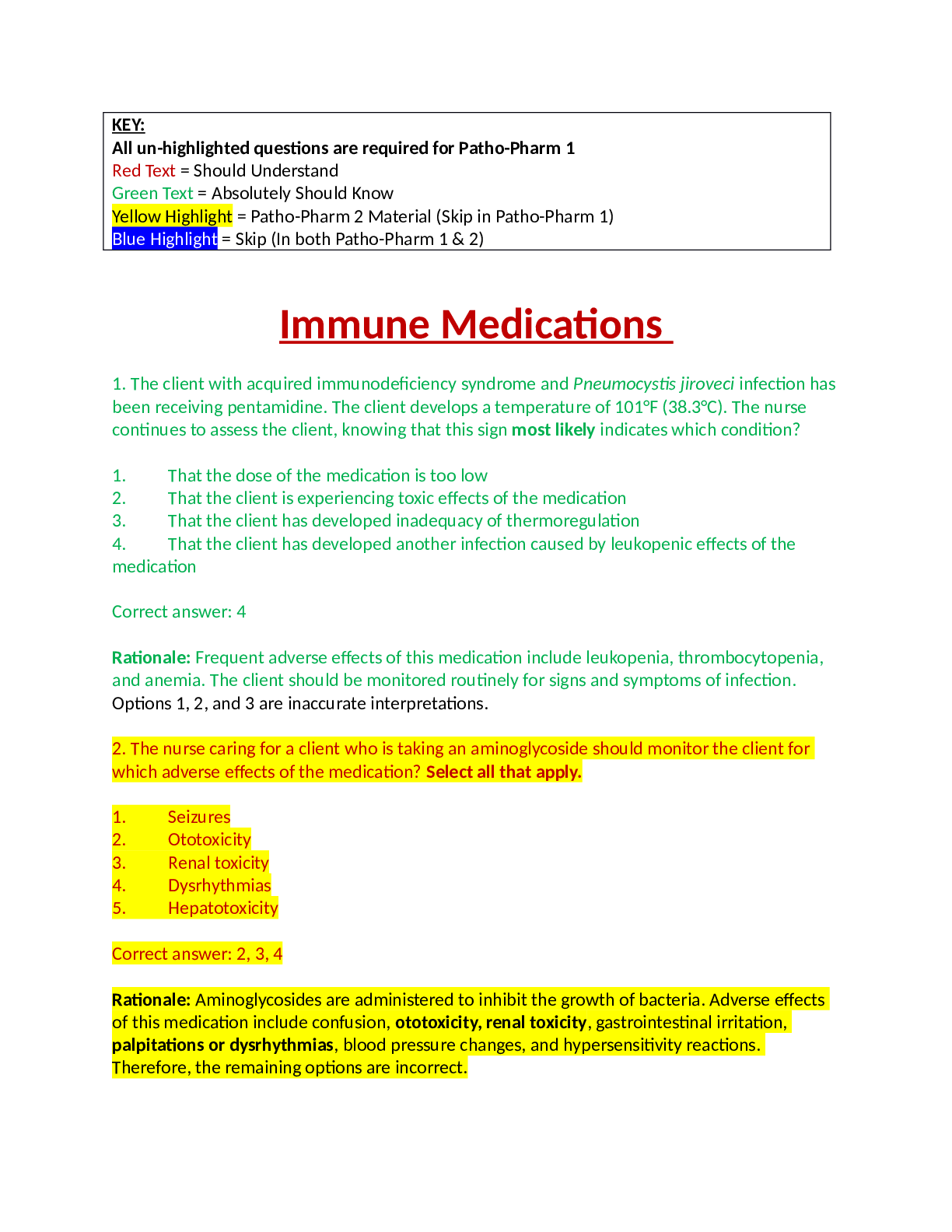
NURS 601 Pharmacology Medication Exams BUNDLE
Immune, Hematological , Renal Urinary, Neurological, Endocrine, Musculoskeletal, Cardiovascular, Oncology and Respiratory
By Ajay25 4 years ago
$54
9
Reviews( 0 )
Document information
Connected school, study & course
About the document
Uploaded On
May 16, 2022
Number of pages
45
Written in
All

Additional information
This document has been written for:
Uploaded
May 16, 2022
Downloads
0
Views
166
Topic Tags
Related Subjects & Courses
Explore similar study resources and related concepts.
Recommended For You
Get more on EXAM »
NURS6011 EVIDENCE BASED PRACTICE FOR PATIENT CENTERED CARE & P...
NURS6011 EVIDENCE BASED PRACTICE FOR PATIENT CENTERED CARE & P...
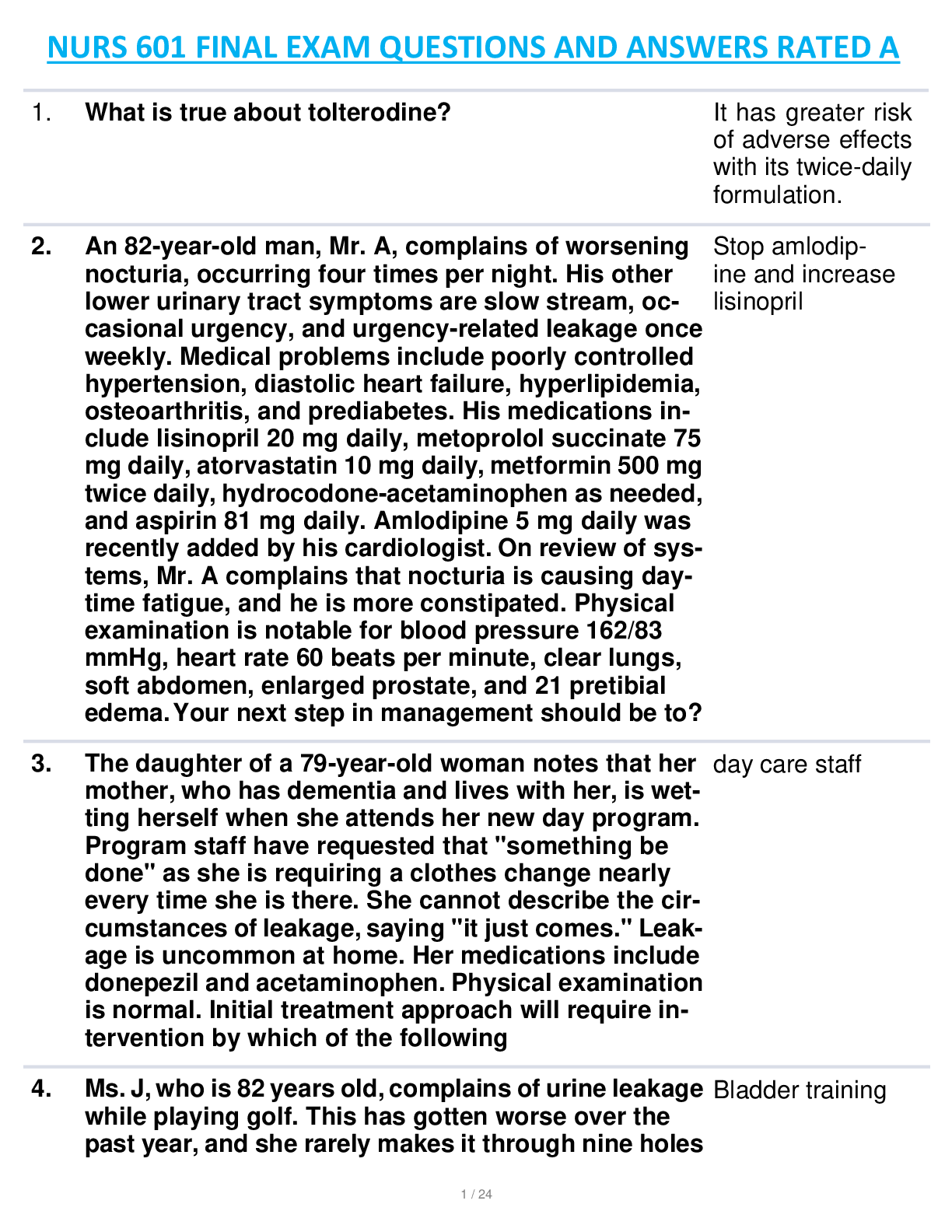
NURS6016 QUALITY IMPROVEMENT OF INTERPROFESSIONAL CARE EXAM Q...
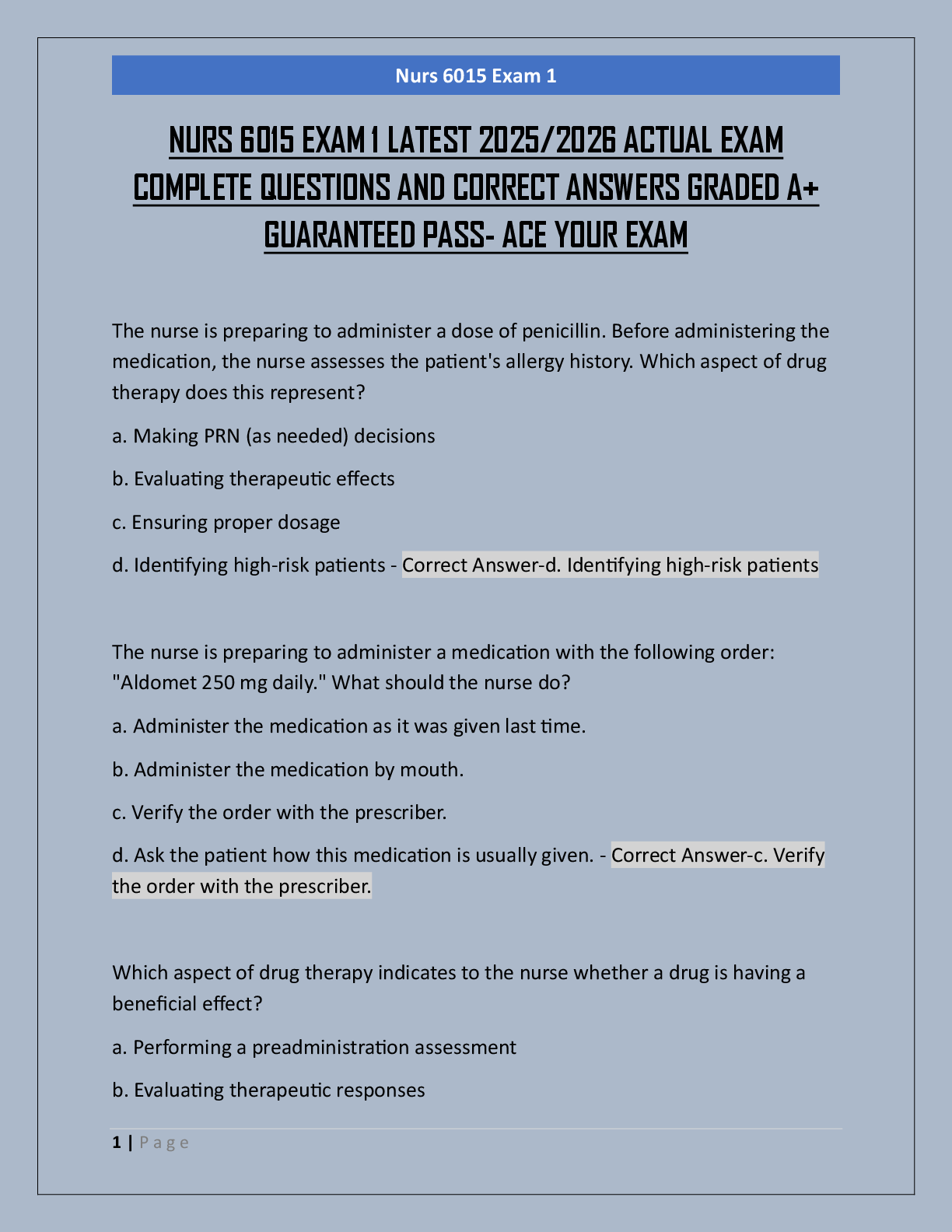
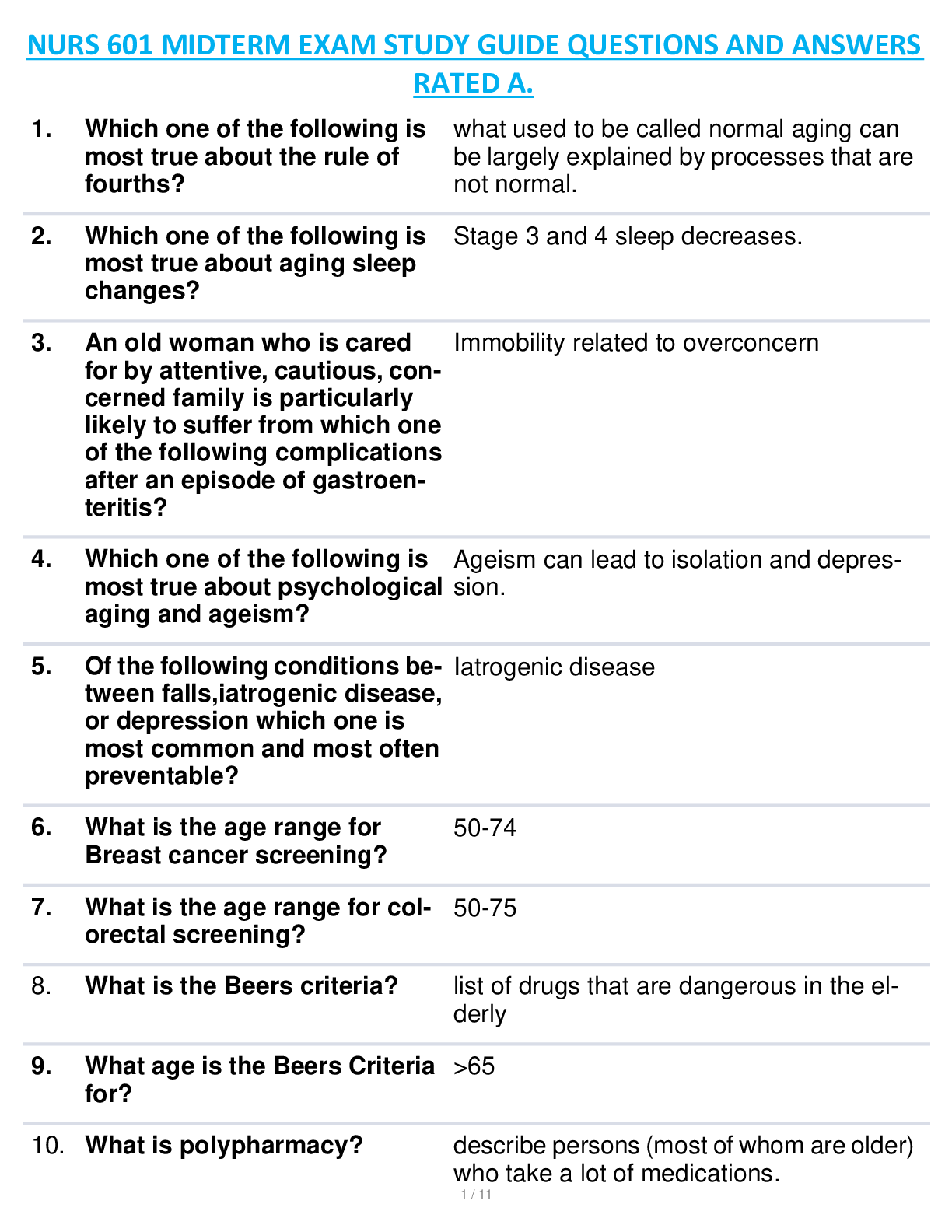
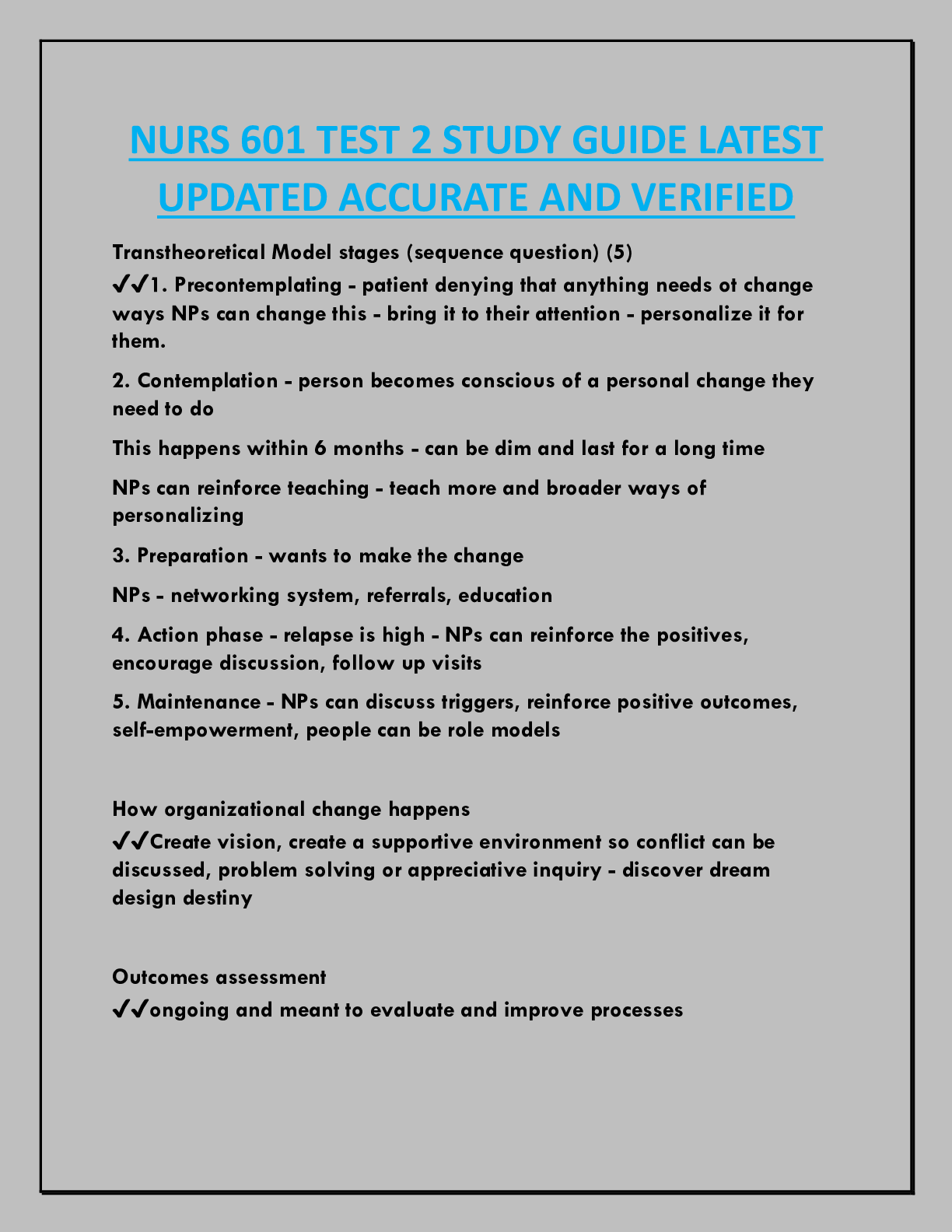
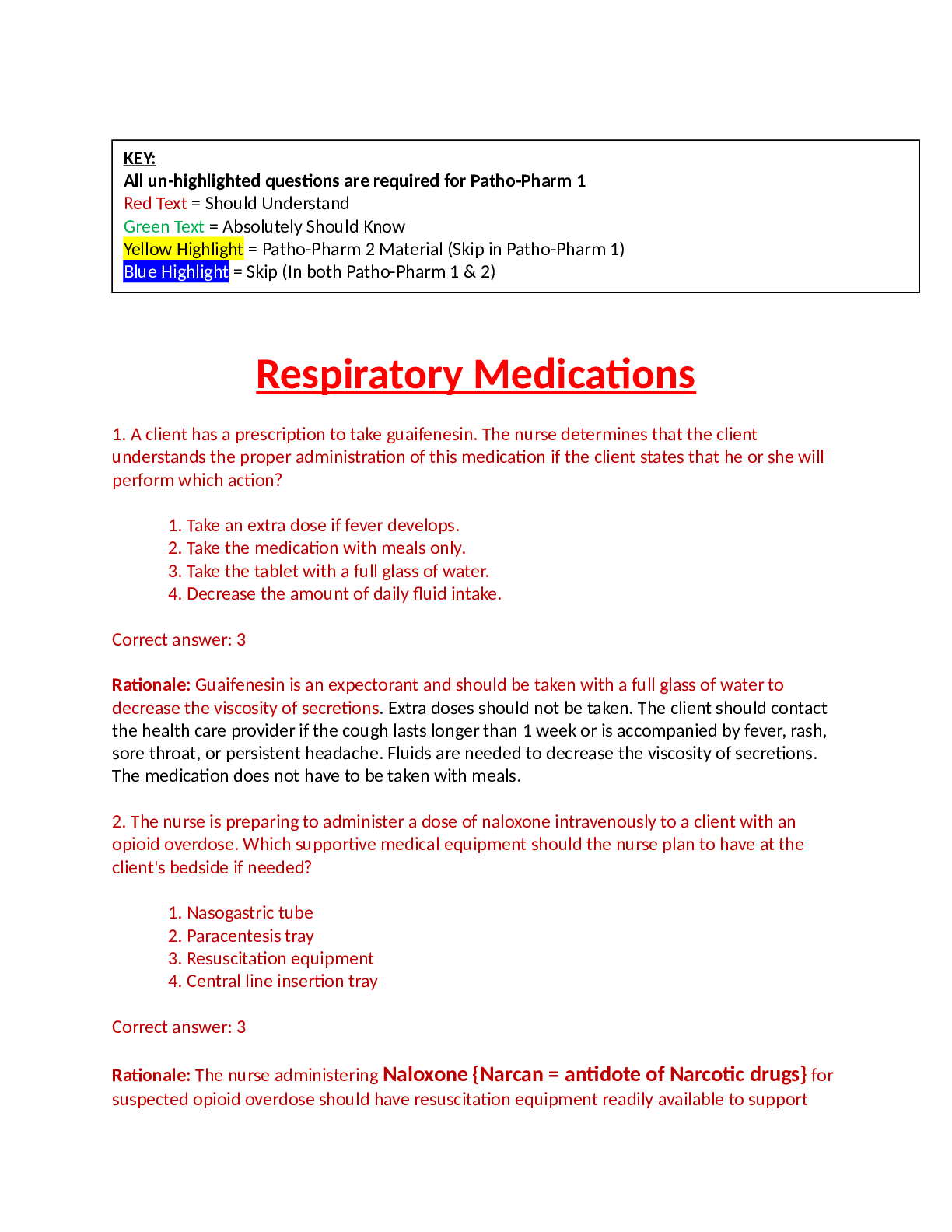
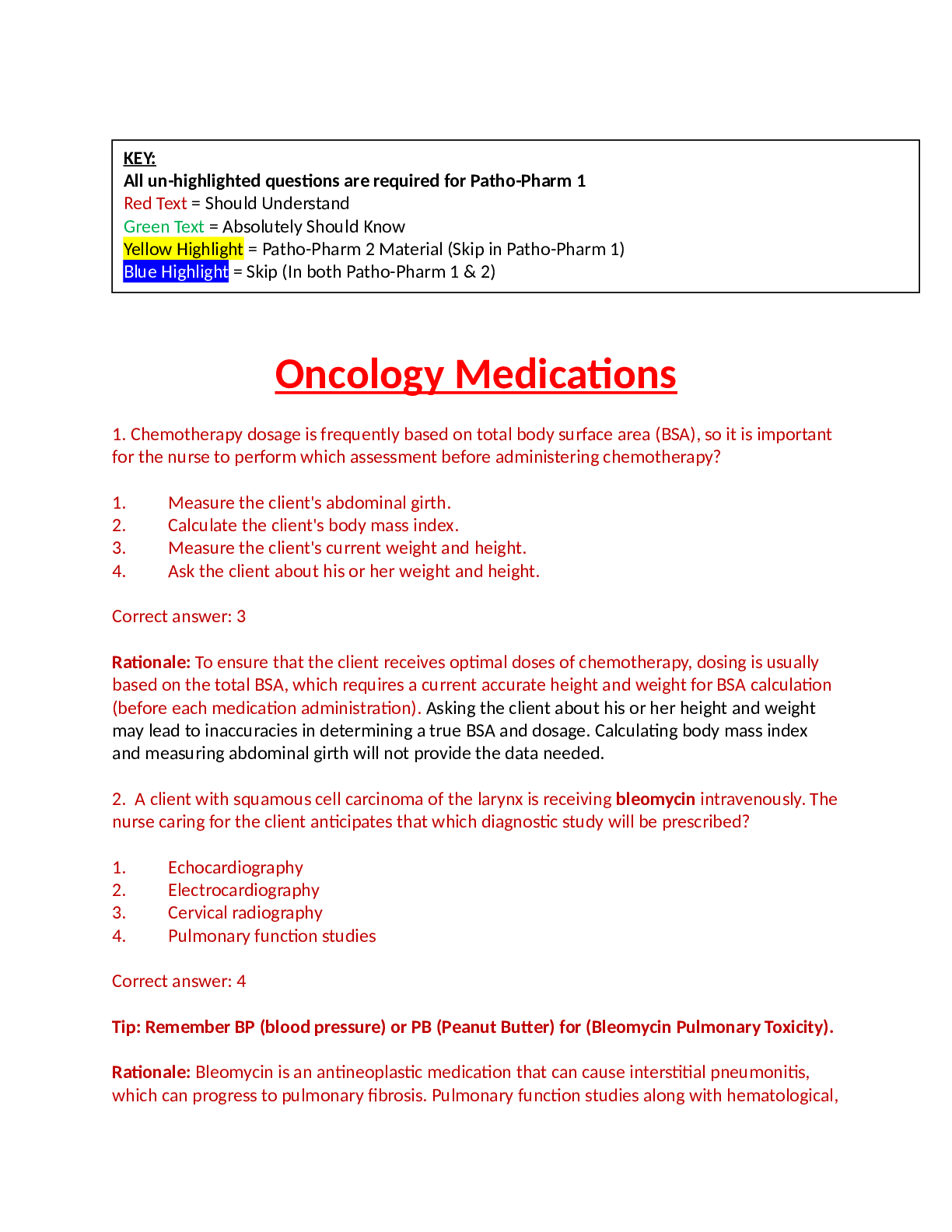
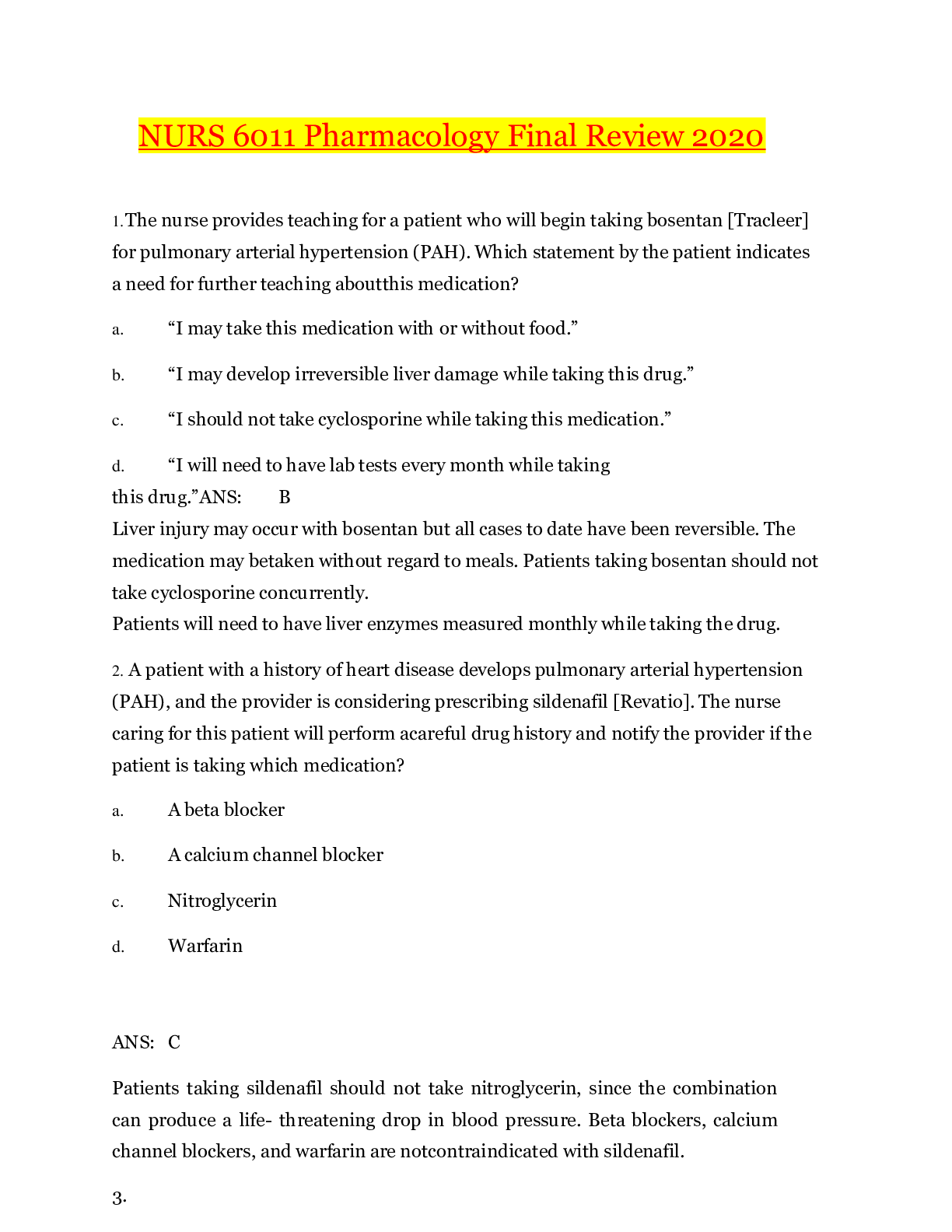
Pharmacology Final Review TEST BANK_2022/2023 | NURS 6011 Phar...

NURS 601 TEST BANK FOR DARBY AND WALSH DENTAL HYGIENE 5TH EDIT...
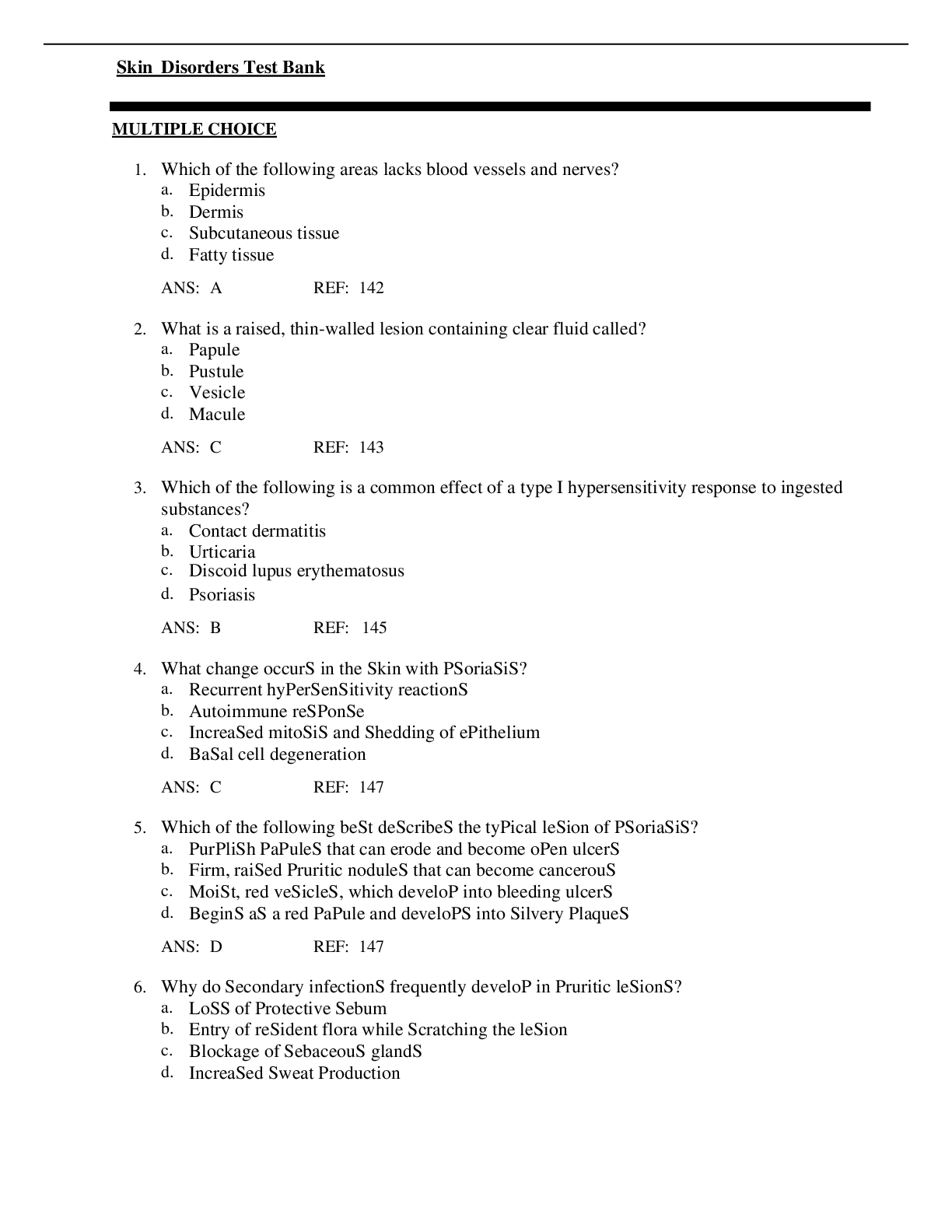
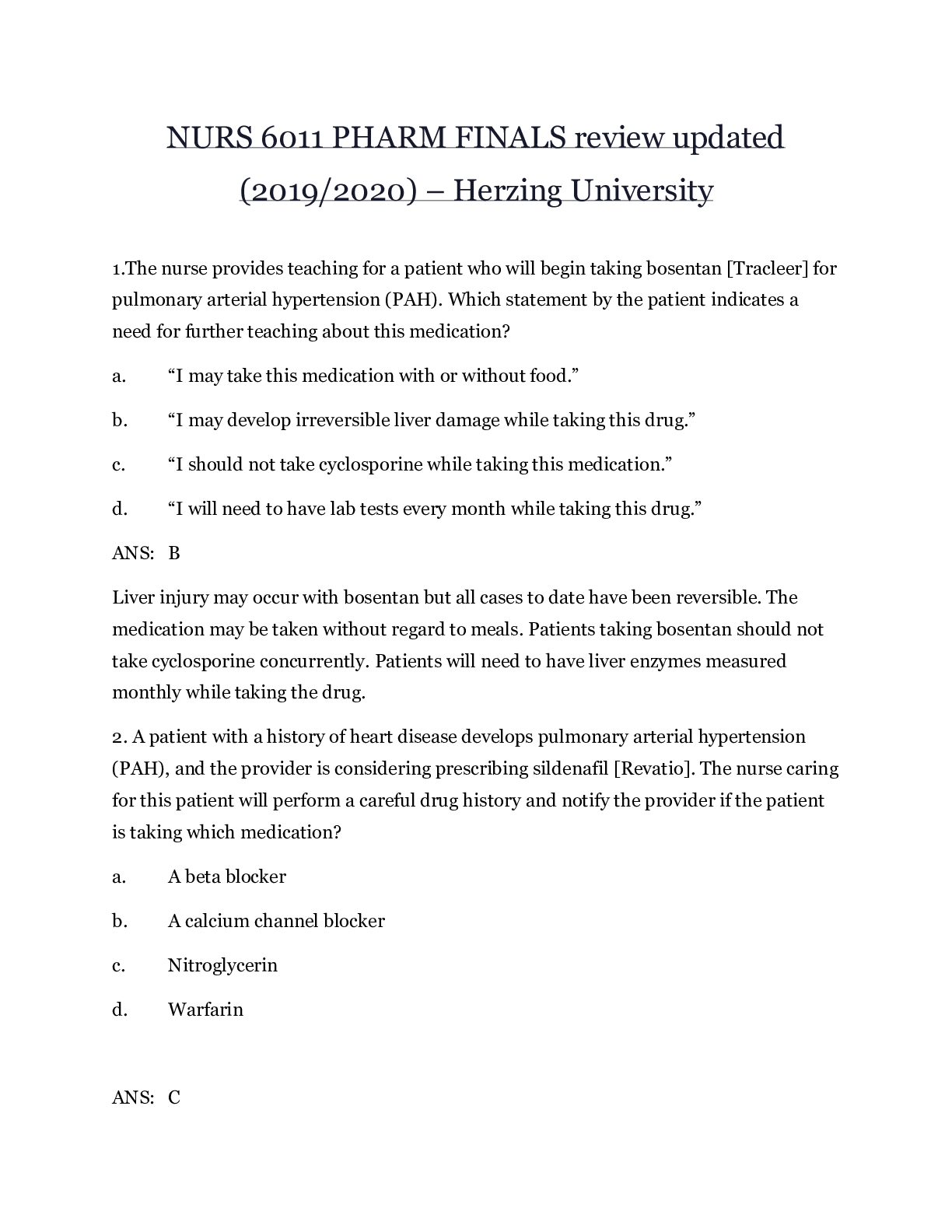
NURS 6011 PHARM FINALS review updated (2019/2020) – Herzing Un...
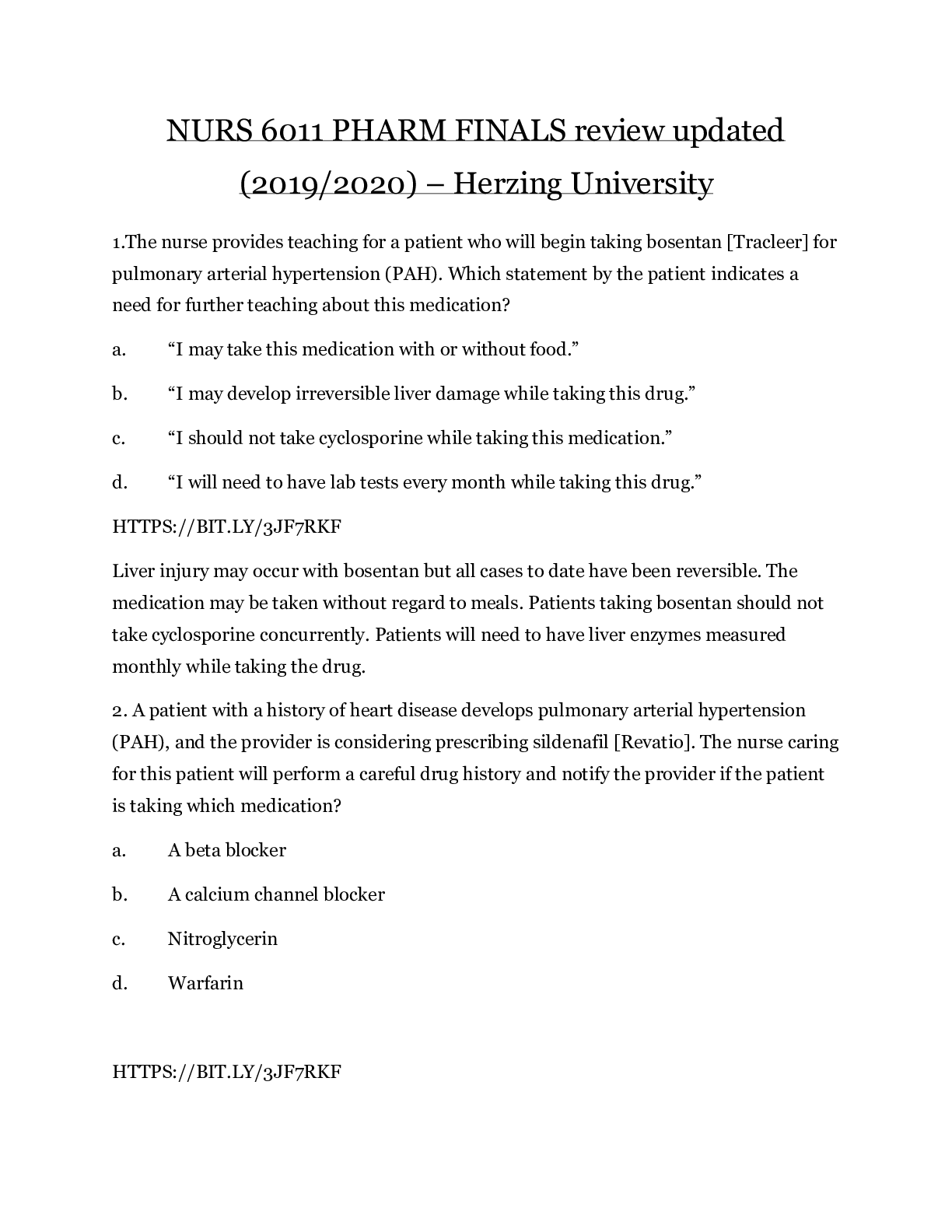
NURS 6011 PHARM FINALS review updated (2019/2020) – Herzing Un...
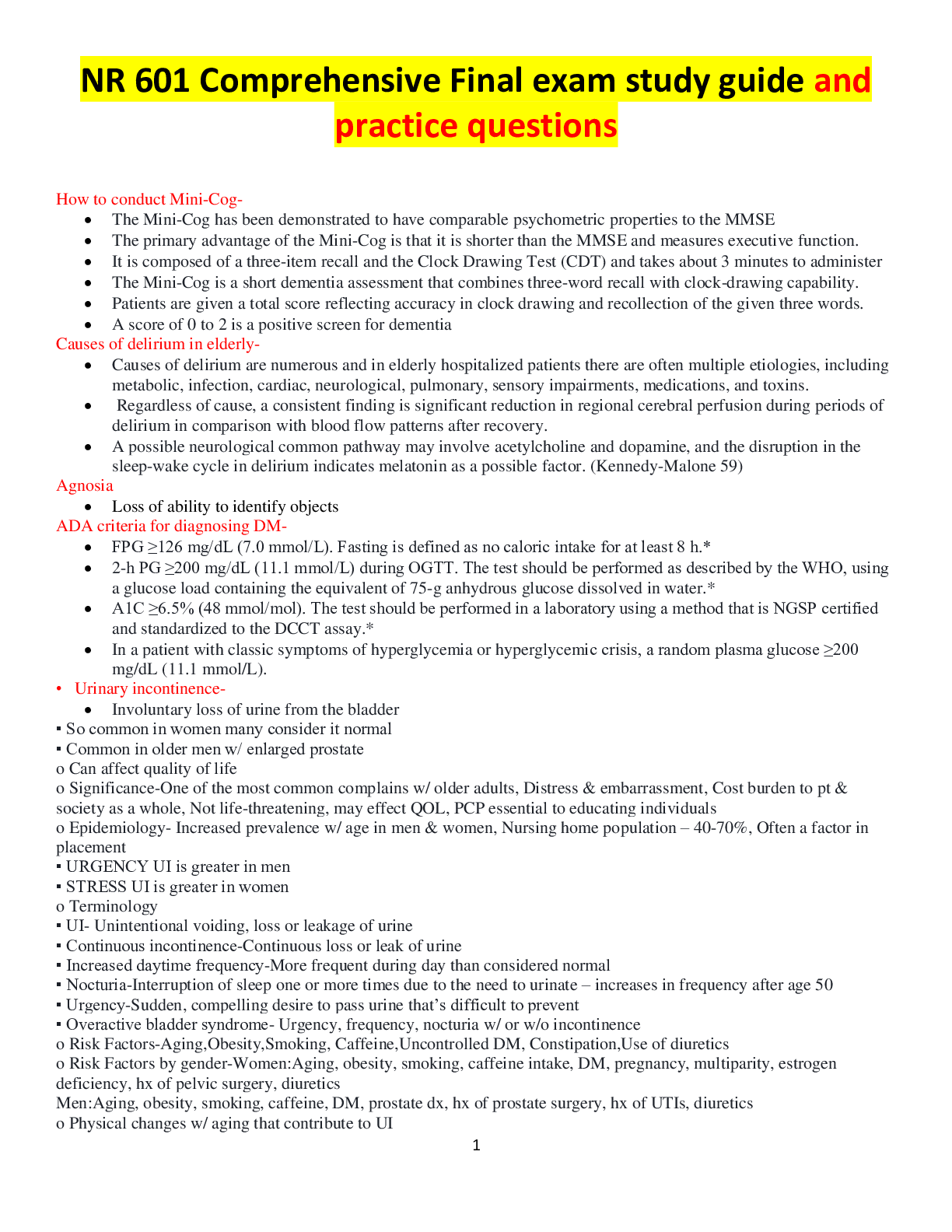
NURS601 FINAL EXAM GUIDE/ NURS 601 FINAL EXAM GUIDE/ NR601 FIN...