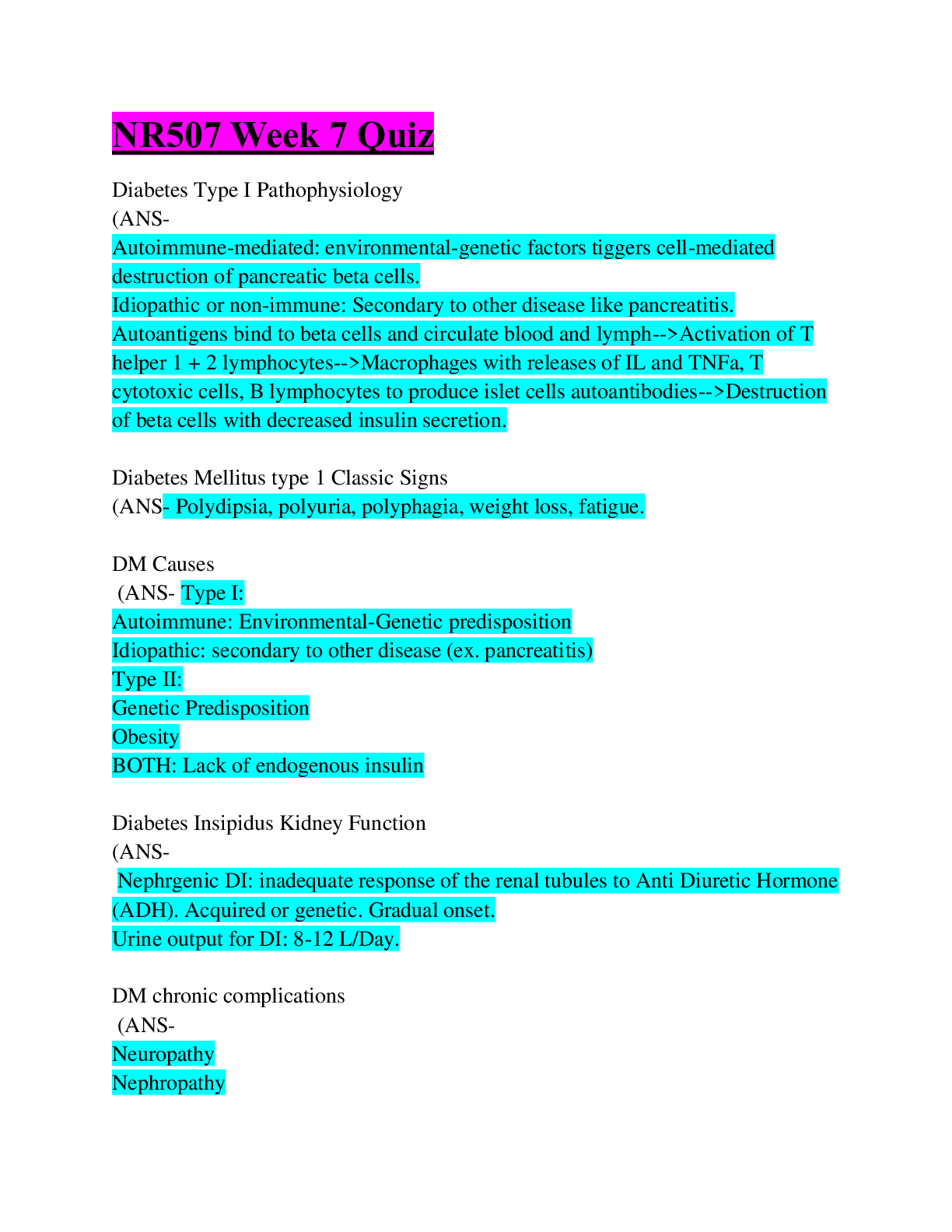
Diabetes Type I Pathophysiology
(ANS-
Autoimmune-mediated: environmental-genetic factors tiggers cell-mediated destruction of pancreatic beta cells.
Idiopathic or non-immune: Secondary to other disease like pancrea
...
Diabetes Type I Pathophysiology
(ANS-
Autoimmune-mediated: environmental-genetic factors tiggers cell-mediated destruction of pancreatic beta cells.
Idiopathic or non-immune: Secondary to other disease like pancreatitis.
Autoantigens bind to beta cells and circulate blood and lymph-->Activation of T helper 1 + 2 lymphocytes-->Macrophages with releases of IL and TNFa, T cytotoxic cells, B lymphocytes to produce islet cells autoantibodies-->Destruction of beta cells with decreased insulin secretion.
Diabetes Mellitus type 1 Classic Signs
(ANS- Polydipsia, polyuria, polyphagia, weight loss, fatigue.
DM Causes
(ANS- Type I:
Autoimmune: Environmental-Genetic predisposition
Idiopathic: secondary to other disease (ex. pancreatitis)
Type II:
Genetic Predisposition
Obesity
BOTH: Lack of endogenous insulin
Diabetes Insipidus Kidney Function
(ANS-
Nephrgenic DI: inadequate response of the renal tubules to Anti Diuretic Hormone (ADH). Acquired or genetic. Gradual onset.
Urine output for DI: 8-12 L/Day.
DM chronic complications
(ANS-
Neuropathy
Nephropathy
Retinopathy
Macrovascular Disease
Infection
Commons signs for DM Type I and Type II
(ANS- Polyuria, polydipsia, fatigue.
DI caused by dysfunction of:
(ANS- Pituitary System
DI Defined
(ANS- The inability to concentrate urine and the production of copious amounts of dilute urine.
Pancreatic, insulin secreting cells
(ANS- Beta cells; endocrine gland.
DM End Result on cellular level
(ANS-
Cellular starvation d/t lack of glucose in cells-->liver stores of glycogen depleted-->use of fat and protein-->Ketones are byproduct of fat catabolism-->Diabetic Ketone Acidosis (DKA) due to ketone build up
OR if less severe: Prevention of lysis of fats-->No ketone formation-->Hyperglycemic Hyperosmolar Nonketotic Coma (HHNK).
polydipsia
(ANS-
Excessive thirst.
Elevated blood glucose-->water osmotically attracted from cells into blood-->Intracellular dehydration-->hypothalmic stim. of thirst.
Polyuria
(ANS- Excessive urination.
Increased blood glucose=> osmotic diuretic--> amount of glucose filtered by glomerulus is greater than can be reabsorbed-->glycosuria-->large amounts of water lost in urine.
Polyphagia
(ANS- Excessive hunger.
Depletion of cellular stores of carbs, fats, and proteins in cellular starvation-->hunger sensation.
Weight Loss in DM type 1
(ANS-
1. Fluid loss in osmotic diuresis
2. Loss of body tissue as fat and proteins used for energy d/t insulin deficiency.
Fatigue in DM type 1
(ANS-
1. Metabolic changes (poor use of food products)
2. Sleep loss from nocturia
Retinopathy
(ANS- Retina: most metabolically active structure. Leading cause of blindness.
Mostly type 2 due to longer hyperglycemia.
Damage to retinal blood vessels and RBCs, platelet aggregation, relative hypoxemia, and HTN.
Stages of Retinopathy
(ANS-
1. nonproliferative: thickening of retinal capillary basement membrane, increase in retinal cap perm.=macular edema, vein dilation, microaneursym form, superfic. and deep hemorrhages.
2. Preproliferative: Retinal ischemia, areas of poor perfusion=infarcts
3. Proliferative: neovascularization (angiogenesis) and fibrous tissue formation within retina or optic disc.
Sorbitol in DM type 2
(ANS- Excessive accumulation that causes intracellular osmotic pressure-->excess water in tissues-->macular edema, cataracts; decreased nerve conduction; swollen, stiff RBCs which decrease circulation.
Nephropathy
(ANS- Diabetic kidney disease (DKD).
50% of people with DM develop DKD.
glomeruli injured by protein denaturation, high renal blood flow d/t hyperglycemia, RAAS activation-->intraglomerular HTN-->increased protein excretion-->glomerular damage-->decreased GFR.
Neuropathy
(ANS- Most common complication of DM. Nerves don't need insulin for glucose transport and are vulnerable to chronic hyperglycemia.
50% of DM type 2 have Periph Neuro.
Nerve degeneration begins at peripheral and moves to spine.
[Show More]