Engineering > QUESTIONS & ANSWERS > ISYE - 6501 Homework 2 Latest Update (All)
ISYE - 6501 Homework 2 Latest Update
Document Content and Description Below
Last updated: 2 months ago
Preview 1 out of 9 pages
Instant download
Buy this document to get the full access instantly
Instant Download Access after purchase
Also available in bundle (1)
Click Below to Access Bundle(s)
BUNDLED PAPERS (Multiple versions) FOR Georgia Institute Of Technology ISYE 6501 Homeworks 1 - 15, Midterm 1 & 2 + FINAL EXAM | ISYE6501x Courseware | edX - Complete Solutions - Introduction To Analytics Modeling - GTX ISYE 6501
GTx: ISYE6501x Introduction to Analytics Modeling Midterm Quiz 2 - GT Students and Verified MM Learners latest 2021 Midterm Quiz 1 - GT Students (Launch Proctortrack first before taking the Midterm Qu...
By Nutmegs 4 years ago
$15
66
Reviews( 0 )
$8.00
Document information
Connected school, study & course
About the document
Uploaded On
May 19, 2022
Number of pages
9
Written in
All

Additional information
This document has been written for:
Uploaded
May 19, 2022
Downloads
0
Views
274
Document Keyword Tags
Recommended For You
Get more on QUESTIONS & ANSWERS »
SOLUTIONS MANUAL for Non Linear Dynamics and Chaos With Applic...
Solutions Manual for Control Systems Engineering, 8th Edition...




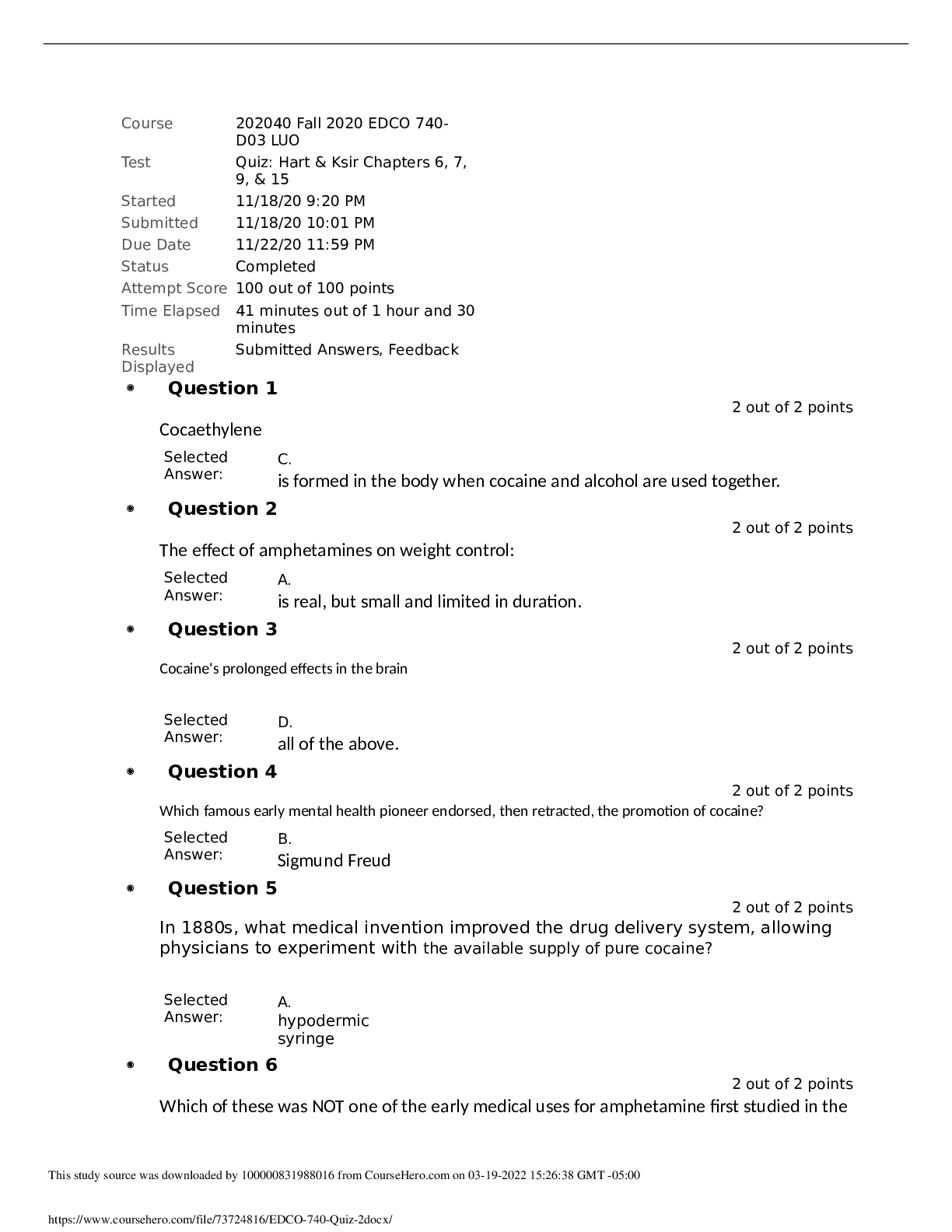
![Preview of [SOLVED] EDCO 740 / EDCO740 Quiz 1 (LATES 2021/2022 Graded A)](https://scholarfriends.com/storage/EDCO_740_Quiz_1.png)