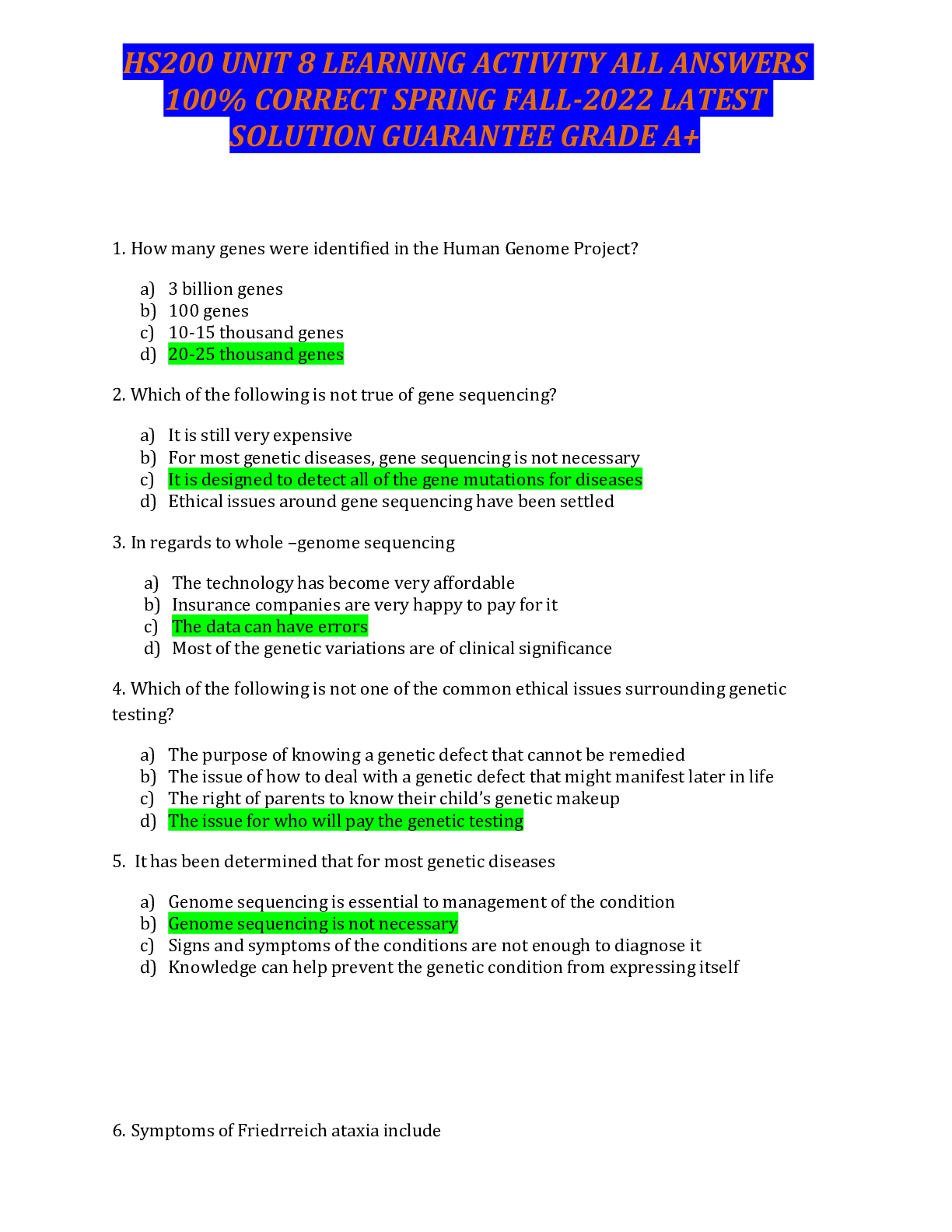
1. How many genes were identified in the Human Genome Project?
a) 3 billion genes
b) 100 genes
c) 10-15 thousand genes
d) 20-25 thousand genes
2. Which of the following is not true of gene sequencing?
a) It is stil
...
1. How many genes were identified in the Human Genome Project?
a) 3 billion genes
b) 100 genes
c) 10-15 thousand genes
d) 20-25 thousand genes
2. Which of the following is not true of gene sequencing?
a) It is still very expensive
b) For most genetic diseases, gene sequencing is not necessary
c) It is designed to detect all of the gene mutations for diseases
d) Ethical issues around gene sequencing have been settled
3. In regards to whole –genome sequencing
a) The technology has become very affordable
b) Insurance companies are very happy to pay for it
c) The data can have errors
d) Most of the genetic variations are of clinical significance
4. Which of the following is not one of the common ethical issues surrounding genetic testing?
a) The purpose of knowing a genetic defect that cannot be remedied
b) The issue of how to deal with a genetic defect that might manifest later in life
c) The right of parents to know their child’s genetic makeup
d) The issue for who will pay the genetic testing
5. It has been determined that for most genetic diseases
a) Genome sequencing is essential to management of the condition
b) Genome sequencing is not necessary
c) Signs and symptoms of the conditions are not enough to diagnose it
d) Knowledge can help prevent the genetic condition from expressing itself
6. Symptoms of Friedrreich ataxia include
a) Pneumonia and failure to thrive
b) Increasing clumsiness and gait disturbances
c) Neoplasms in the eye
d) Uncontrollable bleeding
7. All of the following may indicate an underlying genetic error of metabolism except
a) Abnormal facial features
b) Enlarged liver
c) Spinal scoliosis
d) Body odor
8. Chromosomal diseases are often diagnosed by
a) Blood culture
b) Ultrasound
c) Physical examination
d) Family history
9. Which of the following is true about karyotyping
a) It is performed in a routine doctor’s visit
b) It is used as the initial diagnostic tool for suspected chromosomal disorders
c) It is performed endoscopically
d) It is essential for accurate diagnosis of chromosomal disorders
[Show More]