2020/2021 HESI Pharmacology Version
1(100 Questions and Answers with
Rationale)2020 HESI Pharmacology Version 1 – Questions 1
through 100
1) A nurse is caring for a client with hyperparathyroidism and notes that the
...
2020/2021 HESI Pharmacology Version
1(100 Questions and Answers with
Rationale)2020 HESI Pharmacology Version 1 – Questions 1
through 100
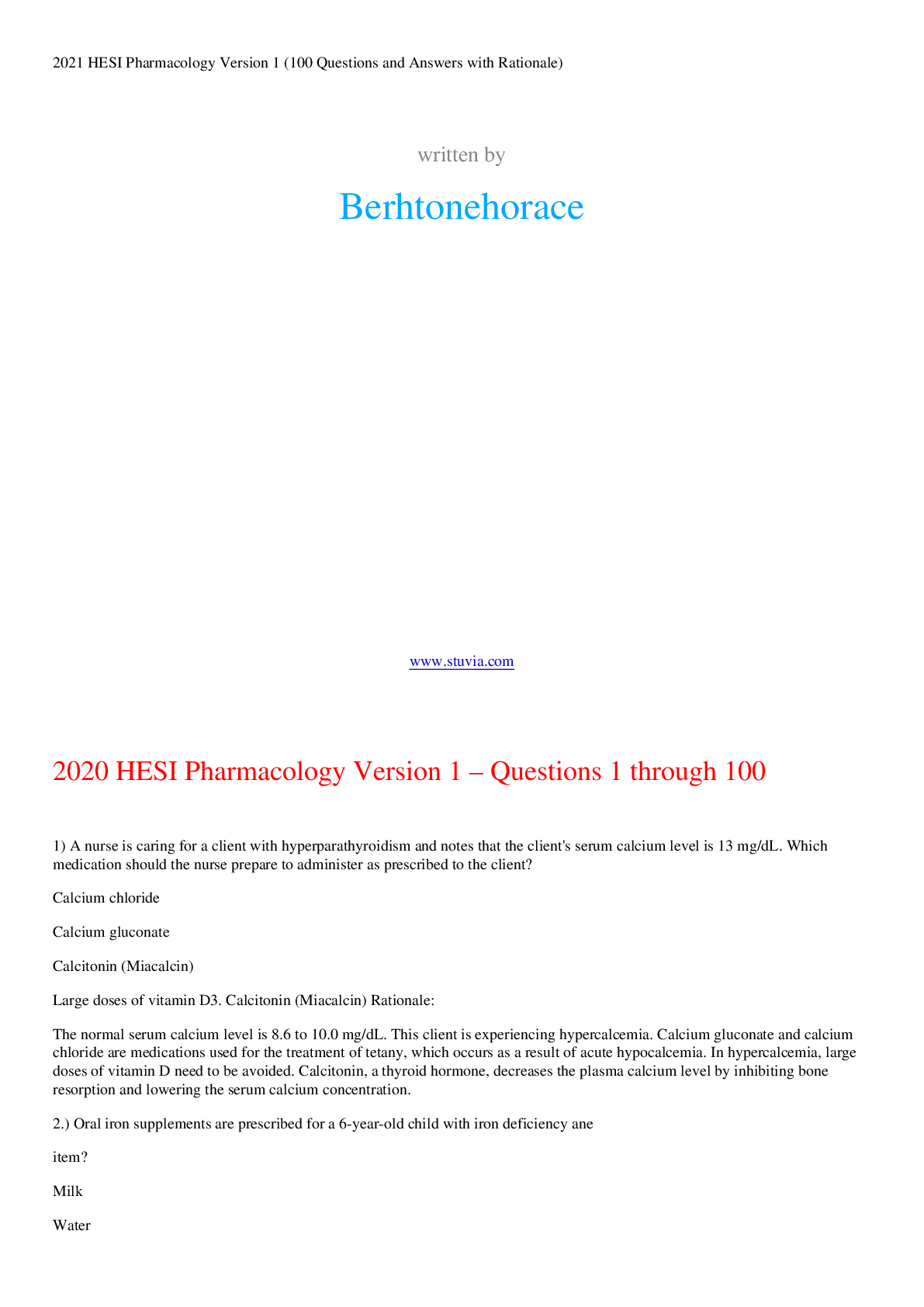
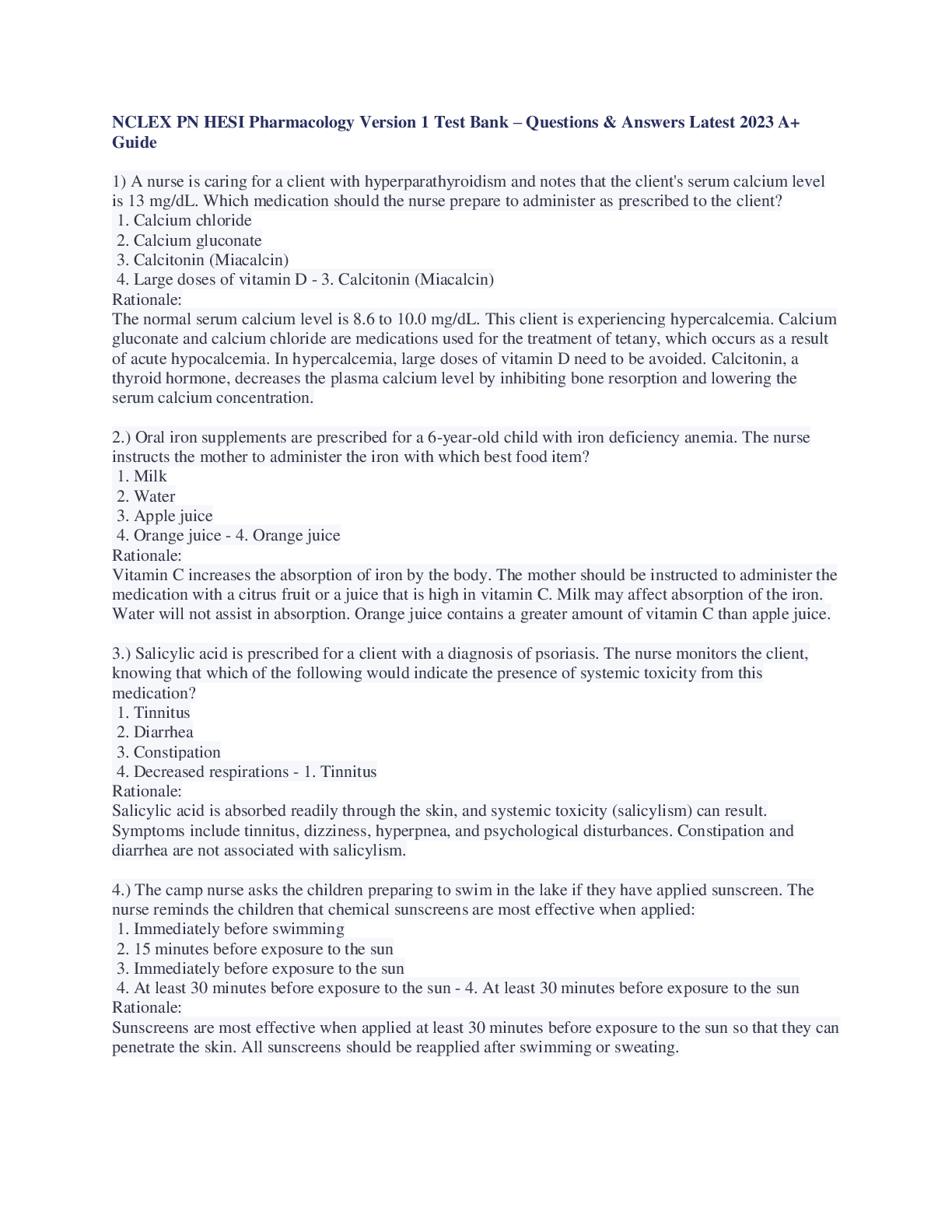
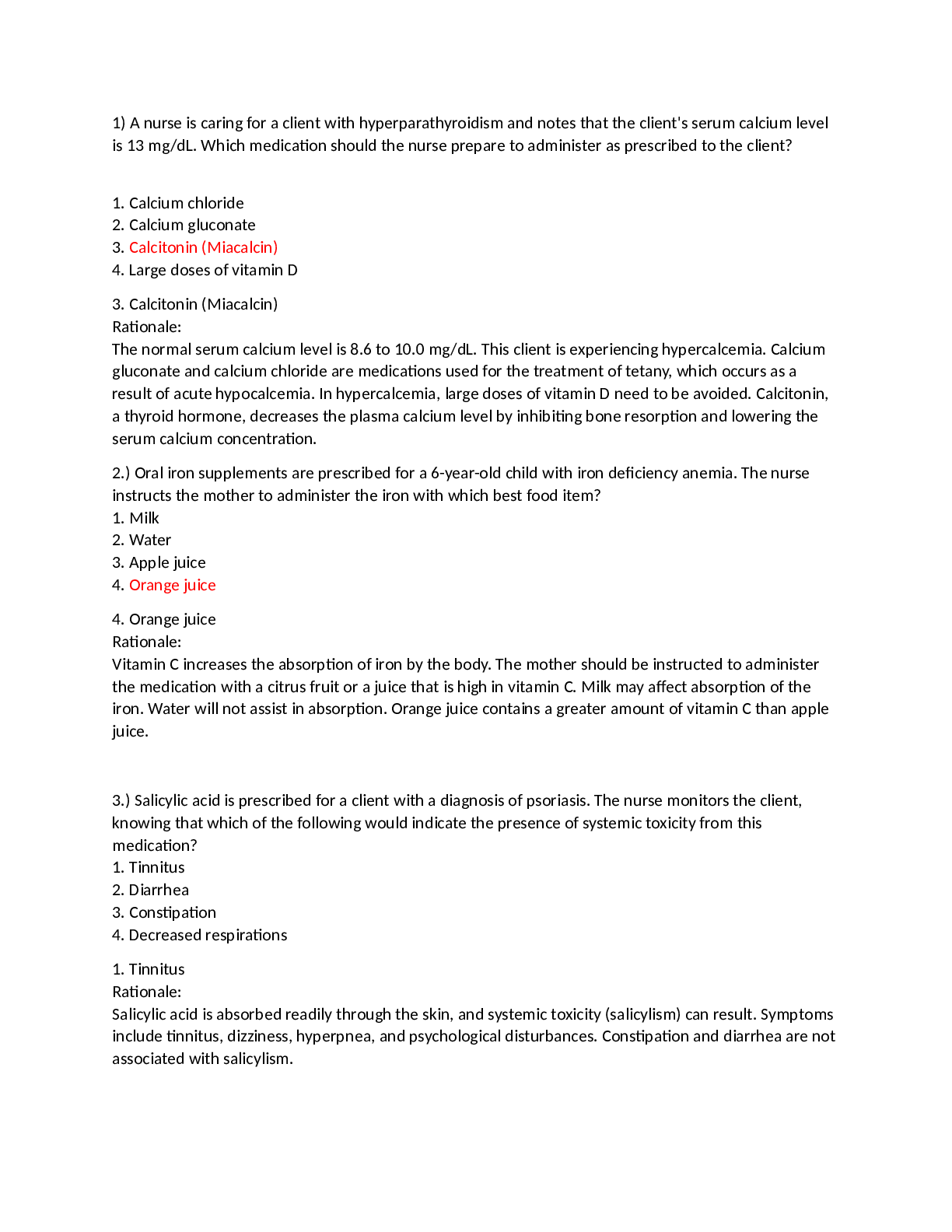
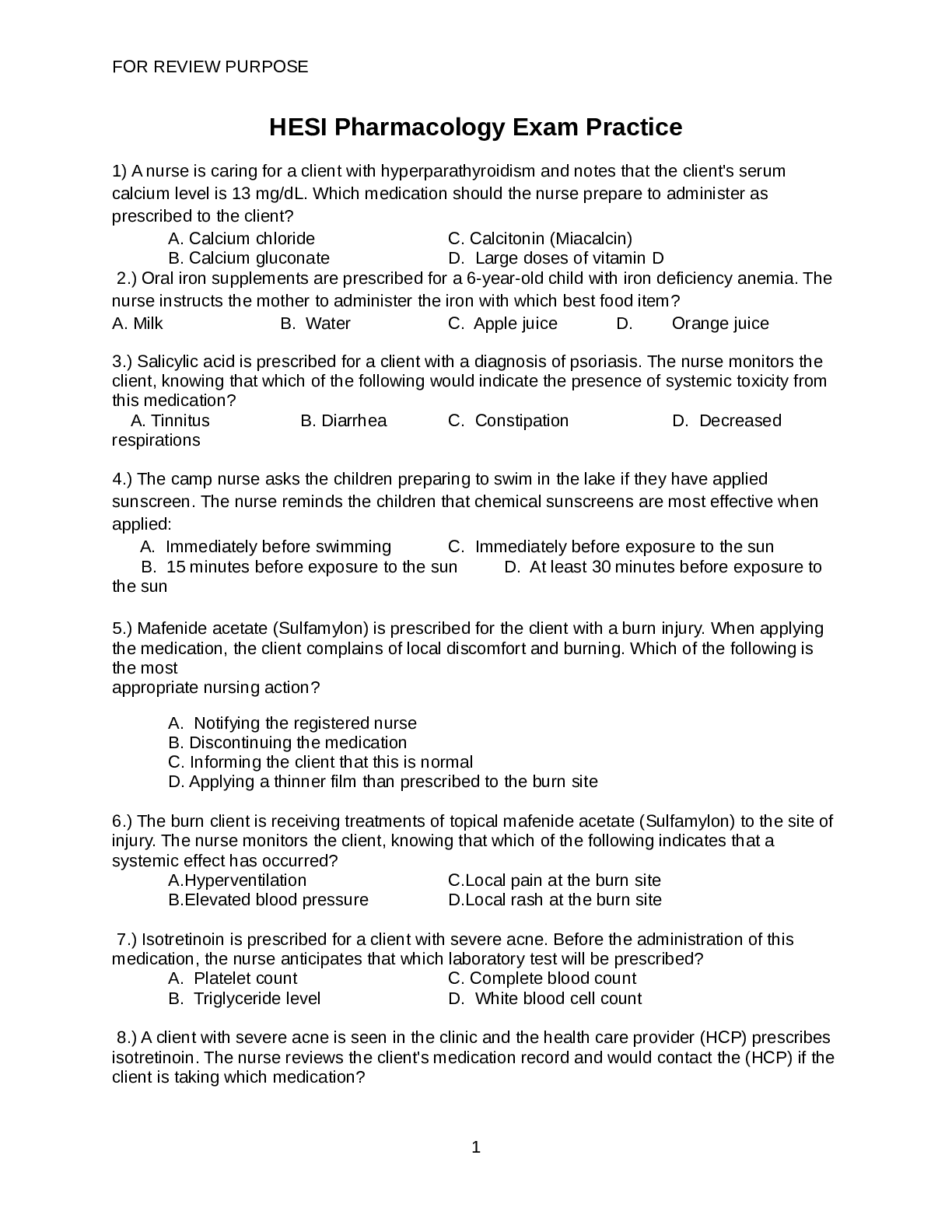
1) A nurse is caring for a client with hyperparathyroidism and notes that the client'sserum
calcium level is 13 mg/dL. Which medication should the nurse prepare to administer as
prescribed to theclient?
1. Calcium chloride
2. Calcium gluconate
3. Calcitonin (Miacalcin)
4. Large doses of vitamin D 3. Calcitonin (Miacalcin)
Rationale:
The normal serum calcium level is 8.6 to 10.0 mg/dL. This client is experiencing
hypercalcemia. Calcium gluconate and calcium chloride are medications used for the
treatment of tetany, which occurs as a result of acute hypocalcemia. In hypercalcemia,
large doses of vitamin D need to be avoided. Calcitonin, a thyroidhormone, decreases the
plasma calcium level by inhibiting bone resorption and lowering the serum calcium
concentration.
2.) Oral iron supplements are prescribed for a 6-year-old child with iron deficiency
item?
1. Milk
2. Water
3. Apple juice
4. Orange juice 4. Orange juice
Rationale:
Vitamin C increases the absorption of iron by the body. The mother should be instructed to
administer the medication with a citrus fruit or a juice that is high in vitamin C. Milk may
affect absorption of the iron. Water will not assist in absorption.Orange juice contains a
greater amount of vitamin C than apple juice.
3.) Salicylic acid is prescribed for a client with a diagnosis of psoriasis. The nurse monitors
the client, knowing that which of the following would indicate the presenceof systemic
toxicity from thismedication?
1. Tinnitus
2. Diarrhea
3. Constipation
4. Decreased respirations 1. Tinnitus
Rationale:
[Show More]