NURSING 1102 Med Surg HESI EXAM
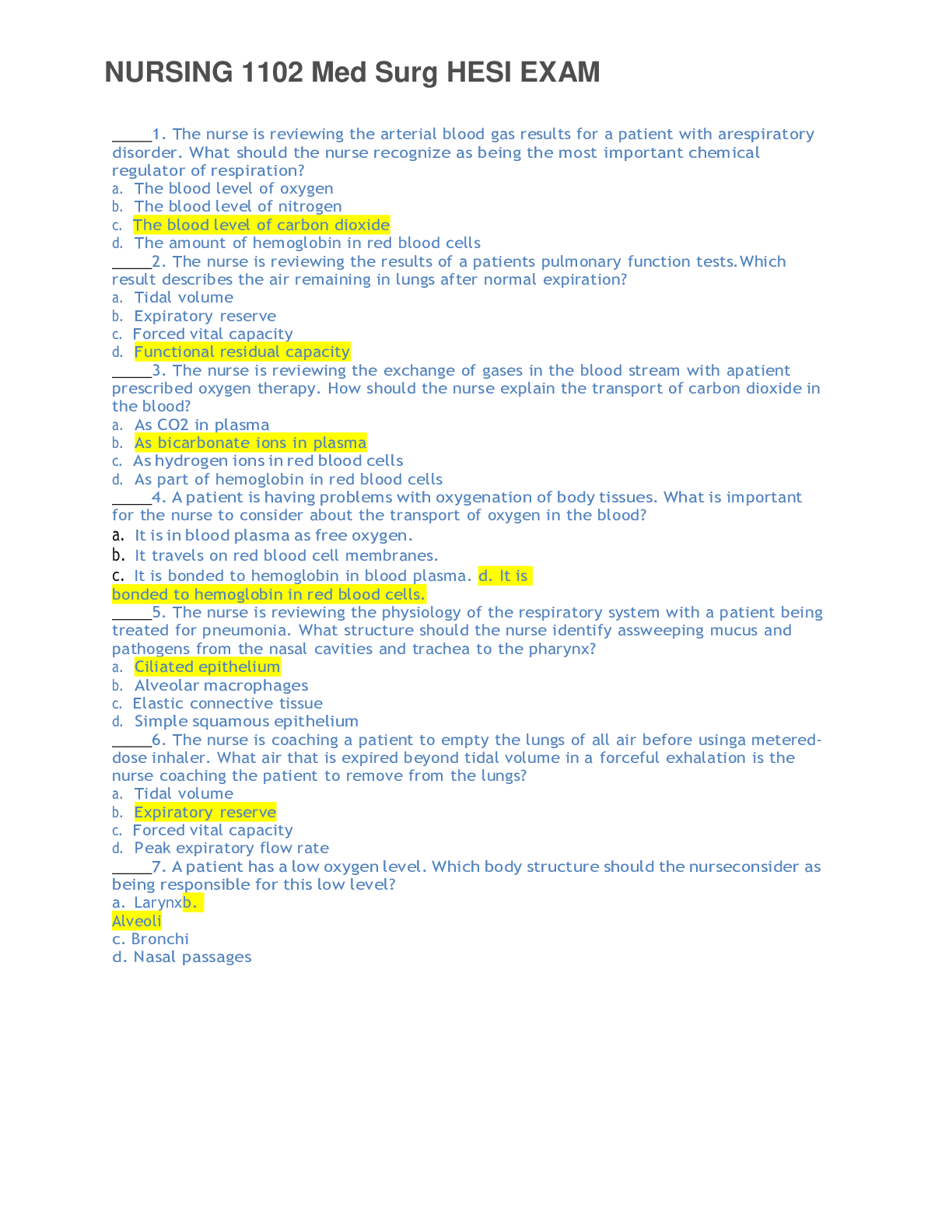
The nurse is reviewing the arterial blood gas results for a patient with a respiratory disorder. What should the nurse recognize as being the most important chemical regulator of respirat
...
NURSING 1102 Med Surg HESI EXAM
The nurse is reviewing the arterial blood gas results for a patient with a respiratory disorder. What should the nurse recognize as being the most important chemical regulator of respiration?
a. The blood level of oxygen
b. The blood level of nitrogen c. The blood level of carbon dioxide
d. The amount of hemoglobin in red blood cells
2. The nurse is reviewing the results of a patients pulmonary function tests. Which result describes the air remaining in lungs after normal expiration?
a. Tidal volume
b. Expiratory reserve
c. Forced vital capacity d. Functional residual capacity
3. The nurse is reviewing the exchange of gases in the blood stream with a patient prescribed oxygen therapy. How should the nurse explain the transport of carbon dioxide in the blood?
a. As CO2 in plasma b. As bicarbonate ions in plasma
c. As hydrogen ions in red blood cells
d. As part of hemoglobin in red blood cells
4. A patient is having problems with oxygenation of body tissues. What is important for the nurse to consider about the transport of oxygen in the blood?
a. It is in blood plasma as free oxygen.
b. It travels on red blood cell membranes. c. It is bonded to hemoglobin in blood plasma. d. It is bonded to hemoglobin in red blood cells.
5. The nurse is reviewing the physiology of the respiratory system with a patient being treated for pneumonia. What structure should the nurse identify as sweeping mucus and pathogens from the nasal cavities and trachea to the pharynx? a. Ciliated epithelium
b. Alveolar macrophages
c. Elastic connective tissue
d. Simple squamous epithelium
6. The nurse is coaching a patient to empty the lungs of all air before using a metered-dose inhaler. What air that is expired beyond tidal volume in a forceful exhalation is the nurse coaching the patient to remove from the lungs?
a. Tidal volume b. Expiratory reserve
c. Forced vital capacity
d. Peak expiratory flow rate
7. A patient has a low oxygen level. Which body structure should the nurse consider as being responsible for this low level? a. Larynx b. Alveoli
c. Bronchi
d. Nasal passages
NURSING 1102 Med Surg HESI EXAM
8. The nurse is providing care to a patient who experienced an ischemic stroke and now requires respiratory support with mechanical ventilation. The nurse realizes that the stroke most likely occurred in which part of the brain? a. Medulla
b. Cerebrum
c. Cerebellum
d. Hypothalamus
9. A nurse is providing care for a patient who complains of difficulty breathing. Which assessment will best help the nurse determine the severity of the patients dyspnea?
a. Count the patients respiratory rate.
b. Ask the
[Show More]






.png)
.png)