NURS 506 EXAM 1 QUESTIONS AND ANSWERS 100% CORRECT
Document Content and Description Below
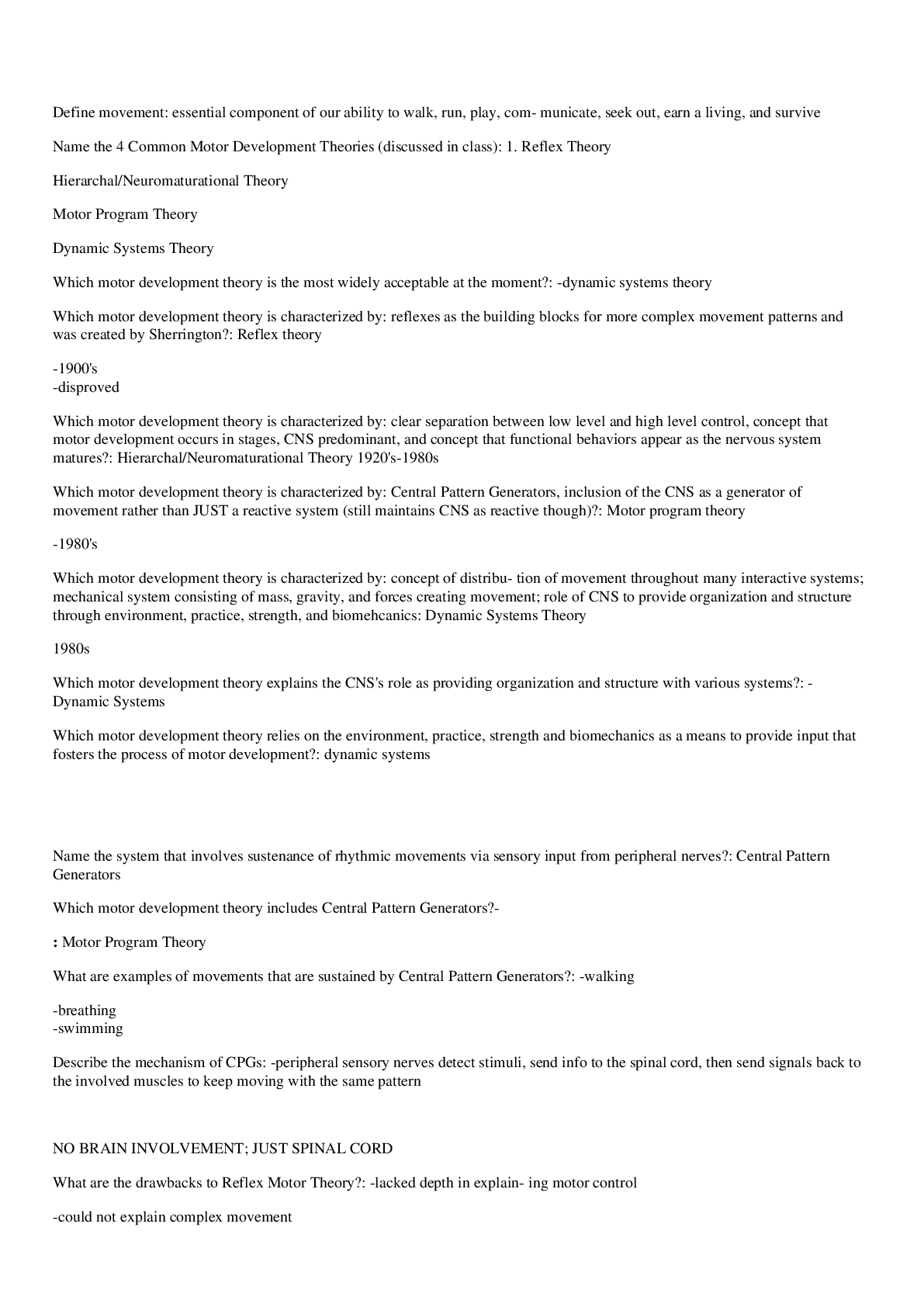
1. Define movement: essential component of our ability to walk, run, play, communicate, seek out, earn a living, and survive
2. Name the 4 Common Motor Development Theories (discussed in class): 1.
Reflex Theory
2. Hi
...
[Show More]
Last updated: 3 years ago
Preview 1 out of 23 pages
Instant download
Buy this Document to get the Full Access Instantly
Provided by Students Who Aced it
We Verify Document Content to Gurantee Accuracy
Reviews( 0 )
Document information
Connected school, study & course
About the document
Uploaded On
May 30, 2022
Number of pages
23
Written in
All

Additional information
This document has been written for:
Uploaded
May 30, 2022
Downloads
0
Views
77
Topic Tags
Related Subjects & Courses
Explore similar study resources and related concepts.
Recommended For You
Get more on EXAM »


.png)
$67.5
424 Pages
NCLEX RN ACTUAL TEST NCLEX RN P1 WITH VERIFIED ANSWERS (ALL CH...
More related documents below