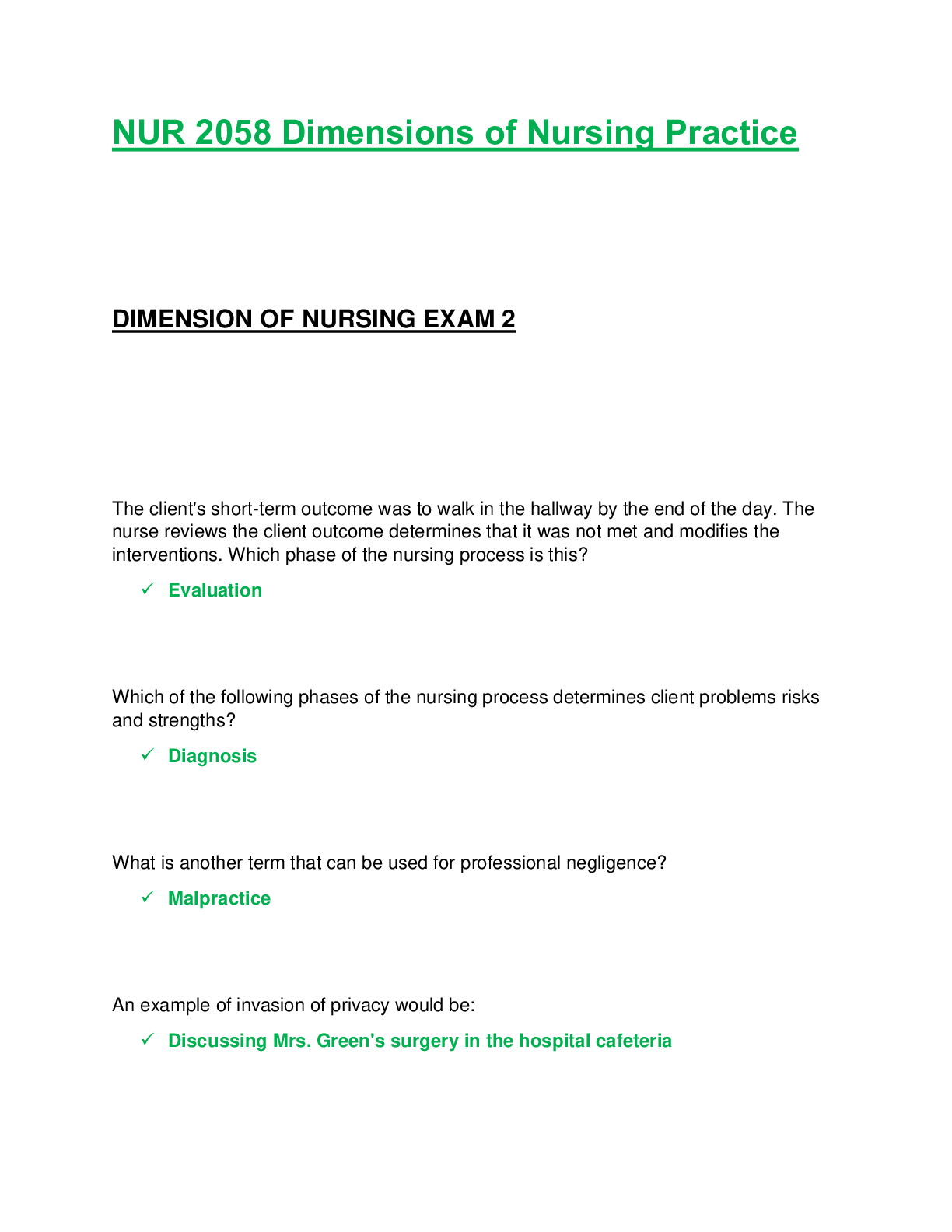
NR-507 Advanced Pathophysiology
Midterm Exam Week 4
1. Question: Hemolytic disease of the newborn (HDN) can occur if the mother:
Student Answer: Is Rh-positive and the fetus is Rh-negative
...
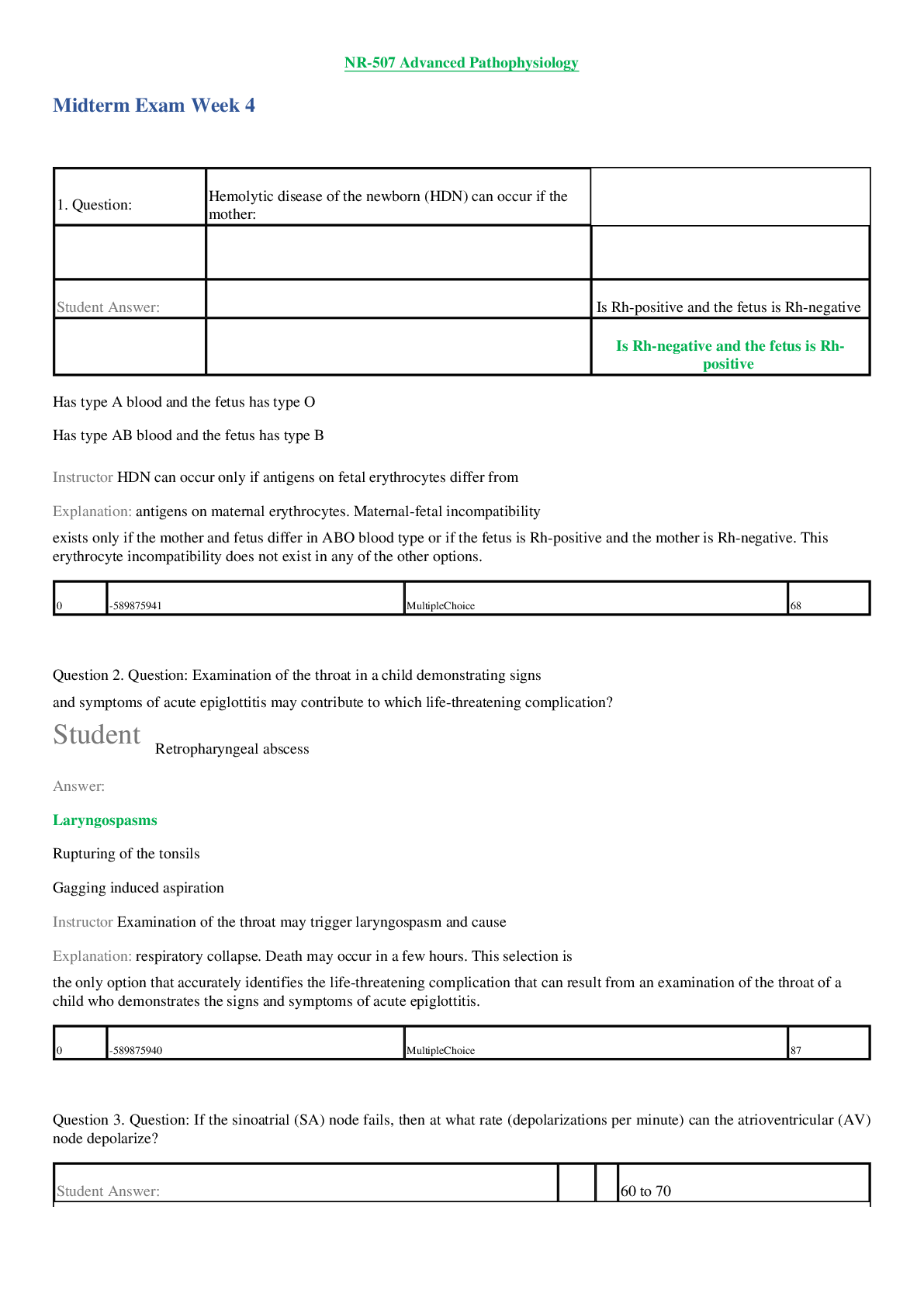
NR-507 Advanced Pathophysiology
Midterm Exam Week 4
1. Question: Hemolytic disease of the newborn (HDN) can occur if the mother:
Student Answer: Is Rh-positive and the fetus is Rh-negative
Is Rh-negative and the fetus is Rh-positive
Has type A blood and the fetus has type O
Has type AB blood and the fetus has type B
Instructor HDN can occur only if antigens on fetal erythrocytes differ from
Explanation: antigens on maternal erythrocytes. Maternal-fetal incompatibility
exists only if the mother and fetus differ in ABO blood type or if the fetus is Rh-positive and the mother is Rh-negative. This erythrocyte incompatibility does not exist in any of the other options.
0 -589875941 MultipleChoice 68
Question 2. Question: Examination of the throat in a child demonstrating signs
and symptoms of acute epiglottitis may contribute to which life-threatening complication?
Student Retropharyngeal abscess
Answer:
Laryngospasms
Rupturing of the tonsils
Gagging induced aspiration
Instructor Examination of the throat may trigger laryngospasm and cause
Explanation: respiratory collapse. Death may occur in a few hours. This selection is
the only option that accurately identifies the life-threatening complication that can result from an examination of the throat of a child who demonstrates the signs and symptoms of acute epiglottitis.
0 -589875940 MultipleChoice 87
Question 3. Question: If the sinoatrial (SA) node fails, then at what rate (depolarizations per minute) can the atrioventricular (AV) node depolarize?
Student Answer: 60 to 70
40 to 60
30 to 40
10 to 20
Instructor If the SA node is damaged, then the AV node will become the heart’s
Explanation: pacemaker at a rate of approximately 40 to 60 spontaneous depolarizations per minute.
0 -589875939 MultipleChoice 75
Question 4. Question: What is the ratio of coronary capillaries to cardiac muscle
cells?
Student 1:1 (one capillary per one muscle cell)
Answer:
1:2 (one capillary per two muscle cells)
1:4 (one capillary per four muscle cells)
1:10 (one capillary per ten muscle cells)
Instructor The heart has an extensive capillary network, with approximately
Explanation: 3300 capillaries per square millimeter (ca/mm2) or approximately
one capillary per one muscle cell (muscle fiber).
0 -589875938 MultipleChoice 73
Question 5. Question: Which cytokines initiate the production of corticotropin-
releasing hormone (CRH)?
Student IL–1 and IL-6
Answer:
IL-2 and TNF-
IFN and IL-12
TNF-ß and IL-4
Instructor Although a number of stress factors initiate the production of CRH, of
Explanation: the options available, only high levels of IL-1 and IL-6 initiate such a
response.
0 -589875937 MultipleChoice 21
Question 6. Question: What process allows the kidney to respond to an increase in
workload?
Student
Answer:
Glomerular filtration
Secretion of 1,25-dihydroxyvitamin D3
Increased heart rate
Compensatory hypertrophy
Instructor Compensatory hypertrophy allows the kidney to respond to an Explanation: increase in workload throughout life. The remaining options are not
relevant to accommodating an increased workload.
0 -589875936 MultipleChoice 108
Question 7. Question: Which type of antibody is involved in type I hypersensitivity
reaction?
Student IgA
Answer:
IgE
IgG
IgM
Instructor Type I reactions are only mediated by antigen-specific IgE and the Explanation: products of tissue mast cells (see Figure 9-1).
0 -589875935 MultipleChoice 9
Question 8. Question: Causes of hyperkalemia include:
Student
Answer:
Hyperparathyroidism and malnutrition
Vomiting and diarrhea
Renal failure and Addison disease
Hyperaldosteronism and Cushing disease
Instructor Hyperkalemia should be investigated when a history of renal disease,
Explanation: massive trauma, insulin deficiency, Addison disease, use of potassium
salt substitutes, or metabolic acidosis exists. The other options are not known to be causes of hyperkalemia.
0 -589875934 MultipleChoice 36
Question 9. Question: What is the first stage in the infectious process?
Student Invasion
Answer:
Colonization
Spread
Multiplication
Instructor From the perspective of the microorganisms that cause disease, the
Explanation: infectious process undergoes four separate stages of progression: (1)
colonization, (2) invasion, (3) multiplication, and (4) spread.
0 -589875933 MultipleChoice 7
Question 10. Question: Which statement is true concerning the IgM?
Student Answer: IgM is the first antibody produced during the initial
response to an antigen.
IgM mediates many common allergic responses.
IgM is the most abundant class of immunoglobulins.
IgM is capable of crossing the human placenta.
Instructor Explanation: Typically, IgM is produced first (primary immune response), followed by IgG against the same antigen. The other options are
not true statements regarding IgM.
0 -589875932 MultipleChoice 6
Question 11. Question: An infant has a loud, harsh, holosystolic murmur and
systolic thrill that can be detected at the left lower sternal border that radiates to the neck. These clinical findings are consistent with which congenital heart defect?
Student Answer: Atrial septal defect (ASD)
Ventricular septal defect (VSD)
Patent ductus arteriosus (PDA)
Atrioventricular canal (AVC) defect
Instructor On physical examination, a loud, harsh, holosystolic murmur and
Explanation: systolic thrill can be detected at the left lower sternal border. The
intensity of the murmur reflects the pressure gradient across the VSD.
An apical diastolic rumble may be present with a moderate-to-large defect, reflecting increased flow across the mitral valve. The presentations of the other congenital heart defects are not consistent with the described symptoms.
0 -589875931 MultipleChoice 39
Question 12. Question: What is the chief predisposing factor for respiratory distress
syndrome (RDS) of the newborn?
Student
Answer:
Low birth weight
Alcohol consumption during pregnancy
Premature birth
Smoking during pregnancy
Instructor RDS of the newborn, also known as hyaline membrane disease Explanation: (HMD), is a major cause of morbidity and mortality in premature
newborns. None of the other options are considered the chief predisposing factors for RDS.
0 -589875930 MultipleChoice 81
Question 13. Question :
Which cardiac chamber has the thinnest wall and why?
Student The right and left atria; they are low-pressure chambers
Answer: that serve as storage units and conduits for blood.
The right and left atria; they are not directly involved in the preload, contractility, or afterload of the heart.
The left ventricle; the mean pressure of blood coming into this ventricle is from the lung, which has a low pressure.
The right ventricle; it pumps blood into the pulmonary capillaries, which have a lower pressure compared with the systemic circulation.
Instructor Explanation: The two atria have the thinnest walls because they are lowpressure chambers that serve as storage units and conduits for
blood that is emptied into the ventricles. This selection is the only option that correctly identifies which heart chambers have the thinnest walls and why that helps cardiac function.
0 -589875929 MultipleChoice 71
Question 14. Question: What is the direct action of atrial natriuretic hormone?
Student Sodium retention
Answer:
Sodium excretion
Water retention
Water excretion
Instructor Atrial natriuretic peptide (ANP) and brain natriuretic peptide (BNP) Explanation: inhibit the secretion of renin, inhibit angiotensin-induced secretion of
aldosterone, vasodilate the afferent and constrict the efferent glomerular arterioles, and inhibit sodium and water absorption by kidney tubules. The other actions are not a result of the atrial natriuretic hormone.
0 -589875928 MultipleChoice 102
Question 15. Question: What is the primary site for uncomplicated local gonococci
infections in men?
Student
Answer:
Epididymis
Lymph nodes
Urethra
Prostate
Instructor Uncomplicated local infections are observed primarily as urethral Explanation: infections in men.
0 -589875927 MultipleChoice 48
Question 16. Question: Which statement concerning benign tumors is true?
Student The resulting pain is severe.
Answer:
Benign tumors are not encapsulated.
Benign tumors are fast growing.
The cells are well-differentiated.
Instructor A benign tumor is well-differentiated with its tissue appearing similar
Explanation: to the tissue from which it arose. The other options are characteristic
of a malignant tumor.
0 -589875926 MultipleChoice 30
Question 17. Question: Which of the following is classified as a megaloblastic
anemia?
Student Iron deficiency
Answer:
Pernicious
Sideroblastic
Hemolytic
Instructor Pernicious anemia is the most common type of megaloblastic anemia.
Explanation: The remaining options are not classified as megaloblastic anemias.
0 -589875925 MultipleChoice 61
Question 18. Question: Apoptosis is a(an):
Answer:
growth is excessive
Student Normal mechanism for cells to self-destruct when
Antigrowth signal activated by the tumor-suppressor
gene Rb
Mutation of cell growth stimulated by the TP53 gene
Transformation of cells from dysplasia to anaplasia
Instructor Normal cells have a mechanism that causes them to self-destruct
Explanation: when growth is excessive and cell cycle checkpoints have been
ignored. Diverse stimuli, including normal development and excessive growth, trigger this self-destruct mechanism, called apoptosis. The remaining options do not describe apoptosis.
0 -589875924 MultipleChoice 24
Question 19. Question: What is the functional unit of the kidney called?
Student Glomerulus
Answer:
Nephron
Collecting duct
Pyramid
Instructor The nephron is the functional unit of the kidney. Although the other
Explanation: options are also located in the kidney, they are not its functional units.
0 -589875923 MultipleChoice 91
Question 20. Question: Which hepatitis virus is known to be sexually transmitted?
Student A
Answer:
B
C
D
Instructor Only hepatitis B virus (HBV) is known to be sexually transmitted.
Explanation:
0 -589875922 MultipleChoice 53
Question 21. Question: The glomerular filtration rate is directly related to which
factor?
Student Perfusion pressure in the glomerular capillaries
Answer:
Diffusion rate in the renal cortex
Diffusion rate in the renal medulla
Glomerular active transport
Instructor The filtration of the plasma per unit of time is known as the
Explanation: glomerular filtration rate (GFR), which is directly related to only the
perfusion pressure in the glomerular capillaries.
0 -589875921 MultipleChoice 98
Question 22. Question: Decreased lung compliance means that the lungs are
Student Difficult deflation
demonstrating which characteristic?
Answer:
Easy inflation
Stiffness
Inability to diffuse oxygen
Instructor A decrease in compliance indicates that the lungs or chest wall is
Explanation: abnormally stiff or difficult to inflate. This selection is the only option
that accurately identifies the meaning of decreased compliance.
0 -589875920 MultipleChoice 45
Question 23. Question: What is the most common cause of iron deficiency anemia (IDA)?
Student Decreased dietary intake
Answer:
Chronic blood loss
Vitamin deficiency
Autoimmune disease
Instructor The most common cause of IDA in well-developed countries is Explanation: pregnancy and chronic blood loss.
0 -589875919 MultipleChoice 63
Question 24. Question: Which drug may be prescribed orally for outbreak
management of herpes simplex viral (HSV) infections?
Student Acyclovir (Zovirax) Answer:
5-Fluorouracil (5-FU)
Zidovudine (AZT) (Retrovir)
Bichloroacetic acid (BCA)
Instructor Although no curative treatment for HSV infection is known, only oral
Explanation: acyclovir, valacyclovir, penciclovir, and famciclovir are used for
primary and periodic outbreaks and to prevent recurrences.
0 -589875918 MultipleChoice 52
Question 25. Question: In a normal, nonmutant state, an oncogene is referred to as
a:
Student
Answer:
Basal cell
Target cell
Caretaker gene
Proto-oncogene
Instructor In its normal nonmutant state, an oncogene is referred to as a proto-
Explanation: oncogene. The other options are not terms used to identify a
nonmutant oncogene.
-589875917 MultipleChoice 28 True
0 -589875917 MultipleChoice 28
Question 26. Question: What is the primary cause of respiratory distress syndrome (RDS) of the newborn?
Student
Answer:
Immature immune system
Small alveoli
Surfactant deficiency
Anemia
Instructor RDS is primarily caused by surfactant deficiency and secondarily by a Explanation: deficiency in alveolar surface area for gas exchange. None of the other
options are related to the cause of RDS.
0 -589875916 MultipleChoice 82
Question 27. Question: Fetal hematopoiesis occurs in which structure?
Student Gut
Answer:
Spleen
Bone marrow
Thymus
Instructor The spleen is the largest of the secondary lymphoid organs and the site Explanation: of fetal hematopoiesis.
0 -589875915 MultipleChoice 57
Question 28. Question: Deficiencies in which element can produce depression of
both B- and T-cell function?
Student Iron
Answer:
Zinc
Iodine
Magnesium
Instructor Of the options available, only deficient zinc intake can profoundly Explanation: depress T- and B-cell function.
0 -589875914 MultipleChoice 11
Question 29. Question: Phagocytosis involves neutrophils actively attacking,
engulfing, and destroying which microorganisms?
Student Bacteria
Answer:
Fungi
Viruses
Yeasts
Instructor Invasion is the direct confrontation with an individual’s primary
Explanation: defense mechanisms against only bacteria, which include the
complement system, antibodies, and phagocytes, such as neutrophils and macrophages.
0 -589875913 MultipleChoice 15
Question 30. Question: Which hormone is synthesized and secreted by the kidneys?
Student
Answer:
Antidiuretic hormone
Aldosterone
Erythropoietin
Angiotensinogen
Instructor Erythropoietin is produced by the fetal liver and in the adult kidney Explanation: and is essential for normal erythropoiesis. This statement is not true of
the other options.
0 -589875912 MultipleChoice 107
Question 31. Question: Which congenital heart defects occur in trisomy 13, trisomy 18, and Down syndrome?
Student
Answer:
Coarctation of the aorta (COA) and pulmonary stenosis
(PS)
Tetralogy of Fallot and persistent truncus arteriosus
Atrial septal defect (ASD) and dextrocardia
arteriosus (PDA)
Instructor Explanation: Congenital heart defects that are related to dysfunction of trisomy 13, trisomy 18, and Down syndrome include VSD and PDA (see Table
Ventricular septal defect (VSD) and patent ductus
33-2). The other defects are not associated with dysfunction of trisomy 13, trisomy 18, and Down syndrome.
0 -589875911 MultipleChoice 38
Question 32. Question: Which laboratory test is considered adequate for an accurate
and reliable diagnosis of gonococcal urethritis in a symptomatic man?
Student Ligase chain reaction (LCR)
Answer:
Gram-stain technique
Polymerase chain reaction (PCR)
DNA testing
Instructor Microscopic evaluation of Gram-stained slides of clinical specimens is Explanation: deemed positive for Neisseria gonorrhoeae if gram-negative diplococci
with the typical “kidney bean” morphologic appearance are found inside polymorphonuclear leukocytes. Such a finding is considered adequate for the diagnosis of gonococcal urethritis in a symptomatic man. The other options are not relevant to the diagnosis of this condition.
0 -589875910 MultipleChoice 49
Question 33. Question: During an IgE-mediated hypersensitivity reaction, which
leukocyte is activated?
Student
Answer:
Neutrophils
Monocytes
Eosinophils
T lymphocytes
Instructor Of the options provided, only eosinophils are activated during IgEExplanation: mediated hypersensitivity reactions.
0 -589875909 MultipleChoice 10
Question 34. Question: What is the life span of platelets (in days)?
Student 10
Answer:
30
90
120
Instructor A platelet circulates for approximately 10 days and ages. Macrophages
Explanation: of the mononuclear phagocyte system, mostly in the spleen, remove
platelets.
0 -589875908 MultipleChoice 56
Question 35. Question: What is the role of caretaker genes?
Student Maintenance of genomic integrity
Answer:
Proliferation of cancer cells
Secretion of growth factors
Restoration of normal tissue structure
Instructor Caretaker genes are responsible for the maintenance of genomic
Explanation: integrity. The other options are not roles assumed by caretaker
genes.
0 -589875907 MultipleChoice 27
Question 36. Question: Which blood cell type is elevated at birth but decreases to
Student Monocytes
adult levels during the first year of life?
Answer:
Platelets
Neutrophils
Lymphocytes
Instructor Only monocyte counts are high in the first year of life and then Explanation: decrease to adult levels.
0 -589875906 MultipleChoice 65
Question 37. Question: Which term is used to identify the movement of gas and air into and out of the lungs?
Student Perfusion
Answer:
Ventilation
Respiration
Diffusion
Instructor Of the options available, ventilation is the only term used to identify Explanation: the mechanical movement of gas or air into and out of the lungs.
0 -589875905 MultipleChoice 41
Question 38. Question: In which primary immune deficiency is there a partial-to-
complete absence of T-cell immunity?
Student Bruton disease
Answer:
DiGeorge syndrome
Reticular dysgenesis
Adenosine deaminase deficiency
Instructor The principal immunologic defect in DiGeorge syndrome is the partial
Explanation: or complete absence of T-cell immunity. The other options are not the
result of either a partial or complete absence of T-cell immunity.
0 -589875904 MultipleChoice 12
Question 39. Question: Which substance has been shown to increase the risk of
Student Alcohol
cancer when used in combination with tobacco smoking?
Answer:
Steroids
Antihistamines
Antidepressants
Instructor Alcohol interacts with smoke, increasing the risk of malignant tumors, Explanation: possibly by acting as a solvent for the carcinogenic chemicals in smoke
products. No current research supports the remaining options as having an increased effect on the incidence of cancer when used in combination with tobacco smoking.
0 -589875903 MultipleChoice 31
Question 40. Question: Which statement concerning exotoxins is true?
Student Answer: Exotoxins are contained in cell walls of gram-negative
bacteria.
Exotoxins are released during the lysis of bacteria.
Exotoxins are able to initiate the complement and
coagulation cascades.
Exotoxins are released during bacterial growth.
Instructor Exotoxins are proteins released during bacterial growth. The Explanation: other options are not true of exotoxins.
0 -589875902 MultipleChoice 16
Question 41. Question: Which type of immunity is produced by an individual after
either natural exposure to the antigen or after immunization against the antigen?
Student Passive-acquired immunity
Answer:
Active-acquired immunity
Passive-innate immunity
Active-innate immunity
Instructor An individual produces active-acquired immunity (active immunity)
Explanation: after natural exposure to an antigen or after immunization, whereas
passive-acquired immunity (passive immunity) does not involve the host’s immune response at all. The innate immune system, also known as nonspecific immune system and the first line of defense, is composed of the cells and mechanisms that defend the host from infection by other organisms in a nonspecific manner, which means that the cells of the innate system recognize and respond to pathogens in a generic way.
0 -589875901 MultipleChoice 2
Question 42. Question: Research supports the premise that exercise has a probable
impact on reducing the risk of which cancer?
Student
Answer:
Liver
Endometrial
Stomach
Colon
Instructor The World Cancer Research Fund summarizes the effects as
Explanation: convincing for cancers of the colon and probable for postmenopausal
breast cancer and endometrial cancer. The relationship is not supported for the remaining options.
0 -589875900 MultipleChoice 32
Question 43. Question: What part of the kidney controls renal blood flow, glomerular filtration, and renin secretion?
Student
Answer:
Macula densa
Visceral epithelium
Juxtaglomerular apparatus (JGA)
Filtration slits
Instructor Control of renal blood flow, glomerular filtration, and renin secretion
Explanation: occur at the JGA. Together, the juxtaglomerular cells and macula
densa cells form the JGA. The control of renal blood flow, glomerular filtration, and renin secretion is not directed by any of the other options.
0 -589875899 MultipleChoice 94
Question 44. Question: What is the fundamental physiologic manifestation of
anemia?
Student
Answer:
Hypotension
Hyperesthesia
Hypoxia
Ischemia
Instructor The fundamental physiologic manifestation of anemia is a reduced Explanation: oxygen-carrying capacity of the blood, resulting in tissue hypoxia.
0 -589875898 MultipleChoice 60
Question 45. Question: Between which months of age does sudden infant death
syndrome (SIDS) most often occur?
Student Answer: 0 and 1
2 and 4
5 and 6
6 and 7
Instructor The incidence of SIDS is low during the first month of life but sharply
Explanation: increases in the second month of life, peaking at 2 to 4 months and is
unusual after 6 months of age.
0 -589875897 MultipleChoice 89
Question 46. Question: What is the purpose of the spirometry measurement?
Student To evaluate the cause of hypoxia
Answer:
To measure the volume and flow rate during forced
expiration
To measures the gas diffusion rate at the alveolocapillary
membrane
To determine pH and oxygen and carbon dioxide
concentrations
Instructor Spirometry measures volume and flow rate during forced expiration.
Explanation: The alveolar-arterial oxygen gradient is used to evaluate the cause of
hypoxia. Diffusing capacity is a measure of the gas diffusion rate at the alveolocapillary membrane. Arterial blood gas analysis can be used to determine pH and oxygen and carbon dioxide concentrations.
0 -589875896 MultipleChoice 47
Question 47. Question: Carcinoma in situ is characterized by which changes?
Student
Answer:
Cells have broken through the local basement membrane.
Cells have invaded immediate surrounding tissue.
Cells remain localized in the glandular or squamous cells.
Cellular and tissue alterations indicate dysplasia.
Instructor Carcinoma in situ (CIS) refers to preinvasive epithelial malignant Explanation: tumors of glandular or squamous cell origin. These early stage cancers
are localized to the epithelium and have not broken through the local
basement membrane or invaded the surrounding tissue. Dysplasia refers to changes in mature cell structure.
0 -589875895 MultipleChoice 22
Question 48. Question: The drug heparin acts in hemostasis by which processes?
Student Inhibiting thrombin and antithrombin III (AT-III) Answer:
Preventing the conversion of prothrombin to thrombin
Shortening the fibrin strands to retract the blood clot
Degrading the fibrin within blood clots
Instructor Clinically administered heparin or heparin sulfate (on the surface of
Explanation: endothelial cells) binds to AT-III and induces a conformational change
that greatly enhances its activity. Under normal conditions, the presence of endothelial cell heparin sulfate and available AT-III in the circulation cooperate to protect the vessels from the effects of spontaneously activated thrombin. The other options do not accurately describe the role heparin plays in hemostasis.
0 -589875894 MultipleChoice 58
Question 49. Question: The coronary ostia are located in the:
Student Left ventricle
Answer:
Aortic valve
Coronary sinus
Aorta
Instructor Coronary arteries receive blood through openings in the aorta, called Explanation: the coronary ostia.
0 -589875893 MultipleChoice 72
Question 50. Question: Blood vessels of the kidneys are innervated by the:
Student Vagus nerve
Answer:
Sympathetic nervous system
Somatic nervous system
Parasympathetic nervous system
Instructor The blood vessels of the kidney are innervated by the sympathetic Explanation: noradrenergic fibers that cause arteriolar vasoconstriction and reduce
renal blood flow. The other options are not involved in this process.
0 -589875892 MultipleChoice 100
Question 51. Question: Which term is used to describe a muscle cell showing a
reduced ability to form new muscle while appearing highly disorganized?
Student
Answer:
Dysplasia
Hyperplasia
Myoplasia
Anaplasia
Instructor Anaplasia is defined as the loss of cellular differentiation, irregularities
Explanation: of the size and shape of the nucleus, and the loss of normal tissue
structure. In clinical specimens, anaplasia is recognized by a loss of organization and a significant increase in nuclear size with evidence of ongoing proliferation. The remaining options refer to specific changes in the cell.
0 -589875891 MultipleChoice 23
Question 52. Question: Which statement best describes a Schilling test?
Student Answer: Administration of radioactive cobalamin and the measurement of its excretion in the urine to test for vitamin
B12 deficiency
Measurement of antigen-antibody immune complexes in the blood to test for hemolytic anemia
Measurement of serum ferritin and total iron-binding capacity in the blood to test for iron deficiency anemia
Administration of folate and measurement in 2 hours of its level in a blood sample to test for folic acid deficiency anemia.
Instructor Explanation: The Schilling test indirectly evaluates vitamin B12 absorption by administering radioactive B12 and measuring excretion in the
urine. This selection is the only option that accurately describes a Schilling test.
0 -589875890 MultipleChoice 62
Question 53. Question: What is the major concern regarding the treatment of
gonococci infections?
Student Development of antibiotic resistance Answer:
Changes in virulence
Changes in pathogenicity
Mutations into different strains
Instructor Several types of drug-resistant strains have been identified; they are
Explanation: penicillinase-producing Neisseria gonorrhoeae (PPNG), which is
resistant to penicillin; tetracycline-resistant N. gonorrhoeae (TRNG), which is resistant to tetracycline; chromosomal control of mechanisms of resistance of N. gonorrhoeae (CMRNG), which is resistant to penicillin and tetracycline; and increasingly a fluoroquinoloneresistant N. gonorrhoeae (QRNG). The other options are not major concerns.
0 -589875889 MultipleChoice 50
Question 54. Question: What is the action of urodilatin?
Student Urodilatin causes vasoconstriction of afferent arterioles. Answer:
It causes vasodilation of the efferent arterioles.
Urodilatin inhibits antidiuretic hormone secretion.
It inhibits salt and water reabsorption.
Instructor Urodilatin (a natriuretic peptide) inhibits sodium and water
Explanation: reabsorption from the medullary part of collecting duct, thereby
producing diuresis. It is not involved in the actions described by the other options.
-589875888 MultipleChoice 105 True
0 -589875888 MultipleChoice 105
Question 55. Question: How is most carbon dioxide (CO2) in the blood transported?
Student Attached to oxygen
Answer:
In the form of bicarbonate
Combined with albumin
Dissolved in the plasma
Instructor Approximately 60% of the CO2 in venous blood and 90% of the CO2 in Explanation: arterial blood are carried in the form of bicarbonate.
0 -589875887 MultipleChoice 44
Question 56. Question: The most common site of metastasis for a patient diagnosed
Student Bones
with prostate cancer is which location?
Answer:
Brain
Bladder
Kidney
Instructor The bone, especially the lumbar spine area, is the most common Explanation: metastasis site for prostate cancer.
0 -589875886 MultipleChoice 29
Question 57. Question: Immunoglobulin E (IgE) is associated with which type of
hypersensitivity reaction?
Student I
Answer:
II
III
IV
Instructor Hypersensitivity reactions have been divided into four distinct types:
Explanation: type I (IgE-mediated) hypersensitivity reactions, type II (tissue-
specific) hypersensitivity reactions, type III (immune complex– mediated) hypersensitivity reactions, and type IV (cell-mediated) hypersensitivity reactions.
0 -589875885 MultipleChoice 14
Question 58. Question: Which immunoglobulin (Ig) is present in childhood asthma?
Student IgM
Answer:
IgG
IgE
IgA
Instructor Included in the long list of asthma-associated genes are those that code
Explanation: for increased levels of immune and inflammatory mediators (e.g.,
interleukin [IL]–4, IgE, leukotrienes), nitric oxide, and transmembrane proteins in the endoplasmic reticulum. None of the other options are associated with childhood asthma.
0 -589875884 MultipleChoice 84
Question 59. Question: The Papanicolaou (Pap) test is used to screen for which
cancer?
Student
Answer:
Ovarian
Uterine
Cervical
Vaginal
Instructor The Pap test, an examination of cervical epithelial scrapings, readily Explanation: detects early oncogenic human papillomavirus (HPV)infection. The Pap test is not used for screening the other cancer sites listed.
0 -589875883 MultipleChoice 25
Question 60. Question: The risk for respiratory distress syndrome (RDS) decreases
for premature infants when they are born between how many weeks of gestation?
Student Answer: 16 and 20
20 and 24
24 and 30
30 and 36
Instructor Surfactant is secreted into fetal airways between 30 and 36 weeks. The Explanation: other options are not true regarding the timeframe when the risk for RDS decreases.
[Show More]









.png)