HESI EXIT COMPREHENSIVE REVIEW B
1.Which information is most concerning to the nurse when caring for an older
client with bilateral cataracts?
A. States having difficulty with color perception
B. Presents with opacit
...
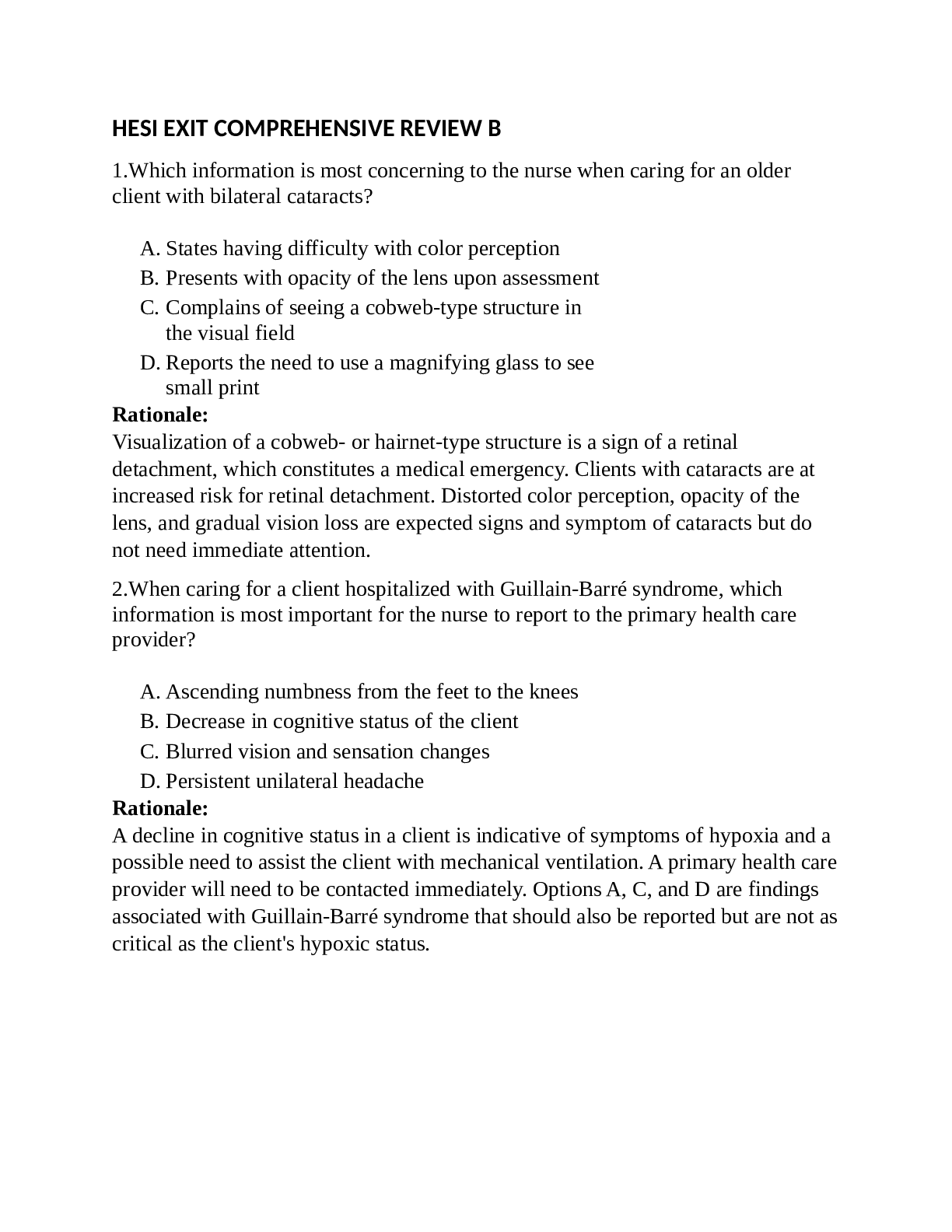
HESI EXIT COMPREHENSIVE REVIEW B
1.Which information is most concerning to the nurse when caring for an older
client with bilateral cataracts?
A. States having difficulty with color perception
B. Presents with opacity of the lens upon assessment
C. Complains of seeing a cobweb-type structure in
the visual field
D. Reports the need to use a magnifying glass to see
small print
Rationale:
Visualization of a cobweb- or hairnet-type structure is a sign of a retinal
detachment, which constitutes a medical emergency. Clients with cataracts are at
increased risk for retinal detachment. Distorted color perception, opacity of the
lens, and gradual vision loss are expected signs and symptom of cataracts but do
not need immediate attention.
2.When caring for a client hospitalized with Guillain-Barré syndrome, which
information is most important for the nurse to report to the primary health care
provider?
A. Ascending numbness from the feet to the knees
B. Decrease in cognitive status of the client
C. Blurred vision and sensation changes
D. Persistent unilateral headache
Rationale:
A decline in cognitive status in a client is indicative of symptoms of hypoxia and a
possible need to assist the client with mechanical ventilation. A primary health care
provider will need to be contacted immediately. Options A, C, and D are findings
associated with Guillain-Barré syndrome that should also be reported but are not as
critical as the client's hypoxic status.
3. A client is admitted with a diagnosis of leukemia. This condition is manifested
by which of the following?
A. Fever, elevated white blood count, elevated
platelets
B. Fatigue, weight loss and anorexia, elevated red
blood cells
C. Hyperplasia of the gums, elevated white blood
count, weakness
D. Hypocellular bone marrow aspirate, fever,
decreased hemoglobin level
Rationale:
Hyperplastic gums, weakness, and elevated white blood count are classic signs of
leukemia. Options A, B, and D state incorrect information for symptoms of
leukemia.
4. The nurse enters the examination room of a client who has been told by her
health care provider that she has advanced ovarian cancer. Which response by the
nurse is likely to be most supportive for the client?
A. "I know many women who have survived ovarian
cancer."
B. "Let's talk about the treatments of ovarian
cancer."
C. "In my opinion I would suggest getting a second
opinion."
D. "Tell me about what you are feeling right now."
Rationale:
The most therapeutic action for the nurse is to be an active listener and to
encourage the client to explore her feelings. Giving false reassurance or personal
suggestions are not therapeutic communication for the client.
5. A nurse working in the emergency department admits a client with full-thickness
burns to 50% of the body. Assessment findings indicate high-pitched wheezing,
heart rate of 120 beats/min, and disorientation. Which action should the nurse take
first?
A. Insert a large-bore IV for fluid resuscitation.
B. Prepare to assist with maintaining the airway.
C. Cleanse the wounds using sterile technique.
D. Administer an analgesic for pain.
Rationale:
High-pitched wheezing indicates laryngeal stridor, a sign of laryngeal edema
associated with lung injury. Airway management is the first priority of care.
Options A, C, and D are all appropriate interventions in managing the client with a
burn but are not as critical as establishing an airway.
6. The nurse walks into the room and observes the client experiencing a tonicclonic seizure. Which intervention should the nurse implement first?
A. Restrain the client to protect from injury.
B. Flex the neck to ensure stabilization.
C. Use a tongue blade to open the airway.
D. Turn client on the side to aid ventilation.
Rationale:
Maintaining the airway during a seizure is the priority for safety. Options A, B, and
C are contraindicated during a seizure and may cause further injury to the client.
7. Which intervention should be included in the plan of care for a client admitted to
the hospital with ulcerative colitis?
A. Administer stool softeners.
B. Place the client on fluid restriction.
C. Provide a low-residue diet.
D. Add a milk product to each meal.
Rationale:
A low-residue diet will help decrease symptoms of diarrhea, which are clinical
manifestations of ulcerative colitis. Options A, B, and D are contraindicated and
could worsen the condition.
8. A nurse implements an education program to reduce hospital readmissions for
clients with heart failure. Which statement by the client indicates that teaching has
been effective?
A. "I will not take my digoxin if my heart rate is
higher than 100 beats/min."
B. "I should weigh myself once a week and report
any increases."
C. "It is important to increase my fluid intake
whenever possible."
D. "I should report an increase of swelling in my feet
or ankles."
Rationale:
An increase in edema indicates worsening right-sided heart failure and should be
reported to the primary health care provider. Digitalis should be held when the
heart rate is lower than 60 beats/min. The client with heart failure should weigh
himself or herself daily and report a gain of 2 to 3 lb. An increase in fluid can
worsen heart failure.
9. After assessing a 26-year-old client with type 1 diabetes mellitus, which data
may indicate that the client is experiencing chronic complications of diabetes?
A. Blood pressure, 159/98 mm Hg
B. Hemoglobin A1C (HbA1C), 6%
C. Creatinine level, 1.0 mg/dL
D. Chronic sciatica
Rationale:
A blood pressure of 159/98 mm Hg is hypertensive and increases the client's risk
for acute coronary syndrome and/or stroke. Options B and C are within defined
parameters, and Option D is not a recognized chronic complication of diabetes.
10. When caring for a client with a tracheostomy, which intervention should the
nurse delegate to the unlicensed assistive personnel (UAP)?
A. Teach the family about signs and symptoms of
hypoxia.
B. Take the vital signs and obtain an O2 saturation
level.
C. Evaluate the need for tracheal suctioning.
D. Revise the plan of care to include tracheostomy
care.
Rationale:
The nurse may delegate obtaining vital signs and O2 saturation; however, the nurse
is responsible for following up on any reported data. Options A, C, and D are all
part of the nursing process and should not be delegated under the nurse's scope of
practice.
11. The charge nurse is making assignments for the upcoming shift. Which client is
most appropriate to assign to the practical nurse (PN)?
A. A client with nausea who needs a nasogastric tube
inserted
B. A client in hypertensive crisis who needs titration
of IV nitroglycerin
C. A newly admitted client who needs to have a plan
of care established
D. A client who is ready for discharge who needs
discharge teaching
Rationale:
The client mentioned in option A has a need for a skill that is within the scope of
practice for the PN. Titration of an IV drip, establishing care plans, and discharge
teaching are within the scope of practice of a registered nurse (RN) and are not
delegated.
12. A nurse performs an initial admission assessment of a 56-year-old client.
Which factor(s) would indicate that the client is at risk for metabolic
syndrome? (Select all that apply.)
A. Abdominal obesity
B. Sedentary lifestyle
C. History of hypoglycemia
D. Hispanic or Asian ethnicity
E. Increased triglycerides
Rationale:
Metabolic syndrome is a name for a group of risk factors that increase the risk for
coronary artery disease, type 2 diabetes, and stroke (A, B, D, and E).
Hypoglycemia is not a risk factor for metabolic syndrome (C).
13. Which clinical manifestation in the client with hyperthyroidism is most
important to report to the health care provider?
A. Nervousness
B. Increased appetite
C. Apical heart rate of 130 beats/min
D. Insomnia
Rationale:
The apical heart rate of 130 beats/min is a critical finding that could lead to heart
failure or other cardiac disorders. Options A, B, and D are all expected findings
that should also be reported but are not as critical.
14. The nurse administers atropine sulfate ophthalmic drops preoperatively to the
right eye of a client scheduled for cataract surgery. Which response by the client
indicates that the drug was effective?
A. The pupils become equal and reactive to light.
B. The right pupil constricts within 30 minutes.
C. Bilateral visual accommodation is restored.
D. The right pupil dilates after drop instillation.
Rationale:
Atropine is a mydriatic drug which causes pupil dilation and paralysis in
preparation for surgery or examination. Options A, B, and C do not describe the
therapeutic effects of atropine sulfate ophthalmic drops prior to cataract surgery.
15. A client with human immunodeficiency virus (HIV) develops a painful
blistering skin rash on the right lateral abdominal area. Which drug should the
nurse expect to administer to treat this condition?
A. Levofloxacin
B. Acyclovir sodium
C. Fluconazole
D. Esomeprazole
Rationale:
The clinical manifestations listed are consistent with herpes zoster (shingles).
Acyclovir sodium is an antiviral used to treat herpes zoster or shingles.
Levofloxacin is an antibiotic and may be used to treat pneumonia or other
infections in the HIV client. Fluconazole is an antifungal and is used to treat
candidiasis in the HIV client. Esomeprazole is a protein pump inhibitor used for
gastroesophageal reflux disease.
16. When assessing a 38-year-old client with tuberculosis who is taking rifampin,
which finding would be most important to report to the primary health care
provider immediately?
A. Orange-colored urine
B. Potassium level, 4.9 mEq/L
C. Elevated liver enzyme levels
D. Blood urea nitrogen (BUN) level, 12 mg/dL.
Rationale:
Rifampin can cause hepatotoxicity, so elevated liver enzyme levels need to be
closely monitored and reported to the health care provider. Orange discoloration of
the urine is an expected side effect of this medication. The potassium level is
normal. A BUN level of 12 mg/dL is within defined parameters.
17. A client with non-Hodgkin lymphoma has been prescribed cyclophosphamide
IV for therapy. Which assessment finding would need to be reported immediately
to the oncologist?
A. Sores on the mouth or tongue
B. Chills, fever, and sore throat
C. Loss of appetite or weight with diarrhea
D. Changes in color of fingernails or toenails
Rationale:
Cyclophosphamide is an immunosuppressive drug used to treat lymphoma and
puts the client at risk for infection. Signs and symptoms of an infection should be
reported to the oncologist immediately. Options A and C are expected signs and
symptoms of non-Hodgkin lymphoma. Option D is a normal side effect of
cyclophosphamide.
18. A nurse is assessing a client with heart failure who has been prescribed digoxin
for therapy. Which finding indicates an issue with the medication management?
A. Regular heart rate of 88 beats/min
B. Serum potassium level, 2.9 mEq/L
C. Weight decreases by 1 lb daily
D. Serum sodium level, 138 mEq/L
Rationale:
A serum potassium level of 2.9 mEq/L is low, and side effects of digoxin toxicity
are exacerbated when the potassium level is low. Options A, C, and D are all
expected findings when caring for a client with congestive heart failure.
19. Which statement by the U.S. Food and Drug Administration (FDA) is an
example of a black box or black label warning for the drug clopidogrel?
A. This drug could cause heart attack or stroke when
taken by clients with certain genetic conditions.
B. Clopidogrel helps prevent platelets from sticking
together and forming clots in the blood.
C. This drug can be taken in combination with
aspirin to reduce the risk of acute coronary
syndrome.
D. Clopidogrel can reduce the risk of a future heart
attack when taken by clients with peripheral
artery disease.
Rationale:
A black box warning is a notice required by the FDA on a prescription drug that
warns of potentially dangerous side effects. Options B, C, and D are all desired
effects of the drug.
20. The nurse is caring for a client with an ischemic stroke who has a prescription
for tissue plasminogen activator (t-PA) IV. Which actions should the nurse expect
to implement? (Select all that apply.)
A. Administer aspirin with tissue plasminogen
activator (t-PA).
B. Complete the National Institute of Health Stroke
Scale (NIHSS).
C. Assess the client for signs of bleeding during and
after the infusion.
D. Start t-PA within 6 hours after the onset of stroke
symptoms.
E. Initiate multidisciplinary consult for potential
rehabilitation.
Rationale:
Neurologic assessment, including the NIHSS, is indicated for the client receiving tPA. This includes close monitoring for bleeding during and after the infusion; if
bleeding or other signs of neurologic impairment occur, the infusion should be
stopped (B, C, and E). Aspirin is contrain-dicated with t-PA because it increases the
risk for bleeding (A). The administration of t-PA within 6 hours of symptoms is
concurrent with a diagnosis of a myocardial infarction and within 4.5 hours of
symptoms is concurrent for a stroke (D).
21. Which action by the nurse is consistent with culturally competent care?
A. Treating each client the same regardless of race or
religion
B. Ensuring that all Native American clients have
access to a shaman
C. Understanding one's own world view in addition
to the client's
D. Including the family in the plan of care for older
clients
Rationale:
The nurse should understand his or her own values and views to prevent those
values from being imparted to others, in addition to understanding the client's
cultural views. Treating every client the same or assuming that all clients share the
same values does not exhibit cultural competence or sensitivity.
22. The charge nurse reviews the charting of a graduate nurse. Which indicates a
need for further education on documentation?
A. Uses descriptive words such as "gurgling" to
describe breath sounds.
B. Records temperature 30 minutes before and after
giving acetaminophen.
C. Charts some actions in advance of performing
them.
D. Includes the client's response to an intervention.
Rationale:
Charting actions prior to implementing them is an example of fraudulent charting,
and the graduate nurse should receive further education. Options A, B, and D are
appropriate charting examples.
23. Which data obtained during a respiratory assessment for a 78-year-old client is
most important to report to the primary health care provider?
A. Auscultation of vesicular breath sounds
B. Pulse oximetry reading of 89%
C. Arterial PaO2 of 86%
D. Resonance on percussion of the lungs
Rationale:
An oxygen saturation lower than 90% indicates hypoxia. Options A, C, and D are
all normal findings.
24. The nurse hears a series of long-duration, discontinuous, low-pitched sounds on
auscultation of a client's lower lung fields. Which documentation of this finding is
correct?
A. Fine crackles
B. Wheezes
C. Course crackles
D. Stridor
Rationale:
Course crackles are caused by air passing through airways that are intermittently
occluded by mucus. Fine crackles are a series of short-duration, discontinuous,
high-pitched sounds. Wheezes are continuous, high-pitched, musical or squeakingtype sounds. Stridor is a continuous croupy sound of constant pitch and indicates
partial obstruction of the airway.
25. The nurse empties a client's urinary drainage from an indwelling Foley
catheter. Which finding should be reported to the primary health care provider?
A. Ammonia odor is noted when the catheter is
emptied.
B. 240 mL of urinary output is produced in 12 hours.
C. A 16-French catheter was used for an adult
female.
D. Drainage system is hanging below the level of the
bladder.
Rationale:
An expected finding is between 400 and 750 mL in 12 hours = average of 30
mL/hr. Ammonia odor is an expected finding. Size 14- to 18-French catheters are
common sizes used in the adult female. Below the level of the bladder is the
correct position for the drainage bag.
26. When blood or blood products are administered, which task can be assigned to
the licensed practical nurse (PN)?
A. Initiation of the blood product
B. Obtaining vital signs after infusion has begun
C. Assessment of client's condition prior to blood
administration
D. Evaluation of client's response after receiving
blood product
Rationale:
Blood and blood products must be initiated by the registered nurse (RN); however,
obtaining vital signs may be delegated as long as the results are evaluated by the
RN. Options A, C, and D are all part of the nursing process and the scope of the
RN.
27.The charge nurse observes a student nurse enter the room of a client who is
prescribed airborne precautions. The application of which personal protective
equipment by the student indicates a correct understanding of this precaution?
A. Surgical mask, clean gloves, and gown
B. Properly fitted N95 respirator or mask
C. Sterile gloves and gown
D. Goggles, clean gloves, and gown
Rationale:
The use of personal protective equipment (PPE) for airborne precautions includes a
properly prefitted N95 respirator or mask. Options A, C, and D do not provide the
appropriate respiratory equipment for airborne precautions. A surgical mask is used
for preventing transmission of droplet precautions.
28. The nurse reviews the comprehensive metabolic panel for a client with an
electrolyte imbalance. Which data requires the most immediate intervention by the
nurse?
A. Potassium level, 3.9 mEq/dL
B. Creatinine level, 1.1 mg/dL
C. Sodium level, 125 mEq/L
D. Calcium level, 9 mg/dL
Rationale:
The normal serum sodium level is 135 to 145 mEq/L. This value indicates
hyponatremia. Symptoms of hyponatremia include nausea and vomiting, headache,
confusion, and seizures, which can be severe and need immediate attention.
Options A, B, and D are all within normal parameters.
29. A client is admitted to the hospital with the diagnosis of hypokalemia. Which
clinical manifestation is most significant?
A. Heart palpitations
B. Leg cramps
C. Nausea
D. Tetany
Rationale:
Hypokalemia can cause heart palpitations, which are indicative of a dysrhythmia
that could progress to a medical emergency. Options B and C are also of concern
but are not as life threatening. Option D is a symptom of hypocalcemia.
30. The nurse prepares to administer 3 units of regular insulin and 20 units of NPH
insulin subcutaneously to a client with an elevated blood glucose level. Which
procedure is correct?
A. Using one syringe, first insert air into the regular
vial and then insert air into the NPH vial.
B. Using one syringe, add the regular insulin into the
syringe and then add the NPH insulin.
C. Avoid combining the two insulins because
incompatibility could cause an adverse reaction.
D. Administer the regular insulin subcutaneously
and then give the NPH IV to prevent a separate
stick.
Rationale:
The regular or "clear" insulin should be withdrawn into the syringe first, followed
by the NPH. Air should first be injected into the NPH vial and then air should be
inserted into the regular vial. NPH and regular insulin are compatible, and
combining will reduce the number of injections. The insulin is ordered
subcutaneously and NPH cannot be given IV.
31. The nurse is caring for a client on the medical unit. Which task can be
delegated to unlicensed assistive personnel (UAP)?
A. Assess the need to change a central line dressing.
B. Obtain a fingerstick blood glucose level.
C. Answer a family member's questions about the
client's plan of care.
D. Teach the client side effects to report related to
the current medication regimen.
Rationale:
Obtaining a fingerstick blood glucose level is a simple treatment and is an
appropriate skill for UAP to perform. Options A, C, and D are skills that cannot be
delegated to UAP.
32. Which disaster management intervention by the nurse is an example of primary
prevention?
A. Emergency department triage
B. Follow-up care for psychological problems
C. Education of rescue workers in first aid
D. Treatment of clients who are injured
Rationale:
Primary prevention is aimed at preventing disease or injury. Training rescue
workers prior to a disaster is an example of minimizing or preventing injury.
Option A is an example of secondary prevention. Option B is an example of
tertiary prevention. Option D is an example of secondary prevention.
33. The nurse teaches a class on bioterrorism. Which methods of transmission are
possible with the biologic agent Bacillus anthracis(Anthrax)? (Select all that
apply.)
A. Inhalation of powder form
B. Handling of infected animals
C. Spread from person to person through coughing
D. Eating undercooked meat from infected animals
E. Direct cutaneous contact with the powder
Rationale:
Anthrax can be transmitted by the inhalation, cutaneous, and digestive routes (A,
B, D, and E); however, the disease is not spread from person to person (C).
34. The nurse assesses a pressure ulcer on a client's heel and notes full-thickness
tissue loss, with some visible subcutaneous fat. How should the nurse stage this
pressure ulcer?
A. Stage I
B. Stage II
C. Stage III
D. Stage IV
Rationale:
The statement above describes a stage III ulcer, which is defined as full-thickness
tissue loss in which subcutaneous fat may be exposed but without exposure of
bone, tendon, or muscle. A stage I ulcer includes intact skin with nonblanchable
redness of a localized area. A stage II ulcer is described by partial-thickness loss of
dermis, including a shallow open ulcer with a pinkish red wound bed. Fullthickness tissue loss with exposed bone, tendon, or muscle and slough or eschar is
indicative of a stage IV ulcer.
35. The nurse prepares to administer ophthalmic drops to a client prior to cataract
surgery. List the steps in the order that they should be implemented from first step
to final step.
1. Drop prescribed number of drops into conjunctival sac.
2. Wash hands and apply clean gloves.
3. Place dominant hand on the client’s forehead.
4. Ask the client to close the eye gently.
A. 3, 2, 1, 4
B. 2, 3, 1, 4
C. 3, 2, 4, 1
D. 2, 3, 4, 1
Rationale:
Washing hands and applying gloves prior to procedure initiation prevents the
spread of infection (2). Placing the dominant hand on the client’s forehead (3)
stabilizes the hand so the nurse can hold the dropper 1 to 2 cm above the
conjunctival sac and drop the prescribed number of drops (1); asking the client to
close the eye gently helps distribute the medication (4).
36. The nurse is caring for a client who is experiencing severe pain. The expected
outcome the nurse writes for the client reads, "The client will state my pain is <2
within 45 minutes after pain medication has been administered." Formulating the
expected outcome is an example of which step in the nursing process?
A. Assessment
B. Planning
C. Implementation
D. Evaluation
Rationale:
Planning allows the nurse to set goals for care and elicit the expected outcome by
identifying appropriate nursing actions. Assessment, implementation, and
evaluation are part of the care for the client but are not the appropriate actions for
formulating the expected outcome.
37. When assessing safety for the older adult, which of the following is of highest
priority to the nurse?
A. The client has a cataract in the right eye.
B. The client is not married and lives alone.
C. The client lives in a two-story building.
D. The client reports a history of repeated falls.
Rationale:
Risk assessment for falls is a critical element in caring for the older adult. Options
A, B, and C are important components in assessing client risk, but a history of
prior falls puts the older client at very high risk for falling again.
38. While assessing a client with recurring chest pain, the unit secretary notifies the
nurse that the client's health care provider is on the telephone. What action should
the nurse instruct the unit secretary to implement?
A. Transfer the call into the room of the client.
B. Instruct the secretary to explain the reason for the
call.
C. Ask another nurse to take the phone call.
D. Ask the health care provider to see the client on
the unit.
Rationale:
Another nurse should be asked to take the phone call, which allows the nurse to
stay at the bedside to complete the assessment of the client's chest pain. Options A
and B should not be done during an acute change in the client's condition.
Requesting the health care provider to come to the unit is premature until the nurse
completes assessment of the client's status
39. The family of a male adult with schizophrenia does not want the client to be
involved in decisions regarding his treatment. The nurse should inform the family
that the client has a right to be involved in his treatment planning based on which
law?
A. Social Security Act of 1990
B. American with Disabilities Act of 1990
C. Medicaid Act of 1965
D. Mental Health Act of 1946
Rationale:
The Americans with Disabilities Act guarantees the client the right to participate in
treatment planning. Option A is a federal insurance program that provides benefits
to retired persons, the unemployed, and the disabled. Option C is a program for
eligible individuals and/or families with low income and resources. Option D
provides for public education regarding psychiatric illnesses.
40. An adult female who presents at the mental clinic trembling and crying
becomes distressed when the nurse attempts to conduct an assessment. She
complains about the number of questions that are being asked, which she is
convinced are going to cause her to have a heart attack. What action should the
nurse take?
A. Take the client's blood pressure and reassure her
that questioning will not cause a heart attack.
B. Explain that treatment is based on information
obtained in the assessment.
C. Encourage the client to relax so that she can
provide the information requested.
D. Empower the client to share her story of why she
is here at the mental health clinic.
Rationale:
The client is exhibiting signs of moderate anxiety, which include voice tremors,
shakiness, somatic complaints, and selective inattention. Option D is the best
method for addressing this client's level of anxiety by creating a shared
understanding of the client's concerns. Although assessment of her blood pressure
might be a worthwhile intervention, reassuring her that questioning will not cause a
heart attack is argumentative. Option B suggests that treatment cannot be provided
without the information, which is manipulative. Asking the client to relax is likely
to increase her anxiety.
41. A client in an acute psychiatric setting asks the nurse if their conversations will
remain confidential. How should the nurse respond?
A. "The Health Insurance Portability and
Accountability Act (HIPAA) prevents me from
repeating what you say."
B. "You can be assured that I will keep all of our
conversations confidential because it is important
that you can trust me."
C. "For your safety and well-being, it may be
necessary to share some of our conversations with
the health care team."
D. "I am legally required to document all of our
conversations in the electronic medical record."
Rationale:
Some information, such as a suicide plan, must be shared with other team members
for the client's safety and optimal therapy. HIPAA does not prevent a member of
the health care team from repeating all conversations, particularly if safety is an
issue. Ensuring a client that a conversation will remain confidential puts the nurse
at risk, particularly if safety is an issue. Although pertinent information should be
documented, the nurse is not legally required to document all conversations with a
client.
42. Which intervention is most important when caring for a client immediately
after electroconvulsive therapy (ECT)?
A. Reorient the client to surroundings.
B. Assess blood pressure every 15 minutes.
C. Determine if muscle soreness is present.
D. Maintain a patent airway.
Rationale:
The client is typically unconscious immediately following ECT, and nausea is a
common side effect. The nurse should take measures to prevent aspiration and
maintain a patent airway. Clients may be confused after ECT, but reorientation is
not as high a priority as the airway. Although vital signs should be assessed, the
airway is a higher priority. Muscle soreness is an expected finding after ECT.
43. A client in the psychiatric setting with an anxiety disorder reports chest pain.
Which action should the nurse take first?
A. Administer an antianxiety medication PRN.
B. Assess the client's vital signs.
C. Notify the primary health care provider.
D. Determine coping mechanisms used in the past.
Rationale:
Although increased heart rate, palpitations, and chest pain may be caused by
anxiety, it is important that the nurse assess the client and rule out physiologic
causes. Nonpharmacologic measures should be taken first. Options C and D may
be considered but are not as high priority as the initial physiologic assessment.
44. The nurse is assessing suicide risk for a client recently admitted to the acute
psychiatric unit. Which finding is the most significant risk factor?
A. High level of anxiety present
B. History of previous suicide attempt
C. Family history of depression
D. Self-care deficit is noted
Rationale:
A previous history of a suicide attempt is the most significant risk factor for future
suicide attempts because the client has previously implemented a plan. Options A,
C, and D may also be risk factors but are not as significant as a history of previous
attempts.
45. A client who is prescribed chlorpromazine HCl for schizophrenia develops
rigidity, a shuffling gait, and tremors. Which action by the nurse is most important?
A. Administer a dose of benztropine mesylate PRN.
B. Determine if the client has increased
photosensitivity.
C. Provide comfort measures for sore muscles.
D. Assess the client for visual and auditory
hallucinations.
Rationale:
Rigidity, shuffling gait, pill-rolling hand movements, tremors, dyskinesia, and
masklike face are extrapyramidal side effects associated with chlorpromazine. It is
most important for the nurse to administer an anticholinergic such as benztropine
mesylate to reverse these effects. Options B, C, and D may be appropriate
interventions but are not as urgent as option A.
46. A nurse is interviewing a mother during a well-child visit. Which finding would
alert the nurse to continue further assessment of the infant?
A. Two-month-old who is unable to roll from back to
abdomen
B. Ten-month-old who cannot sit without support
C. Nine-month-old who cries when his mother
leaves the room
D. Eight-month-old who has not yet begun to speak
words
Rationale:
As a developmental milestone, infants should sit unsupported by 8 months. The
milestone of rolling over is achieved at 5 to 6 months for most infants. Stranger
anxiety is common from 7 to 9 months. Speaking a few words is expected at about
12 months.
47. Which vaccination should the nurse administer to a newborn?
A. Hepatitis B
B. Human papilloma virus (HPV)
C. Varicella
D. Meningococcal vaccine
Rationale:
The hepatitis B vaccination should be given to all newborns before hospital
discharge. HPV is not recommended until adolescence. Varicella immunization
begins at 12 months. Meningococcal vaccine is administered beginning at 2 years.
48. Which vital sign in a pediatric client is most important to report to the primary
health care provider?
A. Newborn with a heart rate of 140 beats/min
B. Three-year-old with a respiratory rate of 28
breaths/min
C. Six-year-old with a heart rate of 130 beats/min
D. Twelve-year-old with a respiratory rate of 16
breaths/min
Rationale:
The normal heart rate for a 6- to 10-year-old is 70 to 110 beats/min. Options A, B,
and D are all within normal range for those ages.
49. The nurse prepares to administer amoxicillin clavulanate potassium
(Augmentin) to a child weighing 15 kg. The prescription is for 15 mg/kg every 12
hours by mouth. How many milliliters should the nurse administer when supplied
as below?
Click Image to Enlarge
(From Macklin D, Chernecky CC, Infortuna H. Math for clinical practice, ed 2, St.
Louis, 2011, Mosby.)
A. 0.5 mL
B. 0.5 mL
C. 5 mL
D. 9 mL
Rationale:
15 mg/kg × 15 kg = 225 mg to be administered
Supply = 125 mg/5 mL
(5 mL/125 mg) × 225 mg = 9 mL
or
(225 mg/125 mg) × 5 mL = 9 mL
50. The nurse prepares to administer acetaminophen oral suspension to a child who
weighs 66 lb. The prescription reads: Administer 15 mg/kg every 6 hours by
mouth. The Tylenol is available 150 mg/5 mL. What is the correct dosage as
indicated on the figure.
Click Image to Enlarge
(From Kee JL, Hayes ER, McCuistion LE. Pharmacology: A nursing process
approach, ed 7, St. Louis, 2011, Elsevier.)
A. 30 mL
B. 15 mL
C. 10 mL
D. 5 mL
Rationale:
66 lb/(2.2 kg/lb) = 30 kg
30 kg × (15 mg/kg) = 450 mg
(5 mL/150 mg) × 450 mg = 15 mL
or
(450 mg/150 mg) × 5 mL = 15 mL
51. The nurse expects a clinical finding of cyanosis in an infant with which
conditions? (Select all that apply.)
A. Ventricular septal defect (VSD)
B. Patent ductus arteriosus (PDA)
C. Coarctation of the aorta
D. Tetralogy of Fallot
E. Transposition of the great vessels
Rationale:
Both tetralogy of Fallot and transposition of the great vessels are classified as
cyanotic heart disease, in which unoxygenated blood is pumped into the systemic
circulation, causing cyanosis (D and E). (A, B, and C) are all abnormal cardiac
conditions, but are classified as acyanotic and involve left-to-right shunts,
increased pulmonary blood flow, or obstructive defects.
52. Which nursing intervention should be implemented postoperatively in an infant
with spina bifida after repair of a meningocele?
A. Limit fluids to prevent infection to the surgical
site.
B. Place the infant in the prone position.
C. Provide a low-residue diet to limit bowel
movements.
D. Cover sac with a moist sterile dressing.
Rationale:
The infant should be placed in the prone position to alleviate pressure on the
surgical site, which is in the sacrum. Fluids should be increased postoperatively to
prevent dehydration. A high-fiber diet should be implemented to prevent
constipation. After the repair, the sac is no longer exposed, so option D does not
apply.
53. When caring for a hospitalized child with type 1 diabetes mellitus, which
intervention can the nurse delegate to the unlicensed assistive personnel (UAP)?
A. Teach the signs and symptoms of hypoglycemia.
B. Assess for polydipsia, polyphagia, and polyuria.
C. Check the blood glucose level every 4 hours.
D. Evaluate the need for a snack between meals.
Rationale:
Checking the blood glucose level is a low-risk task that can be safely delegated to
the UAP in most circumstances. Teaching, assessment, and evaluation are all
within the scope of practice of the RN and should not be delegated to the UAP.
54. The outpatient clinic nurse is reviewing phone messages from last night. Which
client should the nurse call back first?
A. An 18-year-old woman who had a positive
pregnancy test and wants advice on how to tell
her parents
B. A woman with type 1 diabetes who has just
discovered she is pregnant and is worried about
her fingerstick glucose
C. A women at 24 weeks of gestation crying about
painful genital lesions on the vulva and urinary
frequency
D. A women at 30 weeks of gestation who has been
diagnosed with mild preeclampsia and is unable
to relieve her heartburn
Rationale:
The women with epigastric pain should be called first. One of the cardinal signs of
eclampsia, a life-threatening complication of pregnancy, is epigastric pain. Options
A, B, and C are less serious and should be called after option D.
55. Which monitored pattern of fetal heart rate alerts the nurse to seek immediate
intervention by the health care provider?
A. Accelerations in response to fetal movement
B. Early decelerations in the second stage of labor
C. Fetal heart rate of 130 beats/min between
contractions
D. Late decelerations with absent variability and
tachycardia
Rationale:
Late decelerations indicate uteroplacental insufficiency and can be indicative of
complications. When occurring with absent variability and tachycardia, the
situation is ominous. 130 beats/min is an expected heart rate. Options A and B are
not as critical.
56. When caring for a client in labor, which finding is most important to report to
the primary health care provider?
A. Maternal heart rate, 90 beats/min
B. Fetal heart rate, 100 beats/min
C. Maternal blood pressure, 140/86 mm Hg
D. Maternal temperature, 100.0°F
Rationale:
A fetal heart rate (FHR) of 100 beats/min may indicate fetal distress because the
average FHR at term is 140 beats/min, and the normal range is 110 to 160
beats/min. Options A, C, and D are normal findings for a woman in labor.
57. Which interventions should be performed by the nurse when caring for a
woman in the fourth stage of labor? (Select all that apply.)
A. Maintain bed rest for the first 6 hours after
delivery.
B. Palpate and massage the fundus to maintain
firmness.
C. Have client empty bladder if fundus is above
umbilicus.
D. Check perineal pad for color and consistency of
lochia.
E. Apply ice pack or witch hazel compresses to the
perineum.
Rationale:
The fundus should be palpated and massaged frequently to prevent hemorrhage
(B). The lochia should be assessed to detect for hemorrhage (D) and ice packs and
witch hazel can decrease edema and discomfort (E). Bed rest is only recommended
for the first 2 hours (A). A full bladder is suspected if the fundus is deviated to the
right or left of the umbilicus (C).
58.In caring for a pregnant woman with gestational diabetes, the nurse should be
alert to which finding?
A. A consistent fasting blood sugar level between 80
and 85 mg/dL
B. A 2-hour postprandial level >120 mg/dL
C. Client reports taking a 30-minute walk after
dinner
D. Client describes eating pattern of four to six
meals daily
Rationale:
Two-hour postprandial levels >120 mg/dL may indicate the need for the initiation
of insulin to maintain adequate blood glucose levels; consequently, a value >120
mg/dL should be assessed further. Fasting blood sugars between 80 and 85 mg/dL
are normal. Options C and D are healthy behaviors for a woman with gestational
diabetes.
59. The nurse anticipates administering Rho(D) immune globulin (RhoGAM) to
which individuals? (Select all that apply.)
A. An Rh-negative woman who has had a
miscarriage at 24 weeks
B. The father of a baby of an Rh-positive fetus
C. An Rh-negative mother after delivery of an Rhpositive infant with a negative direct Coombs test
D. An Rh-positive infant within 72 hours after birth
E. An Rh-negative mother with a negative antibody
titer at 28 weeks
Rationale:
(A, C, and E) are all candidates for RhoGAM. RhoGAM should never be given to
an infant or father (B and D).
60. When assessing a normal newborn, which findings should the nurse
expect? (Select all that apply.)
A. Umbilical cord contains one vein and two arteries
B. Slightly edematous labia in the female newborn
C. Absence of Babinski reflex
D. Presence of white plaques on the cheeks and
tongue
E. Nasal flaring noted with respirations
Rationale:
These are normal findings (A and B). The others indicate abnormalities or
complications and should be reported to the primary health care provider (C, D,
and E).
61. The nurse is caring for a client with heart failure who develops respiratory
distress and coughs up pink frothy sputum. Which action should the nurse take
first?
A. Draw arterial blood gases.
B. Notify the primary health care provider.
C. Position in a high Fowler position with the legs
down.
D. Obtain a chest x-ray.
Rationale:
Positioning the client in a high Fowler position with dangling feet will decrease
further venous return to the left ventricle. Options A, B, and D should be
performed after the change in position.
62. When caring for a postsurgical client who has undergone multiple blood
transfusions, which serum laboratory finding is of most concern to the nurse?
A. Sodium level, 137 mEq/L
B. Potassium level, 5.5 mEq/L
C. Blood urea nitrogen (BUN) level, 18 mg/dL
D. Calcium level, 10 mEq/L
Rationale:
Multiple blood transfusions are a risk factor for hyperkalemia. A serum potassium
level higher than 5.0 mEq/L indicates hyperkalemia. Options A, C, and D are
normal findings.
63. The nurse is caring for a client with respiratory distress whose arterial blood
gas (ABG) results are as follows: pH, 7.33; PCO2, 50 mm Hg; PO2, 70 mm Hg;
HCO3, 26 mEq/L. How should the nurse interpret these results?
A. Metabolic acidosis
B. Respiratory alkalosis
C. Metabolic alkalosis
D. Respiratory acidosis
Rationale:
A pH < 7.25 and PCO2 > 45 mm Hg with a normal HCO3 indicates respiratory
acidosis. Options A, B, and C are incorrect analyses of the ABGs.
64. The nurse is caring for a client who develops ventricular fibrillation. Which
action should the nurse take first?
A. Administer epinephrine.
B. Defibrillate immediately.
C. Give a bolus with isotonic fluid.
D. Notify the health care provider.
Rationale:
Defibrillation is the first and most effective emergency treatment for ventricular
fibrillation. Options A, C, and D may follow the first action.
65. When caring for an 80-year-old client with pneumonia, which finding is of
most concern to the nurse?
A. Decrease in level of consciousness
B. BUN level, 20 mg/dL; creatinine level, 1.0 mg/dL
C. Reports of a dry mouth and lips
D. Fine crackles auscultated in lung bases
Rationale:
A decrease in level of consciousness is a sign of decreased oxygenation and
requires immediate intervention. Options B, C, and D are expected findings.
66. The nurse is caring for a client with a cerebrovascular accident (CVA) who is
receiving enteral tube feedings. Which task performed by the UAP requires
immediate intervention by the nurse?
A. Suctions oral secretions from mouth
B. Positions head of bed flat when changing sheets
C. Takes temperature using the axillary method
D. Keeps head of bed elevated at 30 degrees
Rationale:
Positioning the head of the bed flat when enteral feedings are in progress puts the
client at risk for aspiration. Options A, C, and D are all acceptable tasks performed
by the UAP.
67. The nurse is caring for a client with chronic renal failure (CRF) who is
receiving dialysis therapy. Which nursing intervention has the greatest priority
when planning this client's care?
A. Palpate for pitting edema.
B. Provide meticulous skin care.
C. Administer phosphate binders.
D. Monitor serum potassium levels.
Rationale:
Clients with CRF are at risk for electrolyte imbalances, and imbalances in
potassium can be life threatening. One sign of fluid retention is pitting edema, but
it is an expected symptom of renal failure and is not as high a priority as option D.
Options B and C are common nursing interventions for CRF but not as high a
priority as option D.
68. Which finding should be reported to the primary health care provider when
caring for a client who has a continuous bladder irrigation after a transurethral
resection of the prostate gland (TURP)?
A. The client reports a continuous feeling of needing
to void.
B. Urinary drainage is pink 24 hours after surgery.
C. The hemoglobin level is 8.4 g/dL 3 days
postoperatively.
D. Sterile saline is being used for bladder irrigation.
Rationale:
A hemoglobin level of 8.4 g/dL is abnormally low and may indicate hemorrhage.
Options A, B, and D are all expected findings after a TURP.
69. Which instructions should the nurse include in the discharge teaching plan of a
male client who has had a myocardial infarction and who has a new prescription
for nitroglycerin (NTG)? (Select all that apply.)
A. Keep the medication in your pocket so that it can
be accessed quickly.
B. Call 911 if chest pain is not relieved after one
nitroglycerin.
C. Store the medication in its original container and
protect it from light.
D. Activate the emergency medical system after
three doses of medication.
E. Do not use within 1 hour of taking sildenafil
citrate (Viagra).
Rationale:
Emergency action should be taken if chest pain is not relieved after one
nitroglycerin tablet (B). The medication should be kept in the original container to
protect from light (C). Keeping the medication in the shirt pocket provides an
environment that is too warm (A). The newest guidelines recommend calling 911
after one nitroglycerin tablet if chest pain is not relieved (D). Nitroglycerin and
other nitrates should never be taken with sildenafil (E).
70. Which of the following cardiac rhythms is represented in the image?
(From Lewis SL, Dirksen SR, Heitkemper MM, et al. Medical-surgical nursing, ed
8, St. Louis, 2011, Mosby.)
A. Normal sinus rhythm
B. Sinus tachycardia
C. Ventricular fibrillation
D. Atrial fibrillation
Rationale:
Ventricular fibrillation is a life-threatening arrhythmia characterized by irregular
undulations of varying amplitudes. Options A, B, and D are not represented in the
image.
71. The nurse prepares to administer digoxin, 0.125 mg PO, to an adult client with
heart failure and notes that the digoxin serum level in the laboratory report is 1
ng/mL. Which action should the nurse take?
A. Discontinue the digoxin.
B. Notify the health care provider.
C. Administer the digoxin.
D. Reverify the digoxin level.
Rationale:
A therapeutic range for digoxin is 0.5 to 2 ng/mL. The digoxin should be continued
to maintain a therapeutic range. Options A, B, and D are not indicated for a
therapeutic range.
72. The nurse prepares to administer digoxin, 0.125 mg IV, to an adult client with
atrial fibrillation. Which client datum requires the nurse to withhold the
medication?
A. The apical heart rate is 64 beats/min.
B. The serum digoxin level is 1.5 ng/mL.
C. The client reports seeing yellow-green halos.
D. The potassium level is 4.0 mEq/L.
Rationale:
Reports of yellow-green halos and blurred vision are signs of digoxin toxicity.
Options A, B, and C are normal findings.
73. The nurse in the emergency department is caring for a client with type 1
diabetes mellitus in diabetic ketoacidosis (DKA). Which action should the nurse
take first?
A. Administer regular insulin IV.
B. Start an IV infusion of normal saline.
C. Check serum electrolyte levels.
D. Give a potassium supplement.
Rationale:
The client in DKA experiences severe dehydration and must be rehydrated before
insulin is administered. Options A, C, and D will follow rehydration.
74. The nurse administers regular insulin (human), 8 units subcutaneously, to a
client at 8:00 am, 30 minutes before breakfast. At what time is the client most at
risk for a hypoglycemic reaction?
A. 9:30 am
B. 10:30 am
C. 12:00 pm
D. 3:00 pm
Rationale:
Regular insulin is short-acting and peaks between 2 and 3 hours after
administration. The client is most at risk for a hypoglycemic reaction during the
peak times. Options A, C, and D are not high-risk times for the client to experience
hypoglycemia because they do not fall within the peak time.
75. The nurse assesses a client who is taking indomethacin (Indocin) for arthritic
pain. Which of the following is most important to report to the primary health care
provider?
A. Takes medication with milk.
B. Blood pressure, 104/64 mm Hg.
C. Elevated liver enzyme levels.
D. Hemoglobin level, 13 g/dL.
Rationale:
Indomethacin is an antiinflammatory drug and can cause liver damage. Elevated
liver enzyme levels indicate a complication with the drug. This medication should
be taken with food or milk to reduce gastrointestinal (GI) side effects. Options B
and D are normal findings.
76. The nurse is caring for a client with deep vein thrombosis who is on a
continuous IV heparin infusion. The activated partial prothrombin time (aPTT) is
120 seconds. Which action should the nurse take?
A. Increase the rate of the heparin infusion using a
nomogram.
B. Decrease the heparin infusion rate and give
vitamin K IM.
C. Continue the heparin infusion at the current
prescribed rate.
D. Stop the heparin drip and prepare to administer
protamine sulfate.
Rationale:
An aPTT more than 100 seconds is a critically high value; therefore, the heparin
should be stopped. The antidote for heparin is protamine sulfate. Increasing the rate
would increase the risk for hemorrhage. The infusion should be stopped, and
vitamin K is the antidote for warfarin (Coumadin). Keeping the infusion at the
current rate would increase the risk for hemorrhage.
77. The nurse is caring for a hospitalized client with myasthenia gravis. Which
finding requires the most immediate action by the nurse?
A. O2 saturation, 89%
B. Reports diplopia
C. Ptosis to left eye
D. Difficulty speaking
Rationale:
Respiratory failure is a life-threatening complication that can occur with
myasthenia gravis. Options B, C, and D are signs of the disease but are not as life
threatening as decreased oxygen saturation.
78.The nurse is planning the care for a client who is admitted with syndrome of
inappropriate antidiuretic hormone secretion (SIADH). Which interventions should
the nurse include in this client's plan of care? (Select all that apply.)
A. Salt-free diet
B. Quiet environment
C. Deep tendon reflex assessments
D. Neurologic checks
E. Daily weights
Rationale:
Correct responses are (B, C, D, and E). SAIDH results in water retention and
dilutional hyponatremia, which causes neurologic changes when serum sodium
levels are less than 115 mEq/L. The nurse should maintain a quiet environment (B)
to prevent overstimulation and assess deep tendon reflexes (C) and perform
neurologic checks (D) to monitor for neurologic deteriora-tion. Daily weights (E)
should be monitored to assess for fluid overload. (A) would contribute to dilutional
hyponatremia.
79. A client with type 2 diabetes has a plantar foot ulcer. When developing a
teaching plan regarding foot care, what information should the nurse obtain first
from the client?
A. How the client examines her feet
B. Which hypoglycemic medication she takes
C. Who lives in the home with her
D. How long she has had diabetes mellitus
Rationale:
Option A specifically relates to foot care. Options B, C, and D provide worthwhile
information to obtain but do not have the importance of option A.
80. A nurse working in a community health setting is performing primary health
screenings. Which individual is at highest risk for contracting an HIV infection?
A. A 17-year-old who is sexually active with
numerous partners
B. A 45-year-old lesbian who has been sexually
active with two partners in the past year
C. A 30-year-old cocaine user who inhales the drug
and works in a topless bar
D. A 34-year-old male homosexual who is in a
monogamous relationship
Rationale:
Option A is at greatest risk for contracting sexually transmitted diseases, including
HIV, because the greater the number of sexual partners, the greater the risk for
contracting an STD. Option B comprises the group of lowest infected persons
because there is little transfer of body fluid during sexual acts. Option C, who freebases, would not be sharing needles, so contracting an STD is not necessarily a
risk. A male homosexual in a monogamous relationship has a decreased risk of
contracting HIV as long as both partners are monogamous and neither is infected.
81. A client at 32 weeks of gestation is hospitalized with preeclampsia, and
magnesium sulfate is prescribed to control the symptoms. Before the next dose of
MgSO4 is given, which assessment finding indicates that the client is at risk for
toxicity?
A. Deep tendon reflexes–decrease to 2+
B. 100 mL of urine output in 4 hours
C. Respiratory rate decreases to 16 breaths/min
D. Serum magnesium level, 7.5 mg/dL
Rationale:
The minimum urine output expected for a repeat dose of magnesium sulfate is 30
mL/hr, so 100 mL of urine in 4 hours can lead to poor excretion of magnesium,
with a possible cumulative effect. Magnesium sulfate, a central nervous system
(CNS) depressant, helps prevent seizures, so option A is a positive sign that the
medication is having a desired effect. A decreased respiratory rate indicates that the
drug is effective. A respiratory rate below 12 breaths/min indicates toxic effects.
The therapeutic level of magnesium sulfate for a PIH client is 4 to 8 mg/dL.
82. A client comes to the obstetric clinic for her first prenatal visit and complains
of feeling nauseated every morning. The client tells the nurse, "I'm having second
thoughts about wanting to have this baby." Which response is best for the nurse to
make?
A. "It's normal to feel ambivalent about a pregnancy
when you are not feeling well."
B. "I think you should discuss these feelings with
your health care provider."
C. "How does the father of your child feel about
your having this baby?"
D. "Tell me about these second thoughts you are
having about this pregnancy."
Rationale:
Although ambivalence is normal during the first trimester, option D is the best
nursing response at this time. It is reflective and keeps the lines of communication
open. Option A is not the best response because it offers false reassurance. Option
B dismisses the client's feelings. The nurse should use communication skills that
encourage this type of discussion, not shift responsibility to the care provider.
Option C may eventually be discussed, but it is not the most important information
to obtain at this time.
83. A primipara presents to the perinatal unit describing rupture of the membranes
(ROM), which occurred 12 hours prior to coming to the hospital. An oxytocin
infusion is begun, and 8 hours later the client's contractions are irregular and mild.
What vital sign should the nurse monitor with greater frequency than the typical
unit protocol?
A. Maternal temperature
B. Fetal blood pressure
C. Maternal respiratory rate
D. Fetal heart rate
Rationale:
Maternal temperature should be monitored frequently as a primary indicator of
infection. This client's rupture of membranes (ROM) occurred at least 20 hours ago
(12 hours before coming to the hospital, in addition to 8 hours since hospital
admission). Delivery is not imminent, and there is an increased risk of the
development of infection 24 hours after ROM. Option B cannot be established with
standard bedside monitoring. Option C is not specifically related to ROM. Option
D is always monitored during labor; this situation would not prompt the nurse to
increase FHR monitoring.
84. An adult client with a medical diagnosis of substance abuse and schizophrenia
was recently switched from oral fluphenazine HCl to IM fluphenazine decanoate
because of medication noncompliance. What should the nurse teach the client and
family about this change in medication regimen?
A. Long-acting medication is more effective than
daily medication.
B. A client with substance abuse must not take any
oral medications.
C. There will continue to be a risk of alcohol and
drug interaction.
D. Support groups are only helpful for substance
abuse treatment.
Rationale:
Alcohol enhances the side effects of fluphenazine HCl. The half-life of
fluphenazine HCl PO is 8 hours, whereas the half-life of the fluphenzaine
decanoate IM is 2 to 4 weeks. Therefore, the side effects of drinking alcohol are far
more severe when the client drinks alcohol after taking the long-acting
fluphenzaine decanoate IM. Options A, B, and D provide incorrect information.
85. A 45-year-old female client is admitted to the psychiatric unit for evaluation.
Her husband states that she has been reluctant to leave home for the last 6 months.
The client has not gone to work for a month, has been terminated from her job, and
has not left the house since that time. This client is displaying symptoms of which
disorder?
A. Claustrophobia
B. Acrophobia
C. Agoraphobia
D. Necrophobia
Rationale:
Agoraphobia is the fear of crowds or of being in an open place. Option A is the fear
of being in closed places. Option B is the fear of high places. Option D is an
abnormal fear of death or bodies after death. A phobia is an unrealistic fear
associated with severe anxiety.
86. A 12-year-old boy complains to the nurse that he is "short" (4′5″ [53 inches]).
His twin sister is 5 inches taller than he is (4′10″ [58 inches]). Based on these
findings, what conclusion should the nurse reach?
A. The boy is not growing as normally expected.
B. The girl is experiencing a period of unexpected
growth.
C. A normal growth spurt occurs in girls 1 to 2 years
earlier than boys.
D. Male-female twins are not identical; therefore,
their growth cannot be compared.
Rationale:
Girls experience a growth spurt at 9.5 to 14.5 years of age and boys at 10.5 to 16
years of age. There are insufficient data to support; growth trends must be assessed
to reach such a conclusion. Option B is not unexpected. The fact that the children
are twins has less to do with their growth than the fact that they are male and
female
87. When administering an intramuscular injection, which factor is most important
to ensure the best medication absorption?
A. Compress the syringe plunger quickly.
B. Select a small-gauge needle.
C. Inject the needle at a 90-degree angle.
D. Select a small-diameter syringe.
Rationale:
Injecting the needle at a 90-degree angle allows the medication to be injected into
the muscle so that appropriate absorption can occur. Too rapid injection of the
medication may be painful and may cause medication leakage and reduced
absorption. Option B will reduce injection discomfort but will not affect
absorption. A syringe barrel that is too small increases the pressure during the
injection and may traumatize tissue without improving medication absorption.
88. An older client calls the clinic and complains of feeling very weak and dizzy.
Further assessment by the nurse indicates that the client self-administered an
enema of 3 L of tap water because of constipation. What is the most likely cause of
the client's symptoms?
A. Mucosal bleeding
B. Sodium retention
C. Fluid volume depletion
D. Water intoxication
Rationale:
Tap water is a hypotonic fluid that can leave the intestine and enter the interstitial
fluid by osmosis, ultimately causing systemic water intoxication. This is
manifested by weakness, dizziness, pallor, diaphoresis, and respiratory distress.
Excessive use of enemas can cause mucosal irritation, which might result in some
bleeding, but the client would not experience weakness and dizziness unless she
was hemorrhaging. Options B and C can occur with the use of a hypertonic rather
than hypotonic solution.
89. The nurse plans to teach blood glucose self-monitoring to a client who is newly
diagnosed with diabetes mellitus type 1, and the health care provider has given the
client a schedule for testing. In addition to the prescribed schedule, the nurse
should also instruct the client to check the blood glucose level in which
circumstance?
A. Any time the client awakens during the night
B. Whenever the client has feelings of dizziness
C. Right after meals if insulin is not administered 30
minutes before the meal
D. Only at scheduled times; additional testing is
harmful to fingertips
Rationale:
Clients should be instructed to always check their blood glucose level whenever
they feel faint or dizzy. There is great variability in recommendations for the
frequency of blood glucose testing. When first diagnosed, clients are often advised
to test before and after meals and at bedtime, and then after meals and at bedtime
for a short period. Once they are stable, clients may be advised to test four times a
day or as little as once each week, depending on the consistency of their diet and
exercise and stability of their blood sugar level. Options A, C, and D provide
inaccurate information.
90. An 8-year-old child is receiving digoxin for congestive heart failure (CHF). In
assessing the child, the nurse finds that her apical heart rate is 80 beats/min, she
complains of being slightly nauseated, and her serum digoxin level is 1.2 ng/mL.
What action should the nurse take?
A. Because the child's heart rate and digoxin level
are within normal range, assess for the cause of
the nausea.
B. Hold the next dose of digoxin until the health care
provider can be notified because the serum
digoxin level is elevated.
C. Administer the next dose of digoxin and notify
the health care provider that the child is showing
signs of toxicity.
D. Notify the health care provider that the child's
pulse rate is below normal for her age group.
Rationale:
Nausea and vomiting are early signs of digoxin toxicity. However, the normal
resting heart rate for a child 8 to 10 years of age is 70 to 110 beats/min, and the
therapeutic range of serum digoxin levels is 0.5 to 2 ng/mL. Based on the objective
data, option A is the best of the choices provided because the serum digoxin level
is within normal levels. Option B is not warranted by the data presented. The
digoxin level is within the therapeutic range, and the child is not showing signs of
toxicity. The child's pulse rate is within normal range for her age group.
91. A client who is first day postoperative after a mastectomy becomes increasingly
restless and agitated. Vital signs are temperature, 100° F; pulse, 98 beats/min;
respirations, 24 breaths/min; and blood pressure, 120/80 mm Hg. Which
intervention should the nurse implement first?
A. Administer a PRN dose of a prescribed analgesic.
B. Assess the incision for any drainage or redness.
C. Instruct the UAP to take vital signs hourly.
D. Assist the client to a more comfortable position.
Rationale:
The nurse's priority is to observe for possible hemorrhage. The client is at high risk
for hypovolemic shock and is exhibiting early symptoms of shock. Remember, in
early shock the blood pressure may be stable or increase slightly as a compensatory
mechanism. If there is no obvious indication of bleeding, the client should then be
assessed for the need of an analgesic and options A, C, and D should be
implemented.
92. A client is receiving propylthiouracil (PTU) prior to thyroid surgery. Which
diagnostic test results indicate that the medication is producing the desired effect?
A. Increased hemoglobin and hematocrit levels
B. Increased serum calcium level
C. Decreased white blood cell (WBC) count
D. Decreased triiodothyronine (T3) and thyroxine
(T4) levels
Rationale:
Propylthiouracil (PTU) is an adjunct therapy used to control hyperthyroidism by
inhibiting the production of thyroid hormones. It is often prescribed in preparation
for thyroidectomy or radioactive iodine therapy. It does not affect option A. Option
B must be monitored after surgery in case the parathyroid glands were removed,
but preoperative PTU does not increase the serum calcium level. If the client has
an infection preoperatively, antibiotics will be given and option C monitored.
93. A client exhibits symptoms of alcohol intoxication. The blood alcohol level is
200 mg (0.2%). Which measurement tool is best for the nurse to use during the
initial assessment of this client?
A. CAGE questionnaire for alcoholism
B. Addiction Severity Index
C. Glasgow Coma Scale
D. DSM multiaxial evaluation
Rationale:
Evaluation of level of consciousness, which is the purpose of the Glasgow Coma
Scale, has the highest priority. Option A is useful in helping clients recognize their
alcoholism. Options B and D are comprehensive assessments that should be
completed after the acute phase is resolved.
94. A client with bipolar disorder is seen in the mental health clinic for evaluation
of a new medication regimen that includes risperidone. The nurse notes that the
client has gained 30 lb in the past 3 months. Which assessment is most important
for the nurse to obtain?
A. Compliance with medication regimen
B. Current thyroid-stimulating hormone (TSH) level
C. Occurrence of mania or depression
D. A 24-hour diet and exercise recall
Rationale:
Medication compliance is most important for the treatment of psychotic disorders,
and because Risperidone is associated with weight gain, it is probable that the
client is complying with the treatment plan. The TSH level indicates thyroid
function, which regulates basal metabolic rate and influences weight. It is
important to obtain information about occurrences of mania and depression since
the last visit, but if the client is compliant with the medication regimen, these
symptoms are likely to have been controlled. Diet and exercise should also be
assessed, but weight gain is a likely indicator of medication compliance.
95. A client is admitted to a mental health unit because of mild depression. When
asked, he denies suicidal ideation, but the nurse reads in the psychosocial
assessment that there were attempts to overdose on aspirin 5 years earlier. Which
intervention is most important for the nurse to implement?
A. Orient the client to activities on the unit.
B. Document suicide precautions on the shift report.
C. Assign the client to a semiprivate room.
D. Obtain a verbal no-suicide contract with the
client.
Rationale:
It is most important to prevent the risk of self-harm from social isolation, so the
client should be assigned to a semiprivate room. Option A does not have the
priority of option C. Options B and D can be implemented if the client admits
suicidal ideation. However, based on the fact that this client is mildly depressed
and that he attempted suicide 5 years ago using a method that is usually nonlethal
(aspirin overdose), it is most important to prevent social isolation.
96. A couple expresses concern and fear prior to having an amniocentesis to
determine fetal lung maturity. To assist them in coping with this situation, which
intervention is best for the nurse to implement?
A. Explain that harm to the fetus is highly unlikely.
B. Answer all their questions regarding the
procedure.
C. Encourage them to verbalize their feelings.
D. Show them a video about the procedure.
Rationale:
The nurse should allay their concerns by providing information about the
procedure and answering questions. This action assists the couple in coping with
the situation. Option A may offer false reassurance. Option C alone does not
resolve the couple's fears. Although option D may be helpful, it is a passive
activity, and the nurse's availability to answer questions is likely to be most helpful
in calming their fears.
97. A client is receiving substitution therapy during withdrawal from
benzodiazepines. Which expected outcome statement has the highest priority when
planning nursing care?
A. Client will not demonstrate cross addiction.
B. Codependent behaviors will be decreased.
C. Excessive CNS stimulation will be reduced.
D. The client will demonstrate an increased level of
consciousness.
Rationale:
Substitution therapy with another CNS depressant is intended to decrease the
excessive CNS stimulation that can occur during benzodiazepine withdrawal.
Options A, B, and D are all appropriate outcome statements for the client described
but do not have the priority of option C.
98. The nurse is assessing a client at 20 weeks' gestation. Which measurement
should be compared with the client's current weight to obtain the most accurate
data about her weight gain during pregnancy?
A. Usual prepregnant weight
B. Weight at the first prenatal visit
C. Weight during previous pregnancy
D. Recommended pattern of weight gain
Rationale:
Comparing the client's current weight with her prepregnant weight allows for the
calculation of weight gain. By the time of the first prenatal visit, she may have
already gained weight. Option C may not be relevant to weight gain with the
current pregnancy. Option D should be evaluated based on serial weights, not just a
single current weight.
99. Which intervention(s) should the nurse implement when administering a new
prescription of amitriptyline HCl to a client with a depressive disorder? (Select all
that apply.)
A. Explain that therapeutic effects should be
achieved within 1 to 3 days.
B. Administer at bedtime to minimize sedative
effects.
C. Give 1 hour after the administration of
isocarboxazid (Marplan).
D. Take blood pressure prior to and after
administration.
E. Assess for adverse reactions such as dry mouth
and blurred vision.
Rationale:
The drug causes sedation, so it should be given at bedtime (B). Cardiovascular
adverse reactions include orthostatic hypotension; therefore, the blood pressure
should be assessed (D). This drug can cause anticholinergic effects such as dry
mouth, blurred vision, constipation, and urinary retention (E). The drug takes 2 to 6
weeks to achieve therapeutic effects (A). All monoamine oxidase (MAO) inhibitors
such as isocarboxazid should be discontinued 1 to 3 weeks prior to the
administration of amitriptyline HCl(C).
100. The nurse assesses a woman in the emergency room who is in her third
trimester of pregnancy. Which finding(s) is(are) indicative of abruptio
placentae? (Select all that apply.)
A. Dark red vaginal bleeding
B. Rigid boardlike abdomen
C. Soft abdomen on palpation
D. Complaints of severe abdominal pain
E. Painless bright red vaginal bleeding
Rationale:
These are all signs of abruptio placentae (A, B, and D). The others are signs of
placenta previa (C and E).
[Show More]







.png)
 LATEST UPDATE.png)