Question 1
1 out of 1 points
A patient is to begin taking tobramycin (Nebcin) for a nosocomial
infection. Which of the following assessments should the nurse prioritize?
Response
Feedback:
Peak and trough levels sh
...
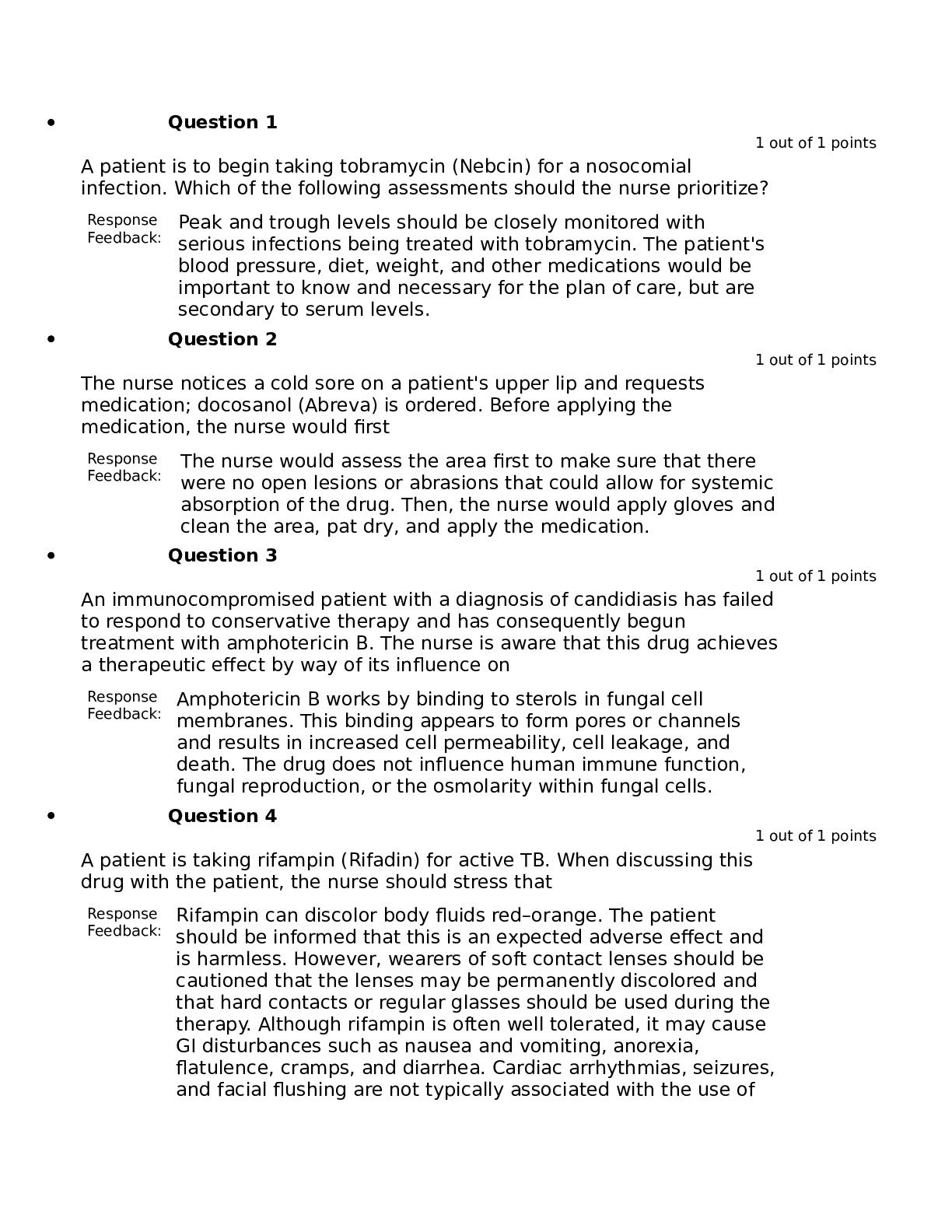
Question 1
1 out of 1 points
A patient is to begin taking tobramycin (Nebcin) for a nosocomial
infection. Which of the following assessments should the nurse prioritize?
Response
Feedback:
Peak and trough levels should be closely monitored with
serious infections being treated with tobramycin. The patient's
blood pressure, diet, weight, and other medications would be
important to know and necessary for the plan of care, but are
secondary to serum levels.
Question 2
1 out of 1 points
The nurse notices a cold sore on a patient's upper lip and requests
medication; docosanol (Abreva) is ordered. Before applying the
medication, the nurse would first
Response
Feedback:
The nurse would assess the area first to make sure that there
were no open lesions or abrasions that could allow for systemic
absorption of the drug. Then, the nurse would apply gloves and
clean the area, pat dry, and apply the medication.
Question 3
1 out of 1 points
An immunocompromised patient with a diagnosis of candidiasis has failed
to respond to conservative therapy and has consequently begun
treatment with amphotericin B. The nurse is aware that this drug achieves
a therapeutic effect by way of its influence on
Response
Feedback:
Amphotericin B works by binding to sterols in fungal cell
membranes. This binding appears to form pores or channels
and results in increased cell permeability, cell leakage, and
death. The drug does not influence human immune function,
fungal reproduction, or the osmolarity within fungal cells.
Question 4
1 out of 1 points
A patient is taking rifampin (Rifadin) for active TB. When discussing this
drug with the patient, the nurse should stress that
Response
Feedback:
Rifampin can discolor body fluids red–orange. The patient
should be informed that this is an expected adverse effect and
is harmless. However, wearers of soft contact lenses should be
cautioned that the lenses may be permanently discolored and
that hard contacts or regular glasses should be used during the
therapy. Although rifampin is often well tolerated, it may cause
GI disturbances such as nausea and vomiting, anorexia,
flatulence, cramps, and diarrhea. Cardiac arrhythmias, seizures,
and facial flushing are not typically associated with the use of
this drug.
Question 5
1 out of 1 points
An immunocompromised patient in a critical care setting has developed a
respiratory infection that has been attributed to methicillinresistant Staphylococcus aureus (MRSA). The nurse should anticipate that
the patient will require treatment with
Response
Feedback:
Vancomycin is the drug of choice to manage infections caused
by MRSA. MRSA is resistant to all of the antistaphylococcic
penicillins, as well as to ciprofloxacin and clindamycin.
Question 6
1 out of 1 points
Which of the following nursing actions is most important in achieving
successful antimicrobial therapy with vancomycin?
Response
Feedback:
The goal of monitoring antibacterial therapy like vancomycin is
to maintain the serum drug level within the therapeutic margin;
this also ensures safety. Serum blood levels should be
monitored for drugs that have a high potential for severe
adverse effects. The other options can be broad goals of a
general drug therapy that may or may not include an
antibacterial drug. Antibiotic doses are not typically tapered
down.
Question 7
1 out of 1 points
A patient is receiving cefazolin in combination with anticoagulants. To
minimize the adverse effects during therapy, the nurse will
Response
Feedback:
The nurse should monitor for bleeding gums when the drug is
administered in combination with anticoagulants, because
patients who receive oral anticoagulants may experience
increased bleeding. Administering the medication with small
amounts of food and fluids
[Show More]