NR 507 MIDTERM WEEK 4 EXAM .QUESTIONS AND ANSWERS. LATEST 2020
Document Content and Description Below
NR 507 MIDTERM WEEK 4 EXAM .QUESTIONS AND ANSWERS. LATEST 2020. 1. Question : What is the final stage of the infectious process?
Student Answer: Colonization
Invasion
Multiplication
Sp
...
[Show More]
Last updated: 4 years ago
Preview 1 out of 12 pages
Instant download
.png)
Buy this Document to get the Full Access Instantly
Provided by Students Who Aced it
We Verify Document Content to Gurantee Accuracy
Reviews( 0 )
Document information
Connected school, study & course
About the document
Uploaded On
Nov 18, 2020
Number of pages
12
Written in
All

Additional information
This document has been written for:
Uploaded
Nov 18, 2020
Downloads
0
Views
210
Topic Tags
Recommended For You
Get more on EXAM »
$13
19 Pages
NR 507 WEEK 4 MIDTERM EXAM 2026/2027 | 60 HIGH-YIELD QUESTIONS...

$16
18 Pages
NR 507 MIDTERM EXAM 2 LATEST VERSIONS (VERSION A& B) / NR 507...
$35
40 Pages
NR-507 Advanced Pathophysiology Actual 2026 Week 8 Final Exam...
$10
258 Pages
NR 507 Final Exam Advanced Pathophysiology - Chamberlain Qu...
$10
24 Pages
NR 507 FINAL EXAM NEWEST CHAMBERLAIN Questions & Answers with...
$10
103 Pages
NR 507 Final Exam Study Guide Advanced Pathophysiology Chamber...
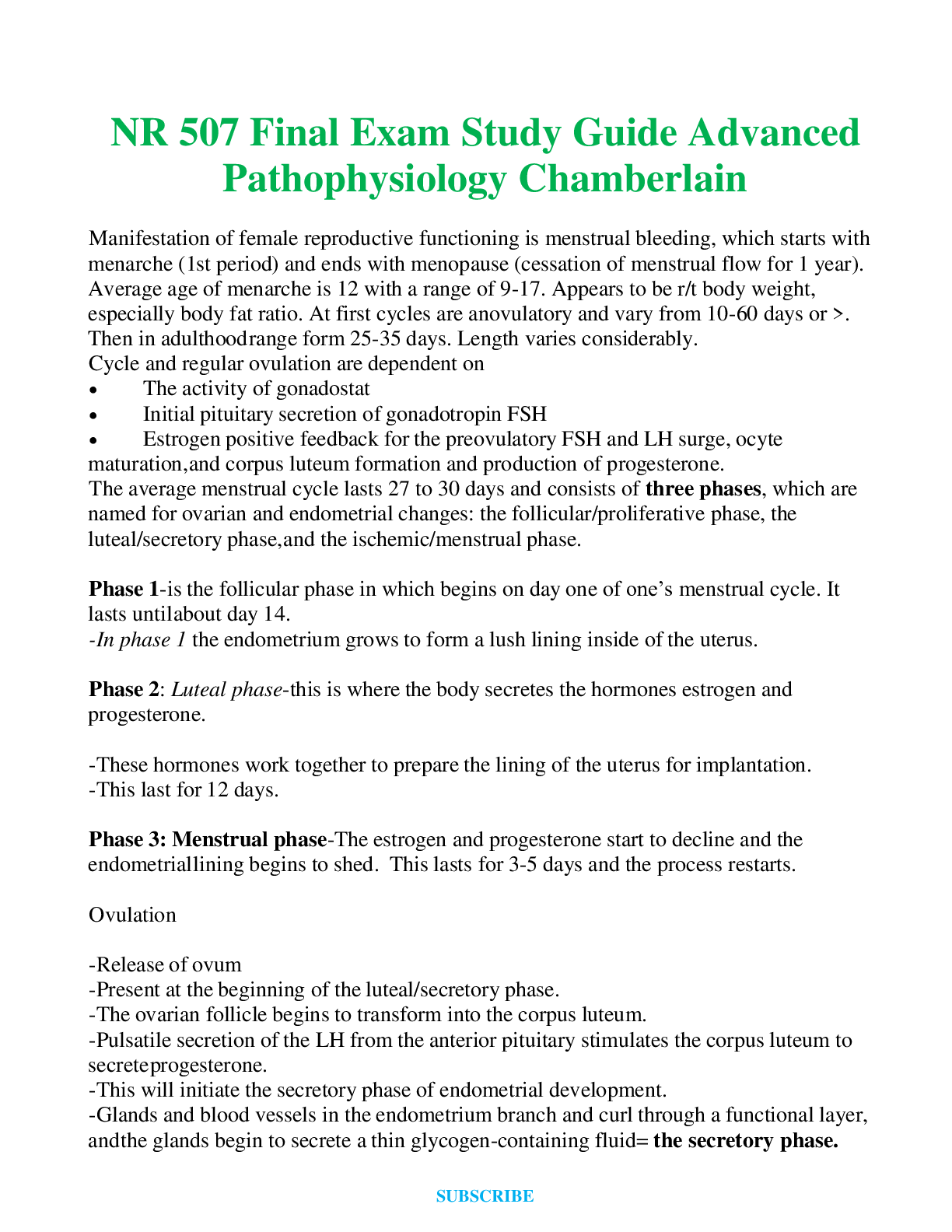
$12
103 Pages
NR 507 Final Exam Study Guide Advanced Pathophysiology Chambe...
$8
23 Pages
NR507 Week 5 Edapt | Latest 2026 | Guaranteed A+ | All Q&A | C...
$9
7 Pages
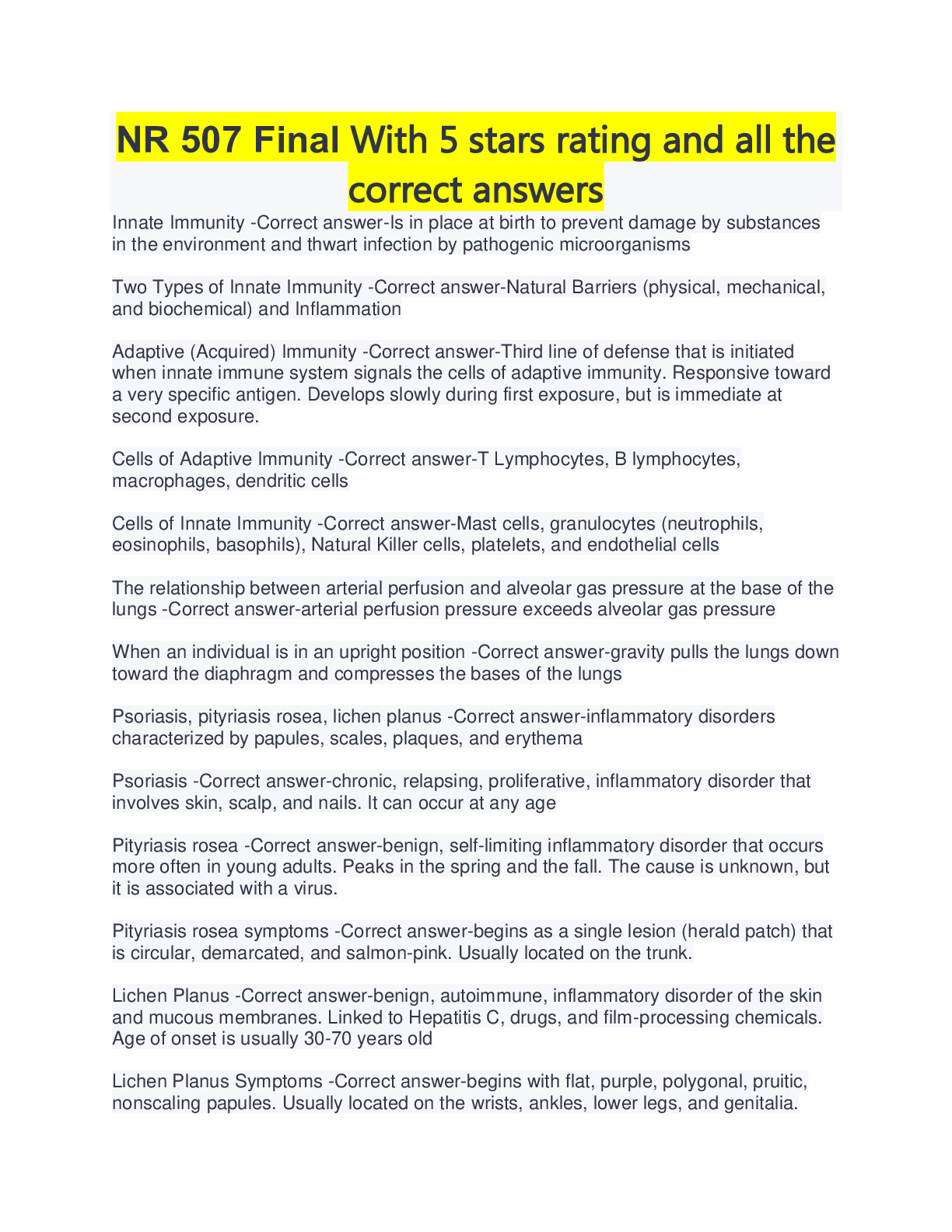
NR 507 Final With 5 stars rating and all the correct answers
$10
6 Pages
NR 507 Advanced Pathophysiology Midterm: (Latest 2025/2026 Upd...
$11.5
4 Pages
NR507 Advanced Pathophysiology Sample Exam Questions on GI & C...
$10
11 Pages
NR507 Advanced Pathophysiology Midterm Exam Questions & Answer...
$11
5 Pages
NR507 Final Exam Study Guide Gastrointestinal & Neurological P...
$9
9 Pages
Skyler Hansen Age: 18 years Diagnosis: Diabetes | NUR 172 Skyl...
$19
34 Pages
49-Year-Old Patient with Intermittent Squeezing Chest Pain (CL...
More related documents below


.png)

.png)