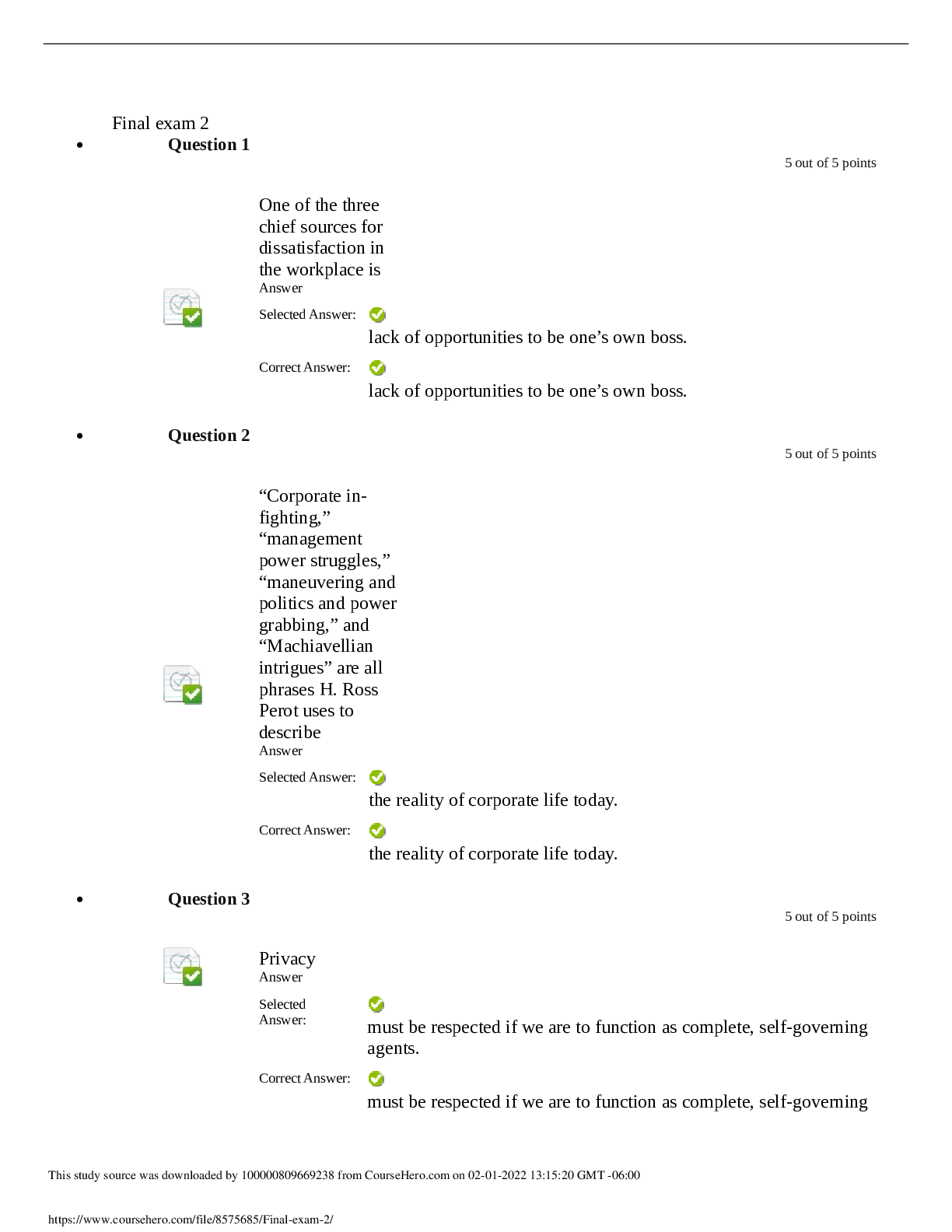
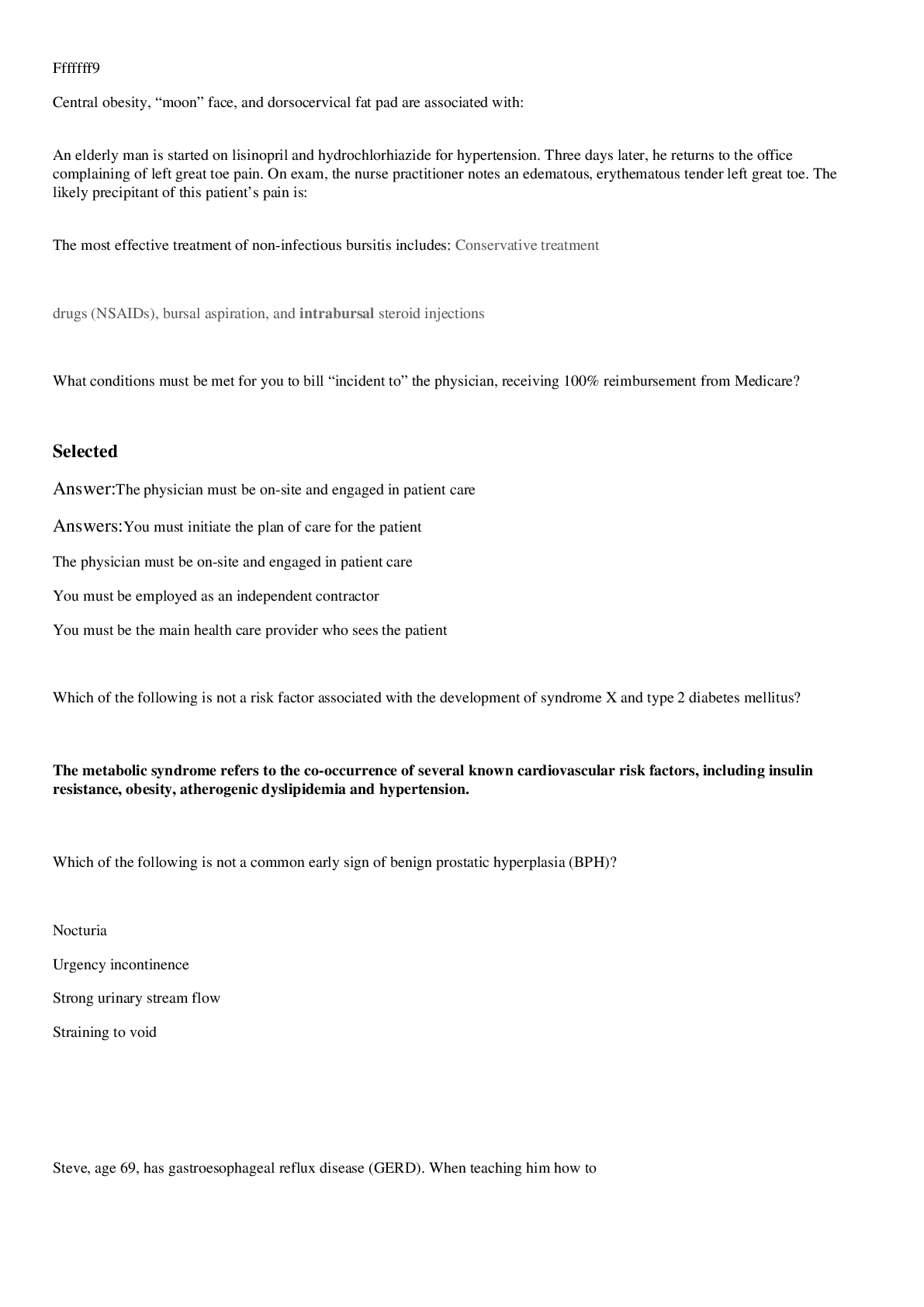
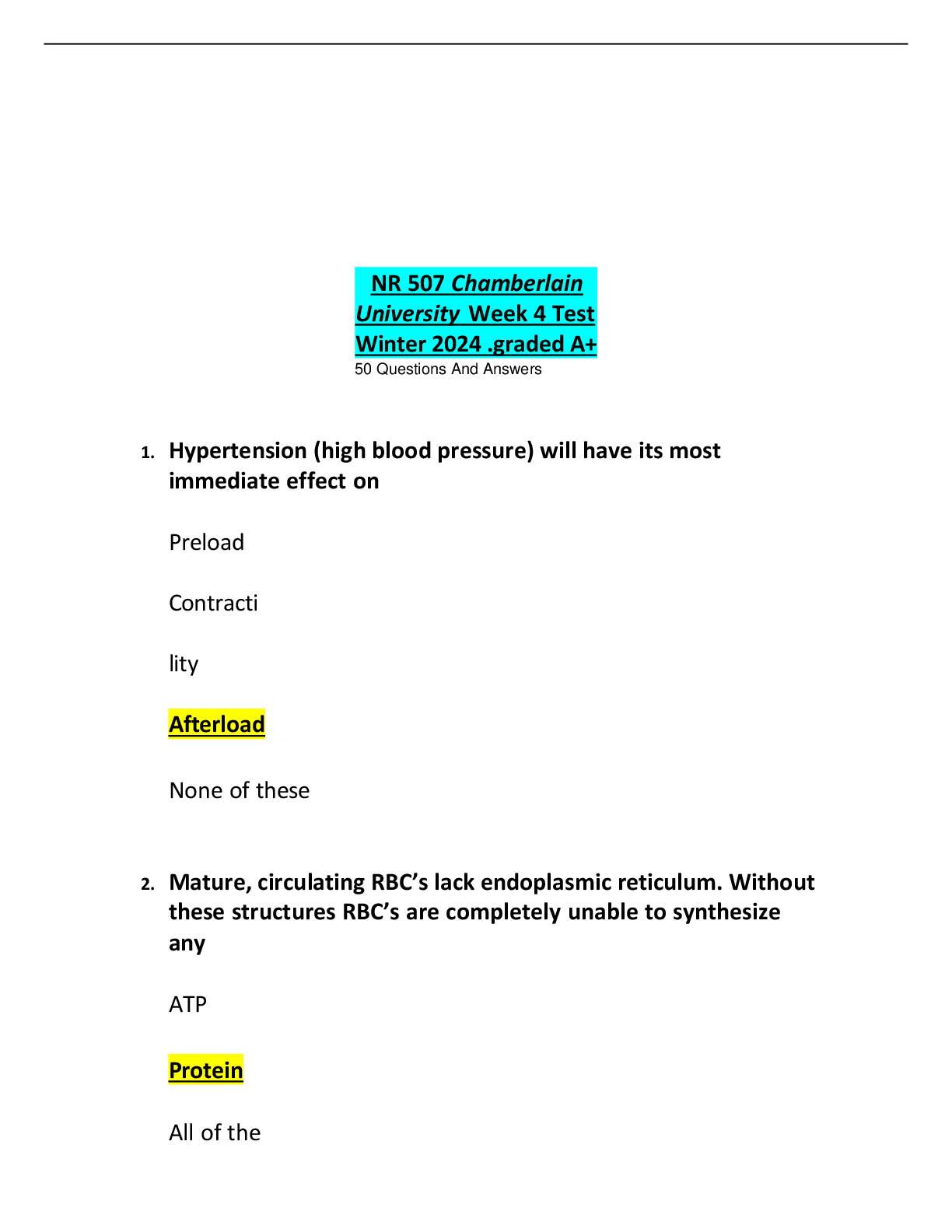
NR 507 PATHO MIDTERM EXAM , LATEST 2020 |CHAMBERLAIN COLLEGE OF NURSING
Document Content and Description Below
NR 507 PATHO MIDTERM EXAM , LATEST 2020 |CHAMBERLAIN COLLEGE OF NURSING. 1. Question : Hemolytic disease of the newborn (HDN) can occur if the mother:
Student Answer: Is Rh-positive and the fetus is Rh-negative
...
[Show More]
Last updated: 4 years ago
Preview 1 out of 7 pages
Instant download
.png)
Buy this Document to get the Full Access Instantly
Provided by Students Who Aced it
We Verify Document Content to Gurantee Accuracy
Reviews( 0 )
Document information
Connected school, study & course
About the document
Uploaded On
Nov 18, 2020
Number of pages
7
Written in
All

Additional information
This document has been written for:
Uploaded
Nov 18, 2020
Downloads
0
Views
127
Topic Tags
Recommended For You
Get more on EXAM »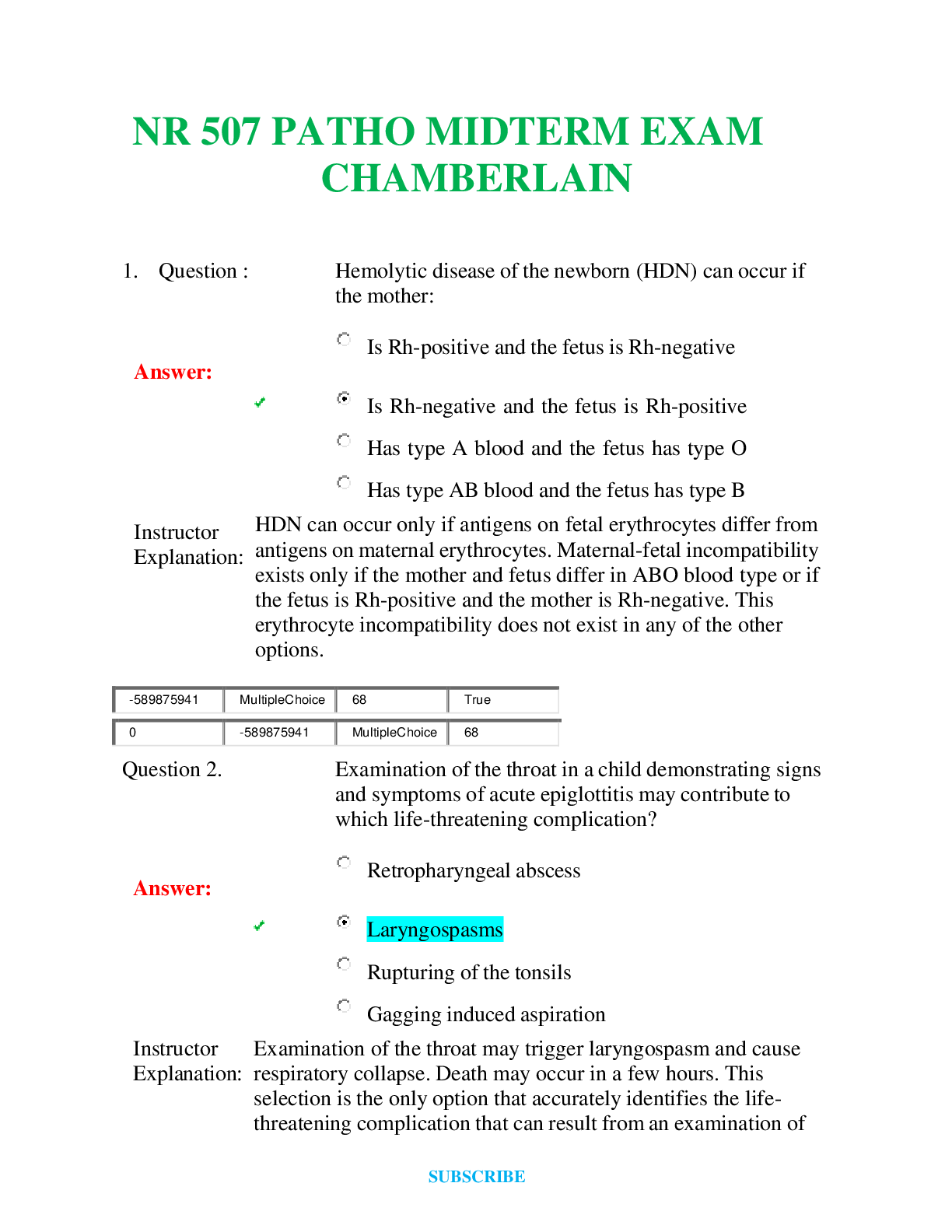
$10
29 Pages
NR 507 PATHO MIDTERM EXAM CHAMBERLAIN Questions & Answers with...
$15
19 Pages
NR 507 Advanced Pathophysiology (NR-507) Week 4 Midterm Exam P...
$12.5
30 Pages
NR 507 Week 4 Midterm NEWEST 2026/2027 ACTUAL TESTBANJ EXAM...

$10
13 Pages
NR 507 / NR507 ADVANCED PATHOPHYSIOLOGY MIDTERM EXAM. QUESTION...
$10
258 Pages
NR 507 Final Exam Advanced Pathophysiology - Chamberlain Qu...
$10
103 Pages
NR 507 Final Exam Study Guide Advanced Pathophysiology Chamber...
$12
103 Pages
NR 507 Final Exam Study Guide Advanced Pathophysiology Chambe...
$11
19 Pages
NR 507 Advanced Pathophysiology Midterm week 8 walden universi...
$8
23 Pages
NR507 Week 5 Edapt | Latest 2026 | Guaranteed A+ | All Q&A | C...
$9
7 Pages
NR 507 Final With 5 stars rating and all the correct answers
$10
6 Pages
NR 507 Advanced Pathophysiology Midterm: (Latest 2025/2026 Upd...
$10
11 Pages
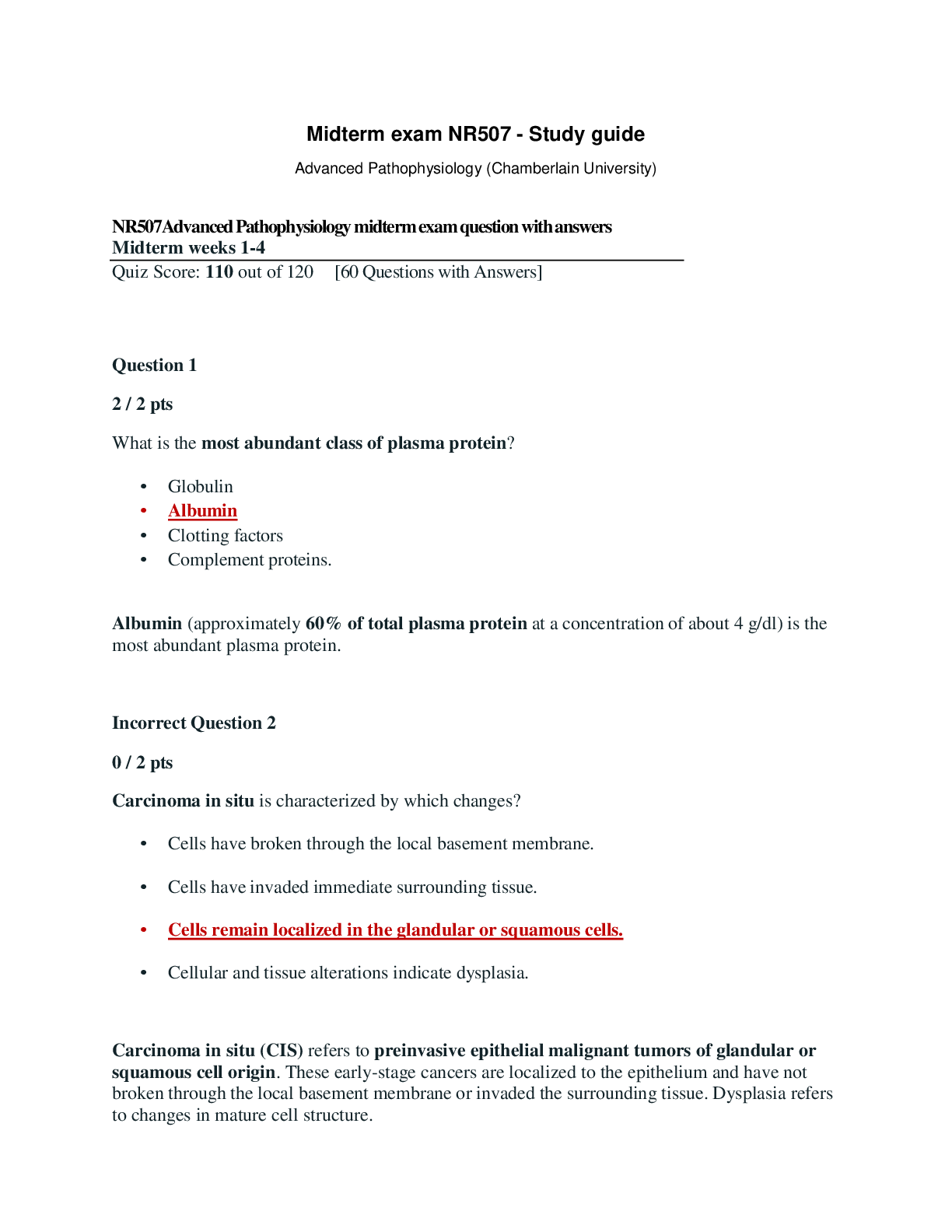
NR507 Advanced Pathophysiology Midterm Exam Questions & Answer...
$11
5 Pages
NR507 Final Exam Study Guide Gastrointestinal & Neurological P...
$55
403 Pages
TEST BANK for Role Development for the Nurse Practitioner 2nd...
$15
963 Pages
TEST BANK for Medical-Surgical Nursing 7th edition by Donna D....
$15
425 Pages
TEST BANK for Fundamentals of Nursing Active Learning for Coll...

$16
345 Pages
Test Bank for Nursing for Wellness in Older Adults Miller 8th...
More related documents below


.png)

.png)