Education  >  EXAM  >  SOCI 111 QUIZ 2 (All)

SOCI 111 QUIZ 2

Document Content and Description Below

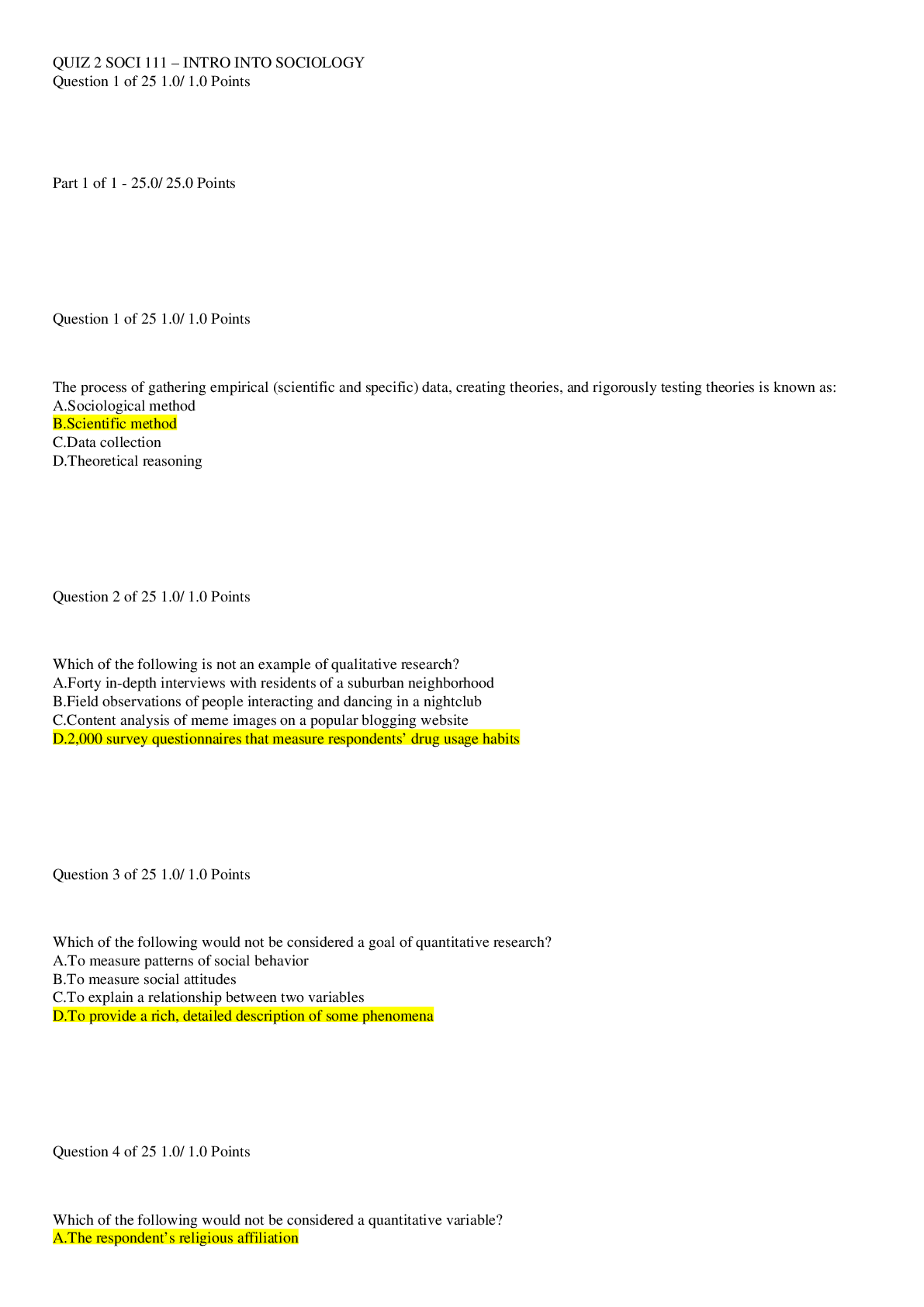
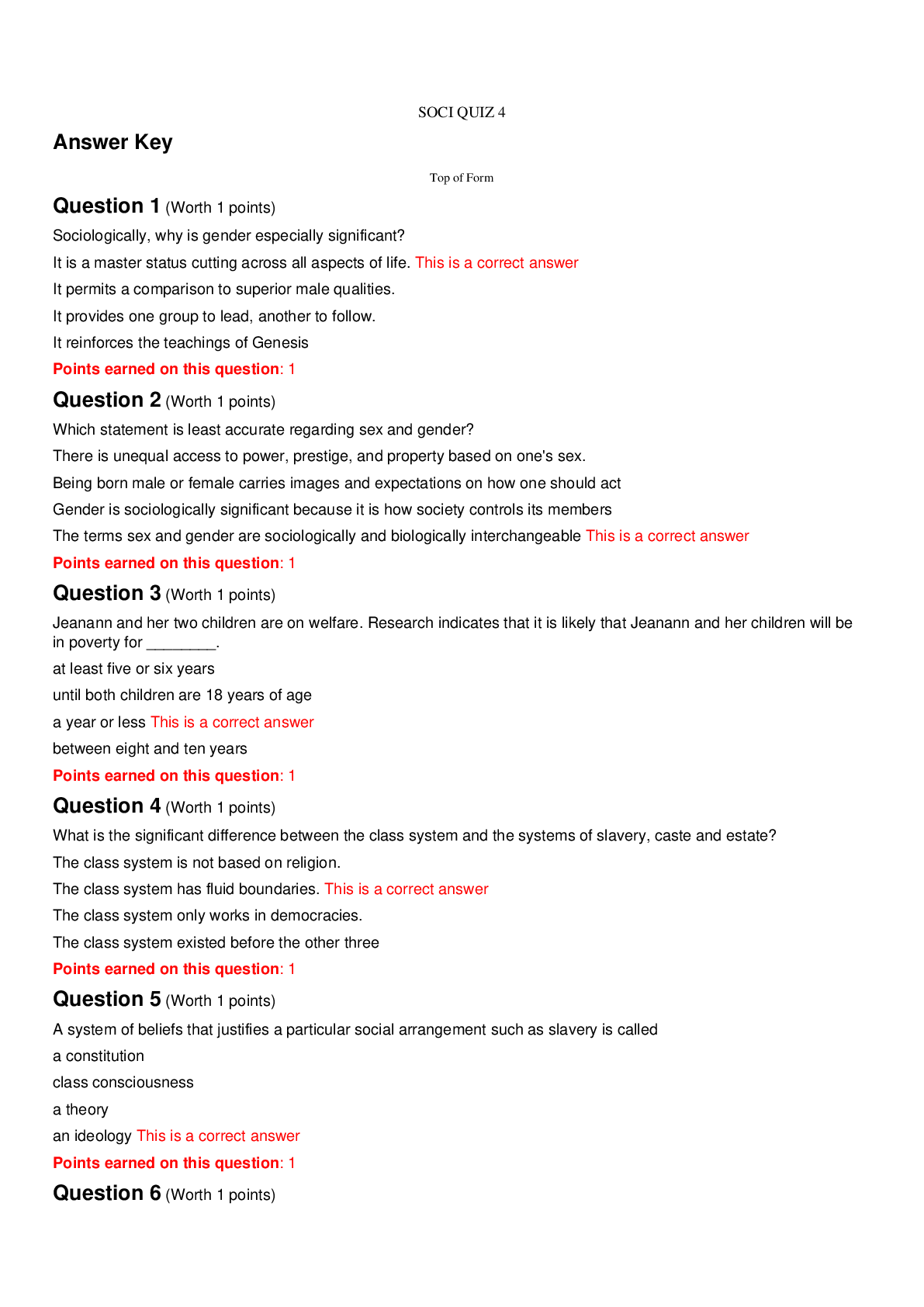
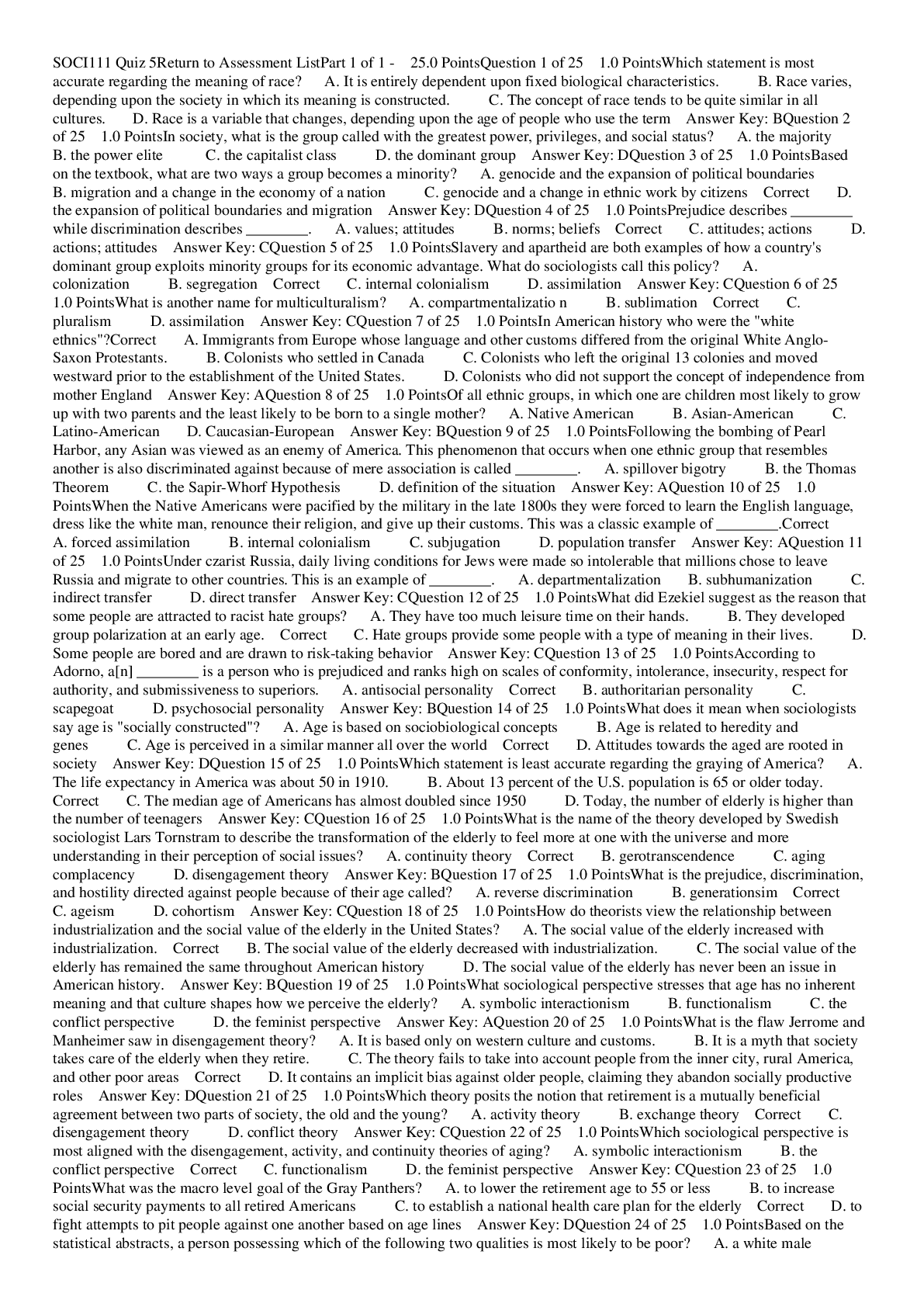
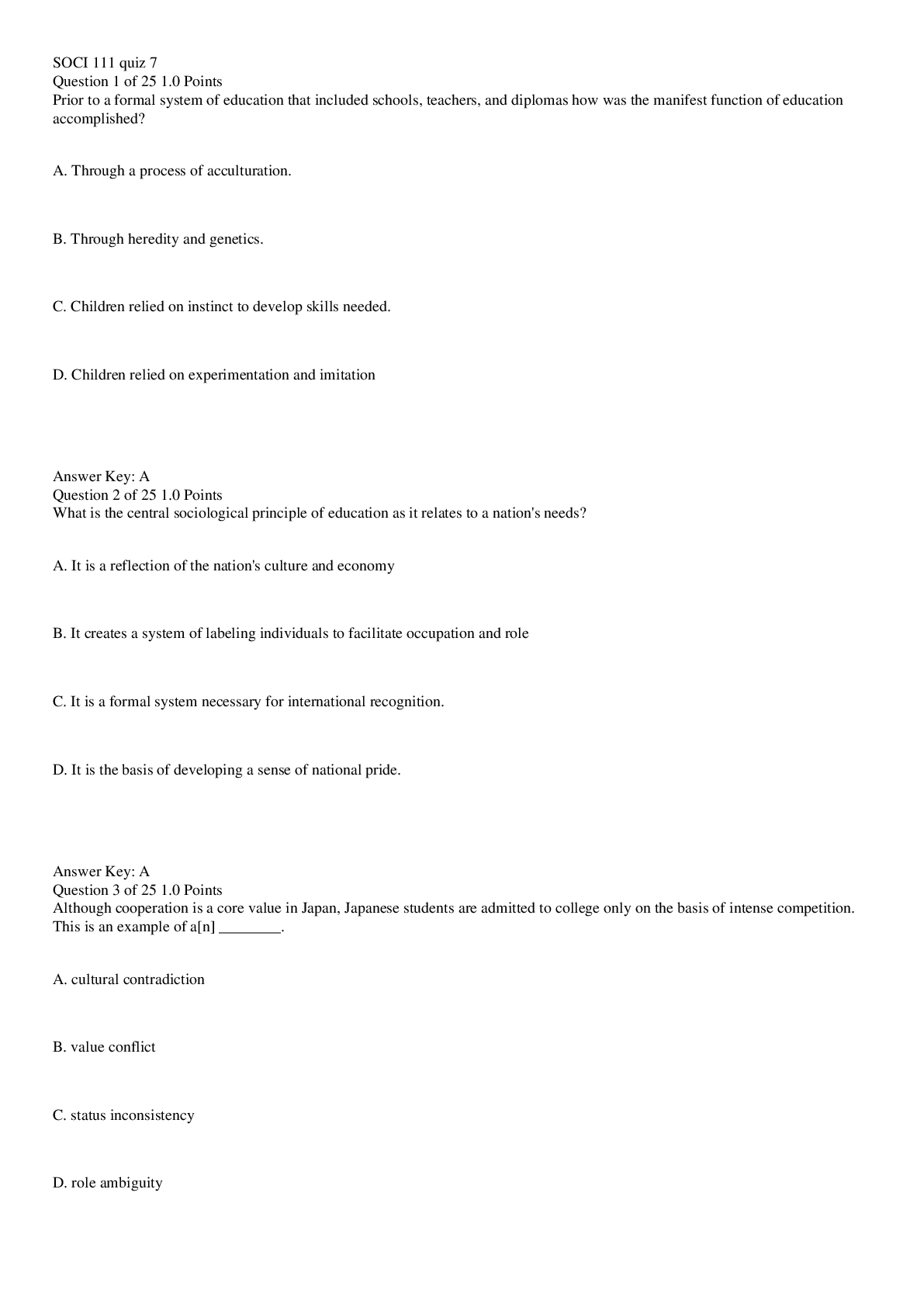
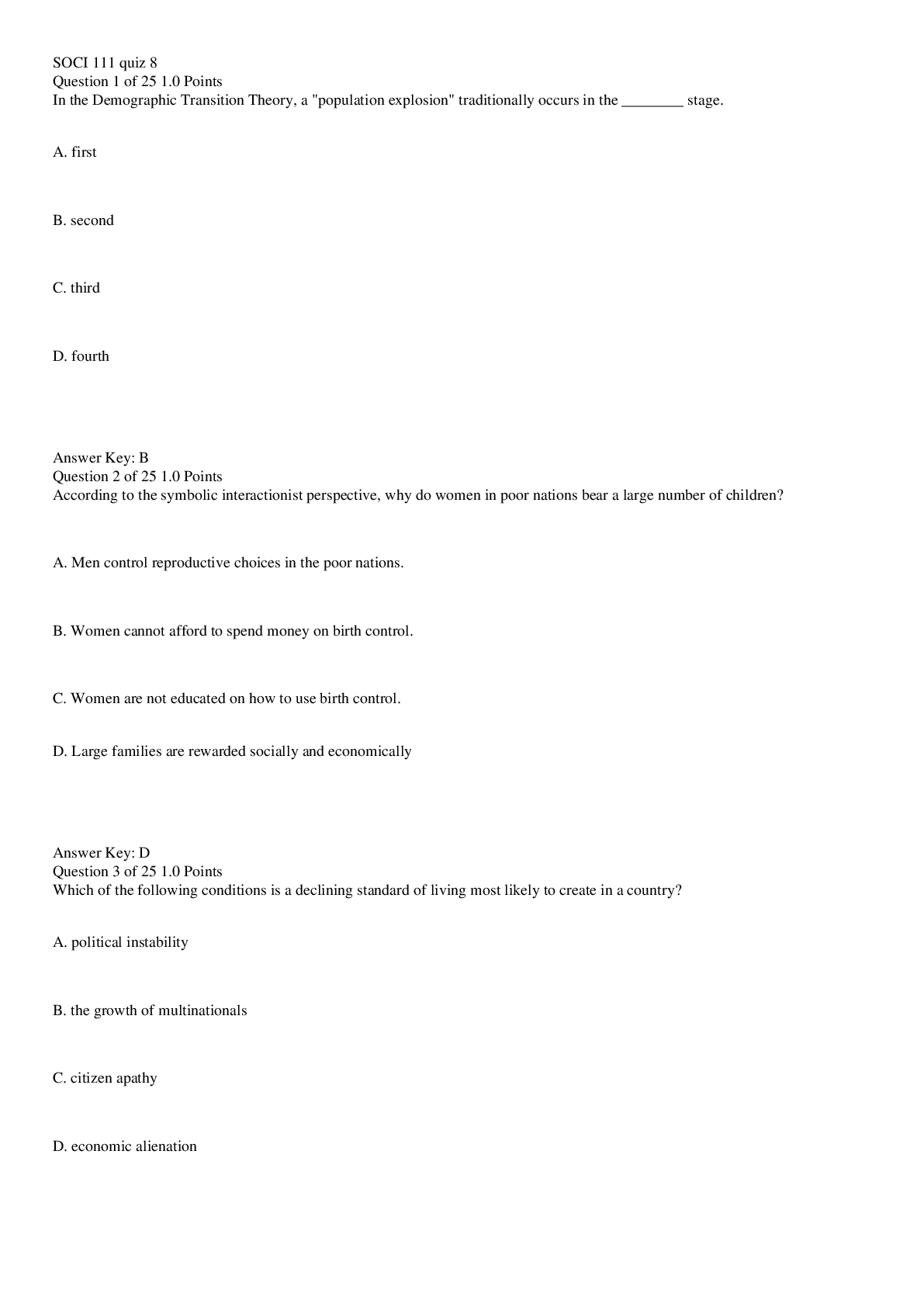
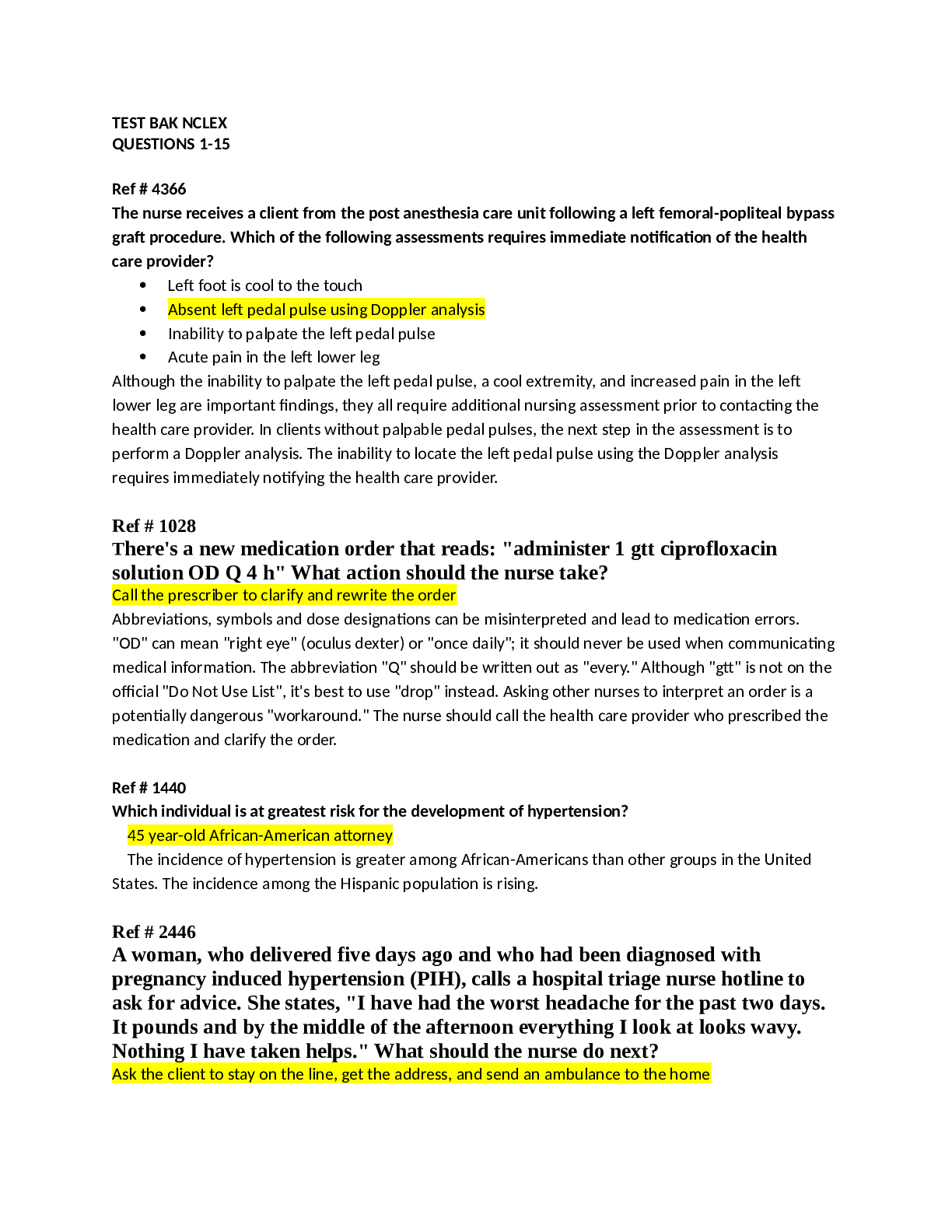
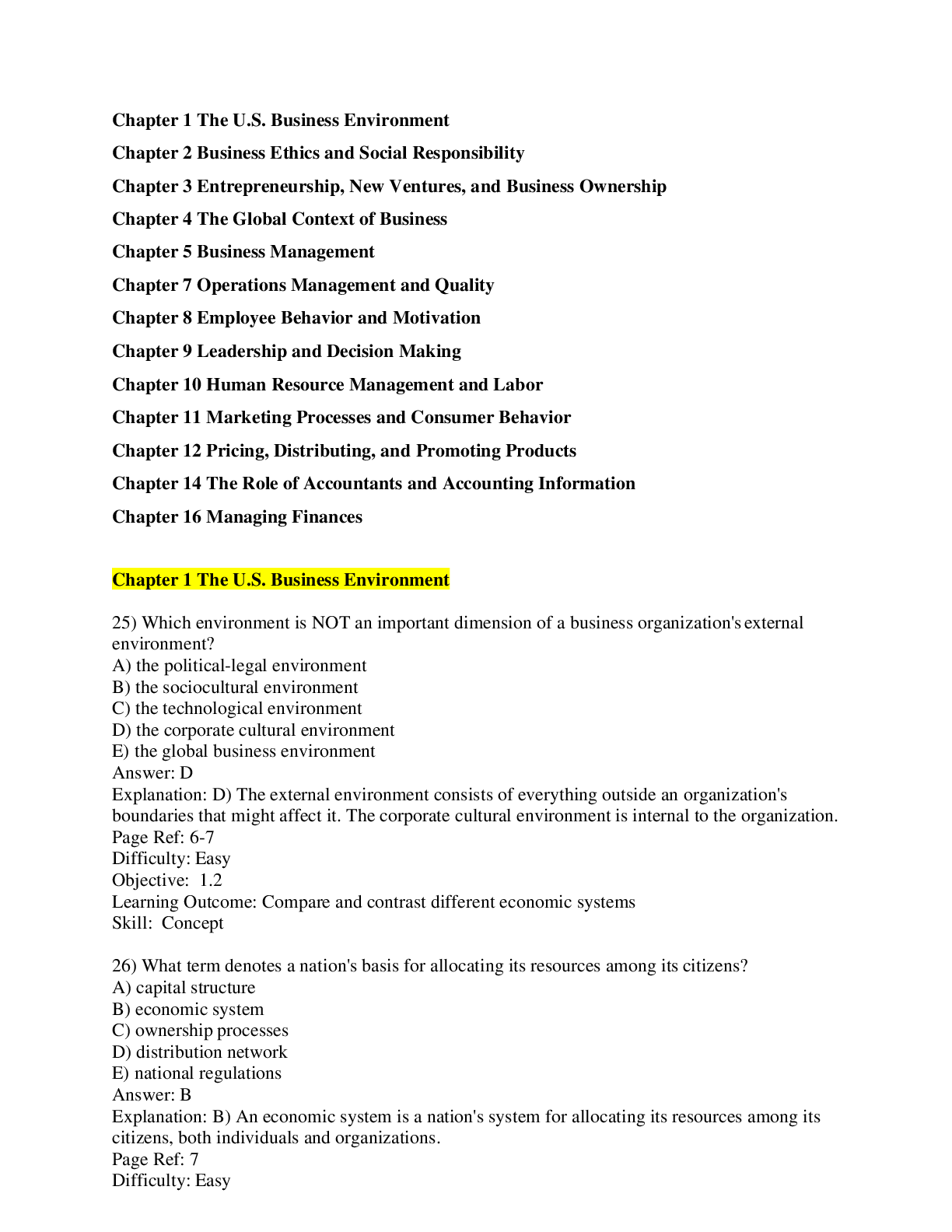
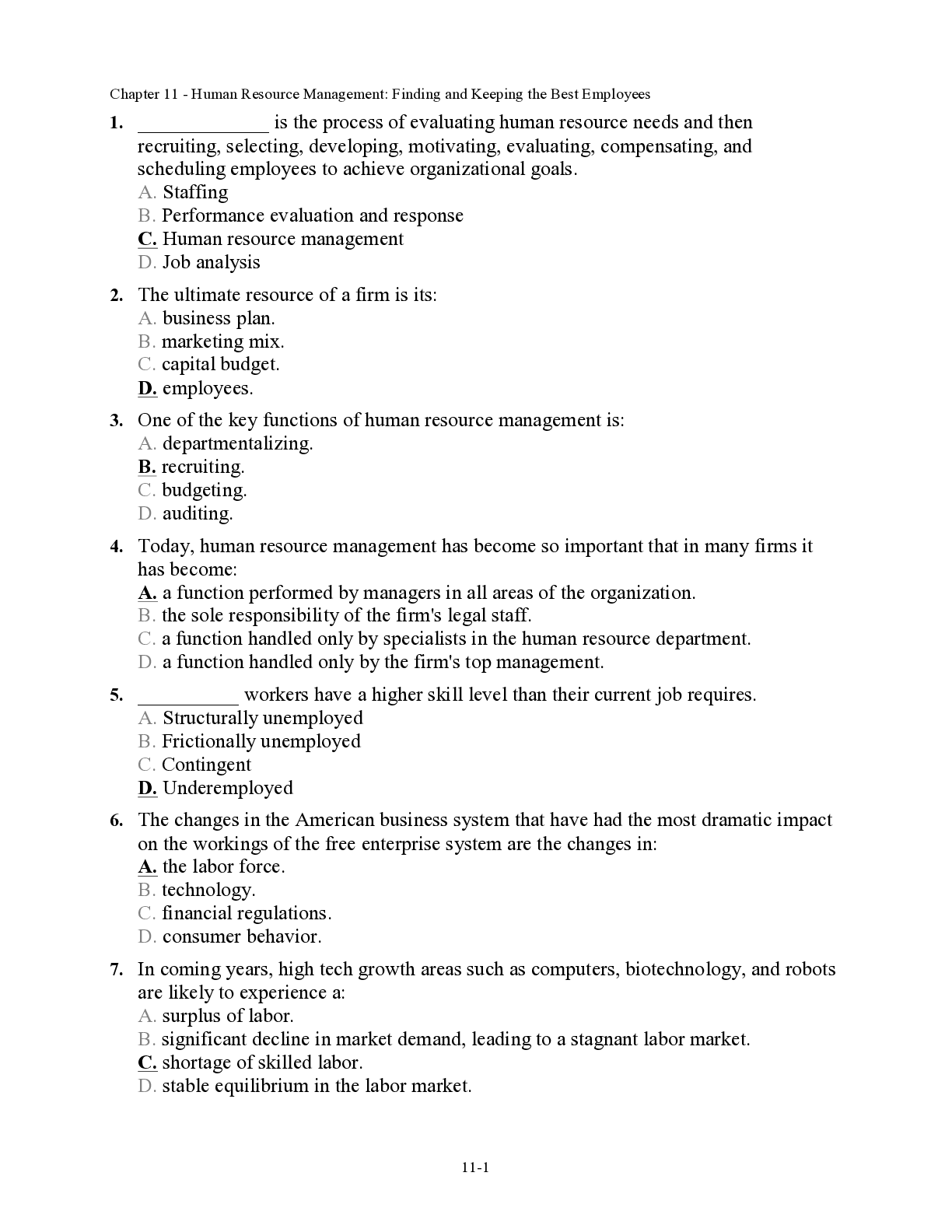
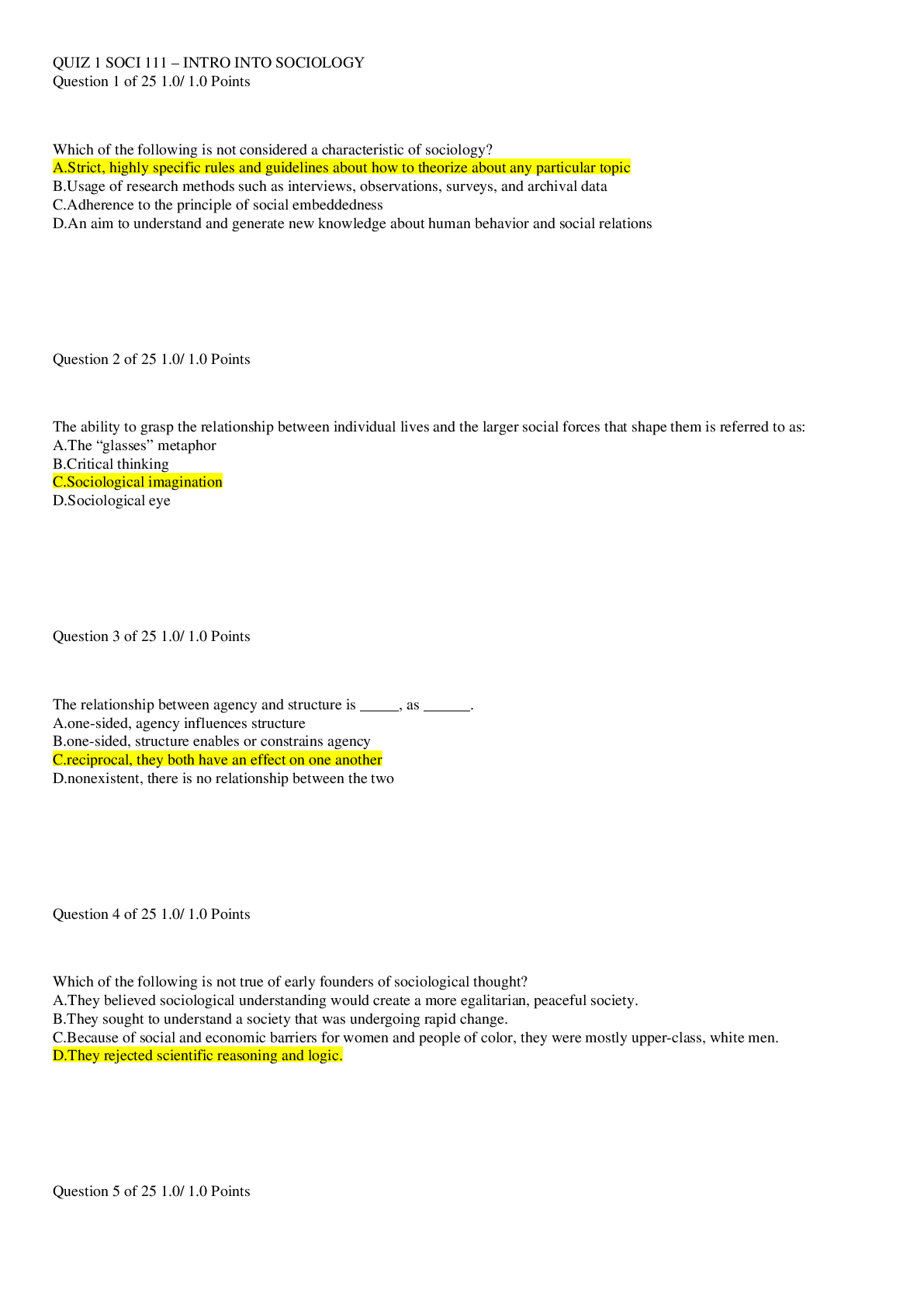
[Solved] SOCI 111 QUIZ 2 QUIZ 2 SOCI 111 – INTRO INTO SOCIOLOGY Question 1 of 25 1.0/ 1.0 Points Part 1 of 1 - 25.0/ 25.0 Points ... Question 1 of 25 1.0/ 1.0 Points The process of gathering empirical (scientific and specific) data, creating theories, and rigorously testing theories is known as: A.Sociological method B.Scientific method C.Data collection D.Theoretical reasoning Question 2 of 25 1.0/ 1.0 Points Which of the following is not an example of qualitative research? A.Forty in-depth interviews with residents of a suburban neighborhood B.Field observations of people interacting and dancing in a nightclub C.Content analysis of meme images on a popular blogging website D.2,000 survey questionnaires that measure respondents’ drug usage habits Question 3 of 25 1.0/ 1.0 Points Which of the following would not be considered a goal of quantitative research? A.To measure patterns of social behavior B.To measure social attitudes C.To explain a relationship between two variables D.To provide a rich, detailed description of some phenomena Question 4 of 25 1.0/ 1.0 Points Which of the following would not be considered a quantitative variable? A.The respondent’s religious affiliation B.The number of times the respondent visits church per month C.Amount of money the respondent donates to his or her church D.The number of hours spent volunteering with a church Question 5 of 25 1.0/ 1.0 Points A researcher finds that as years spent driving increases, the number of accidents decreases. This is an example of: A.Negative causation B.Negative correlation C.Positive correlation D.Decreasing relationship Question 6 of 25 1.0/ 1.0 Points Which of the following does not represent the concept of reliability? A.The major funder of a study is not allowed to be part of the research process because it is considered a conflict of interest. B.A study conducted in 2012 supports a similar study conducted by another researcher in 2005. C.The hypothesis of one study is tested by two different researchers and they reach the same conclusion. D.A study is revisited every 10 years and has similar findings each time. Question 7 of 25 1.0/ 1.0 Points A characteristic of results that systematically misrepresent the full dimensions of what is being studied is referred to as: A.Conflict of interest B.Misleading C.One-sided D.Bias Question 8 of 25 1.0/ 1.0 Points A researcher is interested in how same-sex marriages have been represented on cable television since certain states have begun introducing related legislation. Which of the following would be the most appropriate research method? A.Content analysis of television shows that have featured LGBT characters B.Conducting interviews with gay or lesbian actors C.A national survey of Americans who watch 30+ hours of television each week D.An experiment that measures respondent attitudes about same-sex marriage after they view images of married same-sex couples Question 9 of 25 1.0/ 1.0 Points Which of the following is not characteristic of surveys? A.Can be conducted in person, over the phone, or via an electronic device B.Can consist of open-ended or closed-ended questions C.Must include every member of the population of interest to be accurate D.Can be conducted on a relatively small number of people Question 10 of 25 1.0/ 1.0 Points Which of the following is an example of a leading question? A.Do you oppose increasing state funding for health clinics that target low-income women? B.Do you believe that harsher drunk driving laws decrease the number of car accidents? C.Wouldn’t you agree that our president should be doing more to stop the deforestation of Brazil and subsequent displacement of thousands of people? D.Do you support legislation that decriminalizes marijuana? Question 11 of 25 1.0/ 1.0 Points Which of the following is not typically included in the ethical consideration portion of the research design process? A.Ensuring respondent anonymity B.Ensuring confidentiality C.Keeping the respondent safe from physical and emotional harm D.Ensuring the respondent answers truthfully Question 12 of 25 1.0/ 1.0 Points A _____ refers to a relatively small number of people selected to represent a _____, which is the entire group of interest. A.sect; population B.population; sample C.respondent list; population list D.sample; population Question 13 of 25 1.0/ 1.0 Points The process by which people learn the culture of their society is referred to as: A.Acculturalization B.Socialization C.Social learning D.Assimilation Question 14 of 25 1.0/ 1.0 Points Which of the following statements best represents most sociologists’ stance on nurture vs. nature? A.The majority of our behavior can be explained as instinctual and biologically predetermined. B.All our behavior is learned. Biology has nothing to do with it. C.The majority of our behavior is learned, but the capacity to learn many behaviors is biological. D.We can begin learning social behavior at any point in our lives and experience the same success. Question 15 of 25 1.0/ 1.0 Points Which of the following is not characteristic of the influence of reference groups? A.Buying a pink iPod because it’s your favorite color B.Picking a particular laptop because of a tech expert’s positive review C.Purchasing a smartphone because your coworkers tease you about your “dumb” phone D.“Liking” an article you read on Facebook that your friend posted Question 16 of 25 1.0/ 1.0 Points Which of the following is not outlined as one of the major agents of socialization? A.Work B.Religion C.Romantic relationships D.Family Question 17 of 25 1.0/ 1.0 Points Which of the following behaviors is most likely the result of family socialization? A.Texting and holding a face-to-face conversation at the same time B.Standing during the playing of the national anthem C.Arriving to an important appointment 15 minutes early D.Performing specific household chores Question 18 of 25 1.0/ 1.0 Points Which of the following is not considered part of adolescent subculture? A.Unique fads and fashions in dress and hair styles B.A special vocabulary frowned on and misunderstood by adults. C.A less tolerantattitude toward drug experimentation D.Knowledge of underground media, music, and Internet sites Question 19 of 25 1.0/ 1.0 Points Adopting the behavior or standards of a group you emulate or hope to join is referred to as: A.Conformity B.Clique socialization C.Anticipatory socialization D.Pro-active conformity Question 20 of 25 1.0/ 1.0 Points Which of the following is not considered part of the resocialization process? A.Punish undesirable behaviors with humiliation and difficult chores B.Break down an individual’s sense of self by invading his or her privacy C.Enforce strict and largely arbitrary rules that restrict an individual’s clothing and hairstyle choices D.Encourage members to identify with and form close bonds with their fellow members Question 21 of 25 1.0/ 1.0 Points Which of the following would be considered a violation of “normal” social interaction in the United States? A.Saying “bless you” when someone sneezes B.Refusing to shake a new acquaintance’s hand when it is offered C.Instructing a taxi driver on how to reach your destination D.Saying “thank you” to the driver as you exit the bus Question 22 of 25 1.0/ 1.0 Points Which of the following is not characteristic of Goffman’s theory of the presentation of self? A.Individuals engage in ongoing impression management B.Individuals desire to control and define social situations through their actions C.The use of dress, objects, and tone are not considered instrumental to the process D.Individuals monitor others to look for clues about how to behave Question 23 of 25 1.0/ 1.0 Points Working-class parents often teach their children _____ and _____, while middle-class parents teach their children _____ and _____. A.obedience, respect for authority; creativity, critical thinking B.spontaneity, innovation; subservience, obedience C.laziness, dependence; work ethic, ambition D.obedience, subservience; domination, control Question 24 of 25 1.0/ 1.0 Points The _____ refers to when social actors are engaged in a process of impression management through the use of props, costumes, gestures, and language, while the _____ is when actors let down their masks and practice their impression management. A.center stage, back stage B.social performance, individual restoration C.performance, rehearsal D.front stage, back stage Question 25 of 25 1.0/ 1.0 Points Participating in a family movie night would be considered a(n) _____ group interaction, while attending a school field trip to a local theater would be considered a(n) _____ group interaction. A.primary, secondary B.secondary, primary C.familial, institutional D.organic, mechanical [Show More]

Last updated: 3 years ago

Preview 1 out of 7 pages

Buy Now

Instant download

We Accept:

Payment methods accepted on Scholarfriends (We Accept)
Preview image of SOCI 111 QUIZ 2 document

Buy this document to get the full access instantly

Instant Download Access after purchase

Buy Now

Instant download

We Accept:

Payment methods accepted on Scholarfriends (We Accept)

Reviews( 0 )

$14.00

Buy Now

We Accept:

Payment methods accepted on Scholarfriends (We Accept)

Instant download

Can't find what you want? Try our AI powered Search

63
0

Document information


Connected school, study & course


About the document


Uploaded On

Nov 19, 2020

Number of pages

7

Written in

All

Seller


Profile illustration for QUIZBANK
QUIZBANK

Member since 5 years

1404 Documents Sold

Reviews Received
228
24
1
0
12
Additional information

This document has been written for:

Uploaded

Nov 19, 2020

Downloads

 0

Views

 63

Document Keyword Tags

Recommended For You

Get more on EXAM »
$14.00
What is Scholarfriends

Scholarfriends.com Online Platform by Browsegrades Inc. 651N South Broad St, Middletown DE. United States.

We are here to help

We're available through e-mail, Twitter, and live chat.
 FAQ
 Questions? Leave a message!


Copyright © Scholarfriends · High quality services·