ADV Med-Surg Questions Exam 2
questions with solutions and rationales.
A 68-year-old woman is scheduled to undergo mitral valve replacement for severe mitral stenosis and
mitral regurgitation. Although the diagnosis w
...
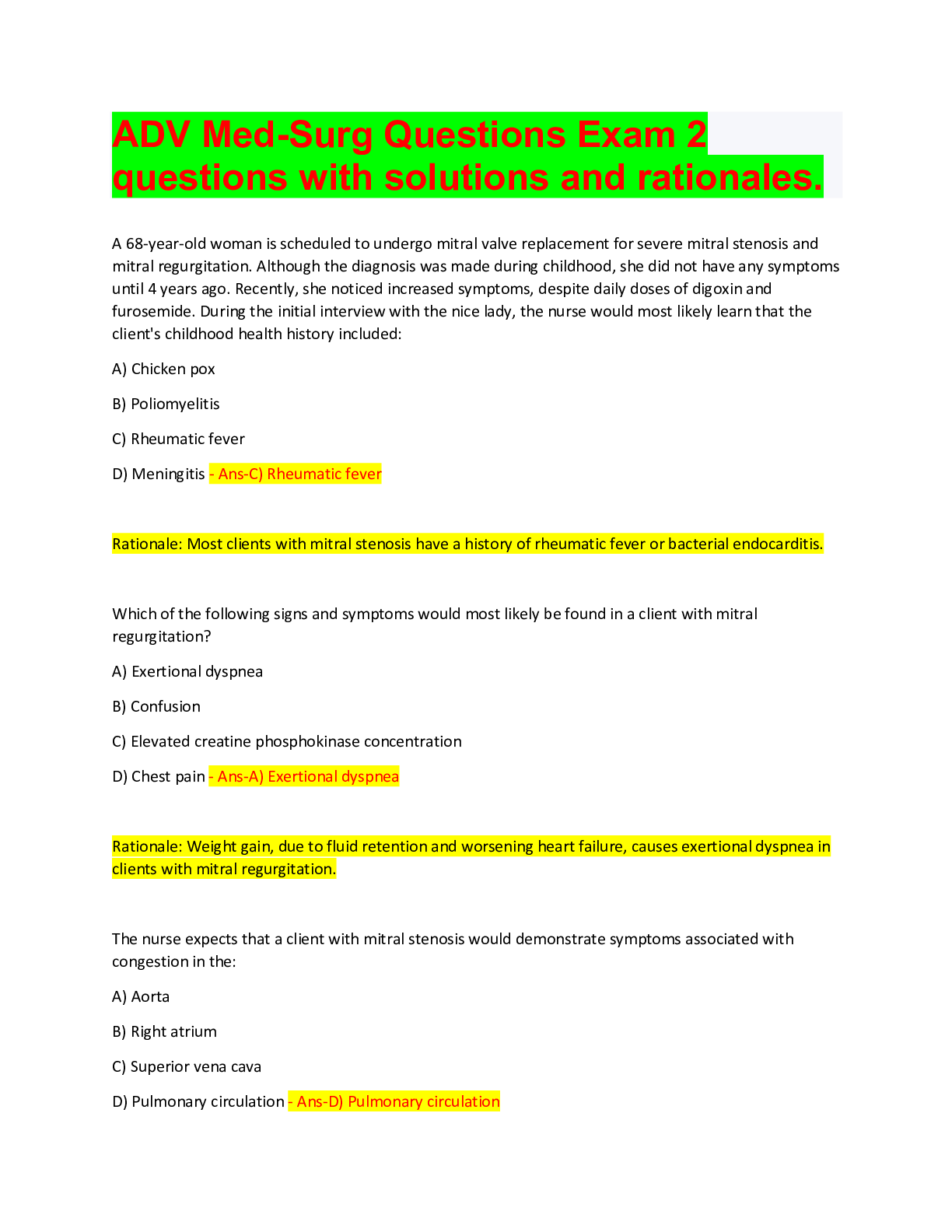
ADV Med-Surg Questions Exam 2
questions with solutions and rationales.
A 68-year-old woman is scheduled to undergo mitral valve replacement for severe mitral stenosis and
mitral regurgitation. Although the diagnosis was made during childhood, she did not have any symptoms
until 4 years ago. Recently, she noticed increased symptoms, despite daily doses of digoxin and
furosemide. During the initial interview with the nice lady, the nurse would most likely learn that the
client's childhood health history included:
A) Chicken pox
B) Poliomyelitis
C) Rheumatic fever
D) Meningitis - Ans-C) Rheumatic fever
Rationale: Most clients with mitral stenosis have a history of rheumatic fever or bacterial endocarditis.
Which of the following signs and symptoms would most likely be found in a client with mitral
regurgitation?
A) Exertional dyspnea
B) Confusion
C) Elevated creatine phosphokinase concentration
D) Chest pain - Ans-A) Exertional dyspnea
Rationale: Weight gain, due to fluid retention and worsening heart failure, causes exertional dyspnea in
clients with mitral regurgitation.
The nurse expects that a client with mitral stenosis would demonstrate symptoms associated with
congestion in the:
A) Aorta
B) Right atrium
C) Superior vena cava
D) Pulmonary circulation - Ans-D) Pulmonary circulationRationale: When mitral stenosis is present, the left atrium has difficulty emptying its contents into the
left ventricle. Hence, because there is no valve to prevent backward flow into the pulmonary vein, the
pulmonary circulation is under pressure.
Because a client has mitral stenosis and is a prospective valve recipient, the nurse preoperatively
assesses the client's past compliance with medical regimens. Lack of compliance with which of the
following regimens would pose the greatest health hazard to this client?
A) Medication therapy
B) Diet modification
C) Activity restrictions
D) Dental care - Ans-A) Medication therapy
Rationale: Adhering strictly to a dosage schedule and observing specific precautions are necessary to
prevent hemorrhage or thromboembolism. Some clients are maintained on lifelong antibiotic
prophylaxis to prevent recurrence from rheumatic fever
Good dental care is an important measure in reducing the risk of endocarditis. A teaching plan to
promote good dental care in a client with mitral stenosis should include demonstration of the proper
use of:
A) A manual toothbrush
B) An electric toothbrush
C) An irrigation device
D) Dental floss - Ans-A) A manual toothbrush
Rationale: Use of an electric toothbrush, an irrigation device, or dental floss may cause gums to bleed
and allow bacteria to enter mucous membranes and the bloodstream, increasing the risk of
endocarditis.
A client has been admitted to the hospital with a diagnosis of suspected bacterial endocarditis. The
complication the nurse will constantly observe for is:
A) Presence of heart murmur
B) Systemic emboliC) Fever
D) Congestive heart failure - Ans-B) Systemic emboli
Rationale: Emboli are the major problem; those arising in the right heart chambers will terminate in the
lungs and left chamber emboli may travel anywhere in the arteries.
[Show More]