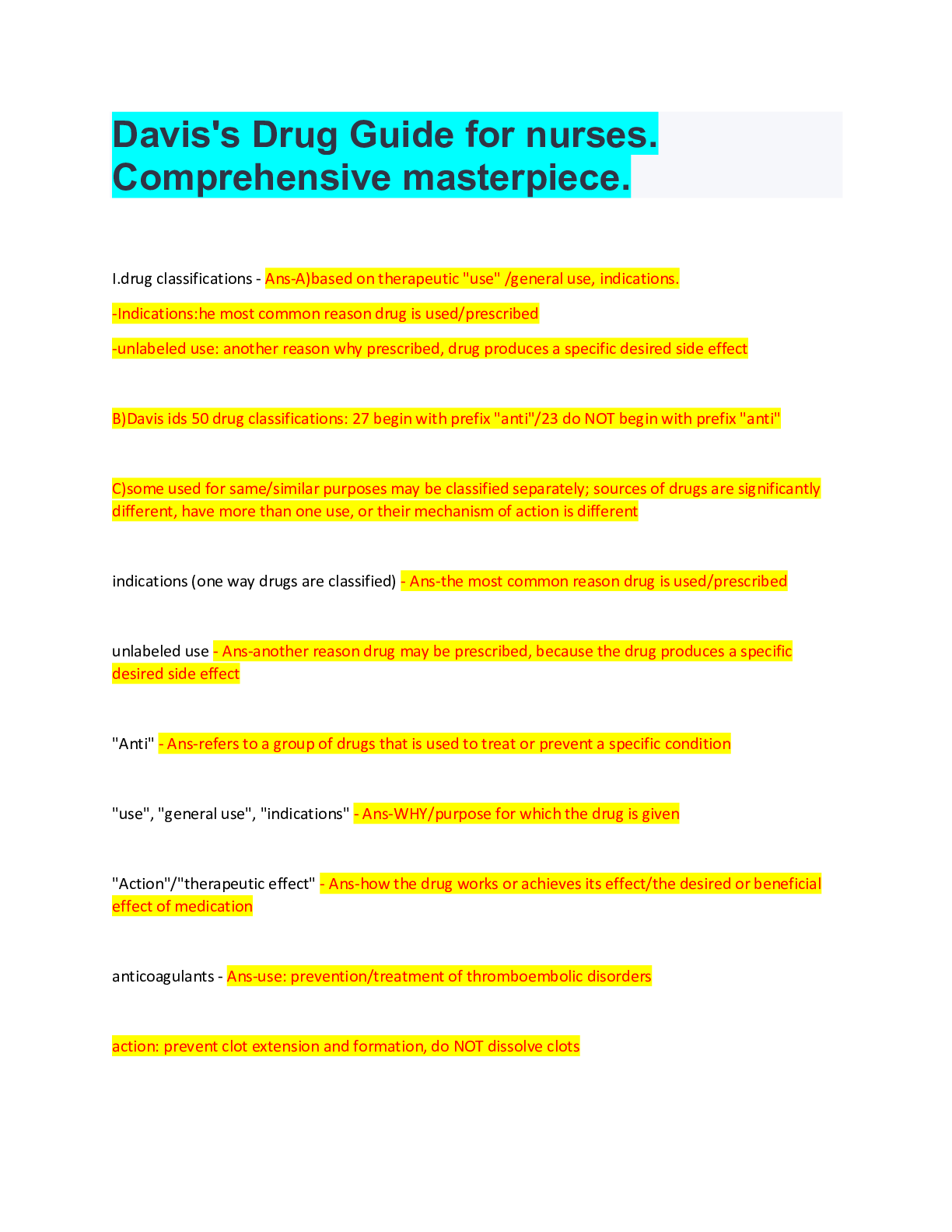
Davis's Drug Guide for nurses.
Comprehensive masterpiece.
I.drug classifications - Ans-A)based on therapeutic "use" /general use, indications.
-Indications:he most common reason drug is used/prescribed
-unlabeled use
...
Davis's Drug Guide for nurses.
Comprehensive masterpiece.
I.drug classifications - Ans-A)based on therapeutic "use" /general use, indications.
-Indications:he most common reason drug is used/prescribed
-unlabeled use: another reason why prescribed, drug produces a specific desired side effect
B)Davis ids 50 drug classifications: 27 begin with prefix "anti"/23 do NOT begin with prefix "anti"
C)some used for same/similar purposes may be classified separately; sources of drugs are significantly
different, have more than one use, or their mechanism of action is different
indications (one way drugs are classified) - Ans-the most common reason drug is used/prescribed
unlabeled use - Ans-another reason drug may be prescribed, because the drug produces a specific
desired side effect
"Anti" - Ans-refers to a group of drugs that is used to treat or prevent a specific condition
"use", "general use", "indications" - Ans-WHY/purpose for which the drug is given
"Action"/"therapeutic effect" - Ans-how the drug works or achieves its effect/the desired or beneficial
effect of medication
anticoagulants - Ans-use: prevention/treatment of thromboembolic disorders
action: prevent clot extension and formation, do NOT dissolve clots
antidepressents - Ans-use: treatment of various forms of endogenous depression
action: preventing the reuptake of dopamine, norepinephrine, and serotonin by presynaptic neurons,
resulting in accumulation of these neurotransmitter
antidiabetics - Ans-use: (insulin)management of diabetes
action: lowers blood glucose by increasing transport of glucose into cells and promotes the conversion
of glucose to glycogen
antidiarrheals - Ans-use: control and symptomatic relief of acute/chronic nonspecific diarrhea
action: slow intestinal motility and propulsion
antihypertensives - Ans-use: treatment of hypertension
action: used to lower blood pressure to a normal level or to the lowest level tolerated
antipsychotics - Ans-use: treatment of acute/chronic psychoses
action: block dopamine receptors in the brain; also alter dopamine release and turnover
antiulcer agents - Ans-use: treatment/prophylaxis of peptic ulcer and gastric hypersecretory conditions
action: eradication of organisms that cause GI infections
diuretics - Ans-use: used alone/in combination in treatment of hypertension/edema due to CHF or other
causes
action: enhances the selective excretion of various electrolytes and water by affecting renal mechanisms
for tubular secretion/reabsorption
lipid-lowering agents - Ans-use: reduce blood lipids
action: inhibit an enzyme involved in cholesterol synthesis
nonopioid analgesics - Ans-use: control moderate to severe pain/fever
action: inhibit prostaglandin synthesis peripherally for analgesic effect ¢rally for antipyretic effect
NSAIDs (nonsteroidal anti-inflammatory agents) - Ans-use: control mild to moderate pain/fever/various
inflammatory conditions
action: analgesic/antipyretic/anti-inflammatory properties.
opioid analgesics - Ans-use: management of moderate to sever pain
action: opioids bind to opiate receptors in the CNS, resulting in alteration to the perception/response to
pain
Thrombolytics - Ans-use: acute management of coronary thrombosis/ischemic stroke/deep vein
thrombosis
action: converts plasminogen to plasmin, which then degrades fibrin in clots.
contraindications - Ans--situations or conditions under which a drug should NOT be given
*hypersensitivity(allergy)=universal contraindication
precautions - Ans-when a condition or diagnoses exist that would cause a consequence(side effect)
**MD must decide determine if benefits of dr
[Show More]





.png)