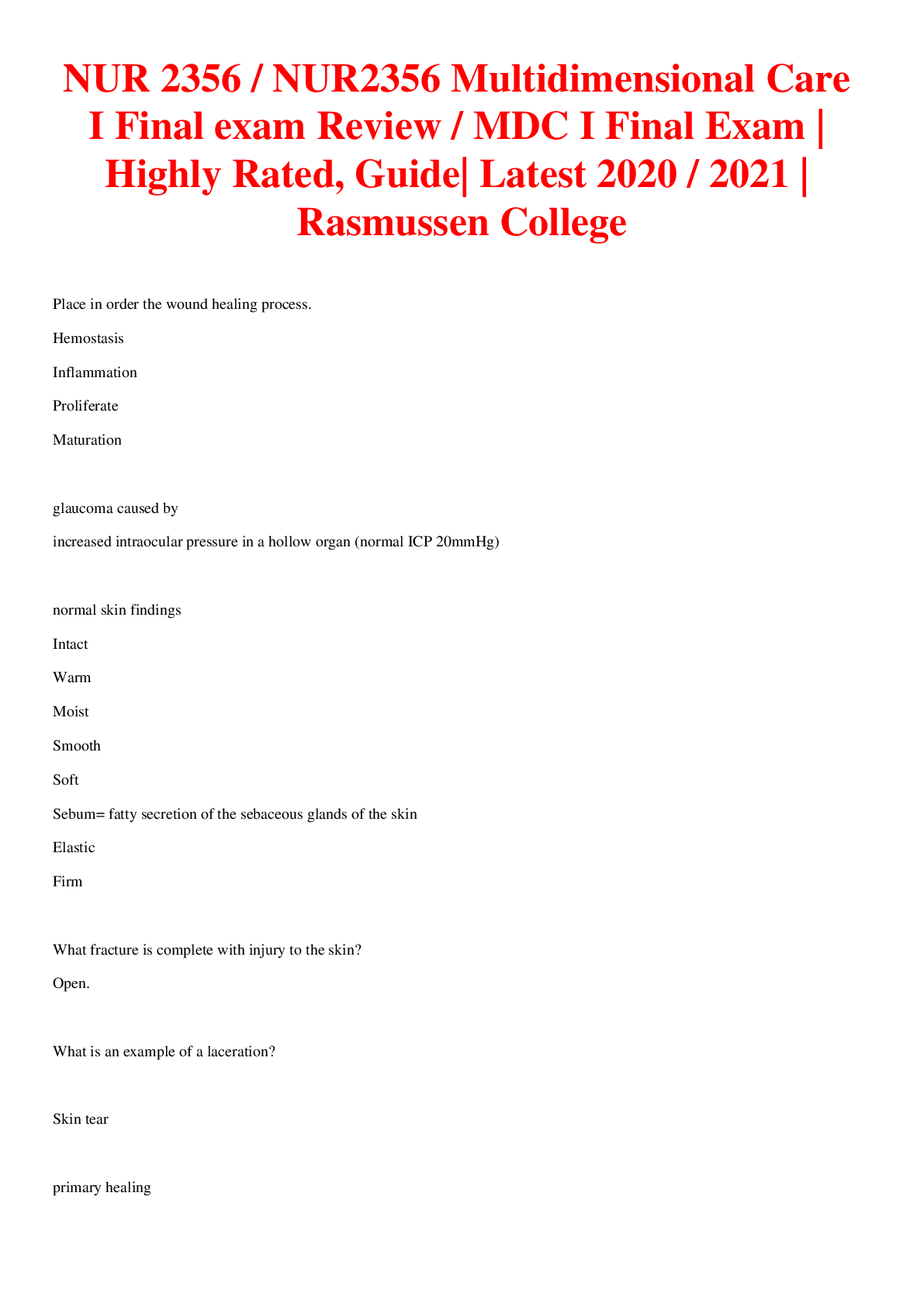
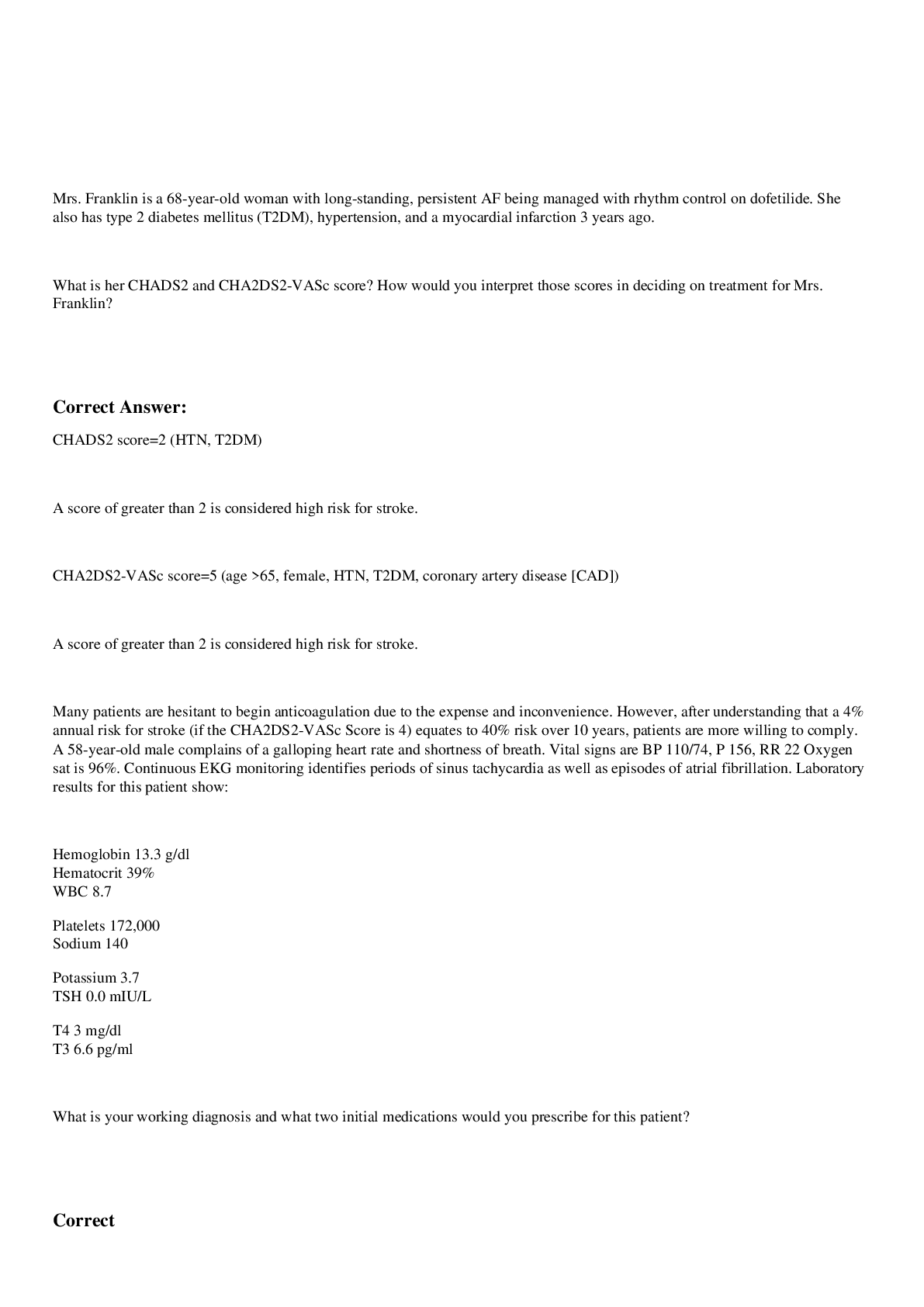
HESI EXIT EXAM 2019 Version 1 | Questions and 100 % Correct Answers |
Document Content and Description Below
HESI EXIT EXAM 2019 Version 1 | Questions and 100 % Correct Answers |
1. A client has an indwelling catheter with continuous bladder irrigation after
undergoing a transurethral resection of the prostate (TURP) 12 hour
...
[Show More]
Last updated: 5 months ago
Preview 1 out of 44 pages
Instant download

Buy this Document to get the Full Access Instantly
Provided by Students Who Aced it
We Verify Document Content to Gurantee Accuracy
Reviews( 0 )
Document information
Connected school, study & course
About the document
Uploaded On
Nov 21, 2020
Number of pages
44
Written in
All

Additional information
This document has been written for:
Uploaded
Nov 21, 2020
Downloads
0
Views
306
Topic Tags
Related Subjects & Courses
Explore similar study resources and related concepts.
Recommended For You
Get more on EXAM »
$64.5
53 Pages
HESI PN EXIT HESI EXIT EXAM TEST BANK QUESTIONS AND 100% VERI...
![Preview of NR546 Final 84 QUESTIONS AND 100% CORRECT SOLUTIONS|UPDATED VERSION 2026/2027]!!!|GUARANT](https://browseimages.nyc3.digitaloceanspaces.com/paper-images/2026/05/20/CKy1SZ4x2026-05-20-11-076a0d6bbfae47f.png)
$11.5
21 Pages
NR546 Final 84 QUESTIONS AND 100% CORRECT SOLUTIONS|UPDATED V...
$19.5
349 Pages
NGN HESI Exit Exam 5 Questions and Correct Verified Answers /...
$15
91 Pages
NURS 6640 Psychotherapy with Individuals FINAL EXAM Test Bank...
$30
1236 Pages
Davis's Diseases & Disorders A Nursing Therapeutics Manual 7th...

$29
938 Pages
Lehne's Pharmacotherapeutics for Advanced Practice Nurses and...
More related documents below