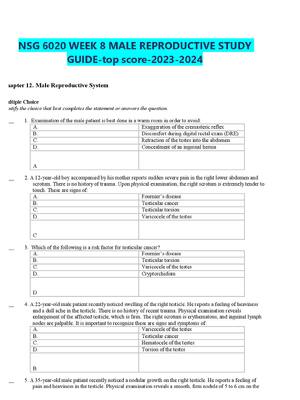
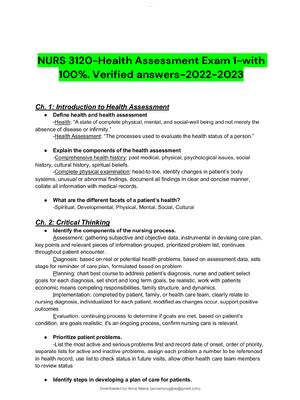
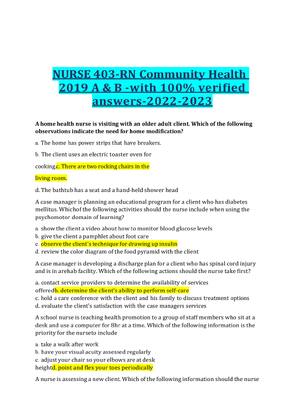
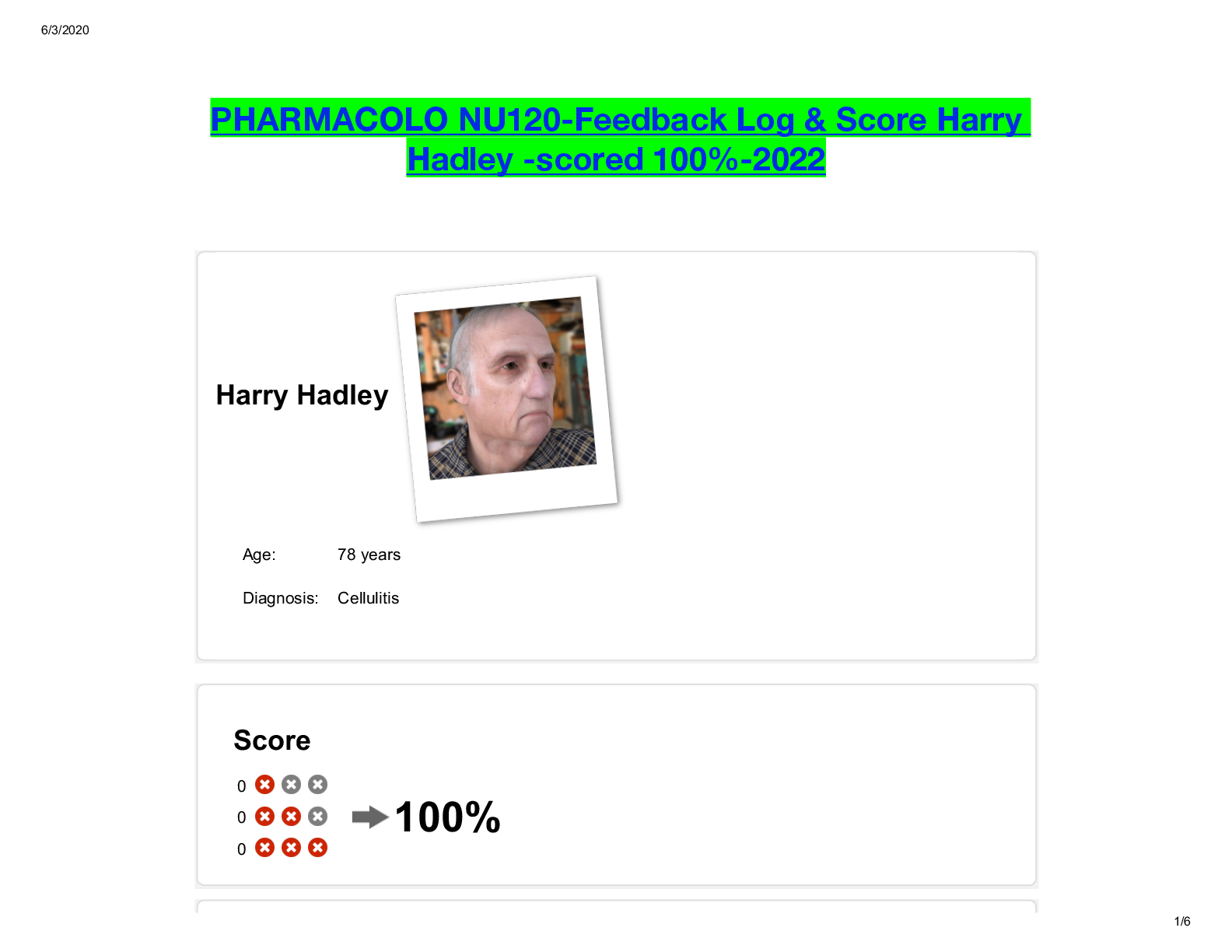
Harry Hadley vSIM Feedback Log & Score Harry Hadley -scored 100%
Document Content and Description Below
Feedback Log 0:00 You arrived at the patient's side. 0:00 You reviewed the patient information. 0:00 You reviewed the orders. 0:00 You introduced yourself. 0:08 You washed your hands. To maintain patient safety, it is im
...
[Show More]
Last updated: 4 months ago
Preview 1 out of 7 pages
Instant download
Buy this Document to get the Full Access Instantly
Provided by Students Who Aced it
We Verify Document Content to Gurantee Accuracy
Reviews( 0 )
Document information
Connected school, study & course
About the document
Uploaded On
Jun 18, 2022
Number of pages
7
Written in
All

Additional information
This document has been written for:
Uploaded
Jun 18, 2022
Downloads
0
Views
150
Topic Tags
Recommended For You
Get more on EXAM »
$10
18 Pages
NURS 6521 / NURS6521, Advanced Pharmacology Final exam | Week...
$11
48 Pages
NURS 6501 / NURS6501 Advanced Pathophysiology Final exam Week...
$11
48 Pages
NURS 6501 / NURS6501, Advanced Pathophysiology Week 11 Quiz (3...
$10
7 Pages
PHARMACOLO NU120- Feedback Log & Score Rachael Heidebrink -202...

$10
4 Pages
NURS 6541 Week 8 Quiz – Question and Answers {Already Scored 1...

$20
22 Pages
Walden University - NURS-6501N-58,Advanced Pathophysiology Tes...
$15
46 Pages
RN VATI Adult Medical Surgical - Real Exam Scored 100% With Sc...

$11
10 Pages
Kenneth Bronson Documentation Medical Case 1. Assignments, Inc...
$8
6 Pages
kenneth bronson documentation/ Medical Case 1: Includes the F...
$13.5
85 Pages
NEW!!! Firefighter 1 Final Test 2025 (Scored 100%) || Study gu...

$14.5
20 Pages
FIREFIGHTER 1 FINAL TEST 2025 || (ACTUAL EXAM SCORED 100%) ||...
$9
16 Pages
Firefighter 1 Final Test Study guide for Firefighter 1 final e...


$22.5
307 Pages
TEST BANK for Davis Advantage for Psychiatric Mental Health Nu...



More related documents below