RN VATI 2019 MERTERNAL NEWBORN REMEDIATION
Document Content and Description Below
1. Nursing Care and Discharge Teaching: Evaluating Client Understanding of Car Seat Safety
A: Use an approved rear-facing car seat in the back seat preferably in the middle (away from air
bags and side impact), to tran
...
[Show More]
Last updated: 3 years ago
Preview 1 out of 6 pages
Instant download

Buy this Document to get the Full Access Instantly
Provided by Students Who Aced it
We Verify Document Content to Gurantee Accuracy
Reviews( 0 )
Document information
Connected school, study & course
About the document
Uploaded On
Jun 19, 2022
Number of pages
6
Written in
All

Additional information
This document has been written for:
Uploaded
Jun 19, 2022
Downloads
0
Views
168
Topic Tags
Related Subjects & Courses
Explore similar study resources and related concepts.
Recommended For You
Get more on VATI RN »
$13.5
90 Pages
RN VATI Adult Medical Surgical 2020 (Result 100%) 90 Questions...
$25.5
31 Pages
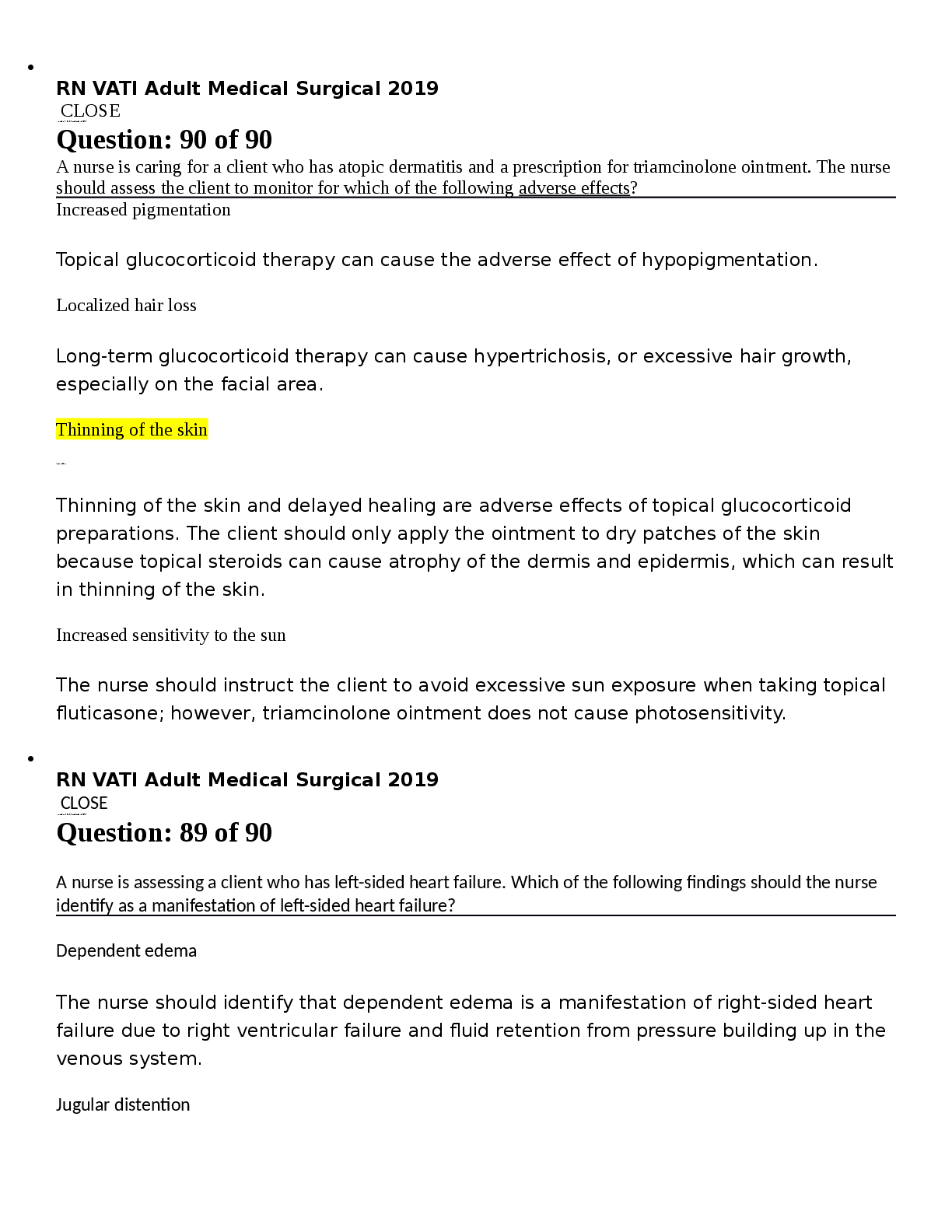
RN VATI EXAM QUESTIONS & ANSWERS BEST EXAM SOLUTION SATISFACT...
$15
46 Pages
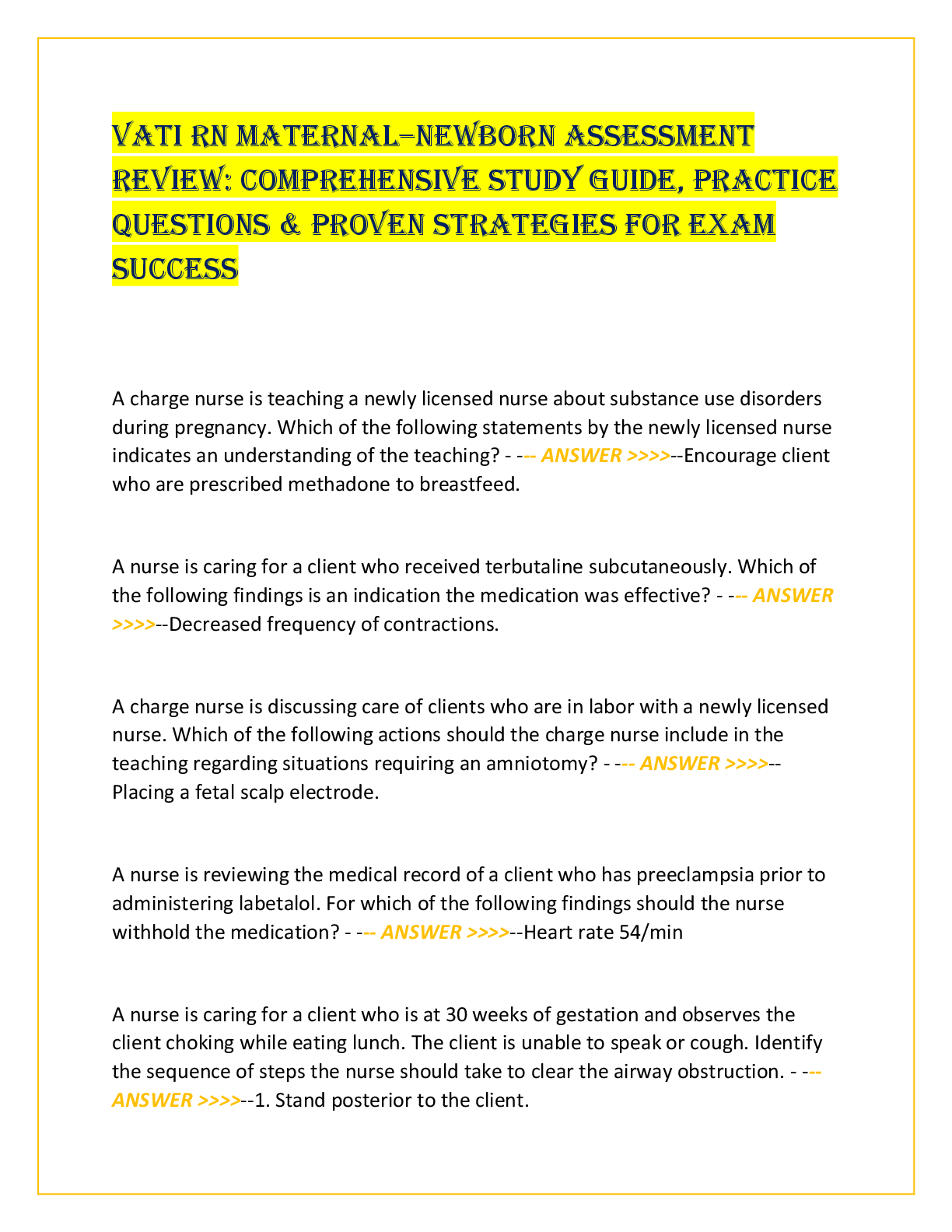
RN VATI Adult Medical Surgical - Real Exam Scored 100% With Sc...
$25
70 Pages
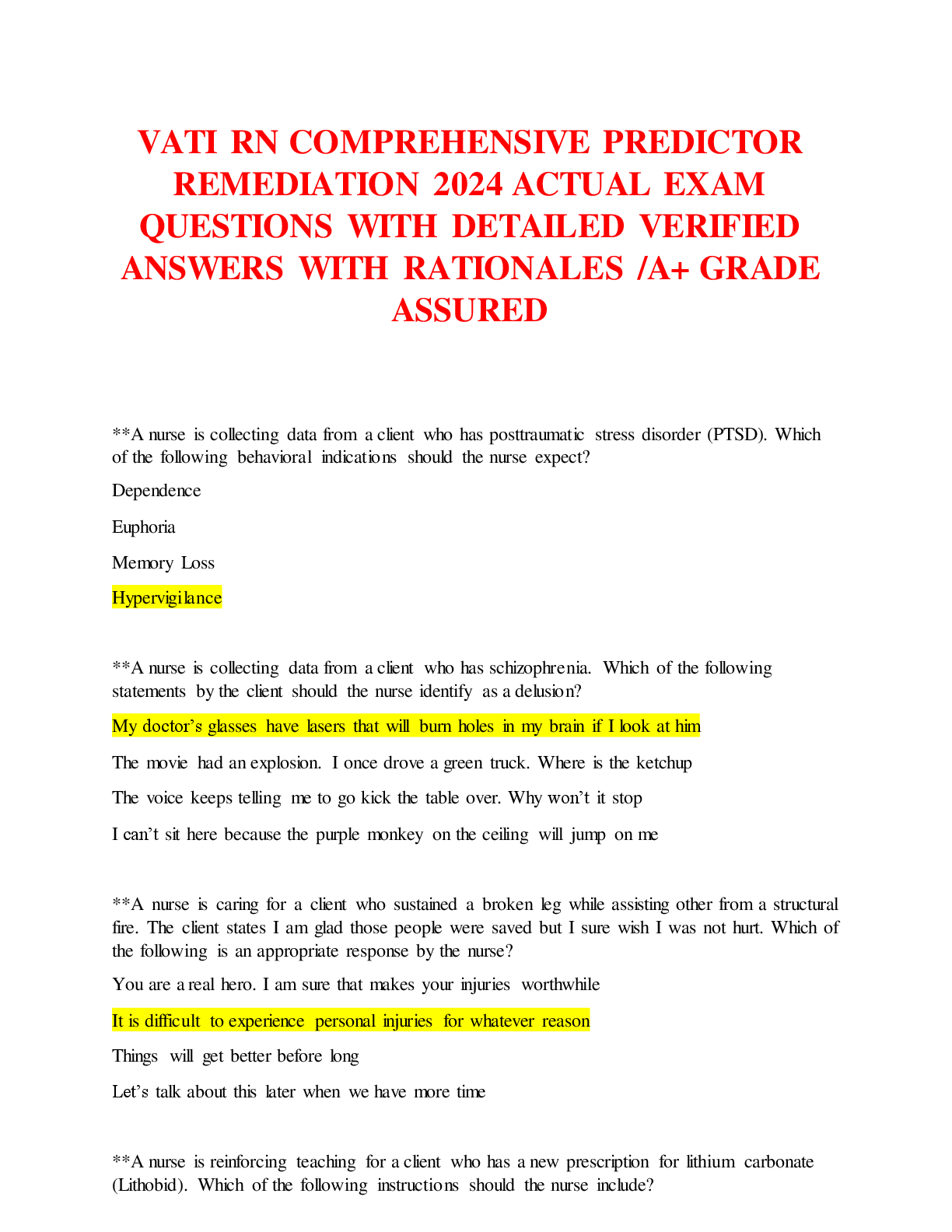
VATI -RN COMPREHENSIVE PREDICTOR REMEDIATION 2024 ACTUAL EXAM...
$14.5
345 Pages
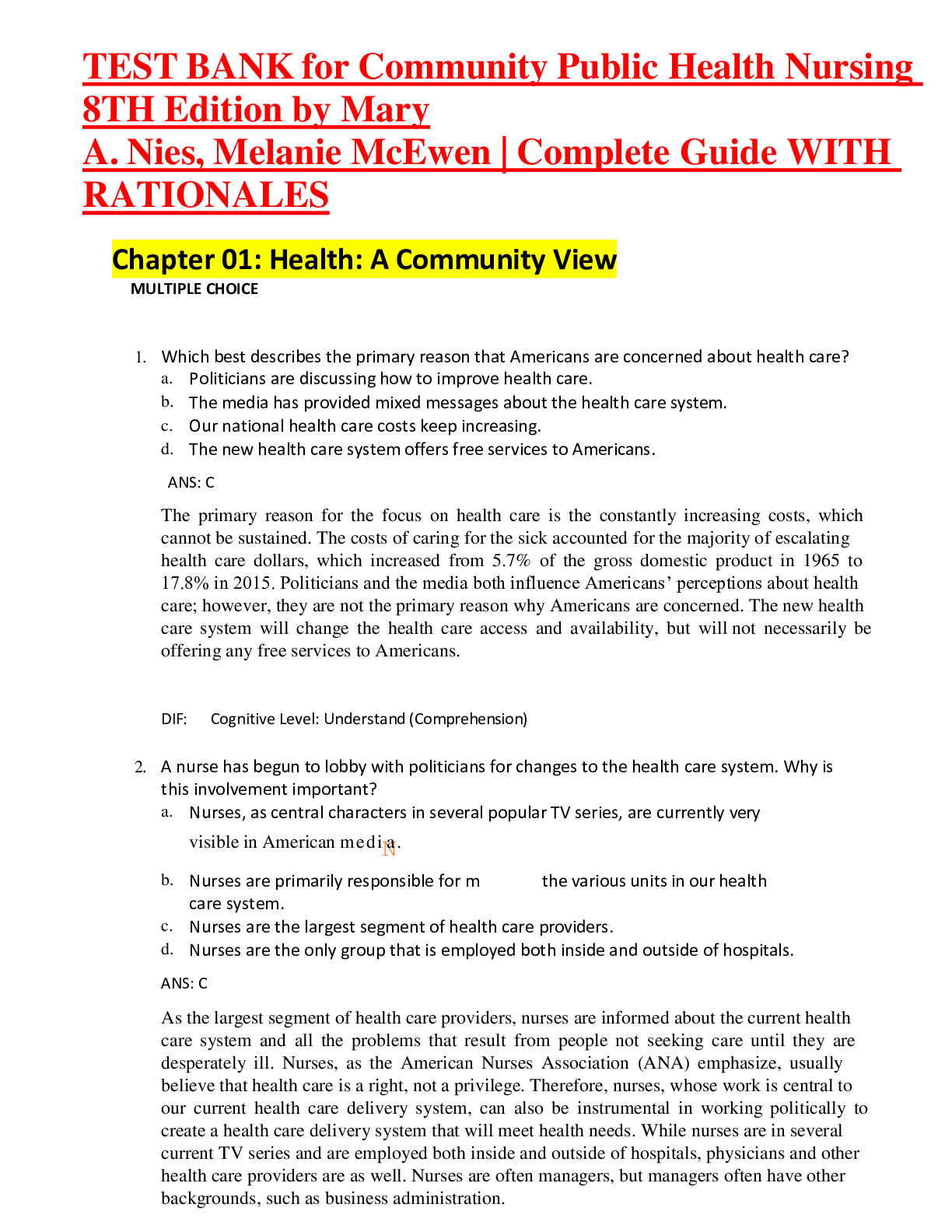
Complete Test Bank For Community Public Health Nursing Promoti...

$100.5
996 Pages
ATI TEAS 7 | 4 Versions for Reading, Math, Science, English, A...

$11
17 Pages
VATI RN COMPREHENSIVE PREDICTOR FOCUSED REVIEW < EXCELLENT STU...
$15
27 Pages
Virtual ATI predictor (Green Light)/ COMPLETED VATI Greenlight...

More related documents below

