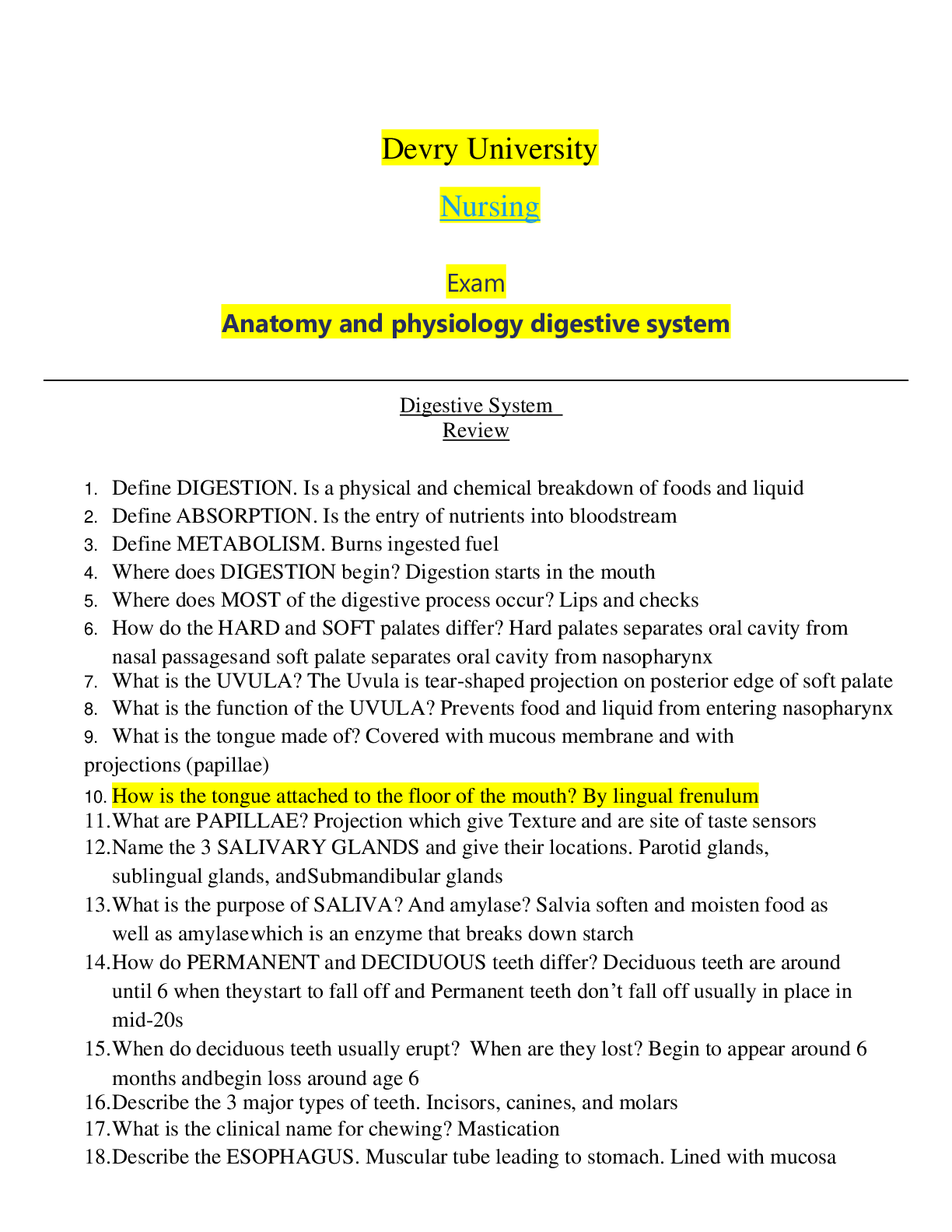
Exam Anatomy and physiology digestive system
Document Content and Description Below
1. Define DIGESTION. Is a physical and chemical breakdown of foods and liquid
2. Define ABSORPTION. Is the entry of nutrients into bloodstream
3. Define METABOLISM. Burns ingested fuel
4. Where does DIGESTION begin? D
...
[Show More]
Last updated: 3 years ago
Preview 1 out of 5 pages
Instant download
Buy this Document to get the Full Access Instantly
Provided by Students Who Aced it
We Verify Document Content to Gurantee Accuracy
Reviews( 0 )
Document information
Connected school, study & course
About the document
Uploaded On
Jun 21, 2022
Number of pages
5
Written in
All

Additional information
This document has been written for:
Uploaded
Jun 21, 2022
Downloads
0
Views
67
Document Keyword Tags
Recommended For You
Get more on EXAM »
$24
993 Pages
ATI-Comprehensive-Mental Health | IMPORTANT REVISION GUIDE BEF...
$14
209 Pages
TEST BANK FOR MODERN BLOOD BANKING & TRANSFUSION PRACTICES 6TH...
$13
188 Pages
Complete Test Bank for Women’s Healthcare in Advanced Practice...
More related documents below