Chapter 1:
Bolded Terms:
- EMS:
- emergency services system
- EMR:
- provides immediate lifesaving care to patients
- EMT:
- provides basic emergency medical care and transportation to patients
- AEMT:
- provide
...
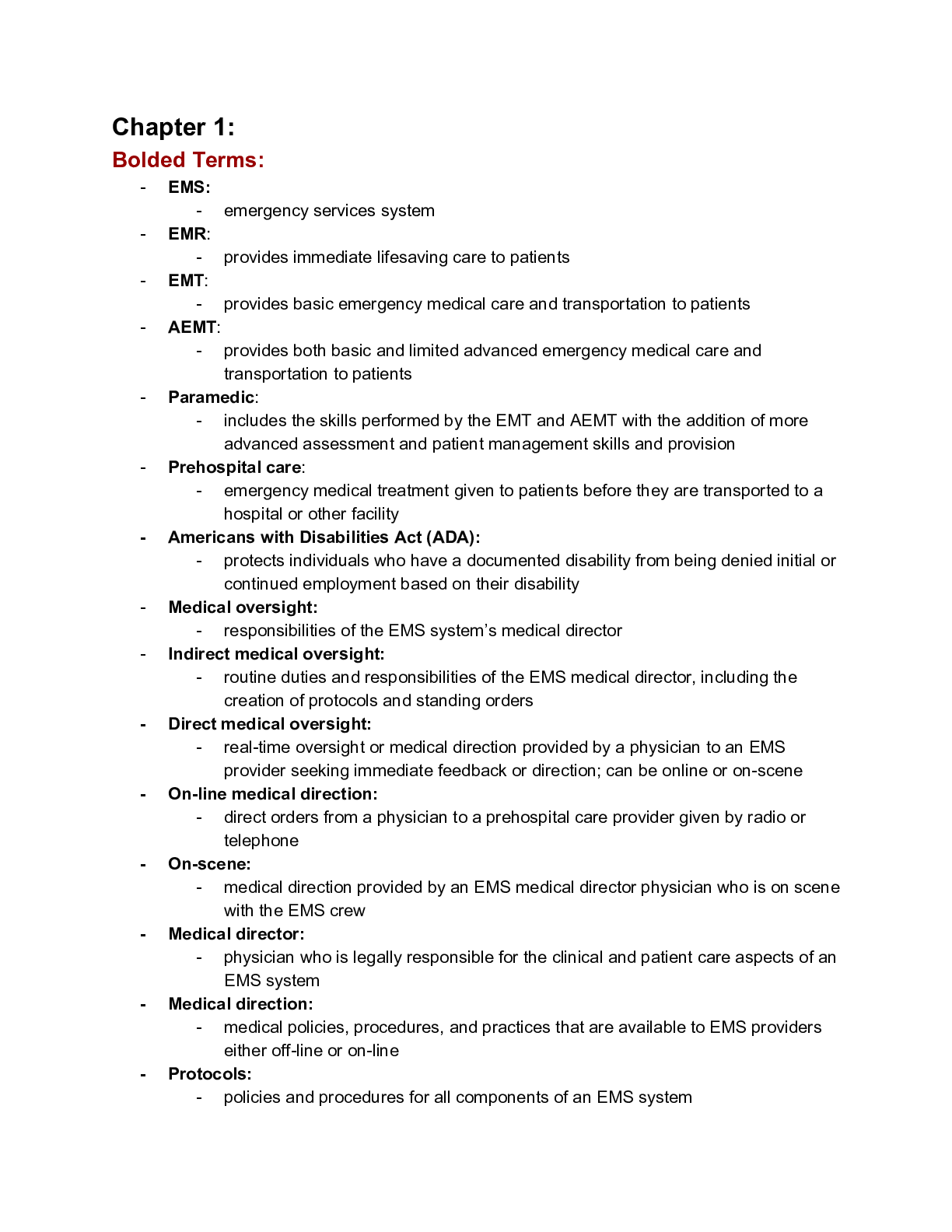
Chapter 1:
Bolded Terms:
- EMS:
- emergency services system
- EMR:
- provides immediate lifesaving care to patients
- EMT:
- provides basic emergency medical care and transportation to patients
- AEMT:
- provides both basic and limited advanced emergency medical care and
transportation to patients
- Paramedic:
- includes the skills performed by the EMT and AEMT with the addition of more
advanced assessment and patient management skills and provision
- Prehospital care:
- emergency medical treatment given to patients before they are transported to a
hospital or other facility
- Americans with Disabilities Act (ADA):
- protects individuals who have a documented disability from being denied initial or
continued employment based on their disability
- Medical oversight:
- responsibilities of the EMS system’s medical director
- Indirect medical oversight:
- routine duties and responsibilities of the EMS medical director, including the
creation of protocols and standing orders
- Direct medical oversight:
- real-time oversight or medical direction provided by a physician to an EMS
provider seeking immediate feedback or direction; can be online or on-scene
- On-line medical direction:
- direct orders from a physician to a prehospital care provider given by radio or
telephone
- On-scene:
- medical direction provided by an EMS medical director physician who is on scene
with the EMS crew
- Medical director:
- physician who is legally responsible for the clinical and patient care aspects of an
EMS system
- Medical direction:
- medical policies, procedures, and practices that are available to EMS providers
either off-line or on-line
- Protocols:
- policies and procedures for all components of an EMS system
- Off-line medical direction:
- medical policies, procedures, and practices that medical direction has
established in written guidelines
- Standing orders:
- preauthorized treatment procedures; a type of treatment protocol
- Quality improvement (QI):
- system of internal and external reviews and audits of an EMS system to ensure a
high quality of care
- Evidence-based medicine:
- medical practice based on scientific evidence that certain procedures,
medications, and equipment improve patient outcome
- Evidence-based guidelines:
- development of medical guidelines based on scientific evidence and research
studies
- Mobile integrated healthcare (MIH):
- provision by a variety of health care entities and practitioners of patient-centered
health care in the out-of-hospital environment using mobile technology and
resources and integrated administratively or clinically with the EMS system
- Community paramedicine (CP):
- services provided by the EMS agency and personnel that are administratively
and clinically integrated with other health care entities
[Show More]