Statistics > QUESTIONS & ANSWERS > Statistics Milestone One Questions and Answers Latest 2022 Graded A (All)
Statistics Milestone One Questions and Answers Latest 2022 Graded A
Document Content and Description Below
Last updated: 3 years ago
Preview 1 out of 20 pages
Instant download

Buy this Document to get the Full Access Instantly
Provided by Students Who Aced it
We Verify Document Content to Gurantee Accuracy
Also available in bundle (1)
Click Below to Access Bundle(s)
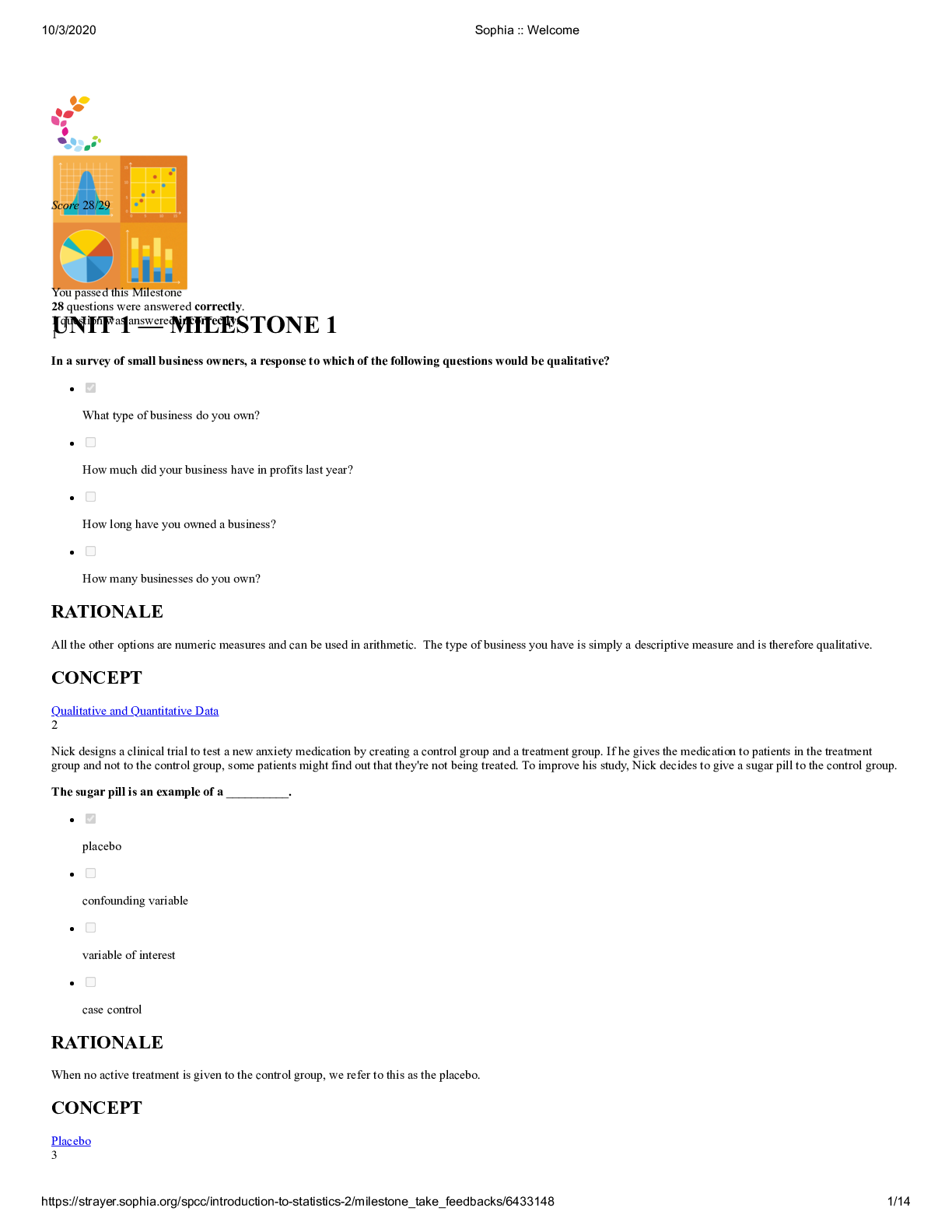
Sophia Statistics Milestone 1, 2, 3, 4, 5 and Final Milestone Statistics Questions and Answers Already Passed - | Western Governors University (WGU) | All Rated A
You passed this Milestone 21 questions were answered correctly. 4 questions were answered incorrectly. 1 Sukie interviewed 125 employees at her company and discovered that 21 of them planned to ta...
By Nutmegs 4 years ago
$40
7
Reviews( 0 )
Document information
Connected school, study & course
About the document
Uploaded On
Jun 23, 2022
Number of pages
20
Written in
All

Additional information
This document has been written for:
Uploaded
Jun 23, 2022
Downloads
0
Views
200
Topic Tags
Recommended For You
Get more on QUESTIONS & ANSWERS »
Chamberlain College of Nursing Week 5 Math 225N Statistics Qui...
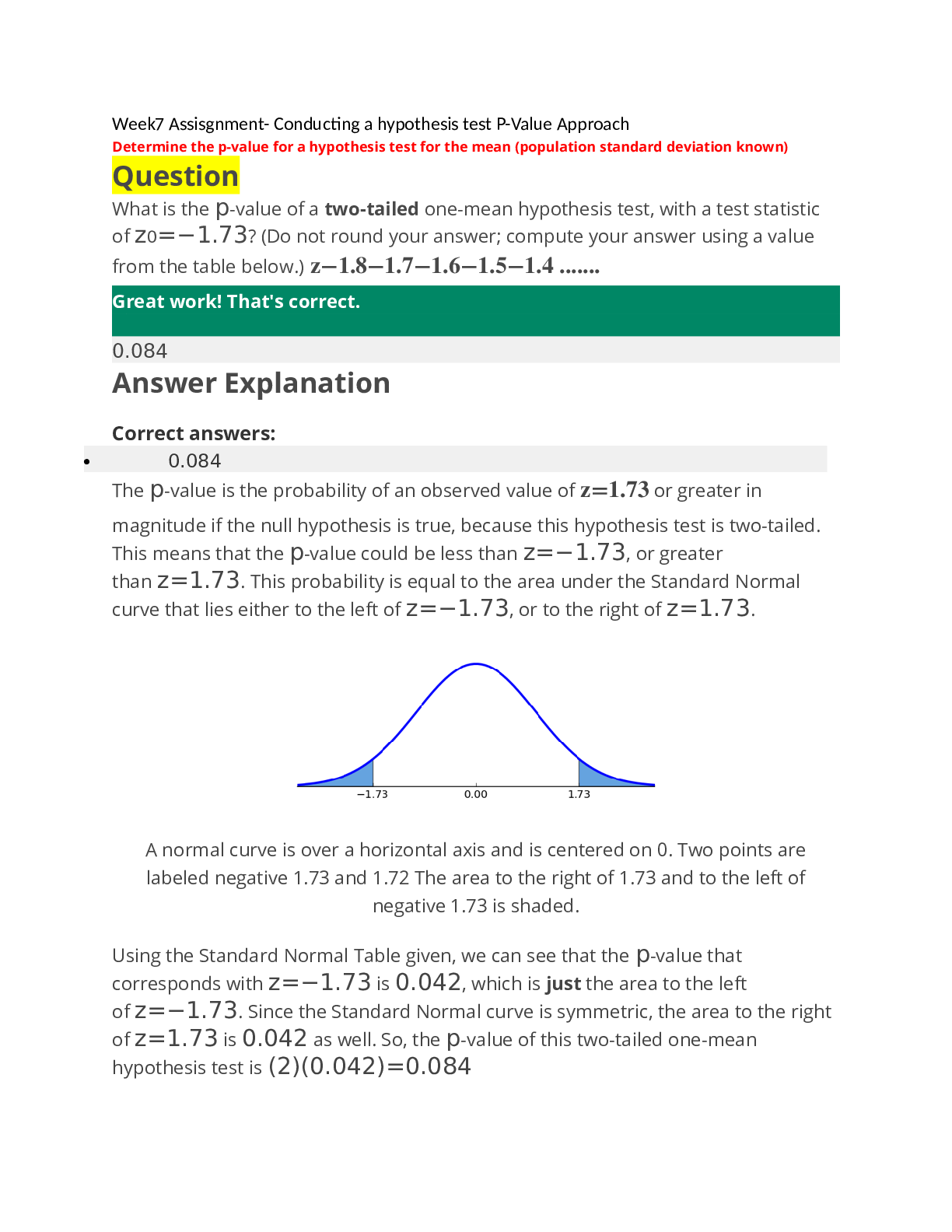
Chamberlain College of Nursing Week 7 Math 225N Statistics Qui...
Chamberlain College of Nursing Week 1 Sampling Questions and A...
ATI PEDS PROCTORED EXAM | A nurse is preparing to assess a 4-...
MED SURG HESI EXIT EXAM QUESTIONS AND ANSWERS CORRECT/VERIFIED...
MED SURG HESI EXIT EXAM Compilation of highly tested Questions...
Sampling Design and Analysis, 3e by Sharon Lohr (Solutions Man...
.png)
TEST BANK for Business Statistics, 4e Norean Sharpe, Richard V...