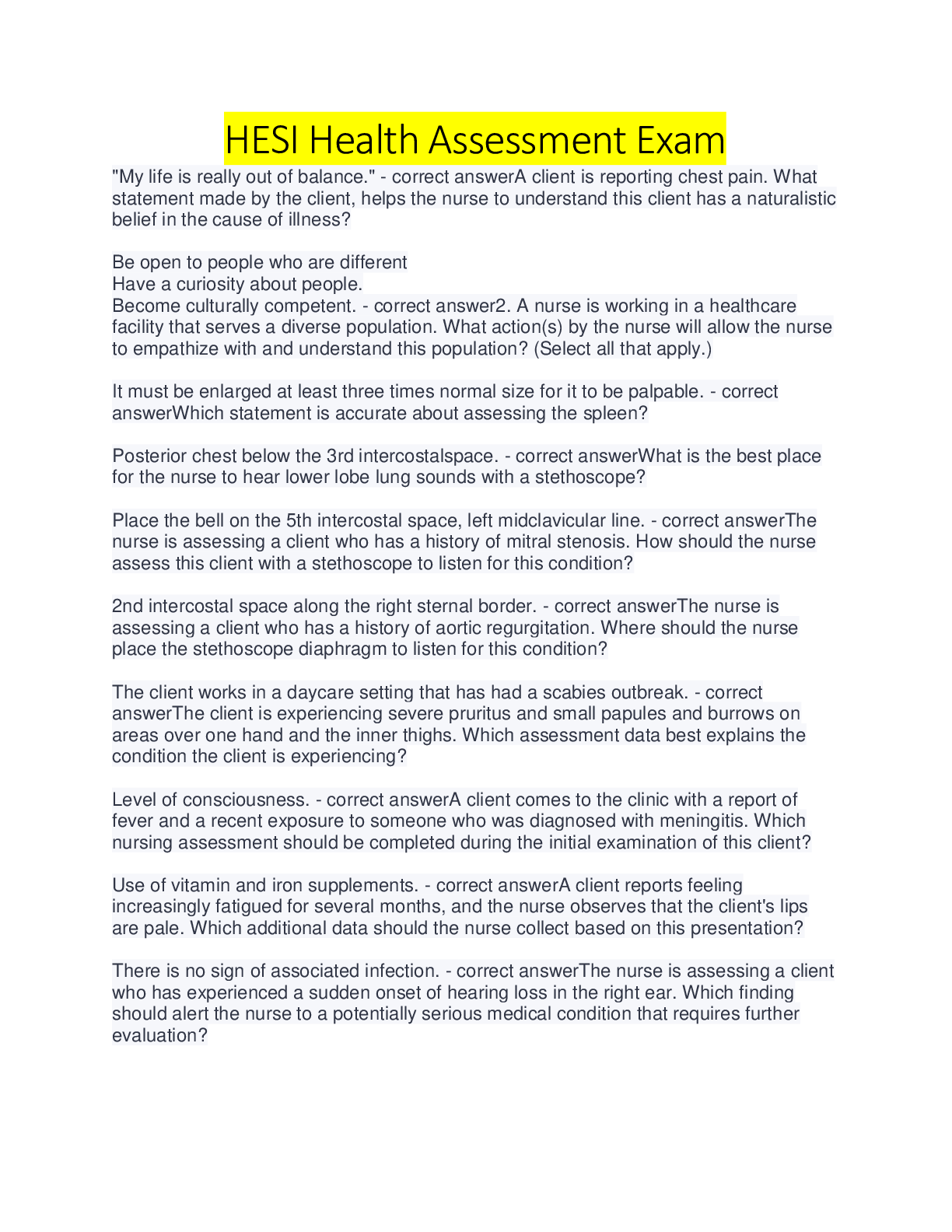
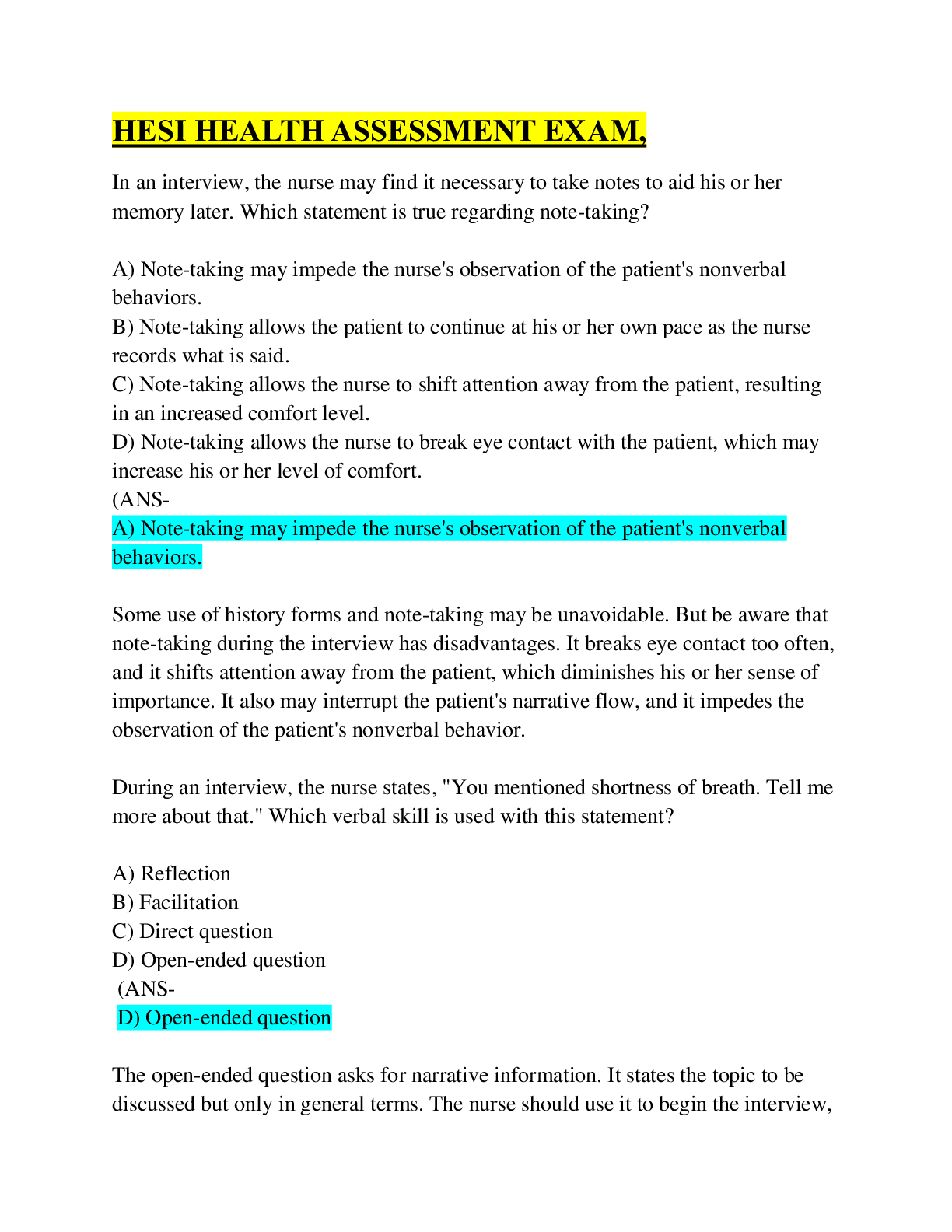
1) The nurse hears bilateral louder, longer, and lower tones when percussing over the lungs of a 4-year old child. What should the nurse do next?
a) Palpate over the area for increased pain and tenderness.
b) Ask the c
...
1) The nurse hears bilateral louder, longer, and lower tones when percussing over the lungs of a 4-year old child. What should the nurse do next?
a) Palpate over the area for increased pain and tenderness.
b) Ask the child to take shallow breaths and percuss over the area again.
c) Refer the child immediately because of an increased amount of air in the lungs.
d) Consider this a normal finding for a child this age and proceed with the examination.
(ANS- d) Consider this a normal finding for a child this age and proceed with the examination.
2) A patient has suddenly developed shortness of breath and appears to be in significant respiratory distress. After putting a call in to the physician and placing the patient on oxygen, which of these is the best action for the nurse to take when assessing the patient further?
a) Count the patient's respirations.
b) Percuss the thorax bilaterally, noting any differences in percussion tones.
c) Call for a chest x-ray and wait for the results before beginning an assessment.
d) Inspect the thorax for any new masses and bleeding associated with respirations. (ANS- b) Percuss the thorax bilaterally, noting any differences in percussion tones.
3) The nurse is teaching a class on basic assessment skills. Which of these statements is true regarding the stethoscope and its use?
a) The slope of the earpieces should point posteriorly (toward the occiput).
b) The stethoscope does not magnify sound but does block out extraneous room noise.
c) The fit and quality of the stethoscope are not as important as its ability to magnify sound.
d) The ideal tubing length should be 22 inches to dampen distortion of sound. (ANS- b) The stethoscope does not magnify sound but does block out extraneous room noise.
4) The nurse is preparing to use a stethoscope for auscultation. Which statement is true regarding the diaphragm of the stethoscope?
a) The diaphragm is used to listen for high-pitched sounds.
b) The diaphragm is used to listen for low-pitched sounds.
c) The diaphragm should be held lightly against the person's skin to block out low-pitched sounds.
d) The diaphragm should be held lightly against the person's skin to listen for extra heart sounds
and murmurs.
(ANS- a) The diaphragm is used to listen for high-pitched sounds.
5) Before auscultating the abdomen for the presence of bowel sounds on a patient, the nurse should:
a) Warm the end piece of the stethoscope by placing it in warm water
b) Leave the gown on so that the patient does not get chilled during the examination
c) Make sure that the bell side of the stethoscope is turned to the "on" position
d) Check the temperature of the room and offer blankets to the patient if he or she feels cold
(ANS- d) Check the temperature of the room and offer blankets to the patient if he or she feels cold
[Show More]

![Preview of HESI Critical Care TEST BANK RN 2021 [50 Questions /Answers]](https://scholarfriends.com/storage/Critical_Care_HESI_notes___.png)