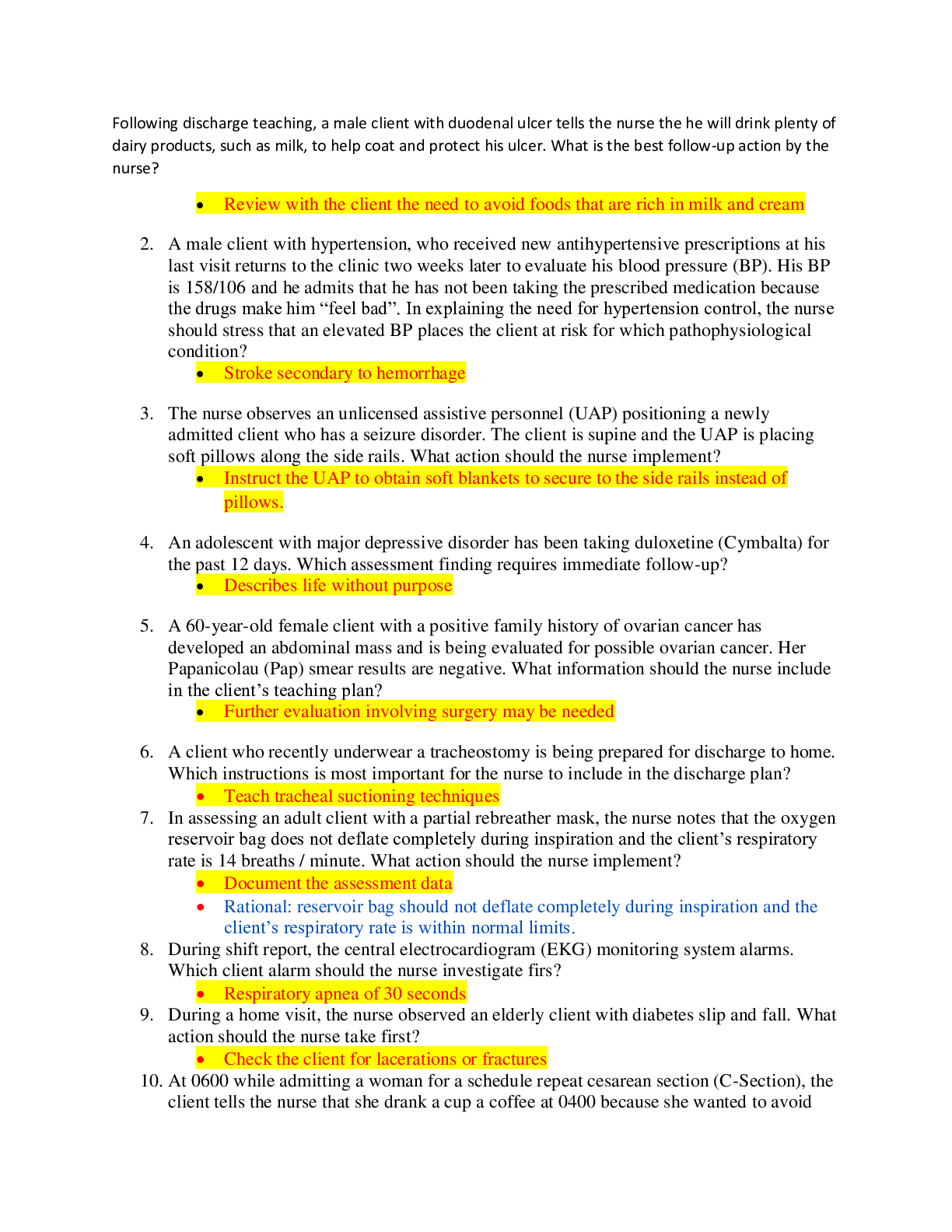
NSG 5003 QUIZES Week 6-10
Document Content and Description Below
NSG 5003 QUIZES Week 6-10
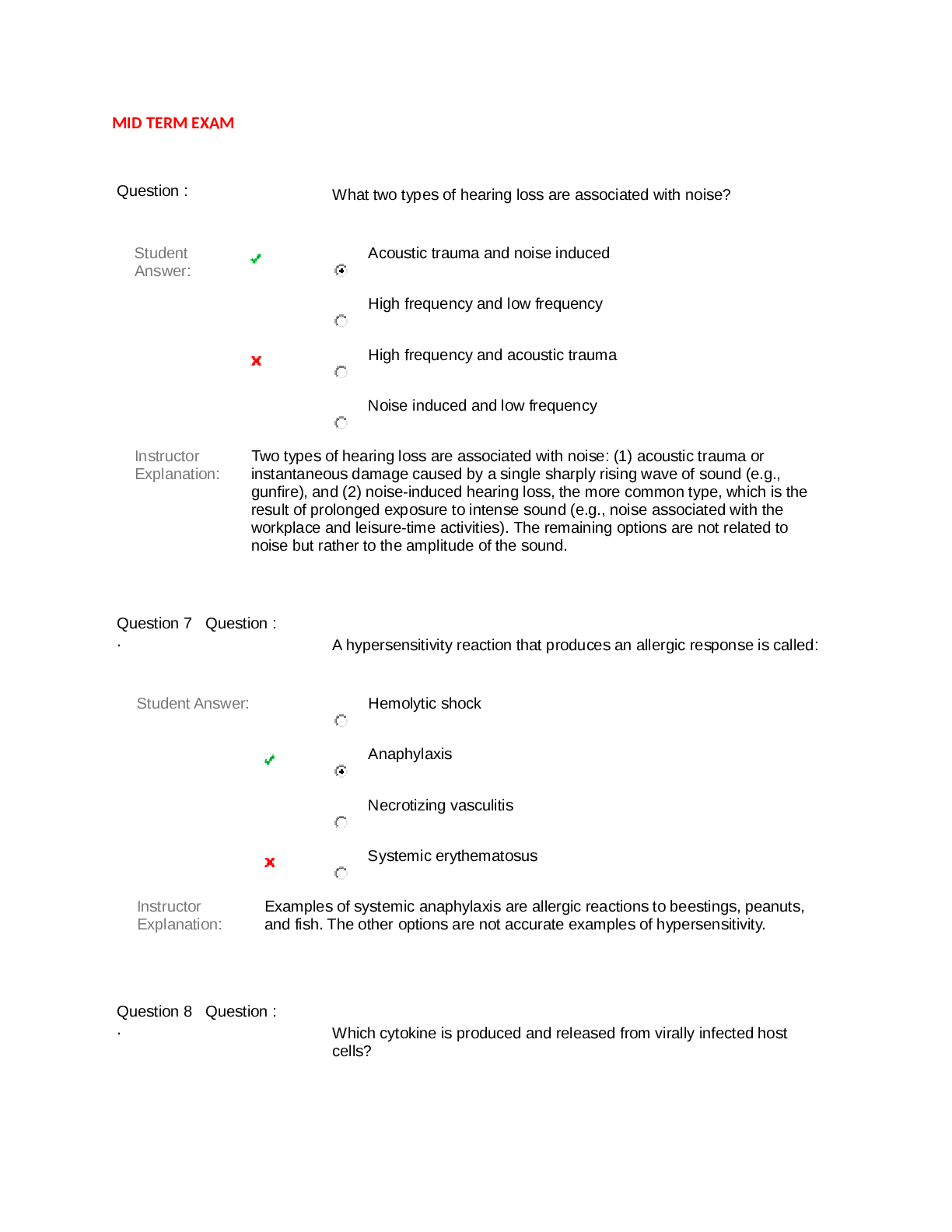
MID TERM EXAM
Question : What two types of hearing loss are associated with noise?
Question 7. Question : A hypersensitivity reaction that produces an allergic response is called:
...
[Show More]
Last updated: 3 years ago
Preview 1 out of 12 pages
Instant download
Buy this Document to get the Full Access Instantly
Provided by Students Who Aced it
We Verify Document Content to Gurantee Accuracy
Reviews( 0 )
Document information
Connected school, study & course
About the document
Uploaded On
Nov 24, 2020
Number of pages
12
Written in
All

Additional information
This document has been written for:
Uploaded
Nov 24, 2020
Downloads
0
Views
80
Topic Tags
Recommended For You
Get more on EXAM »
$15
90 Pages
NSG 5003 WEEK 1, 2, 3, 4, 5, 6, 7, 8, 9, 10 KNOWLEDGE CHECK QU...
$15
54 Pages
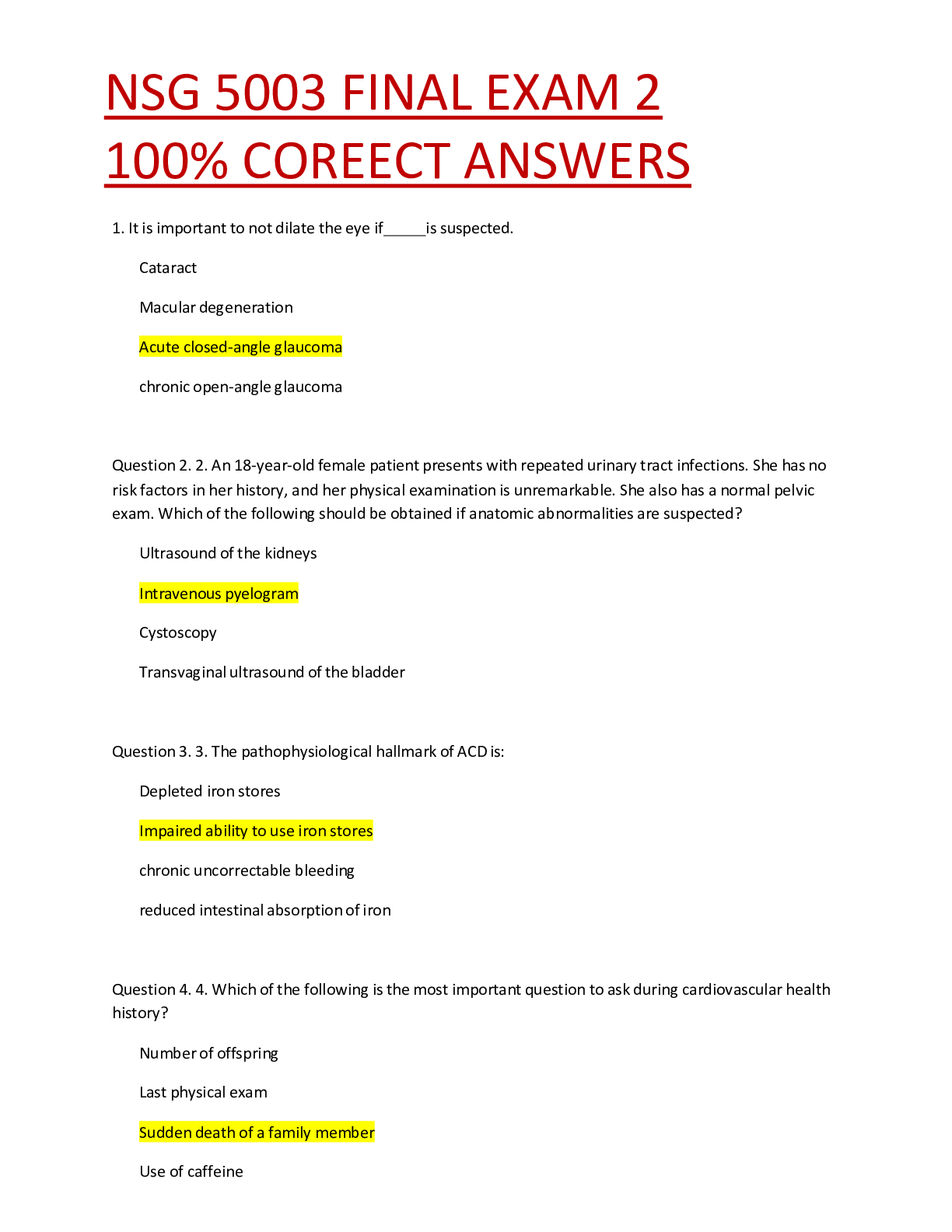
NSG 5003 FINAL EXAM 2 - Questions and Answers (latest 2020)

$8
70 Pages
NSG 5003 Mid Term Exam 3 - Questions and Answers (Latest 2020)
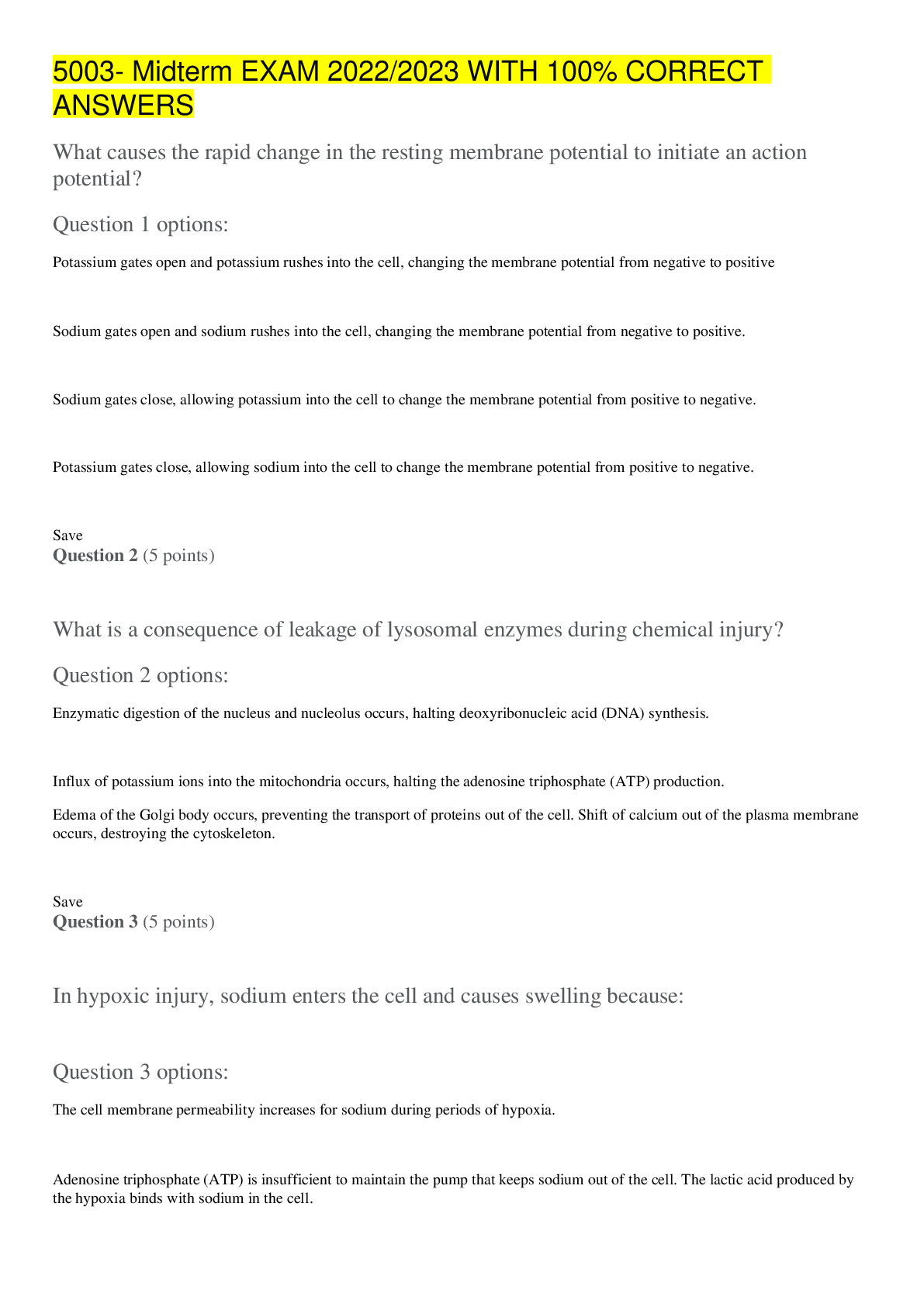
$15
19 Pages
NSG 5003 Advanced Pathophysiology Midterm Exam-Questions and A...
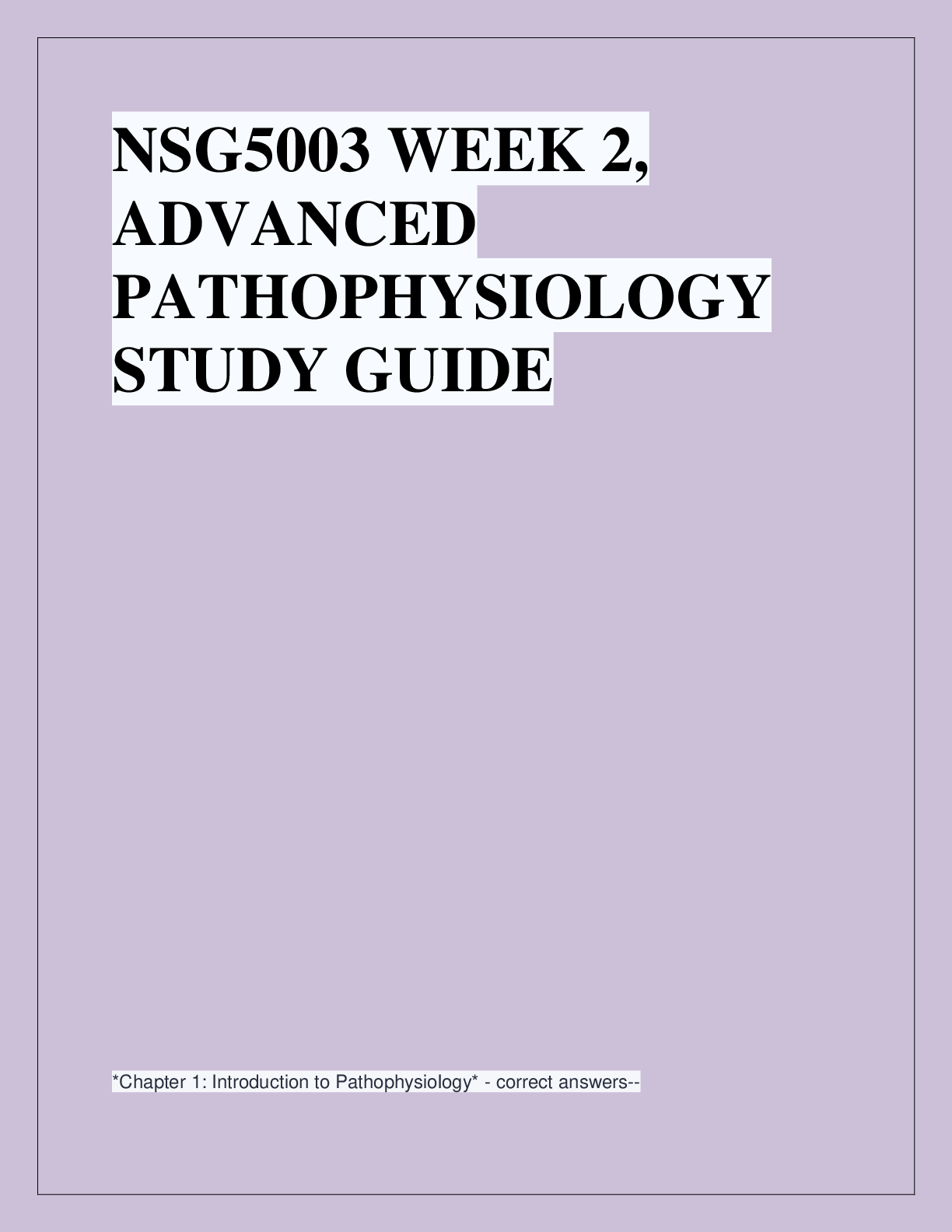
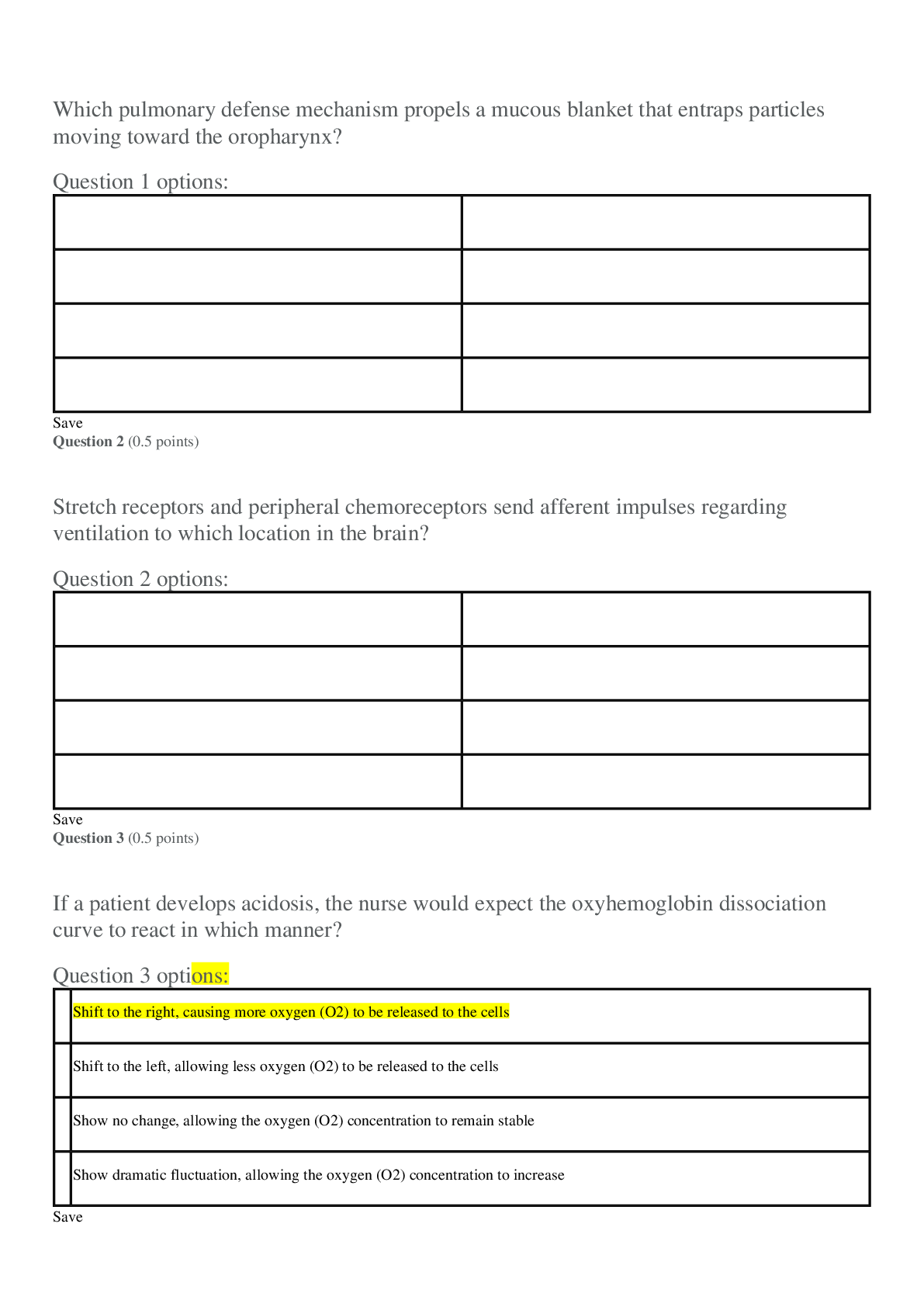
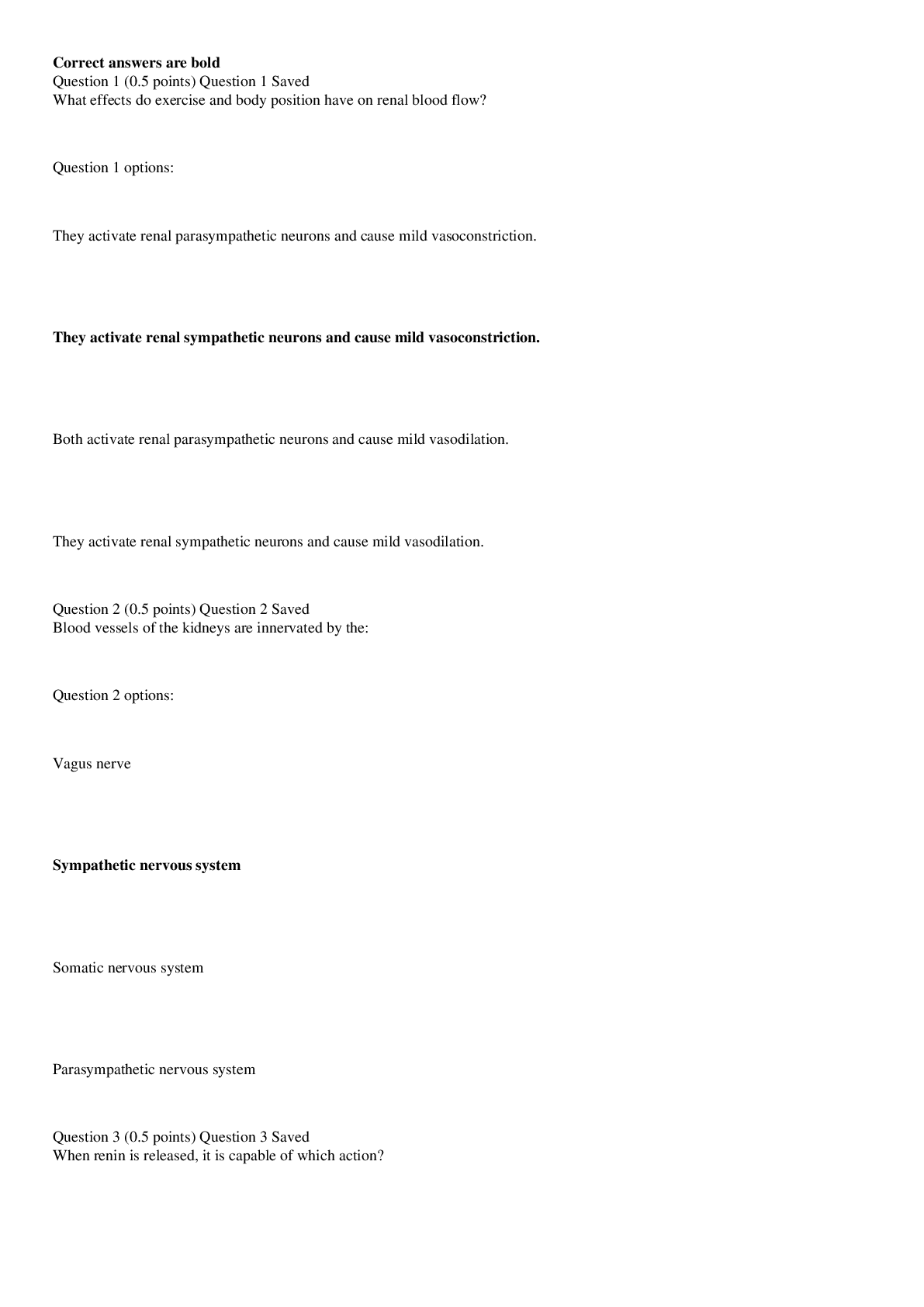
$22
914 Pages
TEST BANK for Medical-Surgical Nursing 10th Edition Concepts f...
$21
715 Pages
TEST BANK for Foundations and Adult Health Nursing 7th Edition...
$19
155 Pages
Test Bank for Success in Practical Vocational Nursing 8th Edit...
$16
155 Pages
TEST BANK for SUCCESS IN PRACTICAL VOCATIONAL NURSING 8TH EDIT...
$4
2 Pages

.png)


.png)