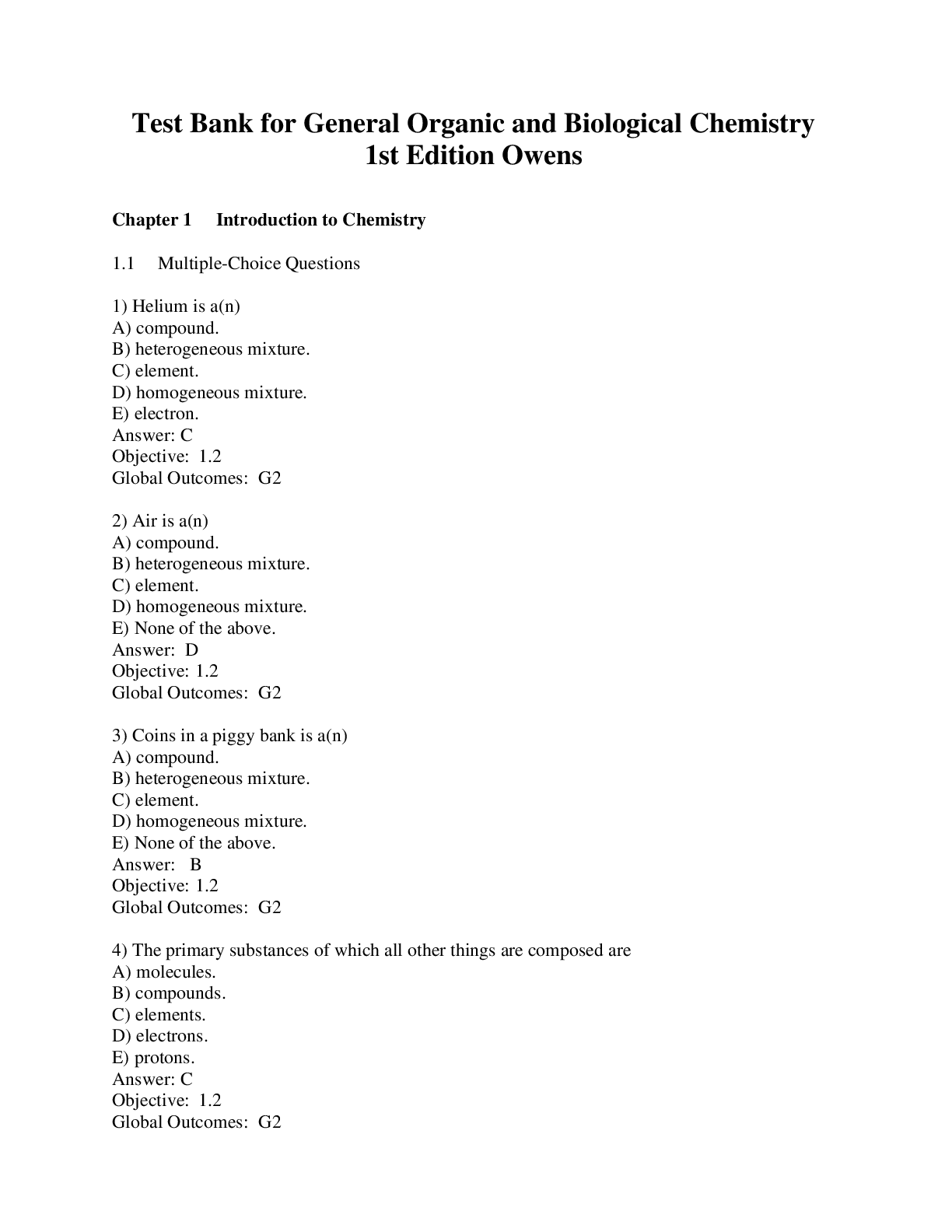
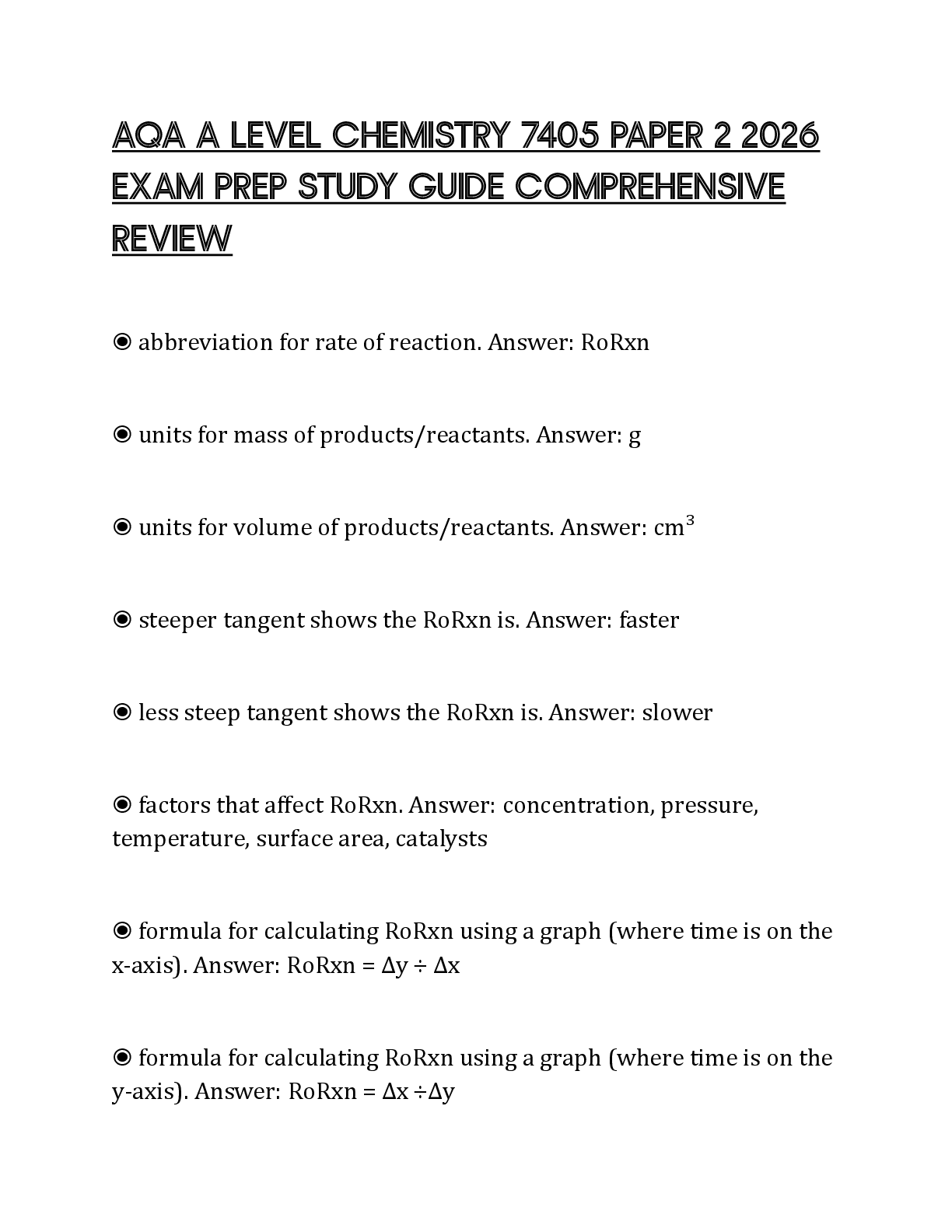
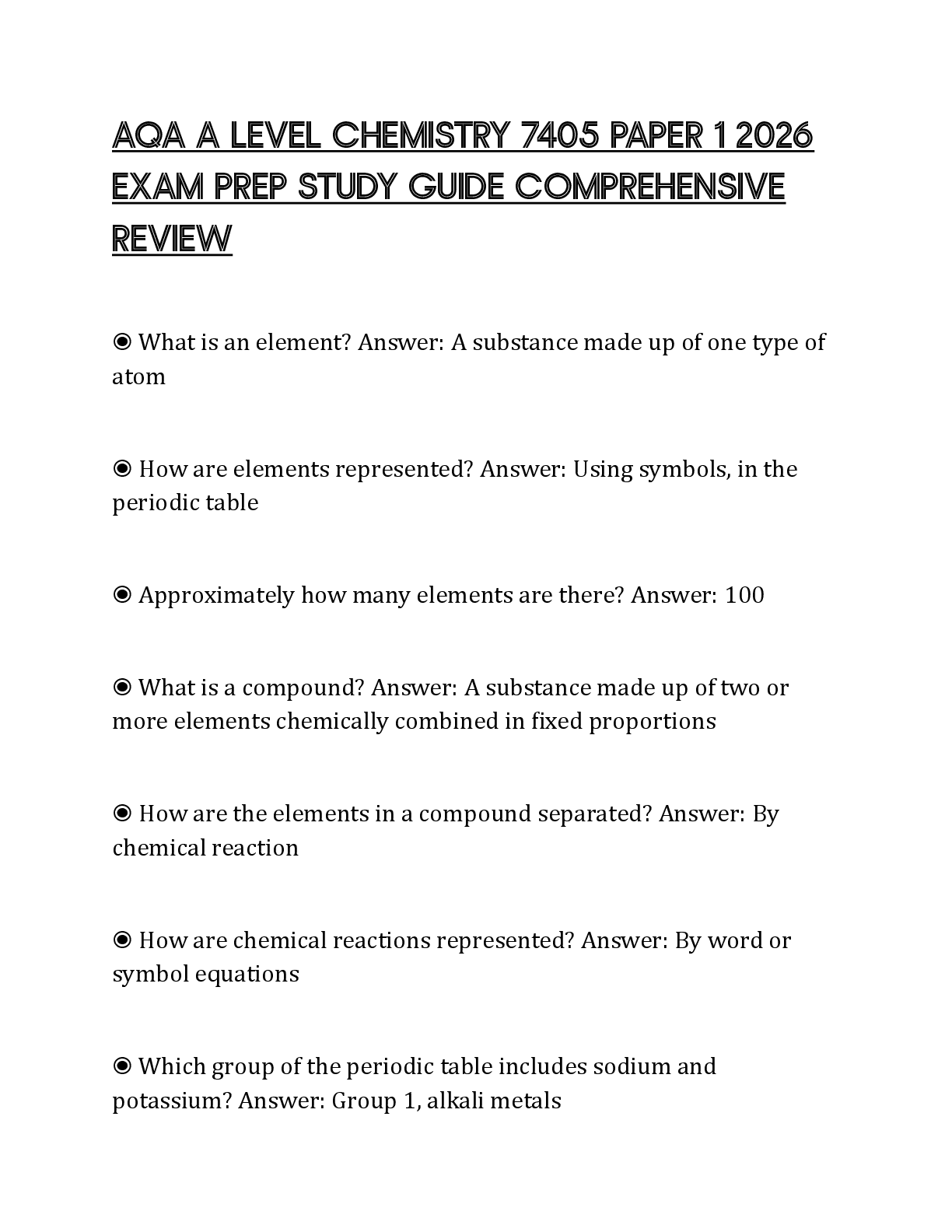
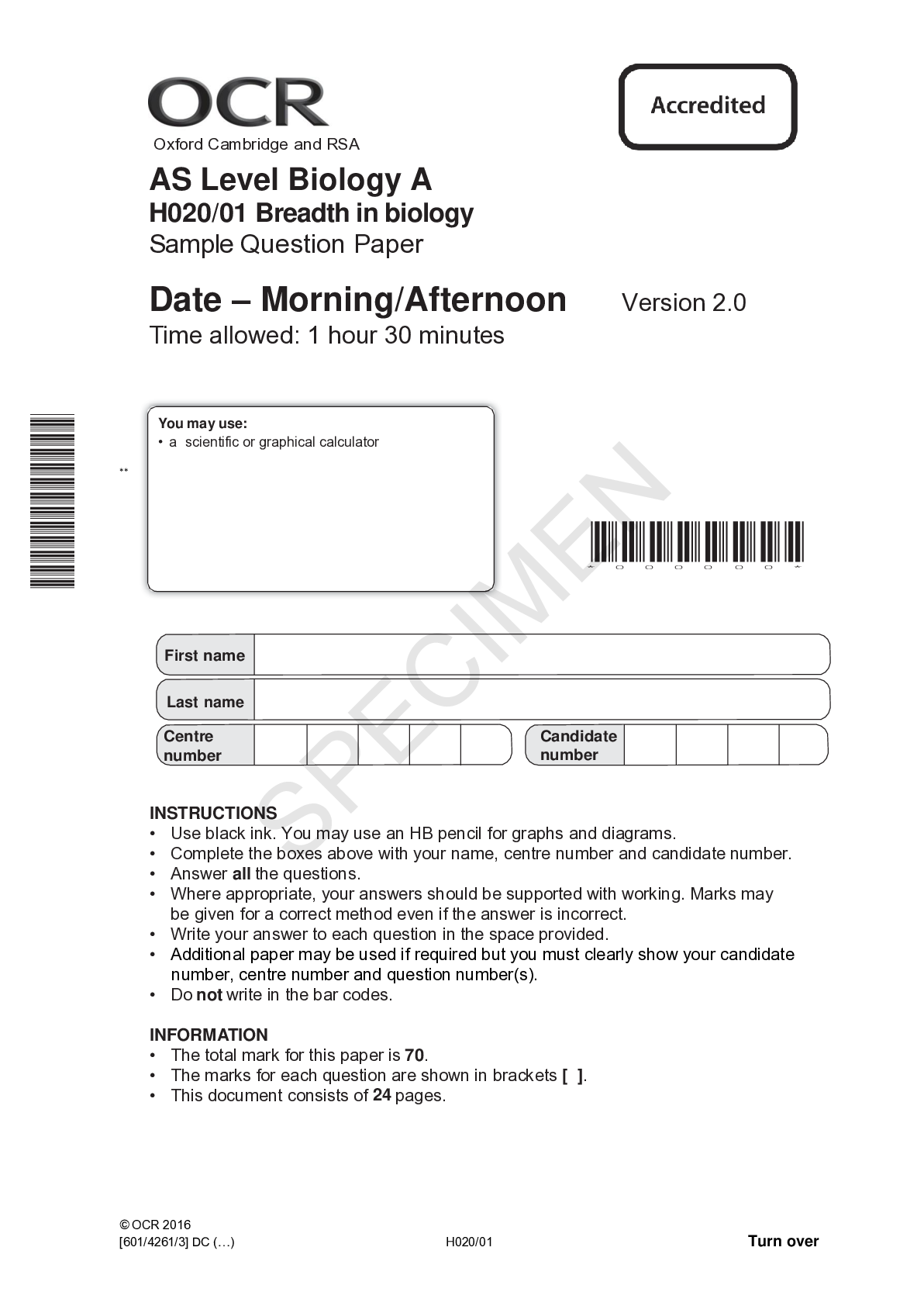
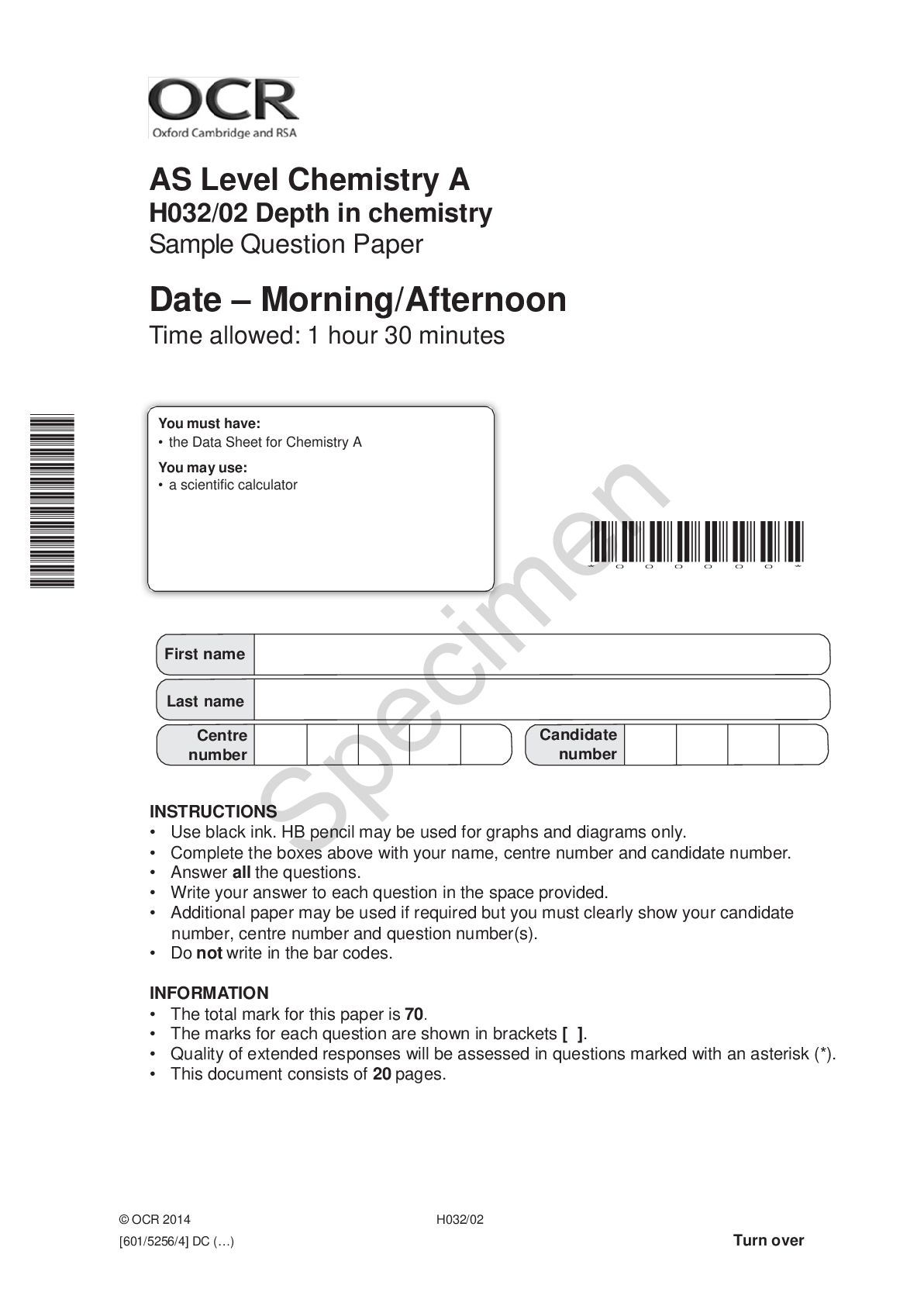
Chemistry > AQA Question Papers > AS Level Chemistry A H032/01 Breadth in chemistry Sample Question Paper (All)
AS Level Chemistry A H032/01 Breadth in chemistry Sample Question Paper
Document Content and Description Below
Last updated: 3 years ago
Preview 1 out of 44 pages
Instant download

Buy this Document to get the Full Access Instantly
Provided by Students Who Aced it
We Verify Document Content to Gurantee Accuracy
Reviews( 0 )
Document information
Connected school, study & course
About the document
Uploaded On
Jun 29, 2022
Number of pages
44
Written in
All

Additional information
This document has been written for:
Uploaded
Jun 29, 2022
Downloads
0
Views
177
Topic Tags
Recommended For You
Get more on AQA Question Papers »
AS Level Chemistry A H032/01 Breadth in chemistry Sample Quest...

>_ AS Level Chemistry A H032/01: Breadth in chemistry || Quest...

OCR AS Level Chemistry H032 01 Question Paper Oct 2021 I Brea...
OCR_AS Level Chemistry A_H032/01 Question Paper Oct 2021 | Bre...
OCR AS Level Chemistry A PAPER 1 H032/01 Breadth in chemistry...

AS Level Chemistry A H032/01 Breadth in chemistry Question Pap...

>_ GCE Chemistry A H032/01: Breadth in chemistry || Mark Sche...
OCR GCE Chemistry A H032/01: Breadth in chemistry Advanced Su...
AS Level Chemistry A H032/01 Breadth in Chemistry May 2023 QP

OCR AS LEVEL CHEMISTRY A PAPER 1 _ JUNE 2022_QP_ H032/01 Bread...

As Level Chemistry A H032/01 chemistry Mark Scheme 2021

GCE Chemistry A H032/01: Breadth in chemistry AS Level Mark Sc...
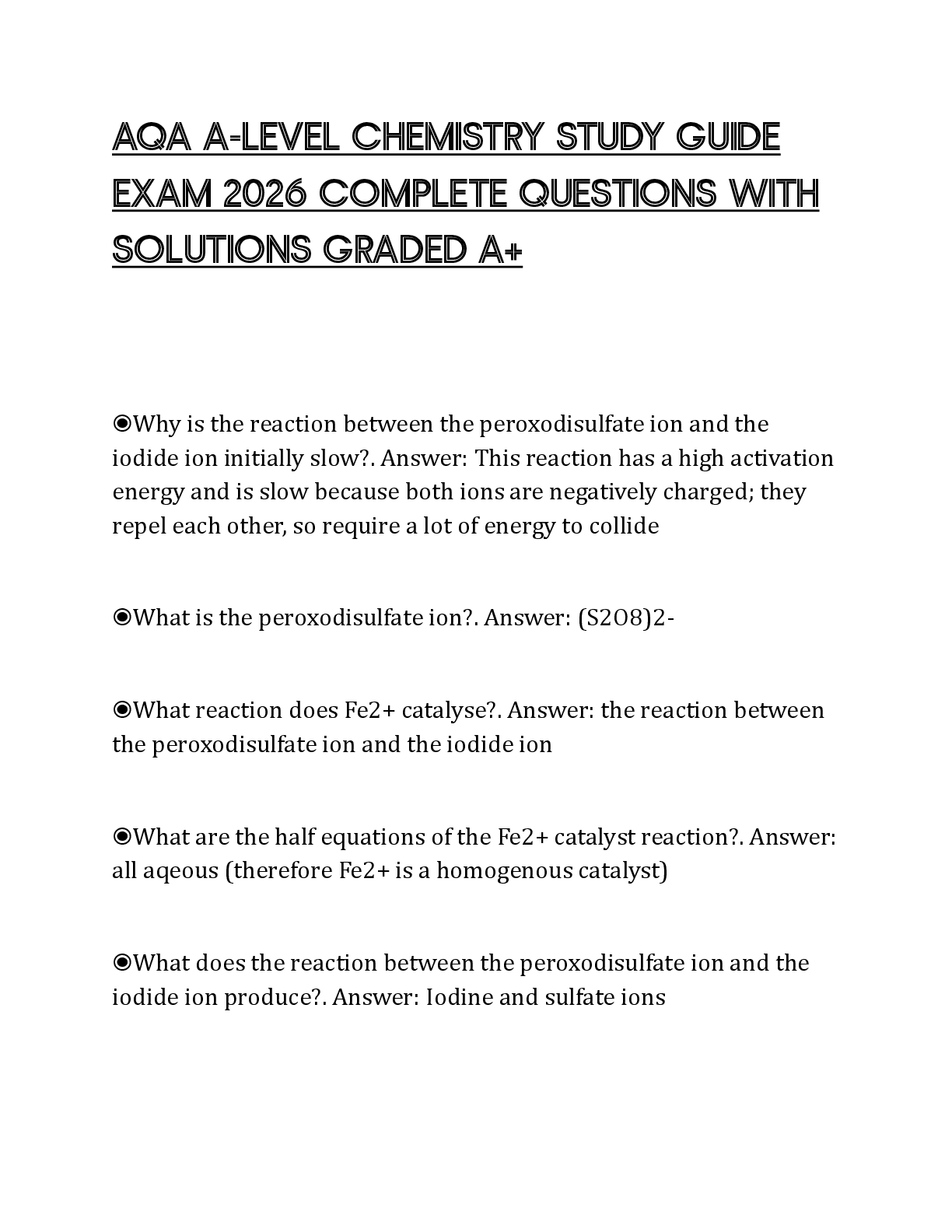
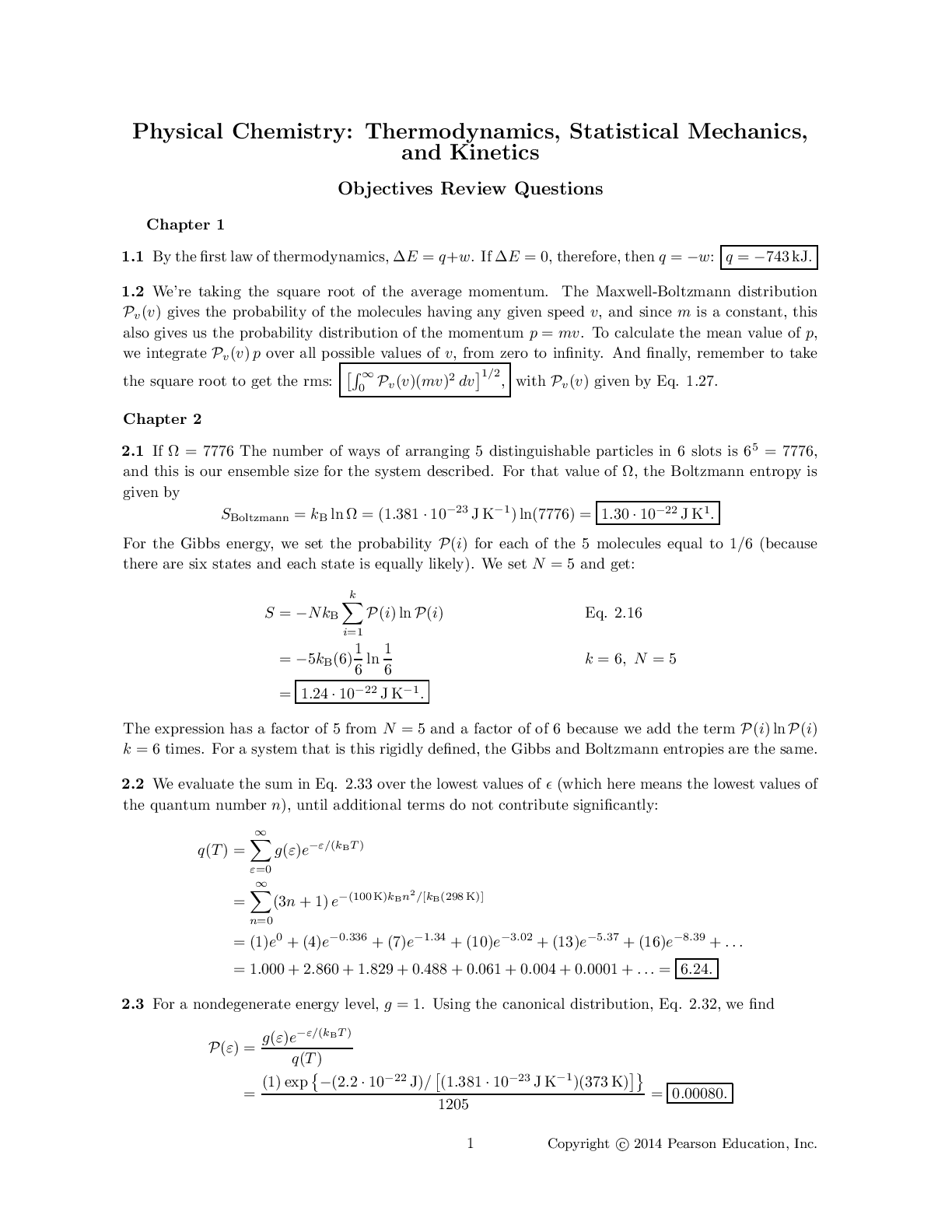
Physical Chemistry Thermodynamics Statistical Mechanics and Ki...
Solutions Manual for Organic Chemistry Student Study Guide 3rd...