cognitive behavioral therapy termination
start termination at first session
gradual termination (increase time between sessions)
interpersonal therapy termination
termination begins in the middle phase
usually 1
...
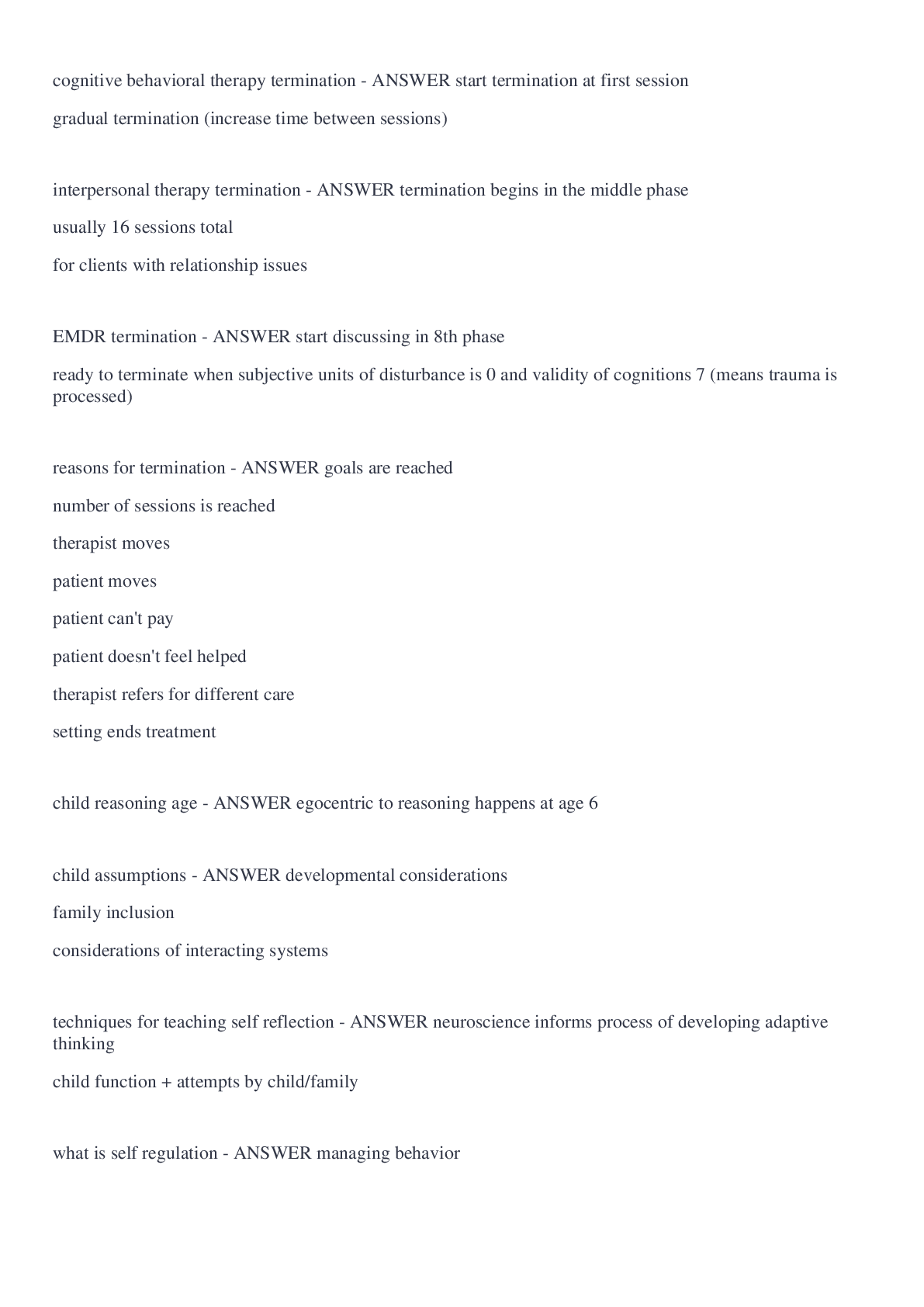
cognitive behavioral therapy termination
start termination at first session
gradual termination (increase time between sessions)
interpersonal therapy termination
termination begins in the middle phase
usually 16 sessions total
for clients with relationship issues
EMDR termination
start discussing in 8th phase
ready to terminate when subjective units of disturbance is 0 and validity of cognitions 7 (means trauma is processed)
reasons for termination
goals are reached
number of sessions is reached
therapist moves
patient moves
patient can't pay
patient doesn't feel helped
therapist refers for different care
setting ends treatment
child reasoning age
egocentric to reasoning happens at age 6
child assumptions
developmental considerations
family inclusion
considerations of interacting systems
techniques for teaching self reflection
neuroscience informs process of developing adaptive thinking
child function + attempts by child/family
what is self regulation
managing behavior
what happens if child is not self regulated
aggressive, trouble integrating with peers, conduct issues, conflict
strengths based approach in peds
praise teen for his/her effort at maintaining control of some aspects of their life
don't assess to label patient
when to use TF-CBT
for post trauma
aims: practice emotion expression, build emotion cognition connection, process trauma
relationship between child and parents is the focus
acronym for TF-CBT
PRACTICE
Upgrade to remove ads
Only $35.99/year
3 characteristics of ADHD
inattention, hyperactivity, impulsivity
brain structures involved in ADHD
prefrontal cortex (goes to temporal and parietal areas)
visual spacial working memory
ADHD therapy
cognitive training for enhancing memory
differentiation
individual separates themself intellectually and decreases risk of dysfunctional family patterns
individuated from family
clear own values and beliefs
fusion
can be between anyone
blurring of self with another person
single emotional system of 2 people
can over or under function
*dysfunctional
transmission process
multi generational transmission process
"you're just like your aunt because..." transmitted behavior patterns influence sense self
triangle family
3 person system; 2 people with conflict get 3rd person involved
ex: child triagulated in parents tension
undifferentiated people and families and those with fusion are likely to triangulate
family projection process
parent projects onto a child
emotional cutoff
limiting or cutting off content especially if there's abuse going on
undifferentiated ego mass
families that are stuck together
symbiotic relationship
one can't function without the other members
hard for members to find independence
Bowens' theory
children's role within the family structure determines the personality more than birth order
Bowen's sibling position concept
older kids more responsible
oldest marrying youngest works best
oldest + oldest= competitive and both in charge
youngest + youngest = over burdened with responsibility
how to promote self statements
use first person pronouns " I statements"
used to help identify their own beliefs
boundaries in structural family therapy should be
clear and flexible, members can have personal identity
enmeshed family
extreme family organization, loss of personal autonomy (helicopter parent)
parents are overly involved and protective
enmeshed therapy boundaries
diffuse, permeable
disengaged family
heightened personal autonomy and independence
weak parental authority
parents do not care when child has a big issue
disengaged family boundaries
rigid and impermeable
coalition
dysfunctional alliance between 2 family members and a 3rd
crossgenerational coalition
a parent and child side against a third family member
schism coalition
child joins one parent and that parent devalues the other
skewed coalition
one spouse overfuncitons for underfunctioning spouse to preserve the marriage and family
parentification
child takes on parent role
therapy focus in structural family therapy
focus is on assessing structural dysfunction
therapist joining
uniting empathetically, temporary part of family system
therapist accomodating
adjusting and adapting to family's affective style
therapist affiliating
positive statements to increase self esteem
negative statements to absolve person of responsibility for behavior
boundary making
therapist changes the distance between enmeshed or disengaged systems
unbalancing by therapist
change in heirchy within family
use this when kids are in charge to get parents to be in charge/collaborate
tracking
following the common ways a family communicates
using a theme for communication
ex: family that humiliates each other-> therapist comments when this occurs
shaping competence
reinforce desirable patterns
give praise
reframing
reframe a conflict as a systems issue rather than one person's problem
first order change
superficial; don't change the family structure; does not last
"we will stop yelling at each other"
second order change
in depth revision of the structure and function
family system rules are changed to not yell at each other
secure attachement
receive themselves as lovable; able to trust self and others in relationship; can be vulnerable and express heir needs and feelings in relationships
insecure attachement
diminished ability to express their needs and feelings and discount their need for attachment; solve problems by themselves without understanding the effect on their partner
anxious attachement
psychologically reactive; demand reassurance in an aggressive, controlling way
blame and manipulate their parnter
vacillating attachment
traumatized people;
fluctuate between attachment and hostility
reactive
[Show More]