NUR2356 MDC EXAM 2 REVIEW LATEST 2020
Document Content and Description Below
MDC EXAM 2 REVIEW
1. The effects of Immobility
a) Interventions that improve flexibility
• P.R.E.P.(Perform passive ROM, Reposition Q2HR, Encourage independent activity as much as possible even in bedrest, Provide ass
...
[Show More]
Last updated: 3 years ago
Preview 1 out of 10 pages
Instant download

Buy this Document to get the Full Access Instantly
Provided by Students Who Aced it
We Verify Document Content to Gurantee Accuracy
Reviews( 0 )
Document information
Connected school, study & course
About the document
Uploaded On
Nov 25, 2020
Number of pages
10
Written in
All

Additional information
This document has been written for:
Uploaded
Nov 25, 2020
Downloads
0
Views
108
Topic Tags
Related Subjects & Courses
Explore similar study resources and related concepts.
Recommended For You
Get more on EXAM »
$26.5
28 Pages
HESI PHARMACOLOGY EXAM LATEST 2020/2021 | COMPLETE AND VERIFIE...
$12.5
25 Pages
ATI PN Fundamentals Predictor Exam Form B | Questions and Answ...
$13
40 Pages
ATI PN Fundamentals Predictor Exam Form A | Questions and Answ...

$10
16 Pages
NSG6435 / NSG 6435: Practicum III Family Health - Pediatrics M...

$9
25 Pages
NURS 6501 / NURS6501 Final Exam Advanced Pathophysiology Lates...
$10
11 Pages
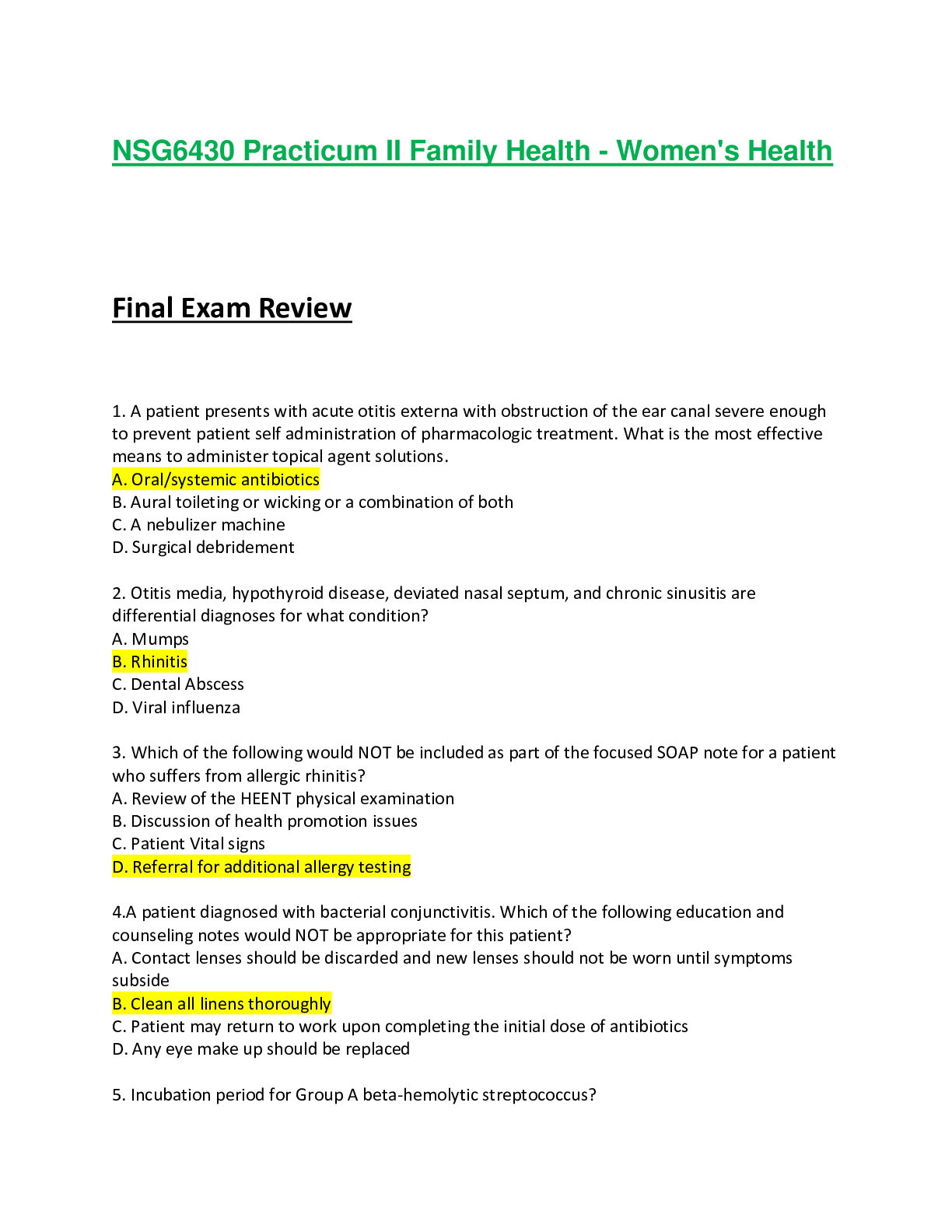
NSG6430 FINAL Exam / NSG 6430 FINAL Exam (Latest 2020/2021) gr...
$22.5
307 Pages
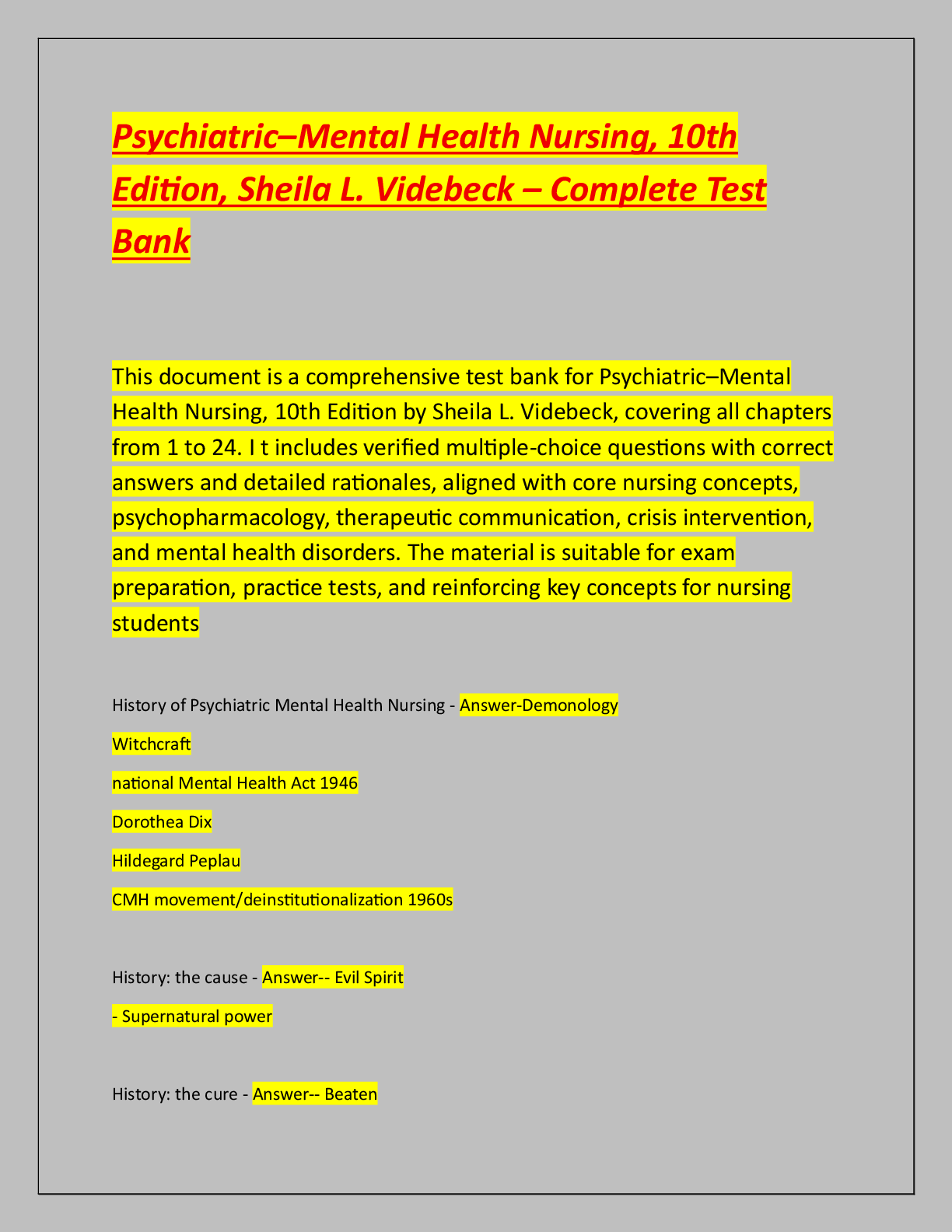
TEST BANK for Davis Advantage for Psychiatric Mental Health Nu...
More related documents below


.png)

.png)