a metal and a non-metal make an - ANSWER ionic bond
a molecule does not have to be a compound - ANSWER true
a non-bonding pair of electrons can serve as a region of electron density - ANSWER true
acid base react
...
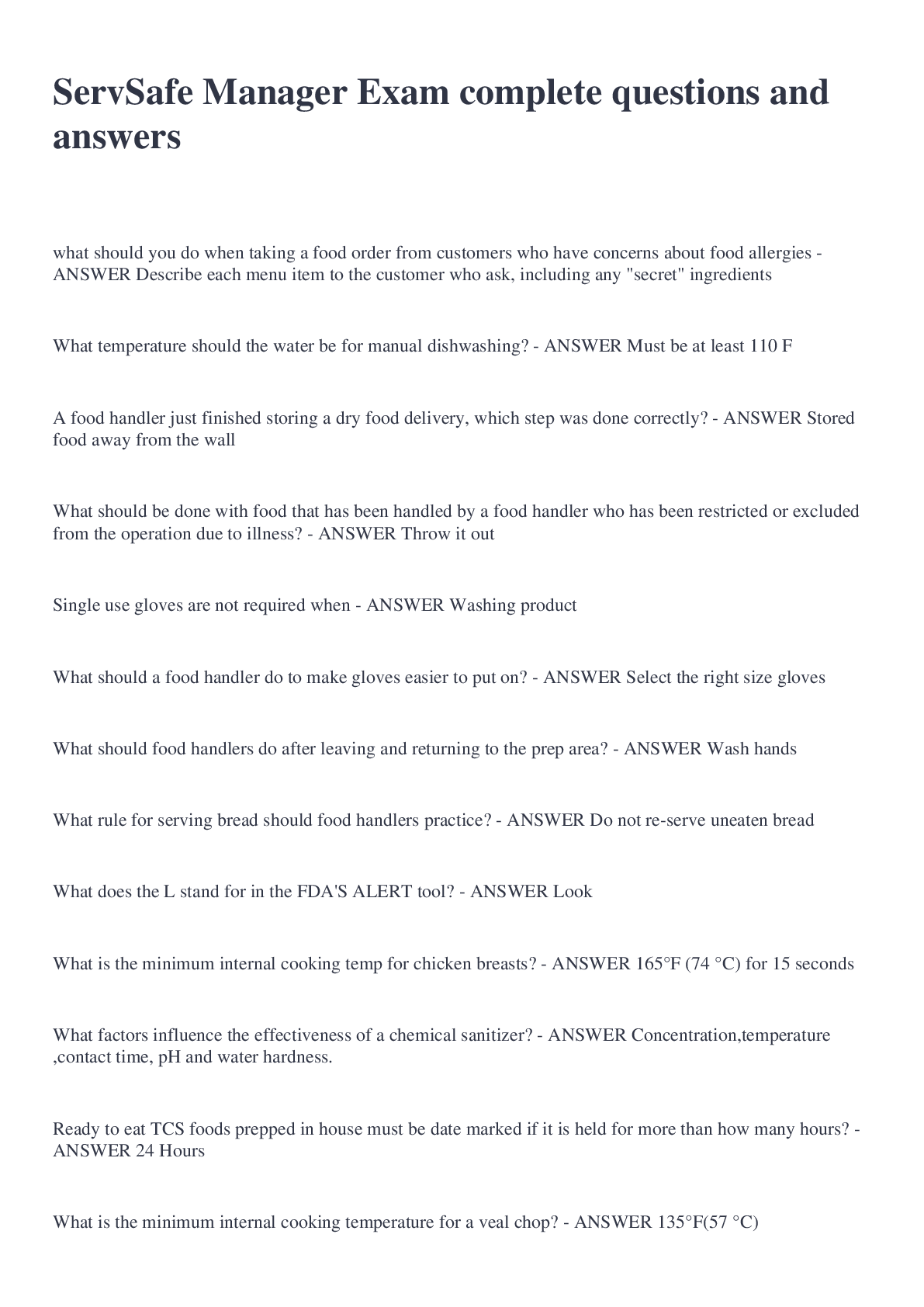
a metal and a non-metal make an - ANSWER ionic bond
a molecule does not have to be a compound - ANSWER true
a non-bonding pair of electrons can serve as a region of electron density - ANSWER true
acid base reaction - ANSWER has water as a product
Aluminum and chlorine react to form - ANSWER AlCl3
aluminum phosphate - ANSWER AlPO4
ammonium floride - ANSWER NH4F
atomic quantum theroy - ANSWER complete description of bonds and the molecular shapes they produce
atomic radius - ANSWER the distance from the center of an atom's nucleus to its outermost electron
atomic radius trend - ANSWER increases down and to the left
bond that forms when orbitals overlap - ANSWER sigma bond
bond that froms when orbitals are side to side - ANSWER pi bond
chemical formula of aluminum phosphate - ANSWER ALPO4
chemical formula of sodium iodide - ANSWER NAL
chemical reaction - ANSWER A change in which one or more substances are converted into new substances.
combustion reaction - ANSWER includes H2, O2, or Co2
correct - ANSWER some atoms can exsist in nature as single atoms
covalent bonds - ANSWER Bonds created by sharing electrons with other atoms.
covalent bonds form between any two atoms - ANSWER false
covalent bonds form both molceules and compounds - ANSWER true
decomposition reaction - ANSWER AB --> A + B
diatomic molecules are always nonpolar - ANSWER true
double replacement - ANSWER AB + CD = AD + CB
electron affinity - ANSWER the amount of energy required to add an electron to a neutral atom to form an negative ion
electron sea theroy - ANSWER Metals are an extensive crystal lattice of metal cations surrounded and submerged in a "sea" of mobile electrons
Electronegitivity - ANSWER the measure of the attraction between the nucleus and the valance electrons
electronegitivity trend - ANSWER increases up and to the right
electronegitvity is the attraction between the nucleus and valance election - ANSWER true
four types of electron conditions - ANSWER non-bonded, single, double, triple bonded
greek prefix for 7, 8, 9, 10 - ANSWER hepta, octa, nona, deca
greek prefix for four, five, six - ANSWER tetra, penta, hexa
greek prefix for one, two three - ANSWER mono, di, tri
Halogens are extremely reactive non-metals - ANSWER true
how do bonds form - ANSWER Transferring/sharing of valence electrons
hydrogen bromide - ANSWER HBr
Inventor of Periodic Table - ANSWER Dmitri Mendeleev
ionic bonds - ANSWER bonds that form between ions of opposite charge that attract
ionization energy - ANSWER the minimum amount of energy required to remove the first electron from the valance shell
ionization energy trends - ANSWER left to right, bottom to top
Law of Mass Conservation - ANSWER Matter cannot be created or destroyed; it can only change forms.
lewis structures - ANSWER diagrams that show the bonds between different atoms
lewis structures can be shown in 3D - ANSWER false
metalic bonds - ANSWER bonds between metallic atoms sharing lossley held electrons
Metaloids - ANSWER elements with properties that fall between those of metals and nonmetals
metals - ANSWER Elements that are good conductors of electric current and heat.
molar mass of carbon - ANSWER 12.01 g/mol
molar mass of NACL - ANSWER 58.44 g/mol
molecular orbital theroy - ANSWER states that the orbitals of molecules atoms are replaced by totally new orbitals when molecules form
negative ion - ANSWER anion
no you can't - ANSWER Can you form an ionic compound with three elements
noble gases are more reactive than halogens - ANSWER false
non-metals - ANSWER elements that are poor conductors of heat and electricity
non-metals are good insulators - ANSWER true
non-polar molecule - ANSWER symetrical, same electronegitivities
nope - ANSWER ionic bonds can form both compounds and molecules
not right - ANSWER hydrogen is the center of a polyotomic bond
not true - ANSWER a compound does have to be a molecule
octet rule - ANSWER States that atoms lose, gain or share electrons in order to acquire a full set of eight valence electrons
One mole of water contains ___ of hydrogen atoms and ____ of oxygen atoms - ANSWER 2, 1
oxidation number of alkali metals - ANSWER +1
oxidation number of Hg3 (PO4)2 - ANSWER +2
oxidation number of O2 - ANSWER 0
oxidation number of p in ca3 p2 - ANSWER +2
oxidation number of tin selenide - ANSWER +3
oxidation numbers - ANSWER Shows how many electrons can be shared, lost or gained to become stable
p2 o5 - ANSWER diphosphorus pentoxide
polar bonds always make polar molecules - ANSWER false
polar molecules - ANSWER assymatriacal, have diffrent electronegitivities
polarity - ANSWER the tendency of an object to form two localized regions of opposite character
polarity does - ANSWER As en increases, what property of compounds does too?
polyatomic ion - ANSWER A charged group of covalently bonded atoms
polyatomic ions can only have one oxidation number - ANSWER false
postive ion - ANSWER cation
potassium cyanide - ANSWER KCN
precipitate - ANSWER A solid that forms from a solution during a chemical reaction.
right - ANSWER metal atoms neither swap or share electrons while bonded
signs of chemical reactions - ANSWER release of heat or light, formation of a gas, color change, formation of a precipitate
Single Replacement - ANSWER A + BC --> B + AC
stronger bond, sigma or pi? - ANSWER sigma
synthesis reaction - ANSWER A+B-->AB
the disticnt shapes predicted by the VSPER theroy are based on attraction of electrons for each other - ANSWER false
the shape and arragment of the periodic table reflects the structure of the atoms composing the elemenets - ANSWER true
three atom molecules must always have bent molecular geometry - ANSWER false
three questions anwsered in chemical reactions - ANSWER what substances reacted, what susbtances were produced, how much of each substance was involved/produced
true - ANSWER the primary factor of determening what type of bond will form between form between two or more atom is the change in electronegitivity
two metals make a - ANSWER metalic bond
two non-metals make a - ANSWER covalent bond
untrue - ANSWER every atom will bond with other atoms to form 8 valence electrons
valance bond theory - ANSWER Bonds are formed when orbitals on atoms overlap
VSPER - ANSWER Valence Shell Electron Pair Repulsion
VSPER theroy states - ANSWER the repulsion between electron pairs causes molecular shapes to adjust so that the valence-electron pairs stay as far apart as possible
what determines atomic radius? - ANSWER number of rings, protons, valance electrons
Where does bonding occur? - ANSWER valence shell
Why are the valance electrons important? - ANSWER most likley to be part of a bond, responsible for an elements physical properties
wrong - ANSWER a bond between two atoms can be 100 percent ionic
yes - ANSWER a bond between two atoms can be 100 percent covalent
yes you can - ANSWER Can you form an ion with three elements
[Show More]

![Preview of eBook [PDF] Concepts of Inorganic Chemistry 1st Edition By Kharkwal M., Tyagi S.B.](https://browseimages.nyc3.digitaloceanspaces.com/paper-images/2024/Aug/30/VXk4GPhs2024-08-30-02-3566d1ae97a1666.png)
![Preview of eBook [PDF] Principles of General Chemistry 3rd Edition By Martin Silberberg](https://browseimages.nyc3.digitaloceanspaces.com/paper-images/2024/Aug/29/t09IEj8n2024-08-29-12-3666d041277c705.png)