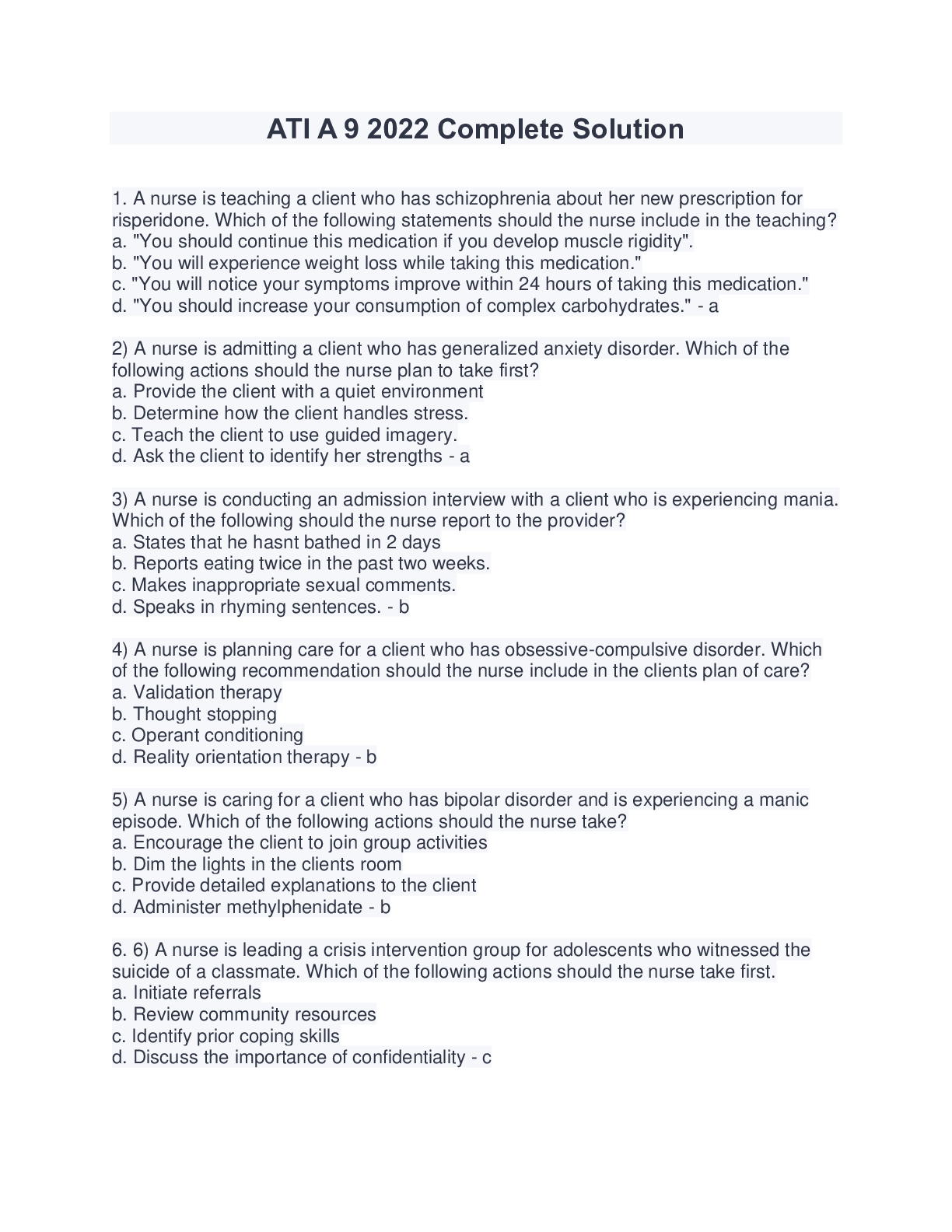
NURSING > ATI Study Resources. > 2019 ATI Community V2 (All)
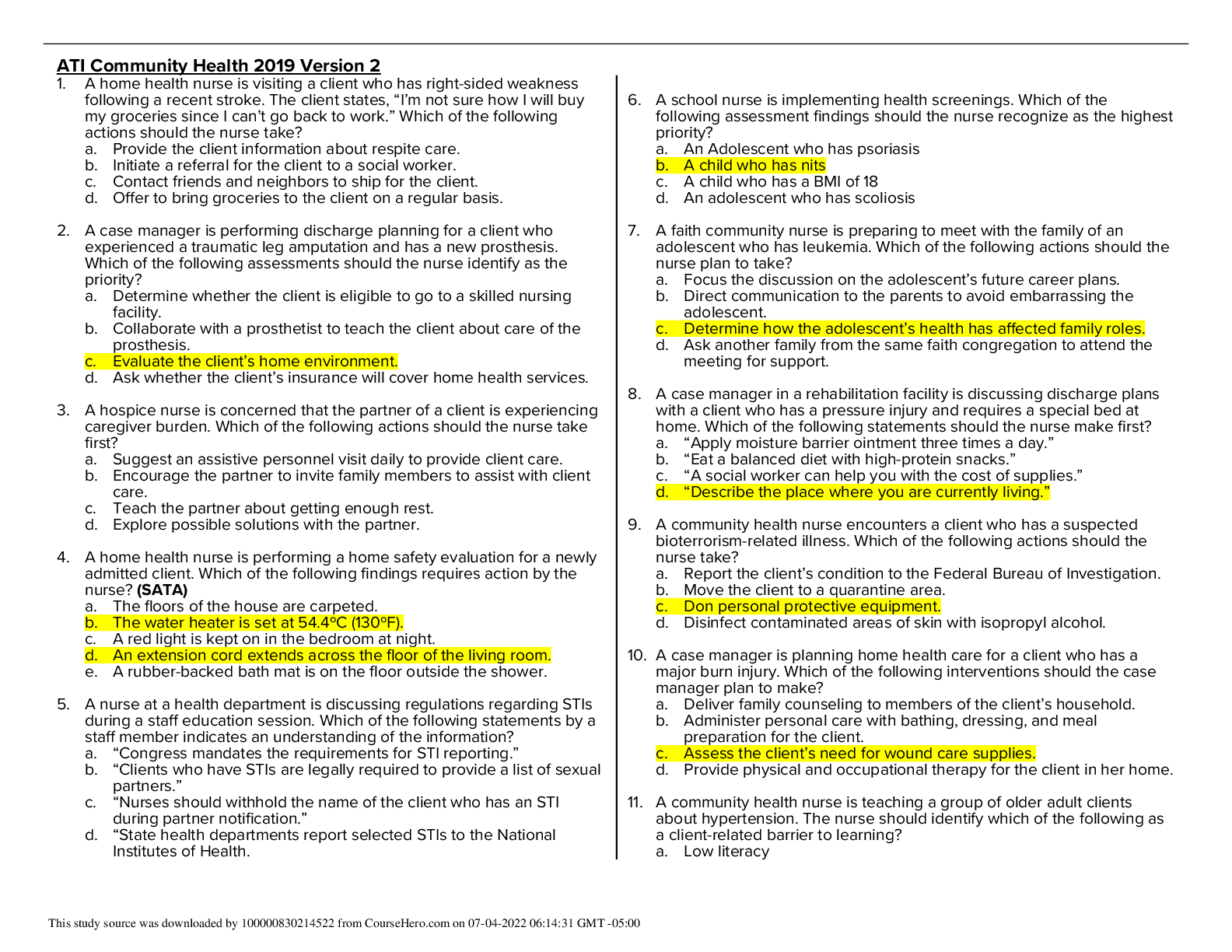
2019 ATI Community V2
Document Content and Description Below
Last updated: 3 years ago
Preview 1 out of 6 pages
Instant download
Buy this Document to get the Full Access Instantly
Provided by Students Who Aced it
We Verify Document Content to Gurantee Accuracy
Reviews( 0 )
Document information
Connected school, study & course
About the document
Uploaded On
Jul 04, 2022
Number of pages
6
Written in
All

Additional information
This document has been written for:
Uploaded
Jul 04, 2022
Downloads
0
Views
153
Topic Tags
Recommended For You
Get more on ATI Study Resources. »

ATI TEAS 7 Exam Test Bank – 300 Questions with Answers Latest...
ATI Fundamentals 2.0 Proctored | ATI Testing | Academic Year 2...
ATI OB Test Bank | Actual Exam – 300 Questions & Verified Answ...
TEST BANK > ATI RN CONCEPT-BASED ASSESSMENT LEVEL 1- 4 || RATE...

ATI MATERNAL NEWBORN PROCTORED EXAM | 33 VERSIONS Contains 260...
.png)
ATI MENTAL HEALTH EXAM A, B and C I Grade A+ Answers and C...

ATI Fundamentals Proctored Exam Questions and Answers | Pages...

ATI Anatomy and Physiology Proctored Exam Answers and cheat s...
 (2100+ Q & A).png)
ATI PN LEADERSHIP PROCTORED EXAM (32 VERSIONS, LATEST- ) (210...
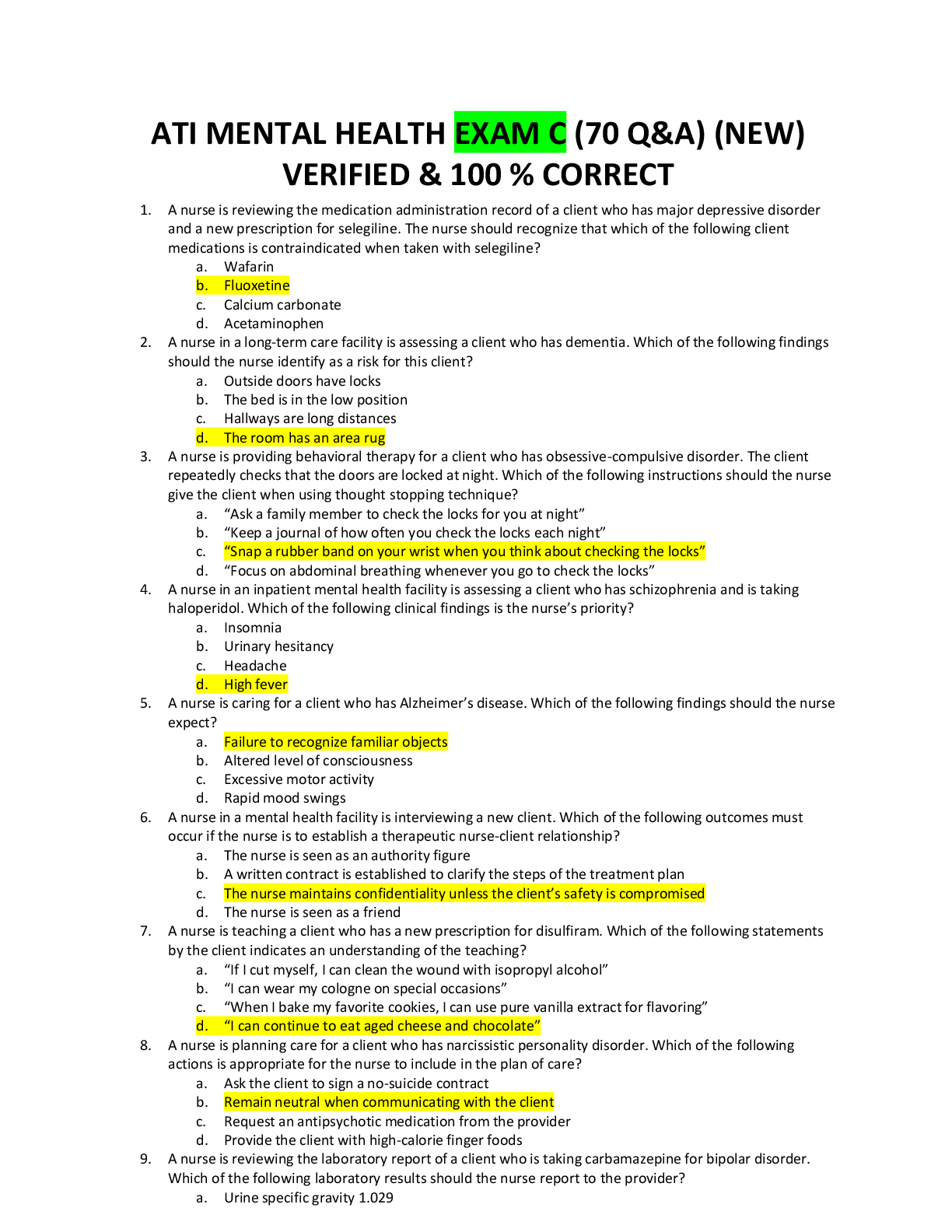
ATI MENTAL HEALTH EXAM C (70 Answers and cheat sheets Grade...

ATI MENTAL HEALTH EXAM B (70 Answers and cheat sheets Grade...

ATI Pharmacology Proctored Exam 7 Latest Versions Questions...

ATI TEAS 7 All Subjects Exam Pack 2025/2026 | Verified Questio...


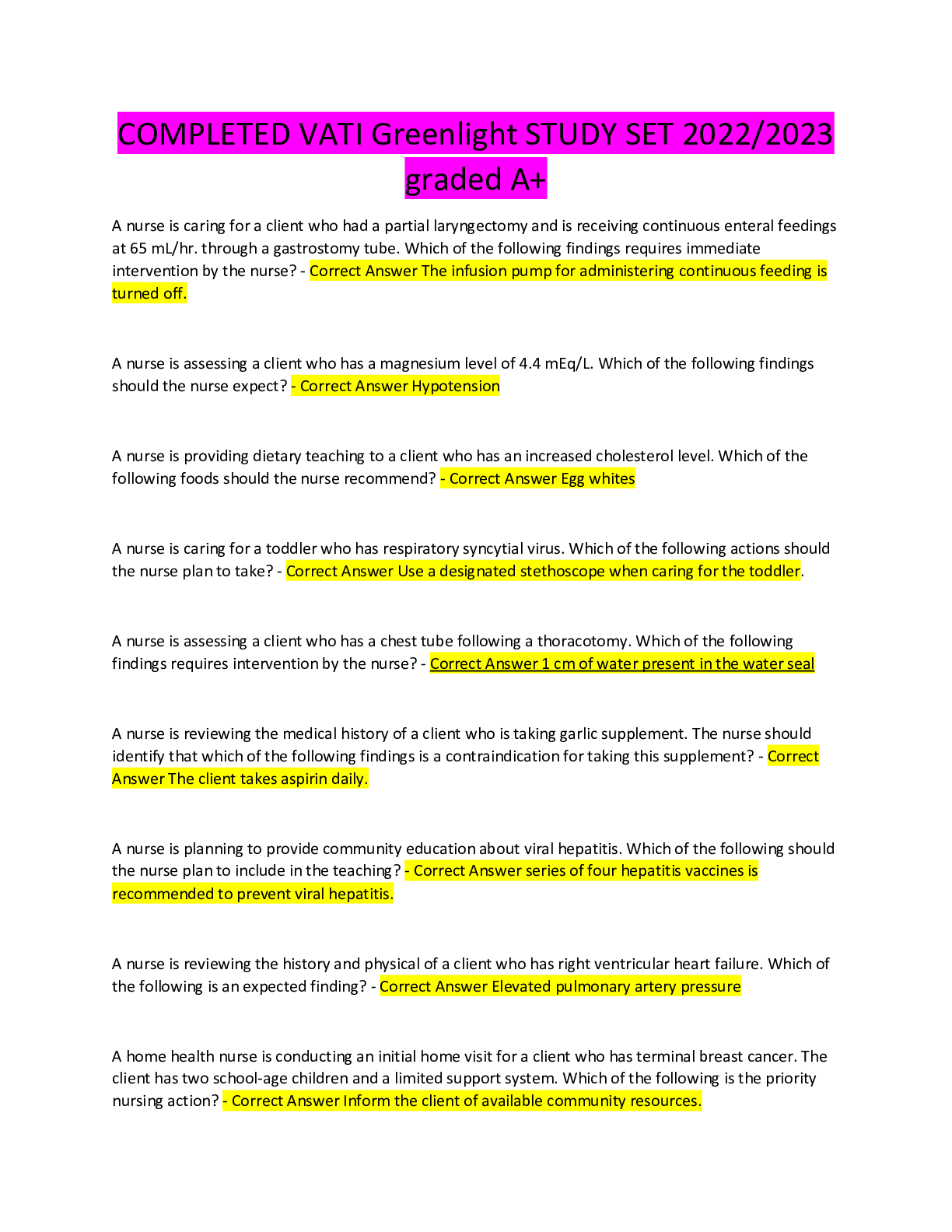


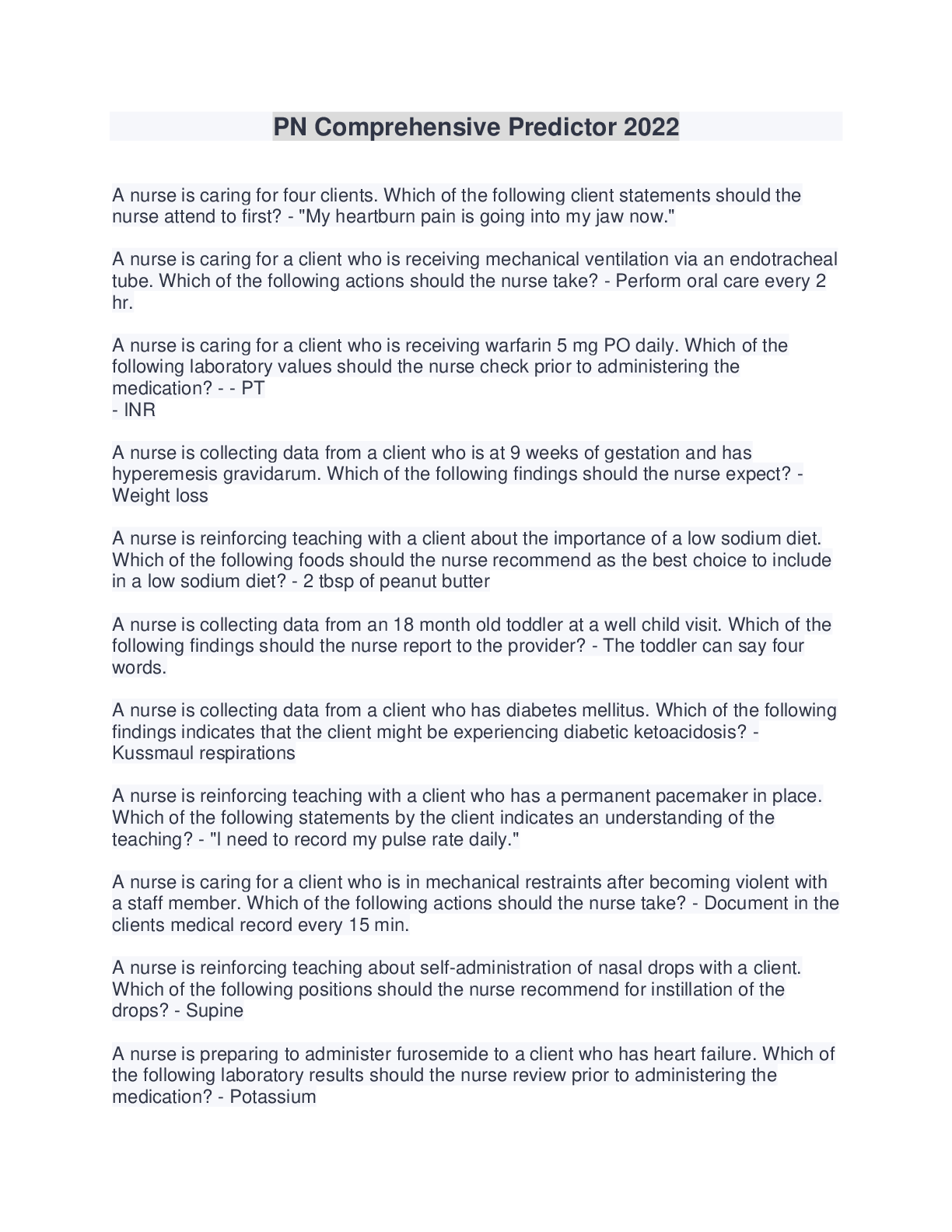
![Preview of PN COMPREHENSIVE PREDICTOR PRACTICE B [2020]](https://scholarfriends.com/storage/PN COMPREHENSIVE PREDICTOR PRACTICE B.png)